- news · movies
Netflix’s Hunchback: Why Quasimodo Is a Stone Carver
Vincent Cassel plays a stone carver in Netflix’s The Hunchback. Here’s how the film’s 1830 setting and its dancer Agnès connect to Victor Hugo’s novel.

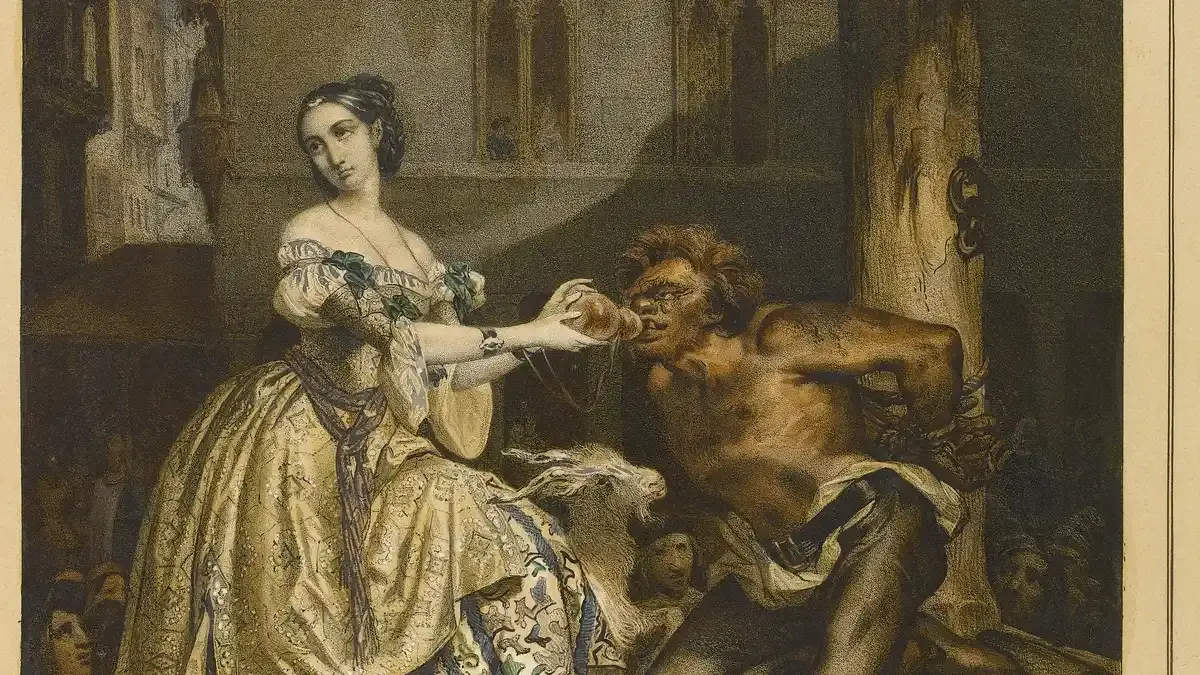
Netflix’s The Hunchback: Soul of Paris makes Vincent Cassel’s Quasimodo a stone carver because it imagines the man Victor Hugo might have drawn on when he wrote Notre-Dame de Paris. The film, which arrived on Netflix on November 27, sets that invented story in 1830. In Hugo’s novel, Quasimodo rings the bells of Notre-Dame in 1482.
Why the carver and the bell-ringer belong to different centuries
In Hugo’s novel, the archdeacon Claude Frollo adopts the abandoned Quasimodo. He becomes the cathedral’s bell-ringer, and years of ringing the bells leave him deaf. His relationship to the cathedral is personal and physical. He knows its galleries and towers, and the sound that gives him a vocation also changes the way he communicates.
Director Jean-François Richet pulls the film forward to the July Revolution, a year before the novel appeared. His Quasimodo is a craftsman caught up in that unrest who finds refuge in Notre-Dame. Netflix imagines the person who could have inspired him by giving him a life Hugo could plausibly have imagined from his own era. The premise is an invention about the origins of the character.
That setup changes what the cathedral does in the story. Hugo’s bell-ringer has spent much of his life inside it. The carver comes to it for shelter at a moment when its own future is uncertain. Both versions make the building a refuge, but they get there by very different routes.
How Agnès connects to Esmeralda
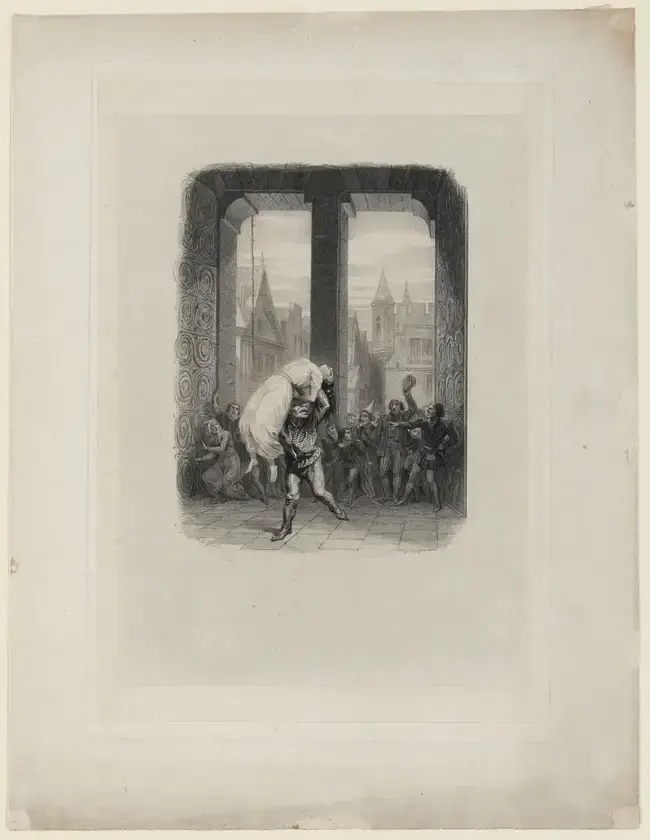
Daphné Patakia plays Agnès, a dancer who crosses paths with Quasimodo in the film. Netflix’s production notes link her red carnival dress to familiar depictions of Esmeralda. There’s a more specific connection in the original text. Agnès is Esmeralda’s baptismal name, so it already belonged to Hugo’s dancer. The film can make that reference without replaying Esmeralda’s plot. The same kind of detail can survive a complete change of setting, as with Cinderella’s glass slipper across different retellings.
Where to read Hugo’s version
Book Four, Chapter III shows how the cathedral and its bells shaped Quasimodo’s life. For Agnès’s name, start with Book Six, Chapter III. The complete French text is available online. Those two chapters give you the clearest points of comparison before watching the film.
Sources
- #Netflix
- #Vincent Cassel
- #Victor Hugo
- #Quasimodo
- #Notre-Dame de Paris
- The Hunchback of Notre-Dame
Make Red Reactions a preferred source
Choose Red Reactions as a preferred source in Google Search.
Confirm your choice on Google.