news · movies
What Is Colony? Train to Busan Director Yeon Sang-ho's New Zombie Thriller Has Infected That Keep Evolving
Colony has already drawn more than 5.8 million admissions in South Korea and opened in North American theaters on August 28. Here's what Yeon Sang-ho's new zombie thriller actually is.
 By Kenza Benouna4 min read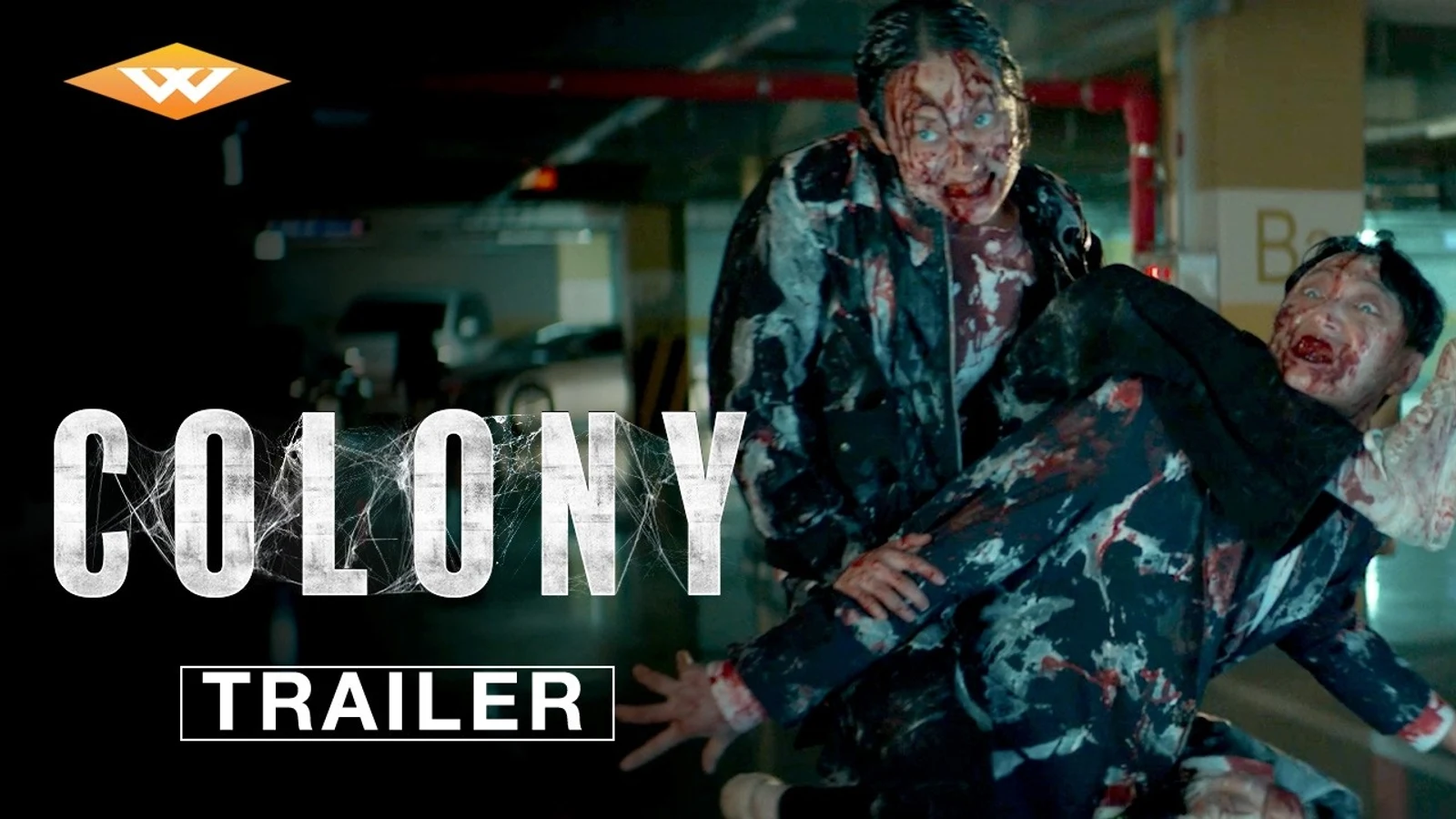
Colony is Yeon Sang-ho’s latest feature-length return to zombie horror, but it is not another Train to Busan sequel. The 2026 Korean thriller traps a biotechnology professor and a group of survivors inside a sealed facility while a rapidly mutating outbreak turns its infected from animal-like attackers into increasingly coordinated predators. The film has already drawn more than 5.8 million admissions in South Korea and opened in North American theaters on August 28.
What Is Colony?
Known in Korean as 군체 (Gun-che), Colony is directed by Yeon Sang-ho from a screenplay he co-wrote with Choi Gyu-seok. Cannes’ official synopsis lays out the setup plainly: biotechnology professor Se-jeong attends a biotech conference “only to witness it spiral into catastrophe when a rapidly mutating virus is unleashed.” As the outbreak spreads and the infected begin to transform, authorities seal off the entire facility, trapping the survivors inside with an escalating threat.
That’s a narrower, more contained premise than Train to Busan’s runaway train, and the film builds its tension around a location under lockdown rather than a race against a moving outbreak.
How Colony’s Infected Evolve
The specific hook that’s driven interest in Colony is how its infected behave. Per Korea’s official film database, the infected don’t stay as simple, mindless attackers — they begin as crawling, animal-like figures and gradually become increasingly coordinated predators as the outbreak progresses. That’s a meaningful step beyond typical zombie-movie logic, where infected are usually static threats from the moment they turn.
It’s worth being precise about what that means and doesn’t mean. Official materials describe transformation and escalating coordination among the infected — they do not describe human-level intelligence, a hive mind, or anything resembling military strategy. Treat “the infected evolve” as the accurate version of that idea, not more dramatic framings that have circulated around the film’s marketing.
Is Colony Connected to Train to Busan?
Only through its director. Yeon Sang-ho also made Train to Busan, Peninsula, and the Netflix series Hellbound — Colony brings him back to feature-film zombie horror after those two films, not “after ten years,” since Peninsula already worked in the same genre space more recently.
Nothing in the film’s official materials establishes Colony as a Train to Busan sequel, prequel, or part of a shared universe. The connection is Yeon’s authorship and his recurring interest in outbreak horror, not shared continuity. Where Train to Busan is defined by survival during an explosive outbreak aboard a moving train, Colony is a siege story: survivors trapped in one sealed building while the threat inside it keeps changing.
Gianna Jun Leads the Cast
Cannes’ official credits confirm the film’s cast:
- Gianna Jun (Jun Ji-hyun) as Se-jeong, the biotechnology professor at the story’s center
- Koo Kyo-hwan as Young-chul
- Ji Chang-wook as Hyun-seok
- Shin Hyun-been as Sul-hee
- Kim Shin-rock as Hyun-hee
- Go Soo as Kyu-seong
Byun Bong-sun handled cinematography and Han Mee-yeon edited the film, both credited on Cannes’ official page alongside Yeon and Choi’s screenplay.
Cannes Premiere and Korean Box-Office Success
Colony had its world premiere in the Midnight Screenings section of the 2026 Cannes Film Festival — not the main Competition lineup, and not a Palme d’Or contender. It opened theatrically in South Korea on May 21, 2026, distributed by Showbox, with a runtime of roughly 122–123 minutes depending on the source (Cannes lists 123 minutes; Korea’s official film database lists 122).
The film’s Korean performance has been substantial: it crossed 5 million admissions within weeks of release, and Korea’s official film database currently shows the film has surpassed 5.8 million admissions, with more than $45 million in Korean theatrical gross as of mid-September 2026. That’s admissions and domestic gross specifically — not a worldwide viewership or box-office figure, and not a claim of any particular record.
North American Release and Current Availability
Well Go USA Entertainment released Colony theatrically in North America on August 28, 2026, roughly two weeks after the distributor’s own 4K theatrical re-release of Train to Busan for that film’s tenth anniversary. As of this writing, Colony remains a theatrical release in North America; Well Go USA has indicated a VOD and digital release is planned for October, though that date had not arrived as of publication, so treat theatrical as the current way to see it in the US and Canada for now.
What Remains Deliberately Mysterious Before You Watch
Official materials are careful not to give away how the outbreak started, who among the trapped survivors makes it out, or exactly how far the infected’s coordination goes by the film’s end. That’s by design — Colony is built around escalating tension inside a sealed space, and its marketing has stayed consistent about keeping those specifics for the film itself rather than the trailer.
For more horror and thriller coverage, visit our horror genre hub.
Sources
Related coverage

Paramount's Warner Bros. Deal Clears State and WGA Lawsuits. What Still Has to Happen
The California-led states and the WGA have settled their challenges to Paramount's Warner Bros. Discovery deal. The transaction can move toward closing, but the merger has not been completed.

Lollipop Chainsaw Is Getting an R-Rated Live-Action Prequel Movie
Dragami Games has licensed a live-action Lollipop Chainsaw film to an international production team. It's described as an R-rated action comedy set before the 2012 game — here's everything actually confirmed so far.

Alan Ritchson Is in Talks for Sony's Helldivers Movie — What We Know About the Adaptation
Alan Ritchson is in talks to join Sony's Helldivers movie after Jason Momoa's reported exit, with Justin Lin still directing. Here's what's actually confirmed about the video game adaptation, and what's still just a negotiation.
World War Z Sequel Is Back With Brad Pitt and Edward Berger — What's Actually Confirmed
Paramount has closed a deal with Brad Pitt to return for a World War Z sequel, with Edward Berger directing from a Dennis Kelly script. Here's what's confirmed about the long-stalled follow-up, and what still isn't.
About the author
Kenza Benouna
Movies, TV & Horror Writer
Kenza Benouna writes about movies and television, with a substantial archive in horror. Her Red Reactions work includes reviews, supernatural and franchise lore, story explainers and analysis of character, atmosphere and adaptation.
Coverage: Horror · Movies · TV · Reviews · Lore & Features
More from Kenza Benouna