lore · movies / tv
Deadites Explained: What Are the Demons in Evil Dead?
What Deadites are, how possession works, why they are not zombies, and how Evil Dead has changed the rules from the original films through Evil Dead Burn.
 By Kenza Benouna14 min read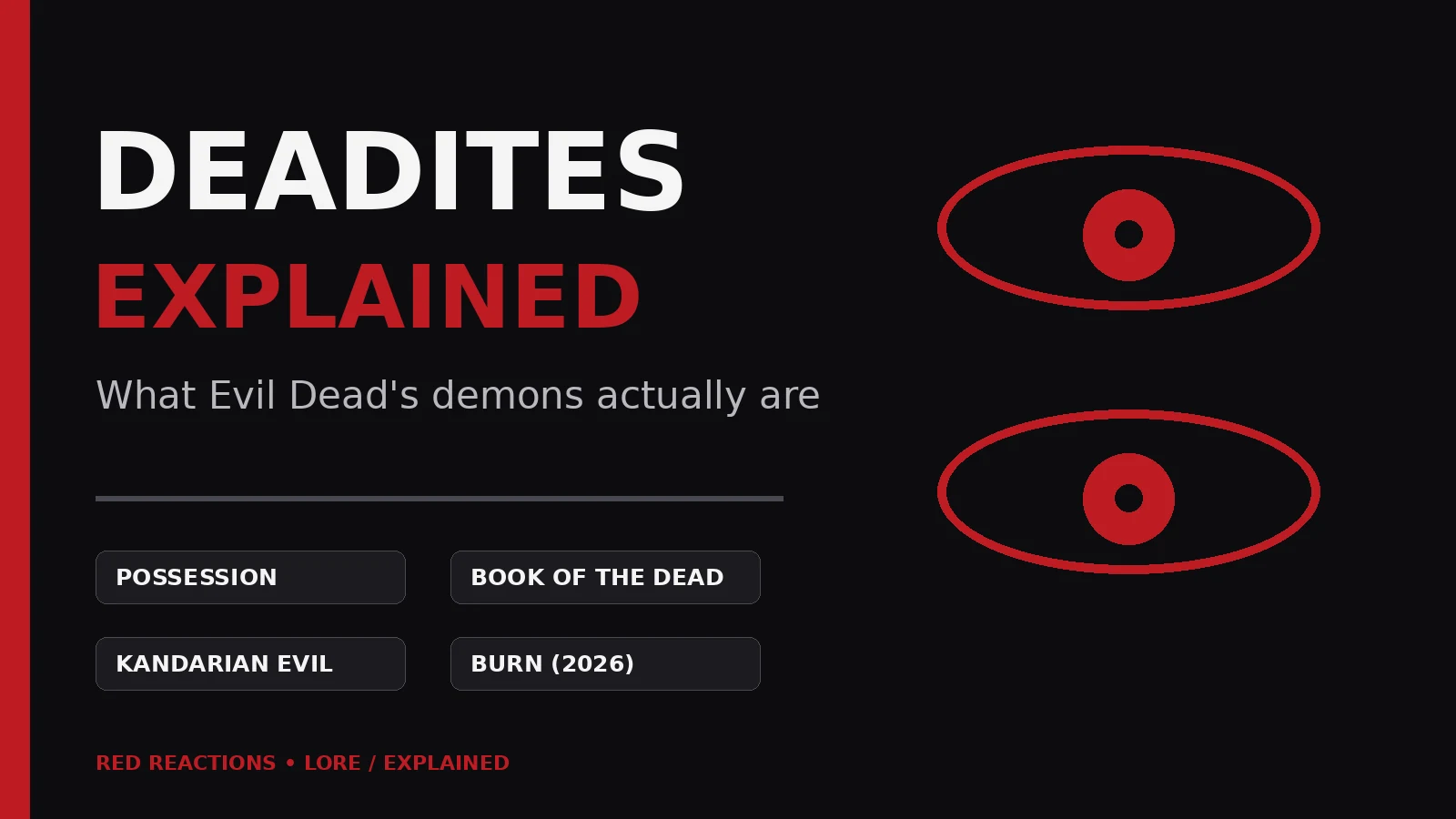
Spoilers: This guide discusses major events from the Evil Dead films, Ash vs Evil Dead, and Evil Dead Burn.
A Deadite is not simply a corpse that got up and started walking. In Evil Dead, the basic idea is demonic possession: an evil force takes control of a person, living or dead, and turns that body into something violent, intelligent and deliberately cruel.
That is why calling Deadites “basically zombies” misses the part that makes them work. They speak. They lie. They remember enough about the person they are wearing to make the people around them hesitate. And across more than four decades of films and television, the franchise has kept changing exactly what they can do.
The rules are not perfectly consistent. Evil Dead has never been the kind of mythology that stops the movie so somebody can explain a clean supernatural rulebook. But there is enough on screen to separate what a Deadite is from the larger evil behind it — and enough contradictory lore to know where not to overstate things.
What Is a Deadite?
In the simplest useful definition, a Deadite is a person or corpse under demonic possession in the Evil Dead universe.
The original film describes demons being unleashed after recorded passages from the Book of the Dead are played at the cabin. Those forces possess the group one by one. Later entries give the possessed victims the franchise name “Deadites.”
The important part is that possession does not turn them into mindless bodies. Deadites can talk, taunt and manipulate. They frequently use a host’s appearance, relationships and voice against survivors. That makes the horror personal in a way a shambling corpse usually is not.
The broader evil can also animate or affect things that are not human — the woods themselves are hostile in the early films, Ash’s severed hand develops a murderous life of its own, and Ash vs Evil Dead pushes supernatural possession into even stranger territory. It is safer, though, not to label every possessed object or environmental manifestation a “Deadite.” The films use that word most clearly for the possessed humanoid creatures.
The Word “Deadite” Came Later Than the Monsters
One easy piece of franchise trivia is often repeated incorrectly: the creatures were not first named in Army of Darkness.
The word is already spoken in Evil Dead II (1987). Near the end, after Ash is thrown into the Middle Ages, one of the medieval soldiers identifies the flying creature attacking them as a “deadite.”
That means the 1981 The Evil Dead introduced the creatures before the franchise had given audiences that label. Sony’s current description of the original still simply refers to dormant demons from the woods possessing the cabin’s occupants.
By the time Army of Darkness arrived, “Deadite” had become normal franchise vocabulary and the term was expanded to an entire medieval army of the undead.
The Book of the Dead Is the Trigger — but There Is More Than One Book
The recurring disaster starts with forbidden text being read or played aloud.
The original film presents the artifact as a Book of the Dead. Later movies use names including Necronomicon Ex-Mortis and Naturom Demonto, while the physical design of the book keeps changing.
That does not necessarily mean the prop is supposed to be literally the same volume in every modern entry.
Evil Dead Rise makes the three-book idea much more useful. The 1923 recordings describe the book found under the Los Angeles building as one of three volumes. Director Lee Cronin later explained that he deliberately connected that idea to the three books Ash encounters in Army of Darkness: Raimi’s stories used one, Fede Álvarez’s 2013 film could be treated as another, and Rise took the third.
It is a neat way to connect stories without forcing every Necronomicon design and every possession rule to match.
And yes, the name “Necronomicon” comes from H. P. Lovecraft’s fiction. Raimi’s Book of the Dead is not Lovecraft’s book operating under the same canon. Evil Dead built its own mythology around the name.
The Kandarian Demon Is Not Just Another Deadite
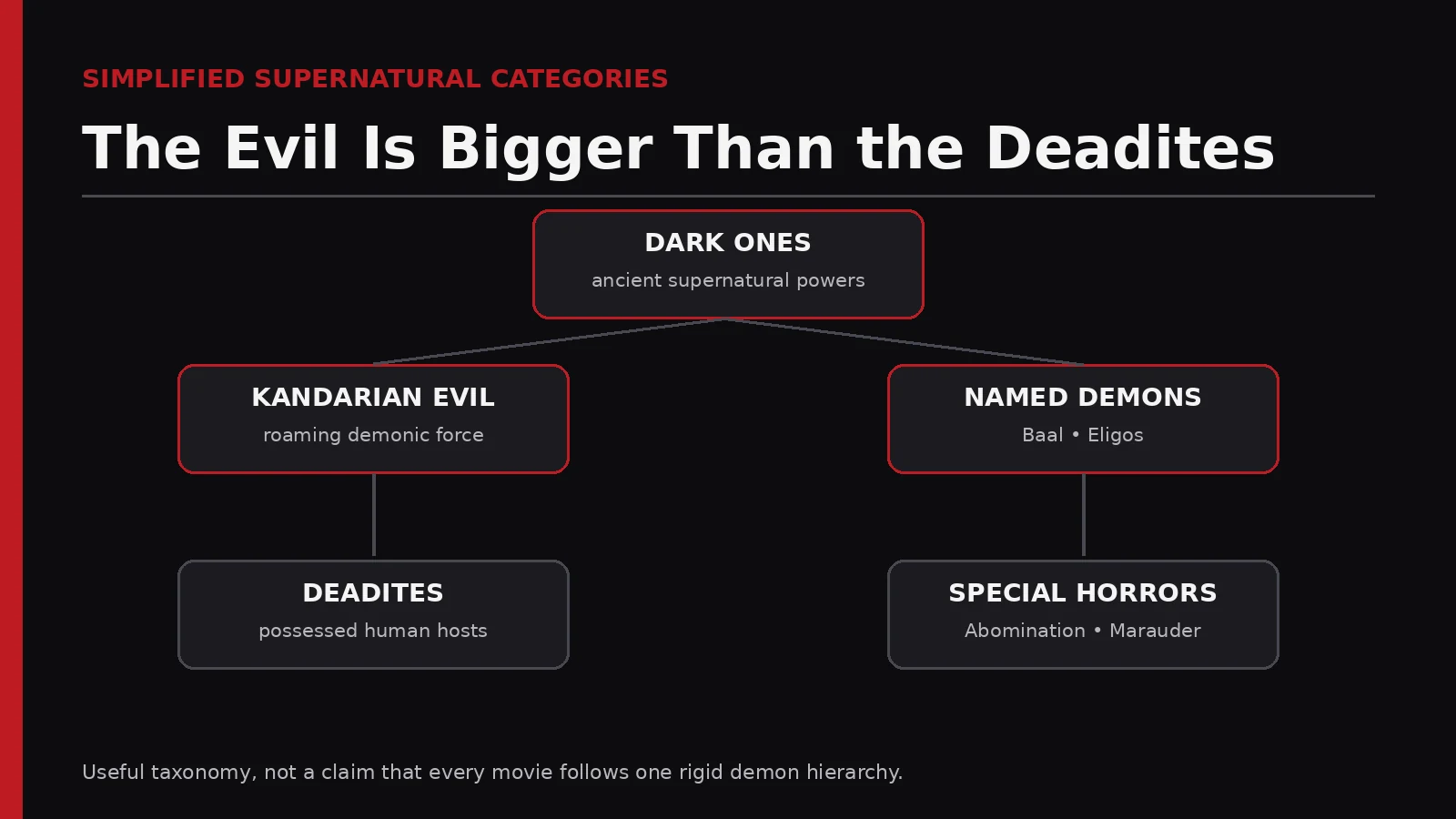
The franchise also makes a useful distinction between the evil force doing the possessing and the body that ends up possessed.
In the Raimi films, the roaming demonic presence is often associated with the Kandarian Demon — the unseen force represented by those famous low, rushing point-of-view shots tearing through the woods. Evil Dead II makes that force more explicit and gives the characters a ritual for making the evil physically manifest before banishing it.
A Deadite is the possessed result: Cheryl, Henrietta, Ellie and the countless other people whose bodies become weapons.
The exact cosmology becomes much more complicated in Ash vs Evil Dead, which adds the Dark Ones and named demons such as Baal and Eligos. So it is better to think of “Deadite” as one category inside a much larger supernatural system rather than a name for every demon in the franchise.
How Possession Works
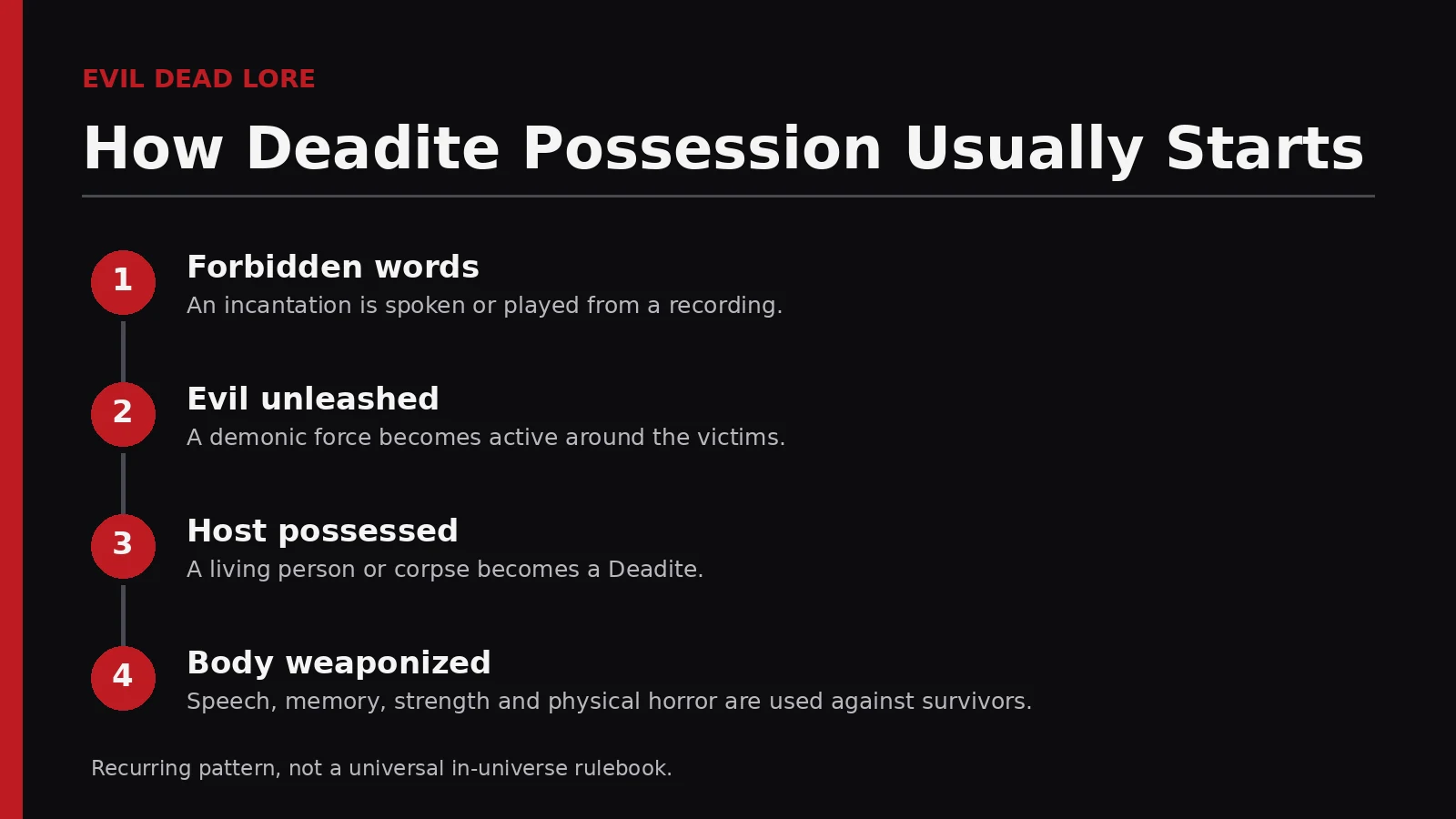
The films are flexible about the details, but several patterns keep returning.
The evil usually needs to be unleashed first. In the classic cabin stories, recorded incantations activate the threat. Evil Dead Rise repeats the idea with Father Littleton’s century-old vinyl records. The danger is not somebody quietly reading an English translation — it is the supernatural passages being spoken.
Possession can hit the living. A victim does not need to die first. Mia in 2013 and Ellie in Rise are obvious examples.
A corpse can still become a threat. Death does not guarantee safety once the supernatural force is loose.
The host’s identity becomes ammunition. Deadites taunt survivors with familiar voices, intimate knowledge and emotional pressure. Whether every memory is literally retained is never laid out as a scientific rule, but the films repeatedly show the demon knowing how to use the host’s relationships.
Possession can sometimes be interrupted. Ash fights his way back in Evil Dead II after seeing Linda’s necklace. Mia’s case in the 2013 film is even more dramatic: David follows the book’s instruction to bury her alive, waits until her heart stops, then digs her up and resuscitates her. She returns without the possession.
That does not create a clean cure anybody can reliably repeat. It shows that Evil Dead possession is supernatural and negotiable enough for specific stories to find loopholes.
What Deadites Can Actually Do
A normal possessed host already has an ugly advantage: it is difficult to know how much of the person you are looking at is still reachable.
On top of that, individual Deadites have demonstrated:
- Superhuman strength — throwing people, overpowering survivors and continuing to attack through injuries that should end a human fight.
- Speech and manipulation — begging, mocking, lying and switching between familiar and openly demonic behavior.
- Levitation — used repeatedly across the franchise, including the lake sequence in Evil Dead Rise.
- Extreme bodily distortion — stretched necks, grotesque posture, unnatural movement and physical transformations.
- Continued movement after dismemberment — Ash’s possessed hand is the franchise’s most famous example of why cutting something off does not automatically make it harmless.
- Fusion and mutation — Evil Dead Rise takes this to its nastiest extreme with the Marauder, formed from multiple possessed bodies.
Some other effects are better attributed to the larger demonic presence rather than to every Deadite as an individual power. Doors move, environments turn hostile, objects seem to come alive and reality itself becomes unreliable around the cabin. Calling all of that “Deadite telekinesis” makes the mythology sound tidier than the movies actually are.
What Do Deadites Look Like?
There is no single Deadite face.
The 1981 film established the unnerving pale eyes and decaying makeup that became part of the franchise’s visual language. Evil Dead II exaggerated bodies and expressions as the series pushed harder into splatter comedy. Army of Darkness went all the way to medieval skeleton armies.
The modern films pull the idea back toward physical horror. Evil Dead (2013) uses sickly skin, damaged bodies and aggressive self-mutilation. Evil Dead Rise makes Ellie’s possession frightening partly because Alyssa Sutherland still looks recognizably like the mother her children know while everything about the way she moves says otherwise.
The designs change because the filmmakers change. The common idea is not a specific eye color or prosthetic. It is a human body becoming wrong.
How Do You Kill a Deadite?
This is where the franchise is at its least interested in giving us one answer.
Severe physical destruction works because there eventually stops being enough body left to attack with. Dismemberment, chainsaws and the wood chipper in Evil Dead Rise all fit that brutal logic.
Fire has also destroyed possessed bodies, but Evil Dead Burn is a good reason not to turn “fire kills Deadites” into an absolute rule. A charred Deadite can remain a problem. The series has repeatedly cared more about the particular nightmare in front of its characters than maintaining a universal damage chart.
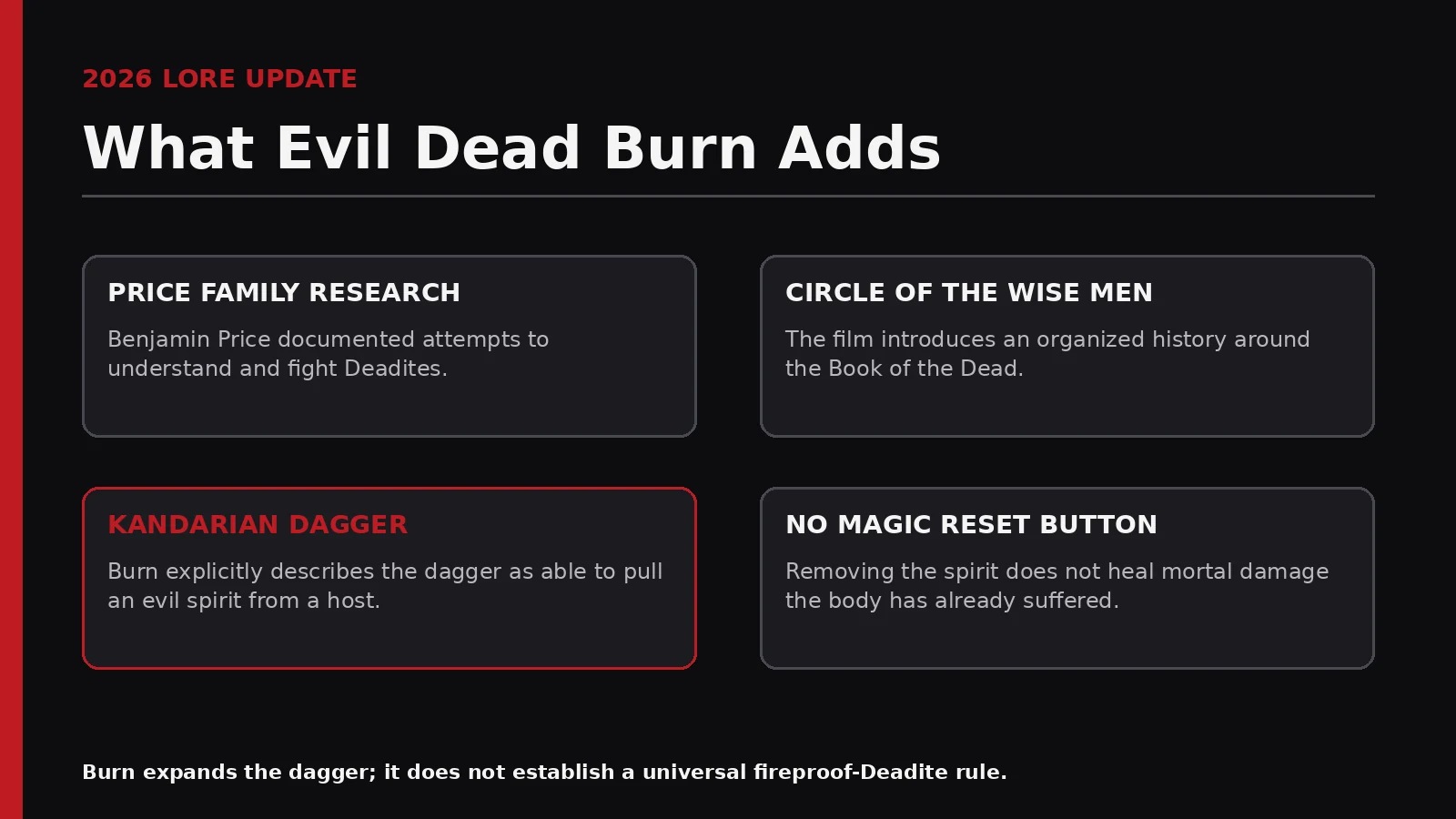
The Kandarian Dagger deserves a separate note. The strange bone-handled weapon appears in the original films, but Evil Dead Burn gives it much more explicit lore: Benjamin Price’s recordings describe the dagger as a way to pull the evil spirit out of a possessed body. Alice uses it against Deadites, but exorcising the spirit does not magically repair the host’s fatal injuries.
That is an important distinction. Banishing the possession and saving the person are not always the same thing.
Ritual banishment can also work against the larger evil. Evil Dead II ends with Annie completing the Necronomicon passage that opens a vortex and drags the manifested demon away — along with Ash and his car.
There is no single headshot rule here. The series has deliberately avoided one.
Deadites Are Not Zombies
The easiest comparison looks like this:
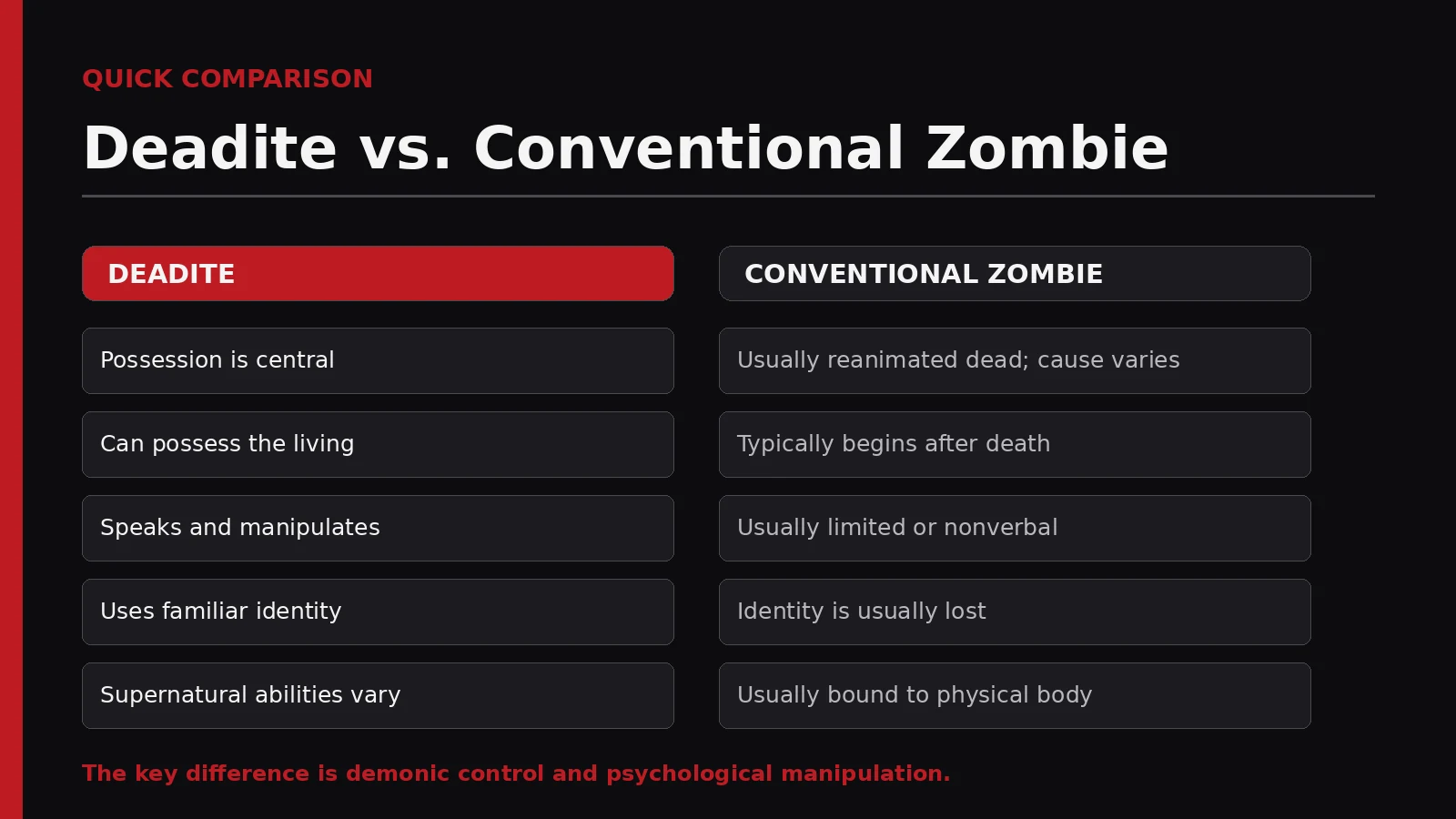
A conventional zombie is usually a reanimated dead person whose identity has largely disappeared. The exact cause varies by story — infection, radiation, magic, unexplained resurrection — so “zombie” is already a broad category.
A Deadite is different because possession is the point. The victim may still be alive when it begins, the creature can speak intelligently, and the demon can weaponize the victim’s relationships.
That is why a Deadite scene often involves someone behind a locked door asking to be let in. The physical threat matters, but hesitation is part of the attack.
Not Every Demon in Evil Dead Is a Deadite
Once Ash vs Evil Dead expanded the mythology, “Deadite” stopped being useful as a catch-all term.
The Dark Ones are ancient supernatural beings tied to the creation and control of the Necronomicon. Ruby’s story makes them central to the series’ larger cosmology.
Baal and Eligos are named demons with their own abilities and agendas. They are not simply another possessed cabin victim.
The Kandarian Demon functions as the roaming evil force behind key possessions in the classic films.
Evil Ash is Ash’s grotesque double in Army of Darkness and eventually leads the medieval undead army. Calling him the Kandarian Demon itself would be inaccurate.
The Abomination in 2013 and the Marauder in Evil Dead Rise are special monsters created by each film’s particular version of the evil. They are not good evidence that every Deadite can transform into the same thing.
How the Deadites Changed Across the Franchise
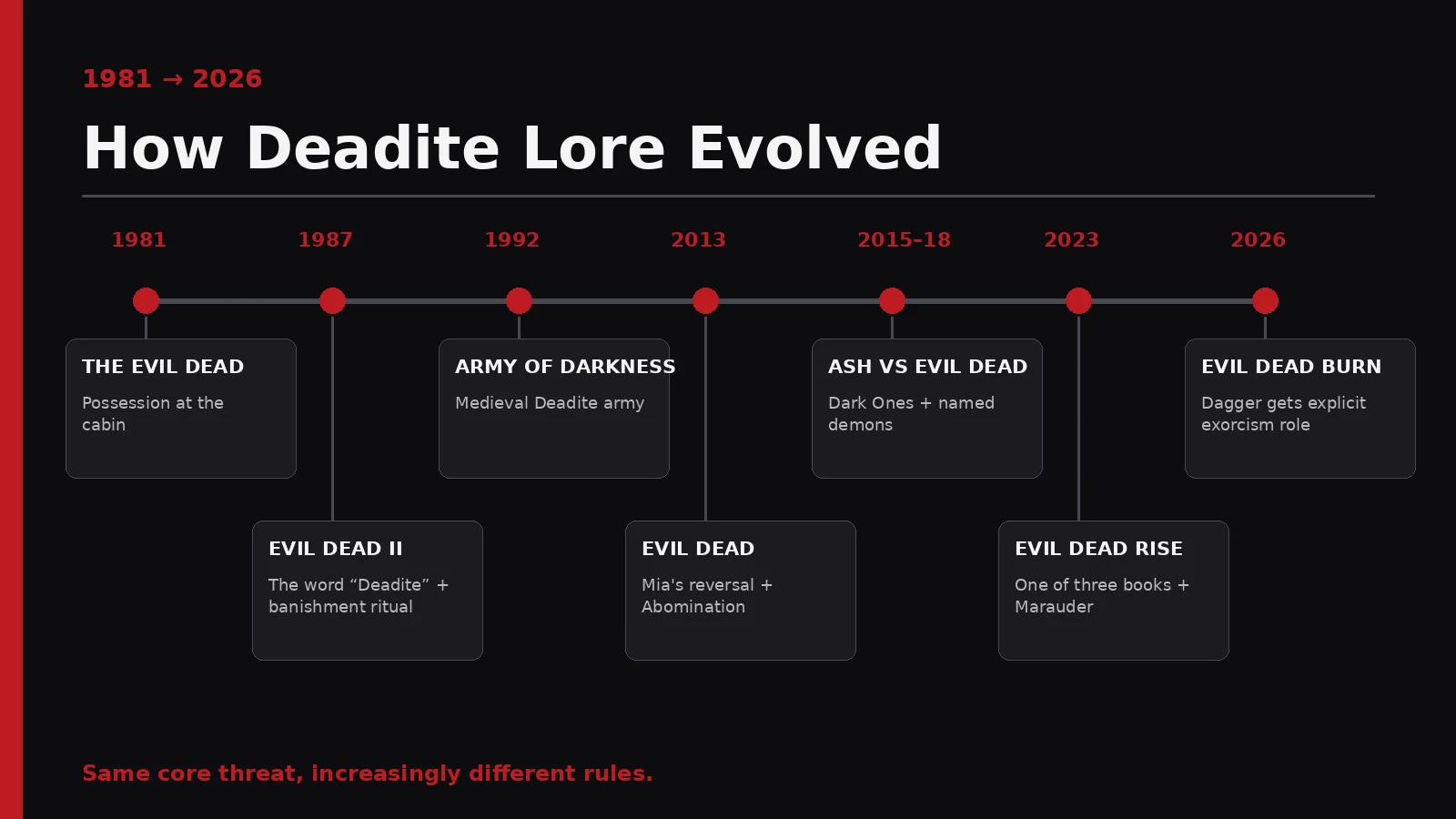
The quickest way to see the mythology evolve is to look at what each era added.
The Evil Dead (1981): the foundation. Recorded words from the Book of the Dead unleash demons that possess people at the cabin.
Evil Dead II (1987): gives audiences the word “Deadite,” makes the Kandarian evil more explicit and shows Ash becoming possessed before fighting his way back.
Army of Darkness (1992): expands the threat into a medieval undead army and turns Deadites into something closer to a war faction.
Ash vs Evil Dead (2015–2018): builds out the cosmology with Ruby, the Dark Ones, Baal, Eligos and a much larger supernatural world.
Evil Dead (2013): takes possession back into grim survival horror, introduces the Taker of Souls/Abomination prophecy and gives Mia the franchise’s clearest possession-reversal case.
Evil Dead Rise (2023): establishes its Book of the Dead as one of three volumes, takes the outbreak into a Los Angeles apartment building and introduces the Marauder.
Evil Dead Burn (2026): makes the Kandarian Dagger far more important to the on-screen rules and connects the new family’s history to organized attempts to understand and fight Deadites.
What Evil Dead Burn Adds to Deadite Lore
Evil Dead Burn, directed by Sébastien Vaniček and written by Vaniček and Florent Bernard, is the sixth film in the franchise. Warner Bros.’ official synopsis centers on Alice, who turns to her in-laws after the death of her husband, only for the family gathering to collapse as the relatives are transformed into Deadites.
The film’s most useful lore addition is not a new universal species of fireproof Deadite.
Instead, Burn gives new importance to the Price family’s history and the Circle of the Wise Men, which Benjamin Price researched alongside the Book of the Dead. His recordings describe the Kandarian Dagger as a weapon capable of pulling the evil spirit from a host.
That lets the film do something nastier than simply handing Alice a magic cure. The dagger can end the possession, but it cannot reverse catastrophic damage the body has already suffered.
The film also gives us Will as a charred, burning Deadite after his death. That image is memorable, but it should not be inflated into a new franchise rule that all Deadites exposed to fire evolve into flame-resistant forms. Evil Dead has always been too inconsistent — and too gleefully mean — for that kind of neat taxonomy.
For how the rest of the film’s plot resolves, our full Evil Dead Burn ending explained covers it in detail.
How Evil Dead: The Game Treats Deadites and Possession
Games are worth a separate note, because Evil Dead: The Game (2022) approaches the mythology differently than any film or TV entry — not by contradicting established lore, but by turning it into a structured gameplay system the movies never needed.
The asymmetrical multiplayer game splits the playable Kandarian Demon into five distinct classes, each built around a different corner of the franchise’s own established lore rather than inventing new demons: the Warlord (Henrietta and Deadites from Evil Dead II), the Puppeteer (Eligos and Eligos-style minions from Ash vs Evil Dead), the Necromancer (Evil Ash and the skeleton army from Army of Darkness), the Plaguebringer (The Witch and pit monsters from Army of Darkness), and The Schemer (Baal and flesh monsters from Ash vs Evil Dead). It’s a game-specific structure, not new film canon — the game is organizing existing named demons and eras into selectable player kits, not asserting that the films themselves divide Deadite threats into five official categories.
The possession mechanics track closely with the pattern already described above rather than inventing a new rule: the demon player spends a resource (Infernal Energy) to possess mobs, objects and vehicles, and can eventually possess a Survivor outright if that character’s fear reaches a high enough threshold — mechanically dramatizing the same “the evil gets inside someone and turns them against their own group” idea the films have used since 1981, just with numbers attached to it for the sake of playability.
So What Is a Deadite?
The clean answer is still the best one: a Deadite is a person or human corpse possessed by the demonic evil unleashed through Evil Dead’s forbidden books.
Everything after that gets messy.
Different books appear to carry slightly different rules. The classic films, the 2013 story, Rise, Burn and Ash vs Evil Dead do not behave like somebody wrote a franchise bible in 1981 and followed it without deviation for forty-five years.
That looseness is not necessarily a problem. The part that stays consistent is more important than the mechanics: the evil does not just kill someone you know. It uses them. It talks through them. It keeps enough of the familiar person visible that destroying the monster can still feel like destroying the victim.
That is the difference between a Deadite and a generic walking corpse — and it is the reason the idea keeps surviving even when the rules around it change.
Sources
- Sony Pictures — The Evil Dead
- Sony Pictures — Evil Dead (2013)
- Warner Bros. — Evil Dead Rise Official Trailer — March 24, 2023
- STARZ — Ash vs Evil Dead
- Evil Dead Burn — Official Site
- Warner Bros. — Evil Dead Burn Official Trailer — May 7, 2026
- ComicBook.com — Lee Cronin on Evil Dead Rise continuity and the three books
- Variety — Evil Dead Burn review — July 9, 2026
- JustWatch — Evil Dead Burn's Circle of the Wise Men — July 16, 2026
- /Film — Evil Dead Burn ending and Kandarian Dagger
- Evil Dead II transcript — Deadite terminology
- Wikipedia — Evil Dead: The Game
- GameSpot — Evil Dead: The Game Tips For Survivors And Kandarian Demons
Make Red Reactions a preferred source
Choose Red Reactions as a preferred source in Google Search.
Confirm your choice on Google.
Related coverage
Evil Dead Burn Ending Explained: Who Survives, What the Dagger Does and What the Post-Credits Scenes Mean
A full spoiler breakdown of Evil Dead Burn's ending, the Kandarian Dagger, Alice's fate, the Circle of the Wise Men, both credits scenes and Evil Dead Wrath.

Evil Dead Burn Streams on HBO Max October 2 — Where to Watch Before Then
Warner Bros. Discovery has confirmed Evil Dead Burn for HBO Max on October 2, 2026, with an HBO broadcast on October 3. Digital and disc options are already available.

Carrie White's Powers Explained: Telekinesis, Emaline and the 2026 Series
What Carrie White can do, how her abilities work in Stephen King's novel and what Prime Video's 2026 finale reveals about Margaret and Emaline. Full spoilers.
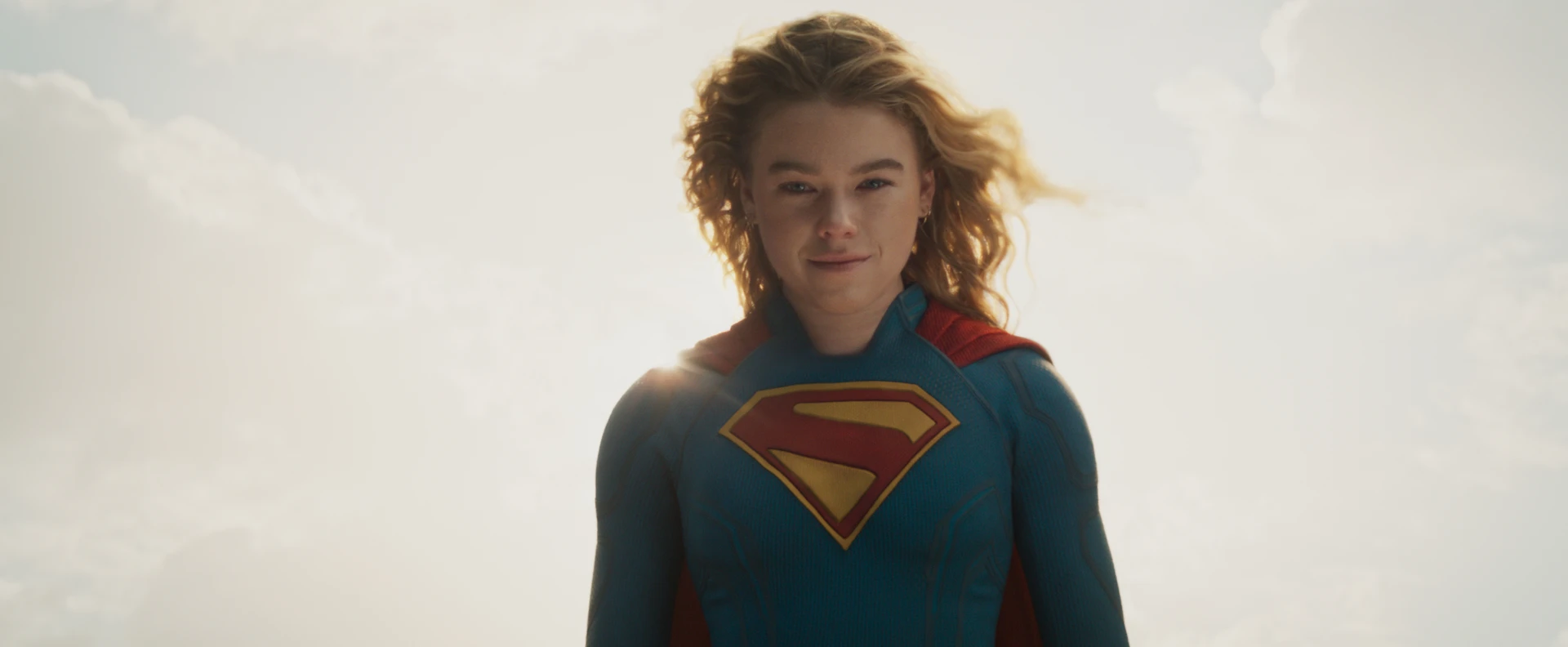
Supergirl Explained — Kara Zor-El's Powers, Origin and Place in the DCU
Kara Zor-El is Superman's cousin, older than him despite arriving on Earth later, and her powers work the same way his do — with a few genuinely unique abilities of her own. Here's her origin and how the DCU film fits into decades of comics continuity.
About the author
Kenza Benouna
Movies, TV & Horror Writer
Kenza Benouna writes about movies and television, with a substantial archive in horror. Her Red Reactions work includes reviews, supernatural and franchise lore, story explainers and analysis of character, atmosphere and adaptation.
Coverage: Horror · Movies · TV · Reviews · Lore & Features
More from Kenza Benouna