news · gaming
Fable Gameplay Breakdown: Bowerstone, Combat, Morality and Release Date
Playground Games' latest Fable gameplay shows how Bowerstone, property ownership, style-weaving combat, reputation and the February 2027 launch actually work.
 By Bamo Anwar7 min read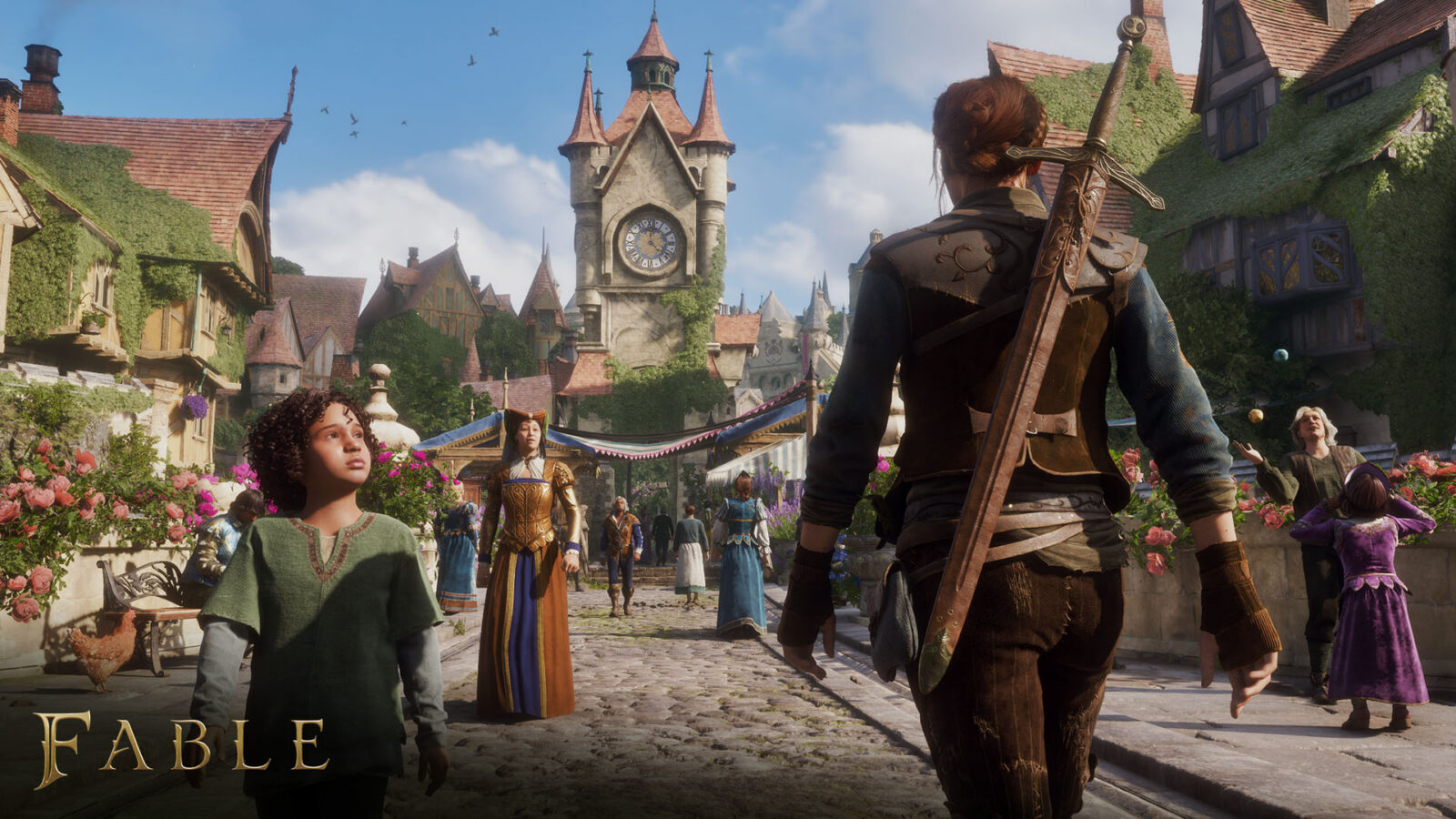
Playground Games has finally shown Fable in the kind of detail that makes it possible to judge the systems instead of just the tone.
Xbox released an 18-minute Gamescom 2026 quest walkthrough set in Bowerstone, while Xbox Wire’s first combat hands-on and additional creator footage have filled in how melee, ranged weapons and magic actually fit together. The result is the clearest picture yet of the reboot’s core loop: explore a densely simulated Albion, build a reputation, own property, make a mess of people’s lives and switch between sword, bow and spell without stopping the fight.
The biggest surprise is how much of old Fable Playground is keeping.
The difference is that those ideas now look far more interconnected.
Bowerstone is more than a backdrop
Playground says Bowerstone contains more than 400 fully voiced NPCs, roughly 130 homes and 30-plus businesses.
Those numbers matter because the buildings are not just scenery. Xbox’s official Gamescom write-up says players can enter every building in Bowerstone and buy every house.
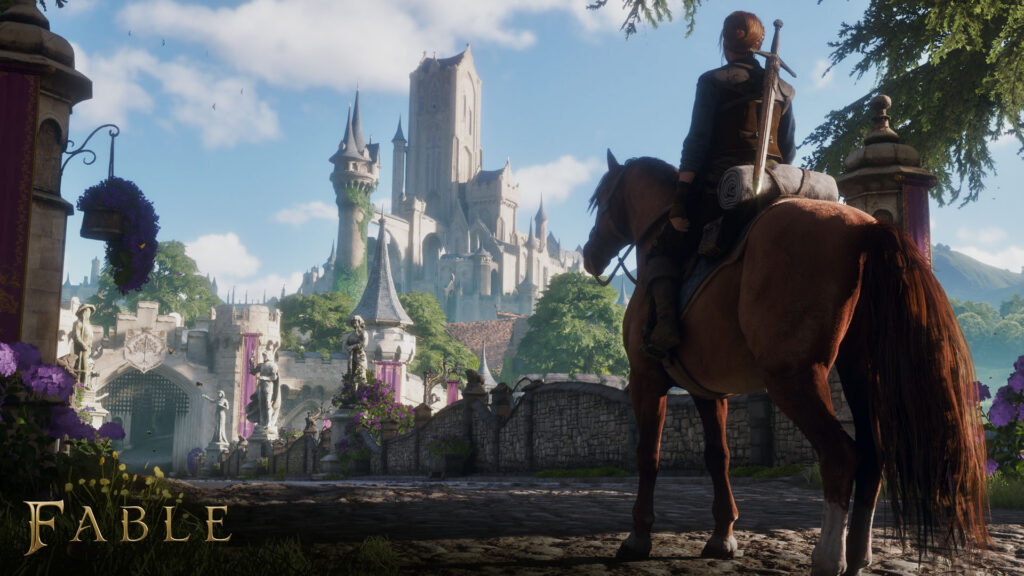
Bowerstone is designed as a city the player can actually live in, not just pass through. Credit: Xbox Game Studios / Playground Games.
The city’s population is part of what Playground calls the Living Population system. Across Albion there are more than 1,000 NPCs, each with a personality, routine and place in the world. They continue living whether the Hero is watching them or not.
That connects directly to property ownership.
You can buy someone’s home and become their landlord. You can buy a shop and become their employer. You can control rent and wages, and those systems can collide: Playground has explained that a poorly paid worker may no longer be able to afford their rent, while an NPC who dislikes you can simply refuse to work for you.
That is a much more interesting version of Fable II’s property fantasy than passive gold arriving in the background.
The new footage also shows how naturally the city is presented. The Hero moves from streets into interiors without the world feeling carved into obvious little gameplay boxes. It is not proof that the entire game has zero loading screens, but it does support Playground’s promise that Bowerstone’s buildings are part of the playable space rather than decorative facades.
Combat is built around “style-weaving”
The classic Strength, Skill and Will idea returns, but Playground has rebuilt it around a system game director Ralph Fulton calls style-weaving.
The goal is simple: melee, ranged attacks and magic should feel like parts of one moveset.
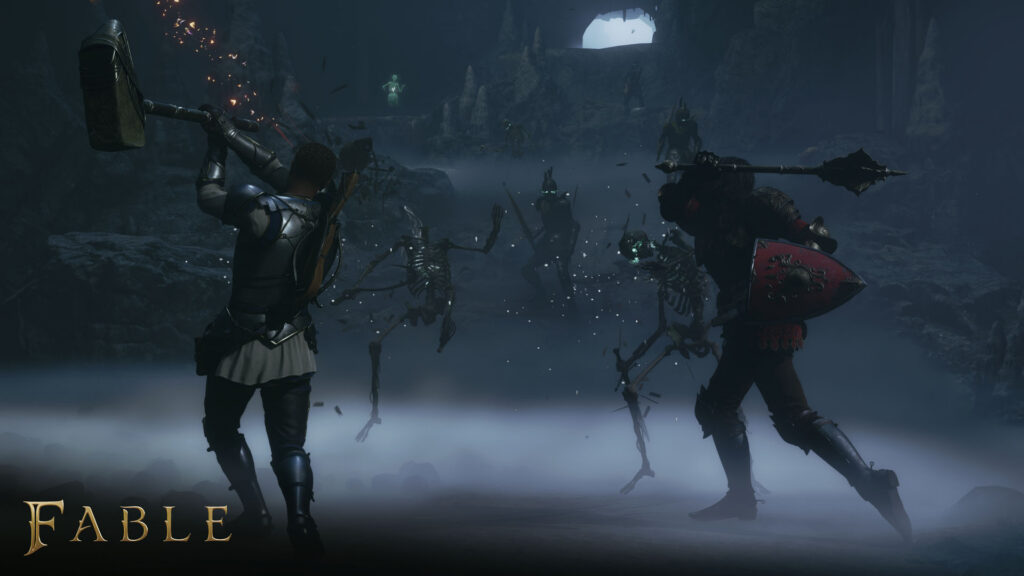
Fulton has said the team wanted players to move between the three without even a frame of delay. In the Gamescom demo, that means a heavy hammer strike can flow into a spell, then a ranged attack, then back into melee without opening a weapon wheel or pausing combat.
That promise is much easier to understand now that people have actually played it.
The demo quest, “Mud and Death,” sends the Hero into a haunted mine with Humphry, the leader of the Heroes’ Guild. It is packed with Hollow Folk, Wraiths and a flying Lantern Keeper mini-boss.
The available tools include:
- a two-handed Bower Hammer with wide, heavy swings
- the Deepwood Bow for slower, more accurate shots
- a rapid-fire Repeater Crossbow
- Fireball
- Lightning
- Blades
- Lift
- Rush, which teleports the Hero behind enemies
- Push
- Befowl, which turns enemies into chickens
Yes, Befowl also works on undead enemies.
The result is an undead chicken, because apparently some traditions are too important to modernize.
Enemy types are supposed to force you to switch styles
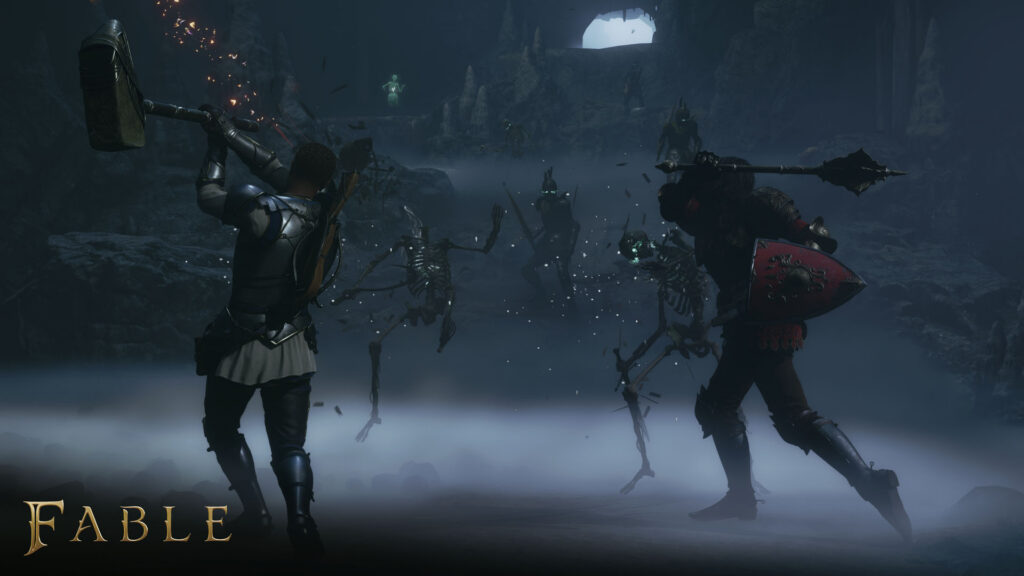
The Gamescom combat demo mixes melee, ranged attacks and magic against different enemy types. Credit: Xbox Game Studios / Playground Games.
The combat system makes more sense when you look at the enemies rather than the spell list.
Hollow Folk come in different versions, including armored variants that can make ranged attacks less useful. Wraiths are weak but dangerous because they can create or inhabit more Hollow Folk if the player ignores them. The Lantern Keeper can fly, use fire breath and explosive projectiles, spawn Wraiths and expose a lantern weak point that ranged weapons are particularly good at hitting.
That is the reason Playground keeps emphasizing style-weaving.
It is not just there so fights look flashy. Different enemies are supposed to push the player between Strength, Skill and Will.
The Gamescom build is still visibly pre-release. Hands-on impressions have pointed to occasional stiffness, enemy reactions that could feel stronger and balance that still needs tuning. That is worth noting without pretending a convention demo six months before launch is a finished combat system.
The underlying idea, though, is now much clearer than it was in the trailers.
Fable’s opening starts in Briar Hill
The reboot begins with the Hero as a child in Briar Hill, where their powers first emerge.
The story then jumps forward to adulthood.
The real inciting incident comes when a mysterious stranger turns the Hero’s grandmother and the rest of Briar Hill to stone. The Hero leaves to find out what happened and how to reverse it, with the grandmother’s final guidance pointing toward Bowerstone and the Heroes’ Guild.
That brings Humphry into the story.
He is not presented as the grand, infallible guildmaster of fantasy tradition. He is a faded former champion trying to hold together what remains of the Guild, with Matt King providing the voice.
The larger threat is Isabel, the Hero of Wraithmarsh, played by Hayley Atwell.
Playground describes her as a powerful Hero driven by grief and a desire to right a tragic injustice. She was once Humphry’s pupil and ward, but her methods put her directly at odds with both him and the player.
And she is not the only familiar danger.
Xbox has also officially teased the return of Jack of Blades, although Playground has not explained what role he plays in this new continuity.
Morality is reputation now
The reboot is also dropping the old idea that one global meter can neatly decide whether the Hero is good or evil.
Instead, reputation is local and subjective.
A settlement can know you for several different things at once, and individual NPCs react according to their own personalities. Playground says players can have up to six active reputations in a settlement.
That means being admired in one town does not automatically make you beloved everywhere else.
The same system feeds back into jobs, relationships and property. Someone may admire a rich entrepreneur but hate a chicken-kicking idiot. Another person might have exactly the opposite reaction.
That is much closer to what Fable always wanted morality to feel like: not a red or blue bar, but Albion gossiping about what you did.
Fable now launches in February 2027
Fable releases February 23, 2027 on Xbox Series X|S, PC and PlayStation 5.
Premium Edition owners can start up to five days earlier on February 18.
The game is included with Game Pass at launch and supports Xbox Play Anywhere between Xbox console and PC. Steam and PlayStation 5 versions are also confirmed.
The PS5 release is a genuine franchise first. Fable spent its original life tied to Xbox and Windows, while Playground’s reboot will launch on Sony’s console at the same time as the Xbox and PC versions.
That makes this reboot more than a revival of an old Microsoft RPG.
It is also the first Fable being launched as a genuinely multiplatform game.
Playground has since put estimates on how long all of this actually takes. Associate game director Will Kennedy told Polygon at Gamescom that the mainline quest content runs roughly 15 to 20 hours, with another 15 to 20 hours in side content and open-world exploration. Associate game director Craig Littler added that the Living Population and property systems described above don’t really have an ending — players who get invested in them can keep going well past that. We break down what those numbers do and don’t tell you in a dedicated look at Fable’s game length.
What the Gamescom footage actually proves
There are still major questions Playground cannot answer with a curated demo.
We do not know how well the Living Population holds up after dozens of hours, whether local reputation produces genuinely different playthroughs or how satisfying the combat remains once its novelty wears off.
But the latest footage does answer the simpler question that has followed the reboot for years:
Does this actually look like Fable?
More than anything Playground had shown before Gamescom, yes.
You can buy the town, marry its residents, ruin their finances, turn skeletons into chickens and then head into a haunted mine with a washed-up Hero.
The technology is new.
The priorities are very old Fable.
Sources
- Xbox Wire — Fable: Find Out How Combat Works After Our First Hands-on — August 26, 2026
- Kotaku — Hands-On With Fable's Combat: Lightning Bolts, Fireballs, And Dismemberment — August 26, 2026
- ResetEra / Polygon — Fable main quest will officially be 15-20 hours long, Xbox confirms — August 31, 2026
- Xbox Wire — Fable: Meet the Incredible Cast — Including the Villain Played by Hayley Atwell — June 7, 2026
- RPG Site — Fable launches on February 23, 2027 for Xbox Series, PS5, and PC
Make Red Reactions a preferred source
Choose Red Reactions as a preferred source in Google Search.
Confirm your choice on Google.
Related coverage
How Long Is Fable? Playground Confirms Main Story and Side Content Length
Playground Games says Fable's mainline story runs roughly 15-20 hours, with another 15-20 hours of side and open-world content on top. Here's what that does and doesn't tell you.
The Escapists 3 Is Coming in 2027: 3D Prisons, Crafting and Co-Op Explained
Team17 has announced The Escapists 3 for 2027. Check its five 3D prisons, 120+ items and weapons, XP progression and distinct local and online co-op limits.
Intergalactic: The Heretic Prophet Gets a Full Reveal in 2027, Naughty Dog Says
Naughty Dog plans a full Intergalactic: The Heretic Prophet reveal in 2027 and no more updates in 2026. The PS5 game's release date remains unannounced.

Activision Is Making the Next Halo as Xbox Cuts 268 Roles and Reshapes Its Studios
Xbox is cutting 268 roles and moving the next Halo to a purpose-built Activision team as Rare, Obsidian, Turn 10 and other studios change reporting lines.
About the author
Bamo Anwar
Anime & Gaming Writer
Bamo Anwar covers anime and gaming for Red Reactions. His work ranges from release news and detailed trailer breakdowns to beginner guides, watch orders and explainers designed to make large franchises and game systems easier to enter.
Coverage: Anime · Gaming · Beginner Guides · Watch Orders · Explainers
More from Bamo Anwar