- feature · movies
The Hunchback of Notre-Dame: What Sanctuary Means
Why does Quasimodo shout “Sanctuary”? Victor Hugo’s novel explains what protects Esmeralda in Notre-Dame and how Netflix’s new film changes that idea.
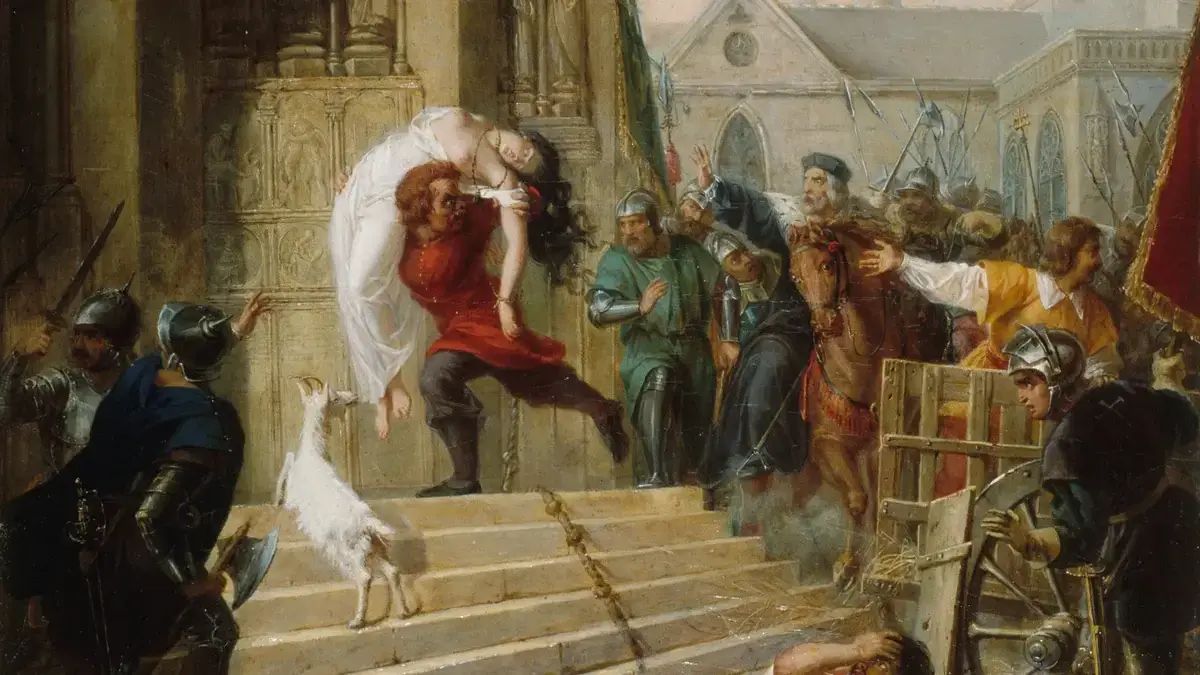
Quasimodo shouts “Sanctuary!” because, in Victor Hugo’s The Hunchback of Notre-Dame, the cathedral gives Esmeralda refuge from immediate execution. He carries her across the threshold, beyond the reach of the officials preparing to hang her. The court has condemned her, and the sentence still stands. Netflix’s The Hunchback, Soul of Paris keeps the idea of Notre-Dame as a refuge and gives it a different role in the story.
What happens when Quasimodo claims sanctuary?
In Book VIII of Hugo’s novel, the authorities bring Esmeralda to the front of Notre-Dame on the way to her execution. Quasimodo drops down from the cathedral, seizes her from the men guarding her and carries her inside. The crowd takes up his cry of “Asile!” In the 1888 English translation, he repeats “Sanctuary!” from above the doors and then from the tower while the crowd cheers. Everyone watching understands why getting her inside matters.
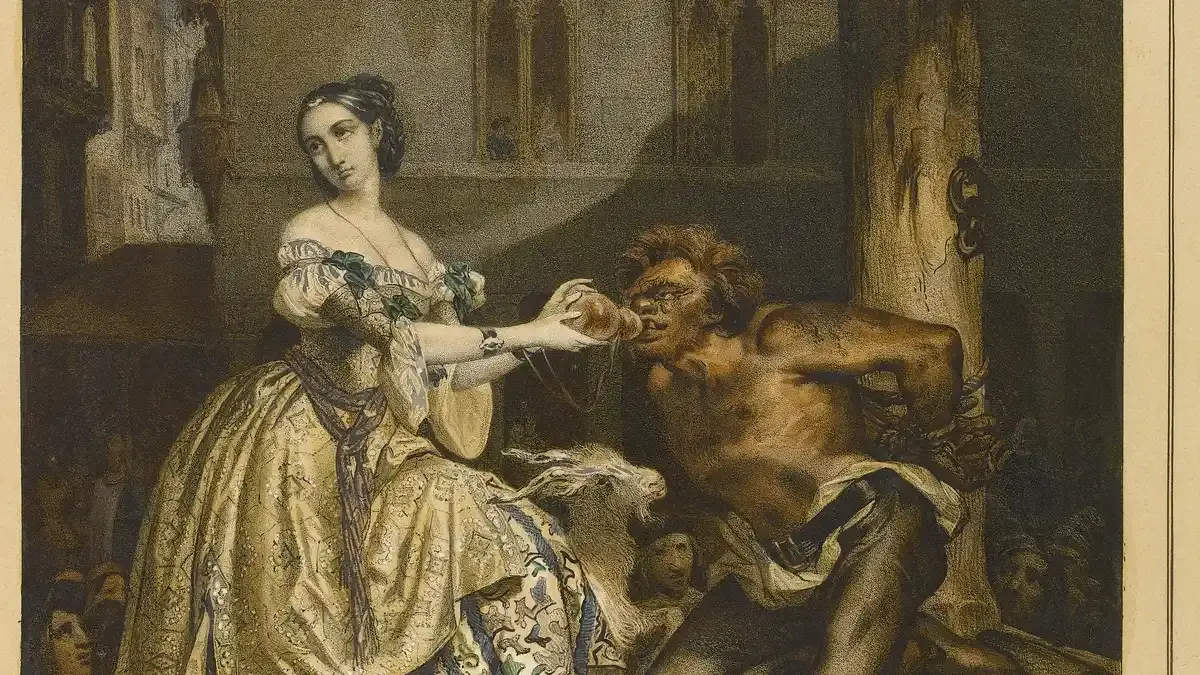
It also reverses an earlier scene. When Quasimodo is tied to the pillory and asks for water, Esmeralda is the one who comes forward. At Notre-Dame he can return that kindness in a place where he has the power to intervene.
Can Esmeralda leave Notre-Dame?
In the next book, Hugo explains that leaving sanctuary puts a condemned person back within reach of the authorities. He also describes a rare way to override the refuge through a court ruling. Esmeralda gains time and a place to sleep, but she cannot simply walk back into Paris. Hugo compares that kind of refuge to another prison. The cathedral saves her from the executioners at the door while giving her very little control over what happens next.
What changes in Netflix’s The Hunchback, Soul of Paris?
Netflix’s production notes place the film in 1830 instead of the novel’s 1482. The cathedral is damaged and largely empty, and this Quasimodo is a sculptor working there. He turns it into a refuge for Agnès. The novel makes the boundary of the church the key to its rescue scene. The film’s notes emphasize what Quasimodo does with the building after he takes responsibility for it. Our guide to why Netflix made Quasimodo a stone carver explains where that change came from.
Frequently asked questions
What happens when Quasimodo claims sanctuary?
In Book VIII of Hugo’s novel, the authorities bring Esmeralda to the front of Notre-Dame on the way to her execution. Quasimodo drops down from the cathedral, seizes her from the men guarding her and carries her inside. The crowd takes up his cry of “Asile!” In the 1888 English translation, he repeats “Sanctuary!” from above the doors and then from the tower while the crowd cheers. Everyone watching understands why getting her inside matters.
Can Esmeralda leave Notre-Dame?
In the next book, Hugo explains that leaving sanctuary puts a condemned person back within reach of the authorities. He also describes a rare way to override the refuge through a court ruling. Esmeralda gains time and a place to sleep, but she cannot simply walk back into Paris. Hugo compares that kind of refuge to another prison. The cathedral saves her from the executioners at the door while giving her very little control over what happens next.
What changes in Netflix’s The Hunchback, Soul of Paris?
Netflix’s production notes place the film in 1830 instead of the novel’s 1482. The cathedral is damaged and largely empty, and this Quasimodo is a sculptor working there. He turns it into a refuge for Agnès. The novel makes the boundary of the church the key to its rescue scene. The film’s notes emphasize what Quasimodo does with the building after he takes responsibility for it. Our guide to why Netflix made Quasimodo a stone carver explains where that change came from.
Sources
- #The Hunchback of Notre-Dame
- #Victor Hugo
- #Quasimodo
- #Esmeralda
- #Netflix
- The Hunchback of Notre-Dame
Make Red Reactions a preferred source
Choose Red Reactions as a preferred source in Google Search.
Confirm your choice on Google.