lore · movies
Insidious Timeline Explained: Where Out of the Further Fits
The Insidious timeline jumps between prequels, flashbacks and the Lambert saga. Here are all six movies in chronological order and where Out of the Further fits.
 By Kenza Benouna11 min read
The Insidious timeline is much easier to understand once you stop ordering the movies by their earliest flashback.
The clean chronological watch order, based on where each film’s main story takes place, is:
Insidious: Chapter 3 → Insidious: The Last Key → Insidious → Insidious: Chapter 2 → Insidious: The Red Door → Insidious: Out of the Further.
The sixth film does not jump years into the future. Out of the Further is set in 2019, with a prologue in 1999, and its main story takes place only weeks after The Red Door. That makes it the latest point in the franchise chronology even though it leaves the Lambert family behind.
Spoiler warning: This guide discusses major events from all six Insidious movies, including character deaths and details from Out of the Further.
The Insidious movies in chronological order
| Order | Movie | Main story setting | Important earlier material |
|---|---|---|---|
| 1 | Insidious: Chapter 3 | 2007 | — |
| 2 | Insidious: The Last Key | 2010 | Elise’s childhood in 1953 |
| 3 | Insidious | 2010 | — |
| 4 | Insidious: Chapter 2 | 2010 | Young Josh in 1986 |
| 5 | Insidious: The Red Door | 2019 | Memories tied to the earlier Lambert haunting |
| 6 | Insidious: Out of the Further | 2019 | Gemma’s childhood in 1999 |
That order matches the main narrative rather than treating every flashback as a separate starting point. A current post-release chronology from Decider likewise places Chapter 3 first, followed by The Last Key, the two original Lambert films, The Red Door and Out of the Further.
Why The Last Key is not actually first
This is where a lot of Insidious watch-order lists get messy.
The Last Key opens in 1953, decades before anything else in the series. If you rank the films by the earliest scene they contain, it would technically come first.
But that is not where most of the movie happens.
The main story follows an adult Elise Rainier in 2010, after the events of Chapter 3. It ends by leading directly toward the Lambert case from the original Insidious. Treating a childhood prologue as the movie’s main position in the timeline makes the viewing order less useful, not more accurate.
The same problem appears with Chapter 2. Its 1986 material is important, but the film’s central story continues immediately after the first Insidious in 2010.
So for an actual marathon, the main-story chronology is the cleaner rule.
1. Insidious: Chapter 3 — 2007
Chapter 3 is the first film in the chronological watch order.
Sony describes it outright as a prequel set before the haunting of the Lambert family. The story follows teenager Quinn Brenner, who seeks Elise’s help after trying to contact her dead mother and instead attracts the Man Who Can’t Breathe.
The movie also shows Elise at a very different point in her life. She has stepped away from paranormal work and is afraid that continuing to enter the Further will expose her to the Bride in Black.
Helping Quinn pulls her back into the work.
It also brings the core paranormal team together. Specs and Tucker begin as two ghost hunters Elise does not know, but by the end they have joined her. That partnership carries directly into the later films.
Chronologically, this is the best place to start because it introduces the adult Elise, her fear of the Further and the beginning of the team before the Lambert family enters the picture.
2. Insidious: The Last Key — 2010, with a 1953 prologue
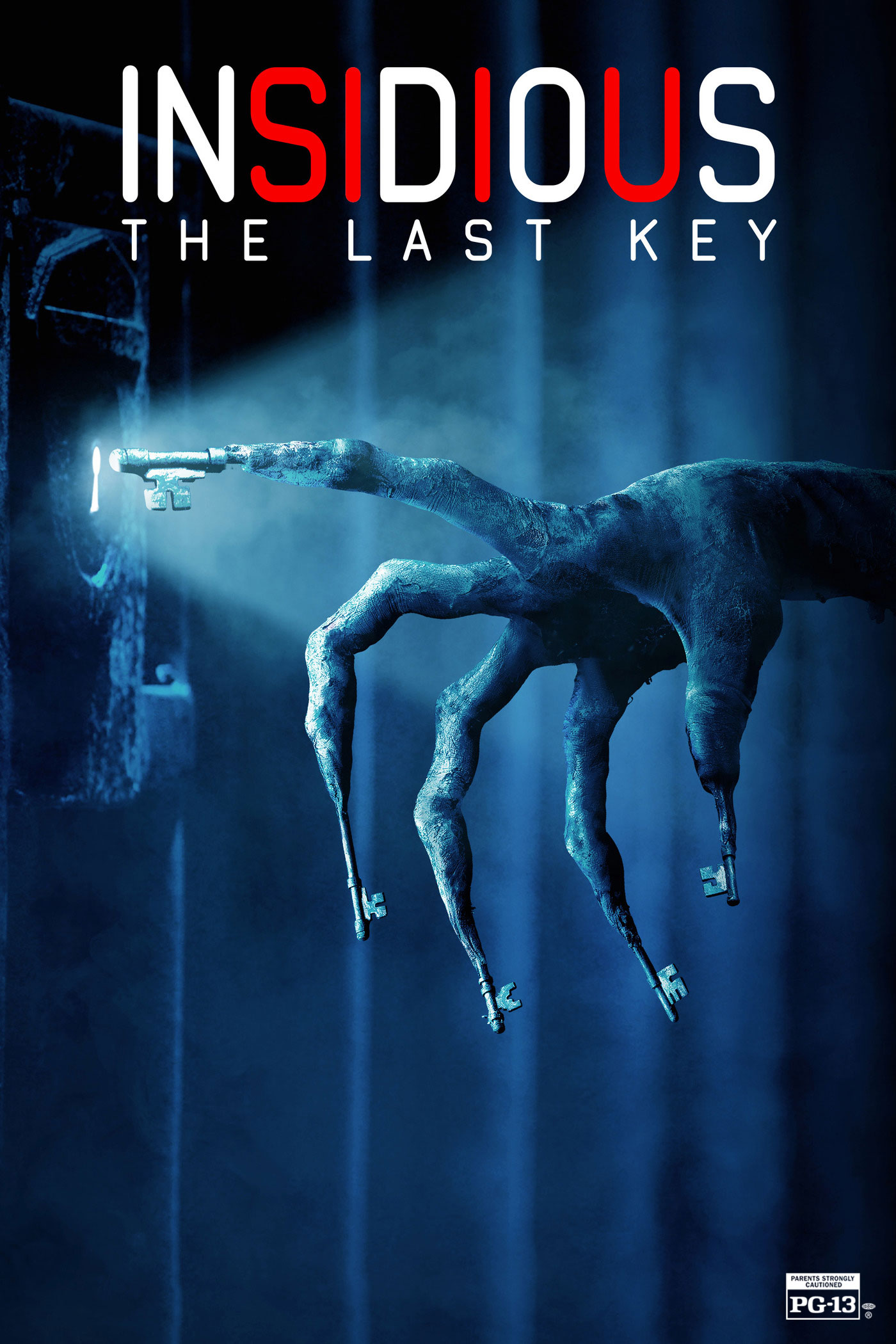
Official key art for Insidious: The Last Key. Credit: Sony Pictures / Screen Gems / Blumhouse.
The Last Key digs further back into Elise’s history without moving the main story backward past Chapter 3.
Its 1953 prologue shows Elise as a child in Five Keys, New Mexico, already able to see spirits. Her father responds to those abilities with abuse, and Elise is manipulated into opening a red door that releases KeyFace. Her mother is killed, leaving Elise with trauma that follows her for the rest of her life.
Decades later, the adult Elise returns to that same house with Specs and Tucker. Sony’s official synopsis centers the film on her return to the family home and the demons that have haunted her since childhood.
The final stretch makes its place in the timeline especially clear: Elise receives the call that will bring her into the Lambert family’s nightmare.
That puts the main 2010 story directly before the original film.
3. Insidious — 2010
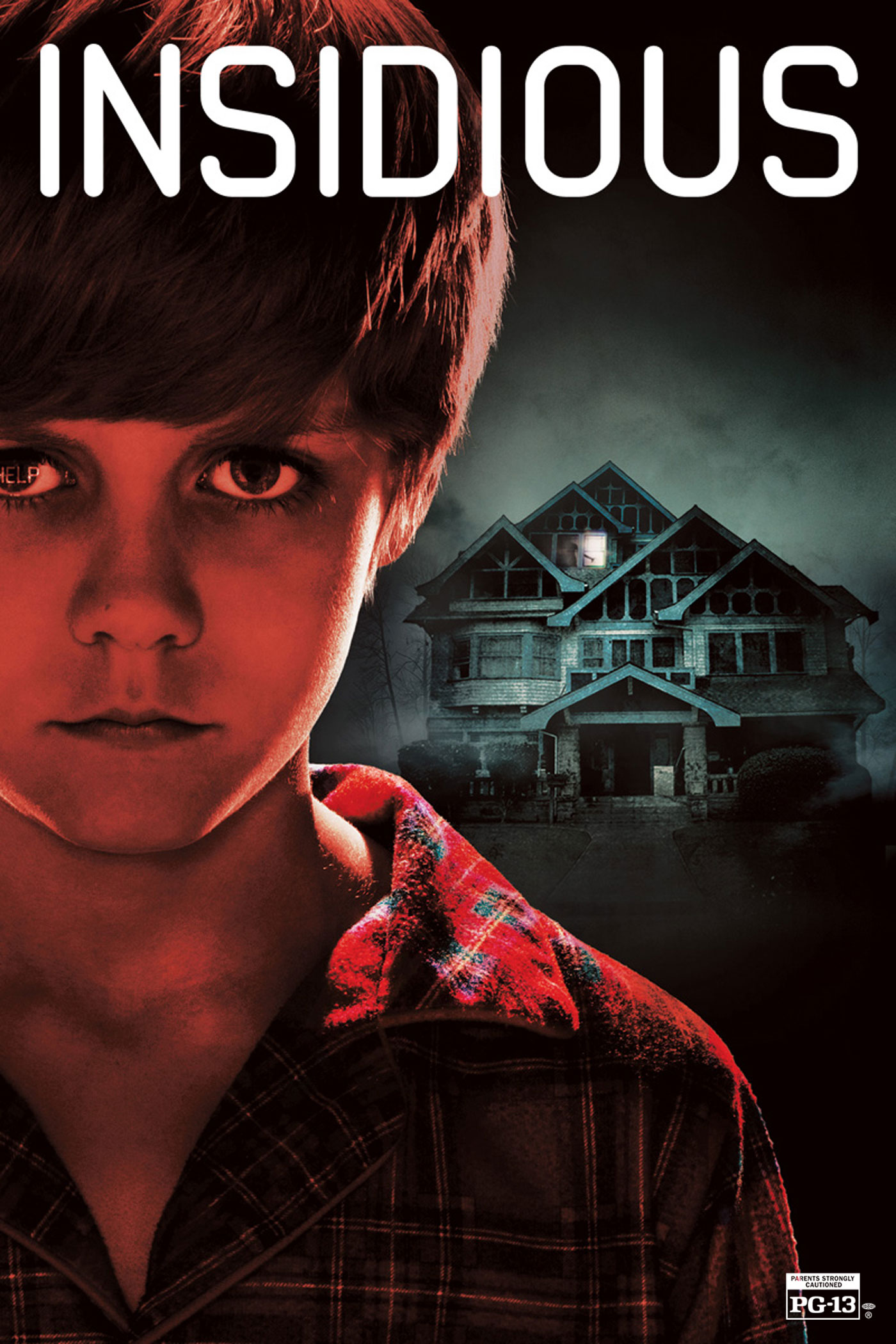
Official key art for Insidious. Credit: Sony Pictures.
This is the movie that introduced the franchise, even though it is third in chronological order.
Josh and Renai Lambert’s son Dalton falls into what appears to be a coma. Moving house does nothing to stop the haunting because the problem was never the building. Dalton is a gifted astral projector whose consciousness has wandered into the Further, leaving his body vulnerable.
Elise, Specs and Tucker arrive to help.
The case also reveals that Dalton inherited the same ability from Josh. As a child, Josh repeatedly astral-projected and became the target of the Bride in Black. Elise had helped suppress both his ability and his memories.
The rescue succeeds, but the ending turns that victory into another problem. Josh returns from the Further possessed by the Bride in Black and kills Elise.
That death is important to the entire franchise: Elise is alive through the original film until she is killed near the end. She is not alive only for its first act, and later appearances do not undo her death.
4. Insidious: Chapter 2 — immediately after Insidious
Chapter 2 is the easiest sequel to place because most of it continues almost directly from the first movie.
The Lambert family is still dealing with the same haunting, Josh is still compromised, and Elise’s death is now part of the investigation.
The complication is the movie’s 1986 material.
A younger Elise investigates eight-year-old Josh Lambert and realizes his astral projection has attracted Parker Crane, the spirit who becomes the Bride in Black. She suppresses Josh’s memories and ability to protect him.
Later, Chapter 2 uses the strange relationship between time and the Further to connect adult Josh back to moments from the past. That does not mean the whole film belongs in 1986. Its main narrative is still the direct continuation of the 2010 Lambert story.
By the end, Josh and Dalton are again made to forget their experiences with the Further.
The family finally gets a long break.
5. Insidious: The Red Door — 2019
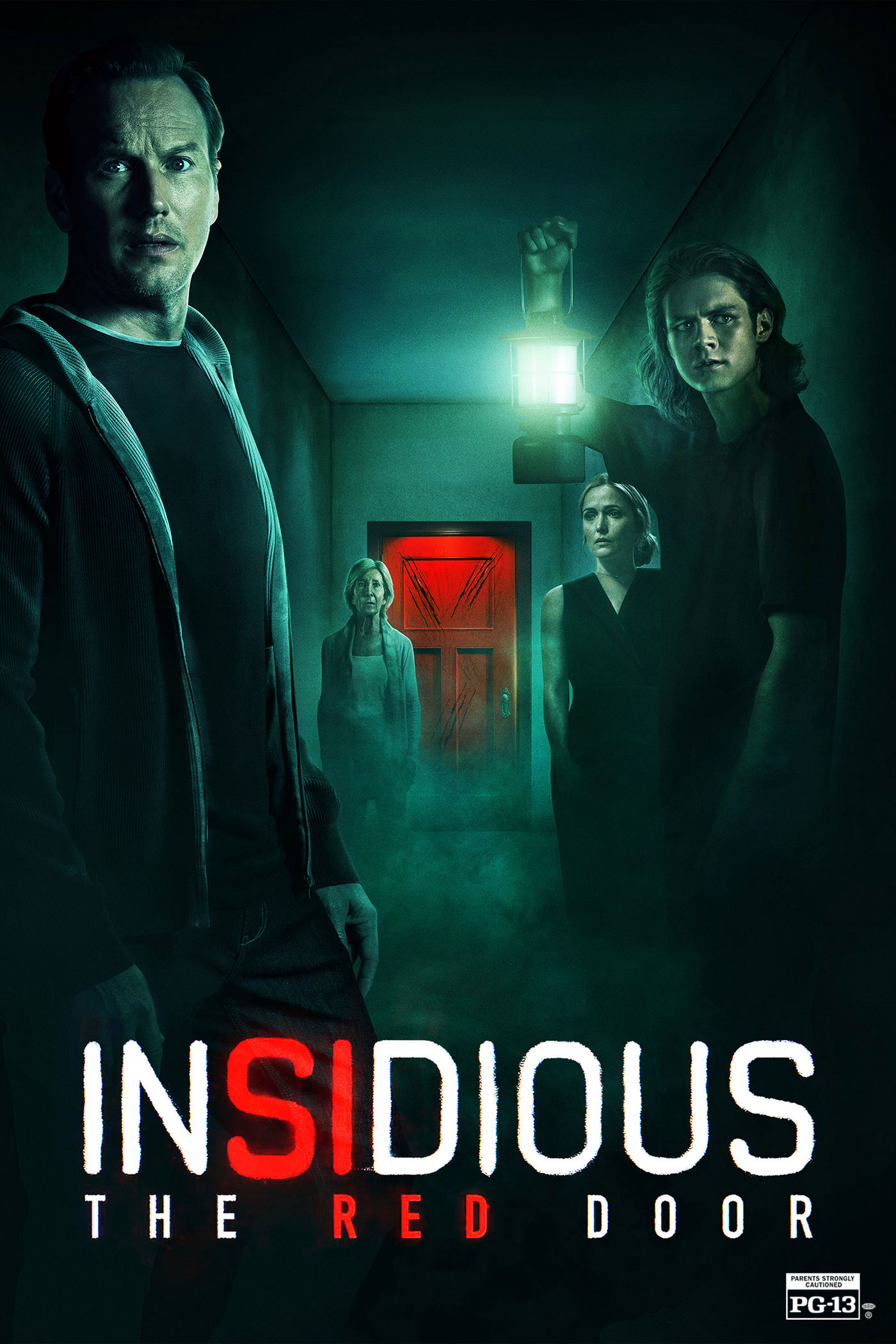
Official key art for Insidious: The Red Door. Credit: Sony Pictures / Screen Gems / Blumhouse.
The Red Door jumps forward nine years and returns to Josh and Dalton.
Sony called the 2023 film the final chapter of the Lambert family’s saga. Dalton is now college-aged, while Josh is dealing with gaps in his memory and the breakdown of his relationship with his family.
Dalton’s art begins opening the part of his mind that had been suppressed. The Further comes back with it.
The film is less about discovering what happened to the Lamberts than finally confronting what they were forced to forget. Josh and Dalton eventually face the past together, and Dalton seals the red door in his painting.
Elise also appears briefly as a spirit. Her presence keeps the wider supernatural mythology connected without reversing the ending of the first film.
For the Lambert family, The Red Door is the endpoint.
For the Insidious timeline, it is not.
6. Insidious: Out of the Further — 2019, with a 1999 prologue
Out of the Further takes place in 2019, just weeks after The Red Door, according to The A.V. Club’s review of the finished film. A separate UPI review confirms that the opening takes place in 1999 before the story jumps twenty years forward.
That makes its chronological position much more precise than simply calling it “present day.”
The Lamberts are gone. The new lead is Gemma, played by Amelia Eve, a mother raising her daughter Maya in the same house where Gemma grew up.
Sony’s official synopsis establishes the central change: Gemma can enter the Further, but she can also bring things from that realm back into the physical world.
That ability makes her different from the Travelers seen earlier in the series.
The finished movie gives it a name: Courier.
A post-release Nerdist breakdown describes a Courier as someone who can move physical and spiritual things between the Further and the real world, rather than leaving the physical body behind while only the consciousness travels.
That is the sixth film’s biggest addition to the mythology.
It does not erase the old astral-projection rules. It introduces a rarer ability that can make the boundary work in both directions.
Elise returns as a spirit and helps Gemma understand what she is dealing with. That makes Out of the Further a handoff rather than a reboot: new family, new supernatural mechanic, same realm and the same guide who has connected every era of the franchise.
For more on the cast, Gemma, Elise and the sixth film’s production, Red Reactions also has an Out of the Further guide. For what happens in the finale, see our Out of the Further ending explained, and for whether it’s worth watching in the first place, see our Out of the Further review.
What exactly is The Further?
The Further is the supernatural space that ties all six movies together.
The original film establishes it as a dark realm that can be reached through astral projection. People such as Dalton and Josh can leave their bodies and travel into it, but doing so exposes those bodies to spirits looking for a way into the world of the living.
Elise can navigate the Further while alive because of her psychic abilities. After her death, she continues to exist there as a spirit and can still help people from the other side.
The realm also does not behave like ordinary physical space. Chapter 2 uses that property to connect events separated by years, while Out of the Further pushes the mythology in a new direction by introducing Couriers.
The important distinction is simple:
Travelers can enter the Further. Couriers can move things between the Further and the physical world.
That is a much cleaner way to describe the new rule than saying every old possession rule has suddenly been rewritten. For the full breakdown of how Travelers, possession, red doors and Couriers actually work, see our complete guide to how The Further works.
Elise Rainier is the real thread through the timeline
The Lambert family dominates the first two films and returns for The Red Door, but Elise is the character who makes the full chronology hold together.
Her timeline runs through more than six decades:
- 1953: young Elise discovers the horror attached to her gift.
- 1986: she helps young Josh Lambert and suppresses his memories.
- 2007: she returns to paranormal work during the Brenner case.
- 2010: she confronts her past in The Last Key and then takes the Lambert case.
- 2010: Josh, possessed by the Bride in Black, kills her near the end of Insidious.
- After her death: she continues appearing from within the Further, including in Chapter 2, The Red Door and Out of the Further.
That is why a franchise that changes families, villains and even its place in time can still feel connected.
Elise does not need to be resurrected.
The mythology already gave her somewhere to go.
Should you watch Insidious in release order or chronological order?
For a first viewing, release order is still the better choice:
- Insidious — 2011 U.S. theatrical release
- Insidious: Chapter 2 — 2013
- Insidious: Chapter 3 — 2015
- Insidious: The Last Key — 2018
- Insidious: The Red Door — 2023
- Insidious: Out of the Further — 2026
The prequels were written with knowledge of what viewers had already seen. Watching them in release order preserves those reveals and lets Elise’s history expand backward naturally.
For a rewatch — or for anyone who mainly wants the cleanest story chronology — use:
Chapter 3 → The Last Key → Insidious → Chapter 2 → The Red Door → Out of the Further.
And if a list puts The Last Key first because of its 1953 opening, remember what it is actually sorting: the earliest flashback, not the main story.
What about Thread: An Insidious Tale?
Thread: An Insidious Tale was announced as a separate Insidious offshoot rather than a continuation of the Lambert story.
It is not included in the six-film order above because it does not have a settled place in this chronology that is necessary to understand the released movies. Until its relationship to the main timeline is made clear in finished, official material, forcing it into a specific slot would be guesswork.
For the six released films, the answer is now straightforward:
Start with Chapter 3 for chronological order, end with Out of the Further, and treat the 1953, 1986 and 1999 sequences as flashbacks rather than separate points in the watch order.
Make Red Reactions a preferred source
Choose Red Reactions as a preferred source in Google Search.
Confirm your choice on Google.
Related coverage
The Further Explained: How Insidious' Supernatural Realm Actually Works
What is The Further in Insidious? Here's how Travelers, possession, red doors, time and the new Courier ability work across all six films.
Insidious: Out of the Further Ending Explained: Cyrus, Couriers and the Mid-Credits Scene
Gemma's Courier power, Cyrus Lam's defeat, Ingrid's sacrifice and the mid-credits scene explained, plus what Out of the Further leaves open.
Insidious: Out of the Further — Everything We Know About the New Insidious Movie
Insidious: Out of the Further is now playing in theaters. This spoiler-light guide covers the confirmed cast, story, Elise's return, Cyrus, trailer and franchise connections.
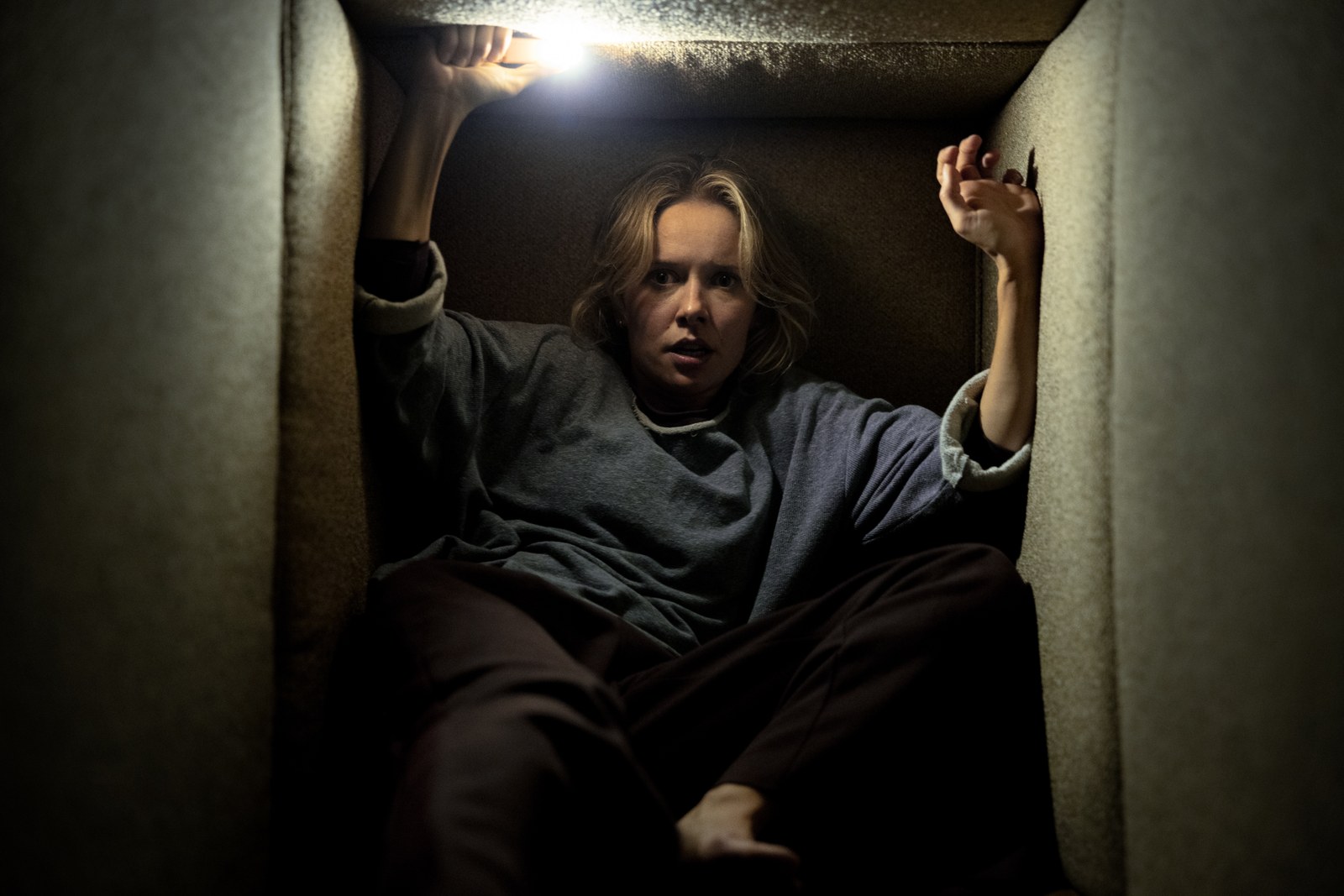
Insidious: Out of the Further Review: The Franchise Finds a Genuinely New Idea
Insidious: Out of the Further gives the franchise its best villain in years and a genuinely fresh supernatural hook in Gemma's Courier ability, even when the plot around it gets crowded.
About the author
Kenza Benouna
Movies, TV & Horror Writer
Kenza Benouna writes about movies and television, with a substantial archive in horror. Her Red Reactions work includes reviews, supernatural and franchise lore, story explainers and analysis of character, atmosphere and adaptation.
Coverage: Horror · Movies · TV · Reviews · Lore & Features
More from Kenza Benouna