lore · movies
The Owens Family Curse Explained: How Practical Magic Began — and Why It Still Matters
Maria Owens created the Owens family curse to protect her descendants from destructive love — and it became a generational tragedy instead. Here's the book history, what the 1998 film actually resolves, and what Practical Magic 2 has confirmed.
 By Kenza Benouna10 min read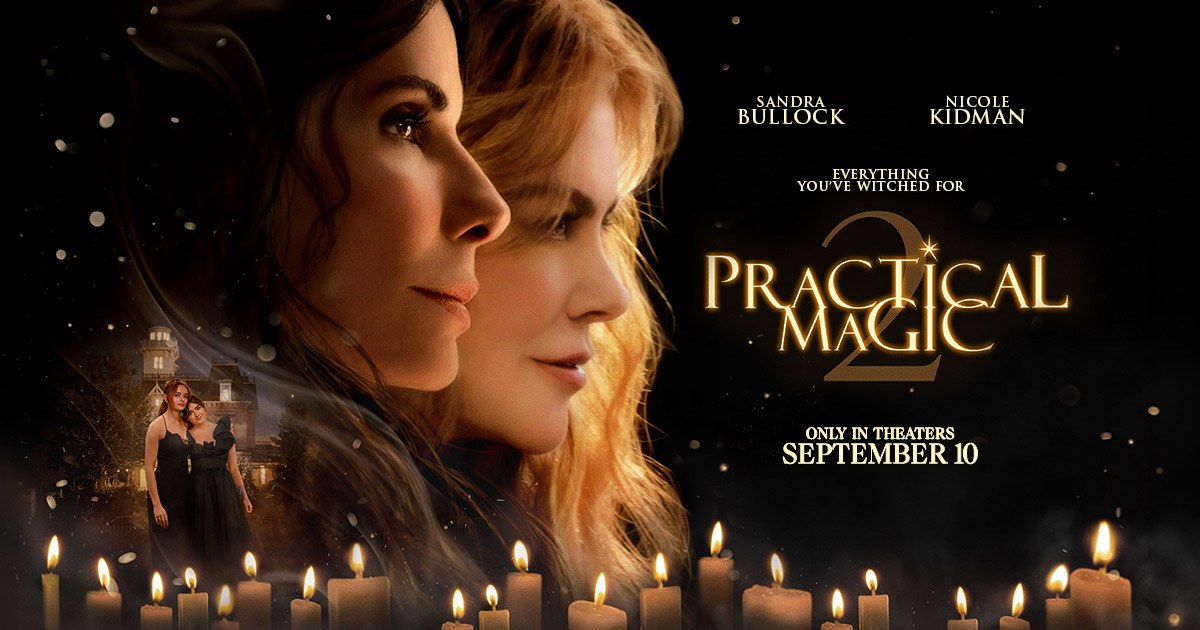
Correction (September 27, 2026): An earlier version incorrectly described Sally and Gillian’s mother as an Owens by marriage rather than by blood. The Rules of Magic establishes Regina Owens as the daughter of Vincent and April Owens. The article now distinguishes that novel genealogy from what the 1998 film explains on screen. Thanks to Jessica for writing in.
The Owens family curse began with Maria Owens, who used magic to protect her descendants from the kind of destructive, dishonest love that had nearly ruined her own life. Instead, the protection became a generational curse tied to love and death. The 1998 film simplifies that history into a single rule — men who fall in love with Owens women tend not to survive it — and Practical Magic 2 has confirmed the curse is still an active threat to Sally and Gillian’s family, not something the first movie quietly erased.
Book continuity, from Alice Hoffman’s novels, and film continuity, from the 1998 movie and its sequel, tell overlapping but not identical versions of this story. Here’s what belongs to each.
What the Owens family curse actually is
Stripped down, the curse is a spell that turns love into danger for Owens women specifically: the men they fall for tend to meet early, often violent ends. In Hoffman’s novels, that mechanism goes back more than 300 years to a specific woman, a specific betrayal, and a specific act of magic gone wrong in exactly the way its caster didn’t intend.
Maria Owens and how the curse began
Alice Hoffman’s prequel novel Magic Lessons traces the curse to Maria Owens in the 1600s. Maria was abandoned as an infant in rural England and raised by a woman named Hannah Owens, who taught her the “Unnamed Arts” — the novel’s term for the family’s inherited magic — along with what Hannah frames as the most important lesson of all: always love someone who will love you back.
Maria didn’t follow that advice. According to Hoffman’s telling, she fell for a man — identified in the novel as John Hathorne — who abandoned her after she became pregnant. Maria followed him to Salem, Massachusetts, where Hathorne became one of the men prosecuting the era’s witchcraft trials, and where Maria herself was accused and nearly executed. It’s out of that specific betrayal — persecuted by the community, abandoned by the man she followed across an ocean — that Maria invokes the curse that follows her descendants ever after.
Why the curse was originally meant as protection
This is the part that gets flattened in shorthand versions of the story: Maria didn’t curse love because she hated it. In Hoffman’s account, she cursed it because she’d just watched what unguarded love had cost her, and she wanted to make sure her descendants would never suffer the same devastation. It was meant as a warning system, not a punishment — a way of steering future Owens women away from men who would betray or destroy them.
The contradiction is the point. By binding love itself to danger, Maria didn’t protect her family from destructive relationships — she made all Owens relationships dangerous, protective or not. The thing built to shield the family from tragedy became the tragedy, passed down instead of prevented.
The official synopsis for The Book of Magic still describes Maria’s own writing on this in stark terms: a journal warning that simply reads “beware of love.” Three centuries later, that warning is still the operating rule for every Owens woman who comes after her.
How the 1998 movie changes the mythology
Warner Bros.’ Practical Magic compresses that entire history into a brisk prologue. The film’s version has Maria narrowly escaping execution for witchcraft, then losing the father of her unborn child, who vanishes without a trace. In her grief, she casts a spell meant to shield herself from ever loving again — a spell that outlives her intentions and becomes a curse on every Owens woman who follows: any man who falls in love with one of them is doomed to an early death.
The movie doesn’t dramatize Salem, Hathorne, or Hannah Owens’ role in Maria’s upbringing at all — those are book-only details from Magic Lessons, published decades after the film. The 1998 film’s Maria exists mostly as prologue shorthand, establishing the rule the rest of the story runs on rather than the specific history behind it.

Sandra Bullock and Nicole Kidman as Sally and Gillian in the 1998 film. Credit: Warner Bros. Pictures.
How the curse shapes Sally and Gillian
In the 1998 film, Sally and Gillian are raised by Aunt Jet and Aunt Frances after their father dies and their mother dies of what the film frames as a broken heart. The film does not spell out their mother’s place in the wider Owens family. In the novels, their mother Regina is an Owens by blood: The Rules of Magic establishes her as the daughter of Vincent and April Owens. Their parents’ deaths shape the sisters in opposite directions.
Sally spends her childhood trying to opt out entirely. As a girl, she casts a deliberately impossible love spell, listing qualities designed to guarantee the man she describes could never actually exist — her way of making sure she’d never fall in love and never trigger the curse. It doesn’t work as insurance so much as foreshadowing: years later, she meets Gary Hallet, an investigator who unknowingly matches the description almost exactly. Sally does marry, briefly and separately, before that — her husband Michael is killed in the film’s version of the curse claiming another Owens partner — and it’s that loss, more than any abstract fear, that hardens her resistance to loving again until Gary.
Gillian takes the opposite approach: leaning into risk rather than avoiding it, moving from one unstable relationship to the next, including the relationship with Jimmy Angelov that becomes the film’s central crisis in its second half.
Did the first movie actually break the curse?
Spoiler warning: this section covers the ending of Practical Magic (1998).
Not explicitly — and it’s worth being precise about what the film does and doesn’t resolve, because three separate things happen in its back half that are easy to blur together.
The first is Michael’s death, which is the film’s clearest on-screen example of the Owens curse operating as advertised. The second is Jimmy Angelov’s death and return: Sally accidentally kills him, a resurrection attempt goes wrong and kills him again, and his spirit ends up possessing Gillian, haunting both sisters until the town’s women form a coven to exorcise him. The third is Sally’s own decision, by the film’s end, to let herself love Gary despite everything she’s spent her life avoiding.
Those three things resolve differently. Jimmy’s possession is defeated outright — that’s a haunting the film actually ends. The Owens family’s standing in their community changes too, with neighbors who once treated them as outsiders showing up to help break Jimmy’s hold. But the underlying romantic curse itself — the rule that loving an Owens woman is dangerous — is never explicitly lifted or reversed on screen. What changes is Sally’s relationship to her own fear: she chooses to love Gary anyway, which reads as emotional resolution without being confirmation that the supernatural mechanism behind the curse has been dismantled. The film ends on Sally embracing who she is rather than on a spell being undone.
That ambiguity is exactly the space Practical Magic 2 is now working in.
How the books expand the Owens family history
Hoffman’s novels didn’t arrive in the order the family’s history actually unfolds. In publication order, the series runs Practical Magic, The Rules of Magic, Magic Lessons, then The Book of Magic — meaning the two prequels exploring Maria’s origins and the aunts’ younger years were both written after the original novel and film already existed. Read in the family’s own chronological order, it’s Magic Lessons, The Rules of Magic, Practical Magic, then The Book of Magic. Neither order is required to understand the film series, but it explains why Maria’s specific backstory — Hannah, Hathorne, Salem — shows up only in material published long after 1998.
Why The Book of Magic matters
The Book of Magic is the final novel in Hoffman’s series, and it’s the book Practical Magic 2 is officially based on. Its premise: after more than 300 years, three generations of Owens women — Franny and Jet, Sally and Gillian, and Sally’s daughters Antonia and Kylie — along with a long-lost brother, are finally forced to confront the curse directly, following its history back toward the places tied to Maria Owens herself. It’s the book explicitly built around the possibility of breaking what Maria started, rather than just living around it.
This article isn’t going to walk through how that novel resolves. It’s preparing movie viewers, not replacing the book — and the specifics of who’s involved and how it ends are exactly the kind of late-novel material worth reading firsthand rather than having spoiled here.
If you’re trying to keep track of who’s actually related to whom across four novels and two films, our Owens family tree breakdown maps out what’s confirmed, generation by generation.
What Practical Magic 2 has actually confirmed
Warner Bros.’ official synopsis for Practical Magic 2 describes “a multi generational family of witches, cursed to be loveless for centuries,” who “attempt to break the spell by confronting dark secrets and sacrificing for each other.” That’s a direct, official confirmation that the curse is still active in film continuity — the first movie’s ending did not erase it, whatever the emotional close of Sally and Gary’s story implied.

Official key art for Practical Magic 2, showing the Owens family across generations. Credit: Warner Bros. Pictures.
Sandra Bullock and Nicole Kidman return as Sally and Gillian, with Dianne Wiest and Stockard Channing back as Aunt Jet and Aunt Frances. Joey King plays Kylie Owens and Maisie Williams plays Antonia — both daughters of Sally, and both existing characters recast from child actors in the original film — alongside Lee Pace, Xolo Maridueña and Solly McLeod. Susanne Bier directs from a screenplay credited to Akiva Goldsman (who co-wrote the 1998 film), Georgia Pritchett and Kelly Marcel, with Bullock, Kidman and original producer Denise Di Novi producing.
On release timing: Warner’s own materials consistently confirm an international rollout beginning September 9, 2026. North American theatrical listings, however, have not been fully consistent — Warner-owned pages and marketing materials have shown both September 10 and September 11, 2026, for the U.S./Canada release. Rather than flatten that into a single date this article can’t actually verify, it’s worth knowing going in that the domestic date may shift by a day depending on where you’re checking.
Book continuity vs. movie continuity — the key difference
Being based on The Book of Magic doesn’t mean Practical Magic 2 reproduces it scene for scene. Warner hasn’t confirmed which specific book events, relationships, deaths or resolution details carry over into the film, and nothing about the novel’s plot should be treated as confirmed movie plot until the studio or the finished film actually shows it. What is confirmed is the throughline: a curse Maria Owens created out of love and grief, simplified by the first film into a rule about the men who love Owens women, and now — however Sally and Gillian’s story wrapped up in 1998 — still very much unfinished business for the family the sequel picks back up.
Sources
- Practical Magic 2 — Official Site (Warner Bros. Pictures)
- Warner Bros.: Practical Magic 2
- Alice Hoffman: Magic Lessons
- Alice Hoffman: The Book of Magic
- Alice Hoffman: The Rules of Magic
- SuperSummary: The Rules of Magic — Summary and Study Guide
- Alice Hoffman: Practical Magic film
- Deadline: 'Practical Magic 2' Adds Six To Cast
Make Red Reactions a preferred source
Choose Red Reactions as a preferred source in Google Search.
Confirm your choice on Google.
Related coverage

Practical Magic Family Tree Explained — The Owens Women, the Curse and Who Is Related to Whom
From Maria Owens to Sally and Gillian's daughters, trace the Owens family tree in Alice Hoffman's novels and see what the 1998 film establishes on screen.
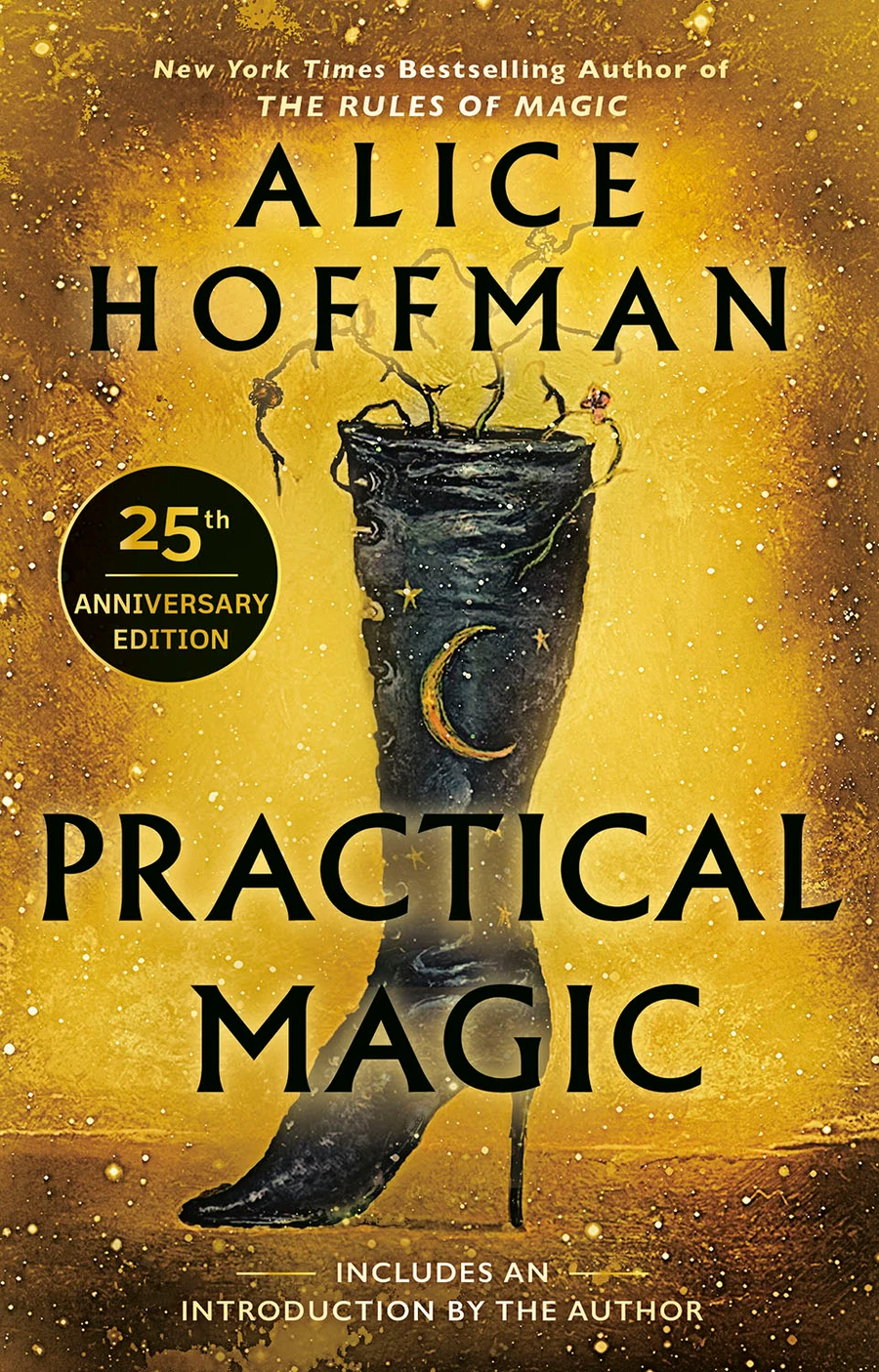
Practical Magic Books Reading Order — Publication Order vs. Chronological Order Explained
Read Alice Hoffman's four Practical Magic novels in publication or chronological order, and understand why the 2026 Practical Magic 2 tie-in is The Book of Magic.
Carrie White's Powers Explained: Telekinesis, Emaline and the 2026 Series
What Carrie White can do, how her abilities work in Stephen King's novel and what Prime Video's 2026 finale reveals about Margaret and Emaline. Full spoilers.

Supergirl Explained — Kara Zor-El's Powers, Origin and Place in the DCU
Kara Zor-El is Superman's cousin, older than him despite arriving on Earth later, and her powers work the same way his do — with a few genuinely unique abilities of her own. Here's her origin and how the DCU film fits into decades of comics continuity.
About the author
Kenza Benouna
Movies, TV & Horror Writer
Kenza Benouna writes about movies and television, with a substantial archive in horror. Her Red Reactions work includes reviews, supernatural and franchise lore, story explainers and analysis of character, atmosphere and adaptation.
Coverage: Horror · Movies · TV · Reviews · Lore & Features
More from Kenza Benouna