lore · gaming
Umbrella Corporation Explained: The Founders, the Viruses and the Fall Behind Resident Evil
How Umbrella went from pharmaceutical giant to the villain of Resident Evil: Spencer, Marcus and Ashford, the Progenitor and T-Virus, and Raccoon City.
 By Kenza Benouna4 min read
Every zombie in Resident Evil traces back to one company. Umbrella is the franchise’s original sin: a pharmaceutical giant whose shampoo, painkillers and instant noodles sat in homes around the world while its real business ran underneath Raccoon City. Thirty years of games, remakes and now Zach Cregger’s 2026 film all orbit the same corporate catastrophe, so here is the whole arc in one place: who built Umbrella, what it made, and how it fell.
Three founders and a flower
Umbrella was founded in the United States in the 1960s by three old-money billionaires: Ozwell E. Spencer, Edward Ashford and James Marcus. The pharmaceutical empire was genuine, but it existed as cover. In an isolated region of West Africa, Spencer and Marcus had found the Progenitor virus, an organism that could reactivate dead cells, and with catastrophic side effects turn a human being into something half alive.
Each founder wanted the virus for a different future. Spencer, the true believer, dreamed of using it to engineer a superior strain of humanity with himself at the top. The partnership barely outlived its founding: Ashford died in a lab accident in 1968, and Spencer had Marcus assassinated in 1978, leaving himself as Umbrella’s sole surviving founder and chief executive.
From Progenitor to T-Virus
The Progenitor virus killed almost everyone it touched, which made it useless as a product. Marcus’s great contribution, before his murder, was the Tyrant virus, a more controllable derivative he privately intended to use to seize the company. The T-Virus is the engine of nearly everything the series throws at you: the zombies, the Cerberus dogs, the Hunters that Umbrella planned to sell as living weapons, and the Tyrant programme that produced Mr. X and Nemesis.
Umbrella’s structure matched its ambitions. Its public headquarters and company town was Raccoon City, a midwestern community of roughly 100,000 people where Umbrella was the dominant employer. Its real work happened in places like the Arklay Laboratory beneath the Spencer Mansion in the mountains outside town, and in parallel labs worldwide, including William Birkin’s underground NEST facility, where an even more dangerous project, the G-Virus, was taking shape.
The 1998 collapse: Arklay to Raccoon City
Umbrella’s fall began with its own sloppiness. In May 1998, the T-Virus leaked inside the Arklay lab, killing the research staff and loosing infected animals into the forest. The S.T.A.R.S. investigation that followed, the events of the first Resident Evil, ended with the mansion destroyed and the survivors aware of exactly who was responsible, and equally aware that their own commander, Albert Wesker, had been on Umbrella’s payroll.
The city itself fell four months later. When Umbrella moved to seize Birkin’s G-Virus by force, the dying scientist injected himself with his own creation and shattered T-Virus samples in the sewers, where rats carried the infection into the water supply. The outbreak consumed Raccoon City in roughly eight days. On 1 October 1998, the US government sterilised the city with a missile strike. Fewer than fifty people are known to have made it out, the events players live through in Resident Evil 2 and 3, both now freshly playable on Switch 2.
The slow death of a giant
Raccoon City did not kill Umbrella overnight, which is one of the series’ sharper ideas: corporations do not die of shame. The company spent years denying responsibility while the US government suspended its business licences and the investigations ground on. The end came in 2003. After a final operation against Umbrella’s last major facility in Russia, where Chris Redfield and Jill Valentine destroyed the T-A.L.O.S. bioweapon, a former executive handed over evidence of the company’s role in Raccoon City. Umbrella lost in court, its stock collapsed, and the corporation was formally dissolved.
What survived was worse than the company. Umbrella’s viral research scattered onto the black market, fuelling the bioterrorism era of Resident Evil 4 through 6, and successor organisations wearing its name, from the Umbrella Corps mercenaries to the reformed “Blue Umbrella”, kept the logo alive long after the original entity was gone.
Why Umbrella still matters in 2026
The franchise keeps returning to the crater Umbrella left. Resident Evil Requiem makes the point explicit: it is set three decades after Raccoon City’s destruction and sends Grace Ashcroft, daughter of outbreak survivor Alyssa Ashcroft, back into the ruins of the city her mother escaped. Cregger’s film adaptation likewise plants its story in and around Raccoon City rather than inventing a new setting.
That is Umbrella’s real legacy within the fiction. The company has been dead for over twenty in-universe years, yet every new protagonist is still cleaning up its research, its survivors and its imitators. In Resident Evil, the monster was never just the zombie. It was the corporation that decided a town of 100,000 people was an acceptable testing ground.
Sources
Make Red Reactions a preferred source
Choose Red Reactions as a preferred source in Google Search.
Confirm your choice on Google.
Related coverage
Do You Need to Play Resident Evil Before the 2026 Movie? The Game Lore That Actually Matters
Zach Cregger's Resident Evil follows an all-new character, not Leon Kennedy — but it's set in the world of Resident Evil 2. Here's exactly what game knowledge helps, and what you can safely skip.
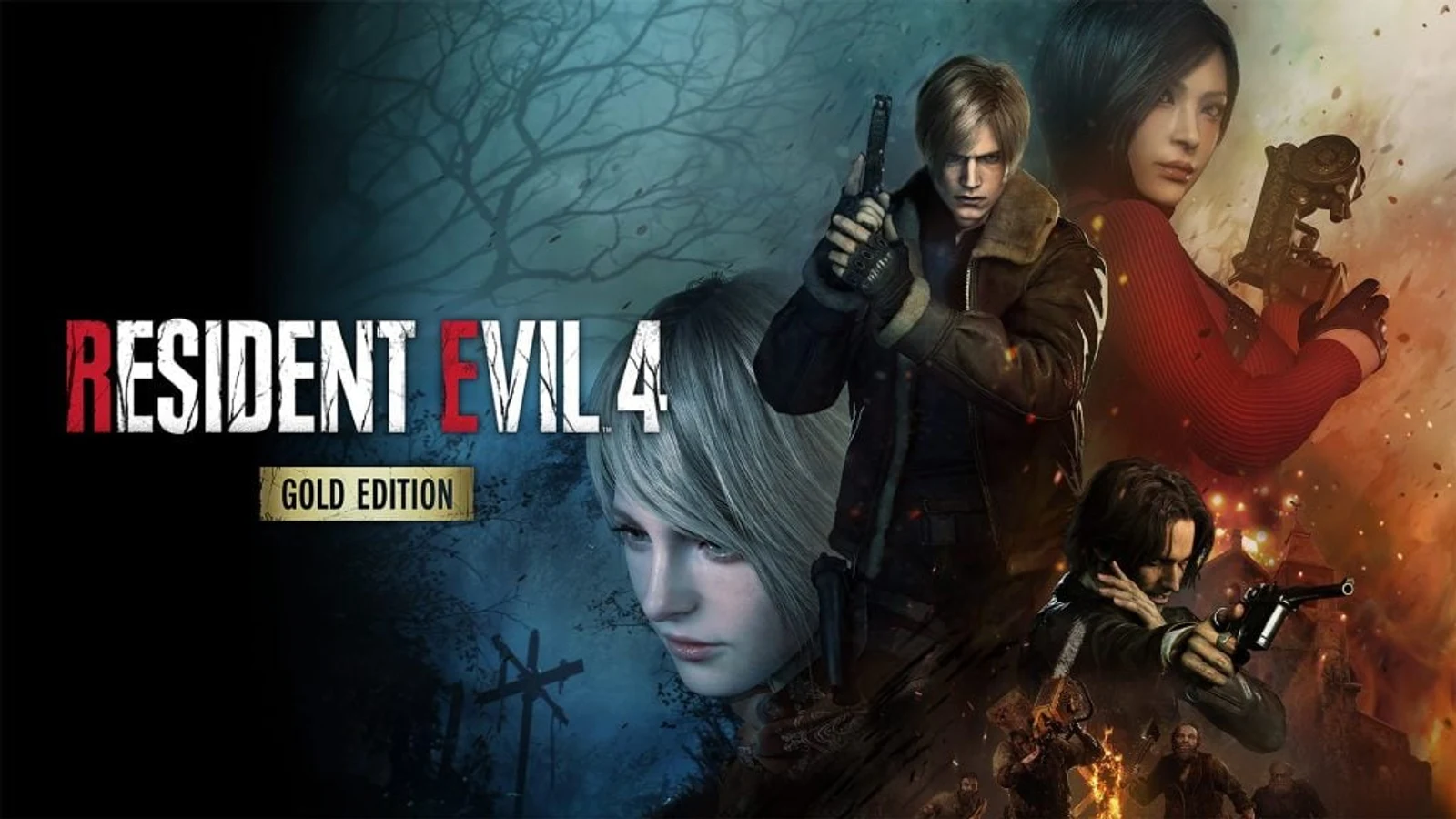
Resident Evil 2, 3 or 4 on Switch 2 — Which One Should You Play First?
Resident Evil 2, 3 and 4 all launch on Switch 2 the same day. Here's how the three remakes actually compare on story, horror-vs-action balance, length and beginner-friendliness — and which one to buy first.
Resident Evil 2, 3 and 4 Remakes Hit Switch 2 on October 16 — What Each Edition Includes
Resident Evil 2 Deluxe Edition, Resident Evil 3 and Resident Evil 4 Gold Edition launch digitally on Switch 2 October 16, 2026, with physical copies following January 29, 2027. Here's exactly what's in each edition.
Resident Evil's Final $60.15M Opening Confirms the Franchise Record
Zach Cregger's Resident Evil finished its domestic opening weekend with $60,152,878—enough to edge past Afterlife's entire North American run.
About the author
Kenza Benouna
Movies, TV & Horror Writer
Kenza Benouna writes about movies and television, with a substantial archive in horror. Her Red Reactions work includes reviews, supernatural and franchise lore, story explainers and analysis of character, atmosphere and adaptation.
Coverage: Horror · Movies · TV · Reviews · Lore & Features
More from Kenza Benouna