lore · gaming / movies
Do You Need to Play Resident Evil Before the 2026 Movie? The Game Lore That Actually Matters
Zach Cregger's Resident Evil follows an all-new character, not Leon Kennedy — but it's set in the world of Resident Evil 2. Here's exactly what game knowledge helps, and what you can safely skip.
 By Bamo Anwar6 min read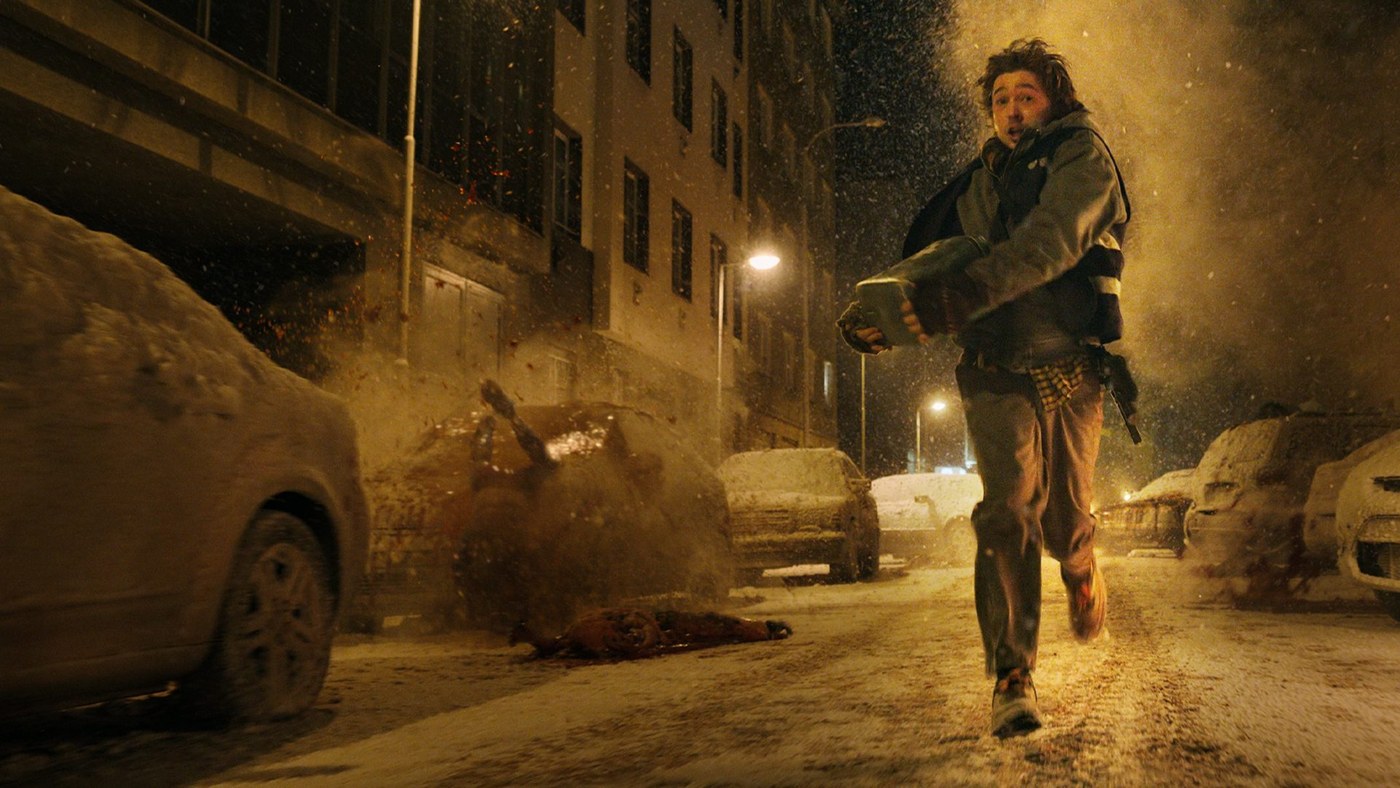
No, you don’t need to play a Resident Evil game before seeing Zach Cregger’s movie on September 18. It follows an all-new character, Bryan, not anyone from the games. But it’s worth knowing this isn’t “loosely inspired by Resident Evil” either — Cregger has said directly that the film takes place in the world of Resident Evil 2, and he built it to reproduce the actual experience of playing the games, not just reference them. A small amount of context makes that intentional design easier to notice.
The movie is closer to RE2’s world than “all-new story” suggests
Sony’s own synopsis calls it “an all-new story”: Bryan (Austin Abrams), a medical courier, gets caught up in “one fateful, horrifying night” that collapses into chaos around him. That’s accurate, but it undersells how specific Cregger has been about where that story sits. In his PlayStation Blog interview, he said plainly: “the world of [Resident Evil] 2 is kind of where this takes place, even though I’d make a couple of little shifts for dramatic license.” Bryan is “on a mission in this horrible night when things are going wrong in Raccoon City” — the same night, broadly, that the second game is built around.
That’s a specific creative choice, not a vague homage. It also isn’t a claim that everything from the games happens exactly as shown here — Cregger is explicit about taking dramatic license, and nothing here should be read as confirmation that the film matches Capcom’s game-canon timeline beat for beat.
Bryan is not Leon Kennedy
Cregger addressed this directly, because it’s the most obvious assumption: “I’m not going to tell Leon’s story, because Leon’s story is told in the games… it would just be kind of redundant, and ultimately, I think, disappointing.” Instead, he wanted “the story that could exist on the sidelines of one of the games” — a different person, on their own errand, moving through the same collapsing city.
Where Leon is trained and tactical, Cregger describes Bryan as closer to “an avatar for me, or what I expect the average video game player would react if they were thrust into the game themselves” — not a soldier or cop, just an ordinary guy with no combat background who gets pulled into a nightmare. He compares that to how later games handled newer, less-prepared protagonists like Ethan Winters or Grace. Bryan isn’t a new version of Leon, and there’s no indication their paths cross in the film.
For an early look at how the film’s box office prospects are shaping up, see our Resident Evil 2026 opening weekend projection.
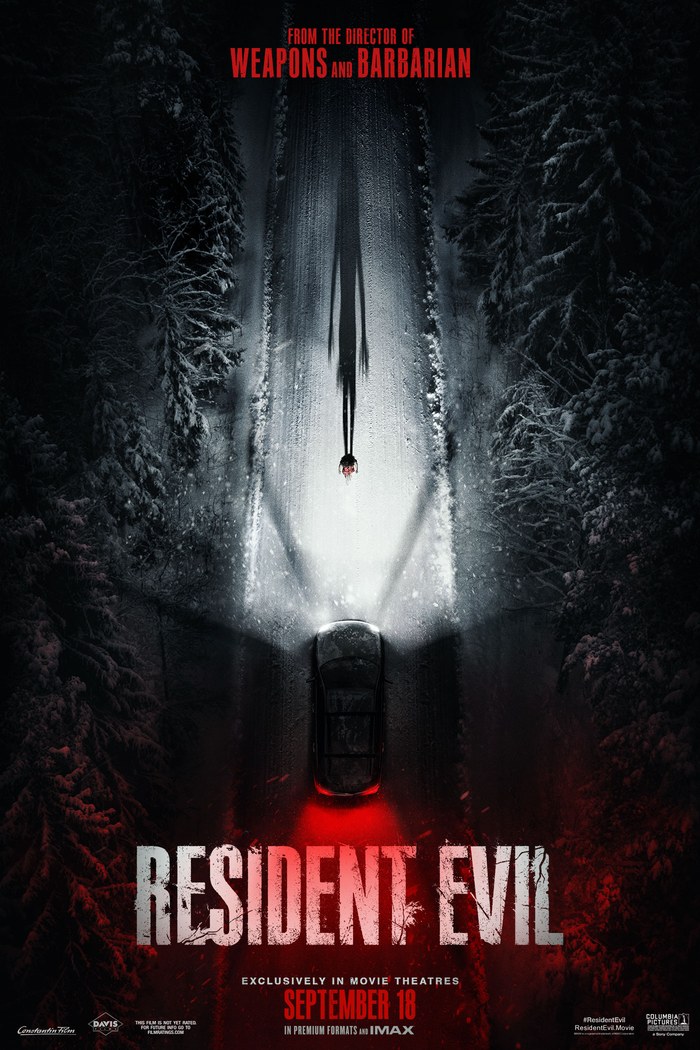
Resident Evil hits theaters September 18, 2026. Credit: Sony Pictures / Constantin Film.
What the older Resident Evil movies have to do with this one
Nothing, as far as continuity goes. This is the second full reboot of the film series, arriving after Constantin Film moved on from 2021’s poorly received Welcome to Raccoon City. Cregger’s version doesn’t use characters, events or continuity from the Paul W.S. Anderson/Milla Jovovich film series, Welcome to Raccoon City, or Netflix’s live-action series. You don’t need to have seen any of them.
Raccoon City and Umbrella, briefly
Two pieces of setting context actually matter here, because Cregger names them directly as essential. Raccoon City is a fictional American city whose 1998 outbreak is the backdrop for the second and third mainline games. The Umbrella Corporation is the pharmaceutical company behind it: in Cregger’s own words, “the world of Resident Evil is that this T-virus that the Umbrella Corporation is responsible for has caused a terrible zombie mutant breakout.” That’s the baseline he’s building on — a city collapsing because of a corporation’s bioweapons research, populated by more than ordinary zombies (the games call the results Bio-Organic Weapons, or B.O.W.s). You don’t need the full 30-year timeline; you need to know the outbreak has a corporate cause, not a mysterious one.
Why “survival horror” shapes the movie’s structure
Cregger’s biggest design goal wasn’t recreating a plot — it was recreating a feeling. Asked what makes the environments work, he said the key is that they “keep changing,” that you’re “always kind of unlocking new areas” and moving somewhere new that “harbors a new, unique danger” — the same structure that makes Resident Evil 2’s single police station feel like it never stops expanding. He also wanted the resource pressure to carry over: “I wanted to keep true to like [in the games], you start with a pistol, you graduate to a shotgun, and then eventually you find an MP5. You’re always worried about how many bullets you have.” That’s the actual throughline connecting the film to the games — not a shared cast, but a shared sense of scarcity and escalation.
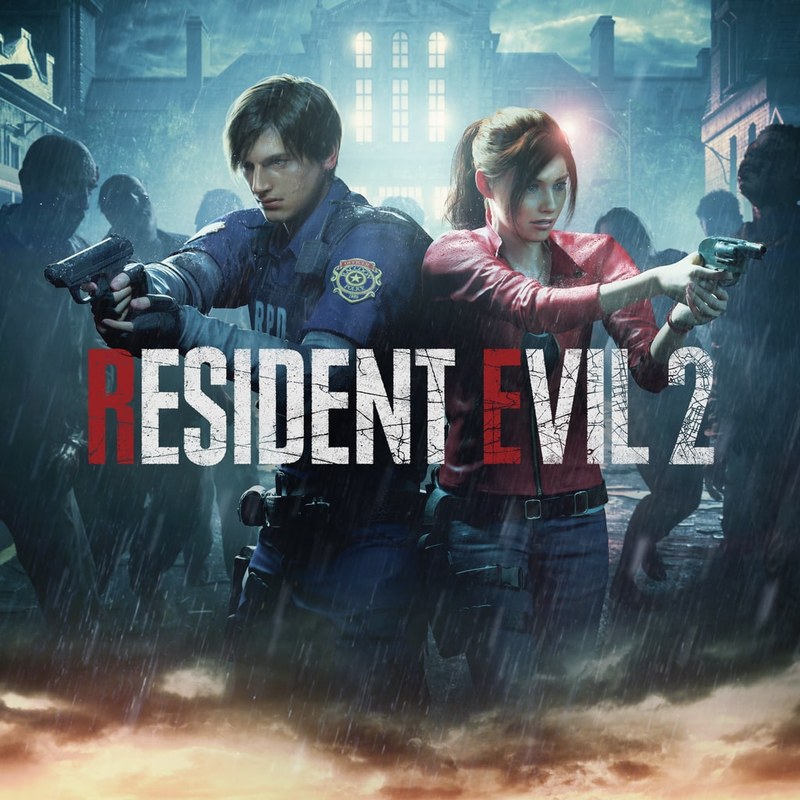
Resident Evil 2 (2019) — the game Cregger names directly as the setting the movie takes place around. Credit: Capcom.
Herbs, typewriters and padlocks — game language, not game plot
Cregger has been open about packing the film with recognizable visual details: green healing herbs redesigned to match the games (he specifically cites Resident Evil 4’s bucket-style healing item as a direct visual reference), healing spray cans, typewriters that longtime players will read as a nod to the games’ save points, and padlocks that repeatedly block Bryan’s progress. Recent promotional material has also shown brief first-person-perspective sequences, framed as another way of putting the audience inside the games’ viewpoint rather than as the film’s dominant style throughout.
Treat all of this the way it’s intended: as deliberate game-literate detail, not proof of a literal plot connection. A typewriter shows up because it’s recognizable Resident Evil iconography — it doesn’t mean the film uses the games’ save system. A green herb doesn’t mean Bryan is playing by the same healing rules as a game character. They’re the vocabulary Cregger is using to tell his own story, not confirmation that a specific game’s events are unfolding on screen.
If you want to play one game first
You don’t have to. But if you’d like some context going in, Resident Evil 2 (2019 remake) is the clearest pick — it’s the exact setting Cregger names, it introduces Leon and Claire’s side of the same outbreak, it demonstrates the resource-management tension he’s borrowing, and it’s a modern, widely available entry point on PS4, PS5, Xbox and PC (and, from October 16, Switch 2). If you want the roots of Umbrella and the outbreak’s origin instead, the original Resident Evil (available in its HD remaster) covers the mansion incident that started it all. Neither is required reading — think of them as optional extra credit, not homework. If you’re weighing RE2 against RE3 or RE4 more generally rather than just for movie context, our full comparison guide covers which one to actually start with.
What you can safely ignore
You don’t need the full Resident Evil timeline, every game’s plot, the Anderson film series, Welcome to Raccoon City, or the Netflix show. You don’t need to know who Chris or Jill are beyond “earlier protagonists from the first game.” Bryan’s story is designed to work on its own — the game knowledge above just makes the parts that are clearly, deliberately borrowed easier to spot.
Sources
Make Red Reactions a preferred source
Choose Red Reactions as a preferred source in Google Search.
Confirm your choice on Google.
Related coverage
Resident Evil's Final $60.15M Opening Confirms the Franchise Record
Zach Cregger's Resident Evil finished its domestic opening weekend with $60,152,878—enough to edge past Afterlife's entire North American run.
Resident Evil 2, 3 or 4 on Switch 2 — Which One Should You Play First?
Resident Evil 2, 3 and 4 all launch on Switch 2 the same day. Here's how the three remakes actually compare on story, horror-vs-action balance, length and beginner-friendliness — and which one to buy first.
Resident Evil 2, 3 and 4 Remakes Hit Switch 2 on October 16 — What Each Edition Includes
Resident Evil 2 Deluxe Edition, Resident Evil 3 and Resident Evil 4 Gold Edition launch digitally on Switch 2 October 16, 2026, with physical copies following January 29, 2027. Here's exactly what's in each edition.
The Legend of Zelda Movie Isn't Adapting One Game — What Nintendo's 'Original Story' Actually Means
Nintendo has confirmed The Legend of Zelda movie isn't a direct adaptation of any single game. Here's exactly what Shigeru Miyamoto said, what the Triforce tease does and doesn't confirm, and what's still unknown.
About the author
Bamo Anwar
Anime & Gaming Writer
Bamo Anwar covers anime and gaming for Red Reactions. His work ranges from release news and detailed trailer breakdowns to beginner guides, watch orders and explainers designed to make large franchises and game systems easier to enter.
Coverage: Anime · Gaming · Beginner Guides · Watch Orders · Explainers
More from Bamo Anwar