Movies Review
Spoiler-light on plot and ending. The creature's design and in-film mythology are discussed in a clearly marked section.The Ritual Review: Netflix's Forest Horror Is Better Before It Explains the Nightmare
The Ritual is at its best when guilt, fractured friendship and an unknowable forest do the work. Once the film explains its threat, it trades dread for spectacle — and it's a worse movie for it, even if it's still a good one.
 By Kenza Benouna5 min read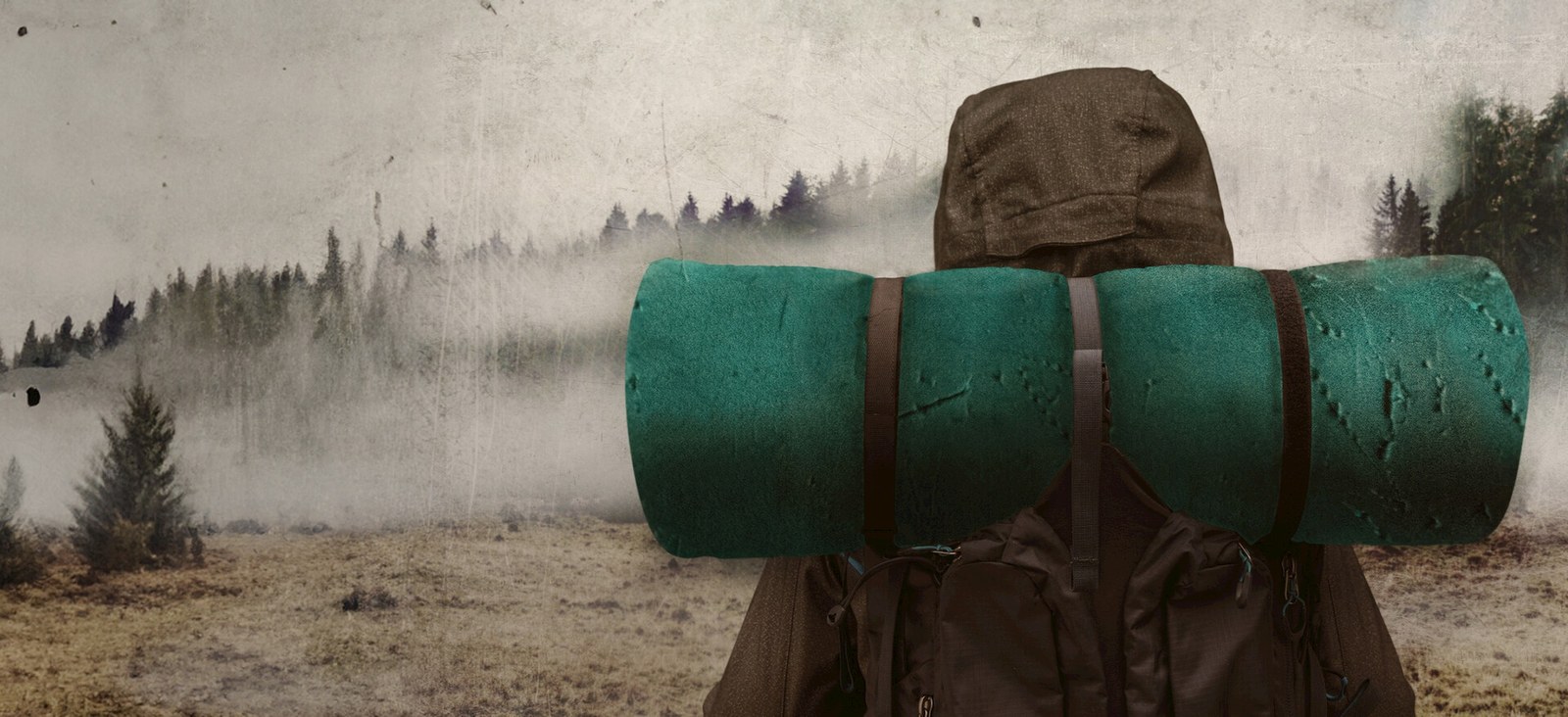
The Ritual works because it understands that four friends getting lost in the woods isn’t scary on its own — what’s scary is four friends who already don’t trust each other getting lost in the woods. David Bruckner’s film spends its best stretch letting guilt and resentment do as much damage as anything supernatural, and only loses its grip once it starts explaining exactly what’s hunting them.
The setup, briefly
Luke (Rafe Spall), Phil (Arsher Ali), Hutch (Robert James-Collier) and Dom (Sam Troughton) are hiking through the Swedish wilderness to memorialize their friend Rob, killed six months earlier in a robbery Luke survived by hiding. When Dom injures his knee, the group cuts through the forest instead of sticking to the marked trail, and the strained dynamic between the four men starts closing in on them well before anything in the trees does.
Luke’s guilt is the film’s real engine
Rafe Spall carries this movie, and the reason it works is that Luke’s guilt over Rob’s death isn’t treated as backstory — it’s the lens the entire film runs through. The nightmare and flashback imagery tied to that night doesn’t function as a jump-scare delivery system; it keeps recontextualizing how Luke sees himself in relation to the others, and Spall plays that discomfort as something closer to shame than trauma in the generic sense. He makes Luke simultaneously the most sympathetic person in the group and the hardest one to be around, which is a harder balance than it sounds. The other three don’t know the full truth of what happened that night, and the film uses that gap — what they suspect versus what actually happened — as its own quiet source of tension long before anything supernatural shows up.
A friendship that’s already broken
The other three friends are thinner on the page, and it shows. Hutch functions as the group’s default leader by competence rather than personality, Dom mostly exists to be injured and increasingly desperate, and Phil gets the least defined role of the four. That’s a real limitation — this is a movie about four men, and only one of them gets a full character. But the group dynamic still reads as credible where it counts: the resentment, the old hierarchy from their university years, the way stress reorganizes who trusts whom. Bruckner and screenwriter Joe Barton aren’t interested in making all four friends equally deep; they’re interested in how a group like this actually fractures under pressure, and that part holds up even when individual characterization doesn’t.
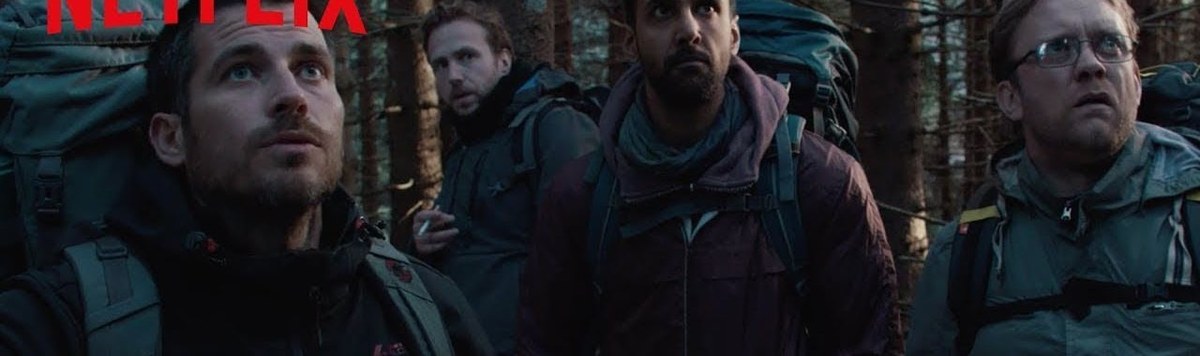
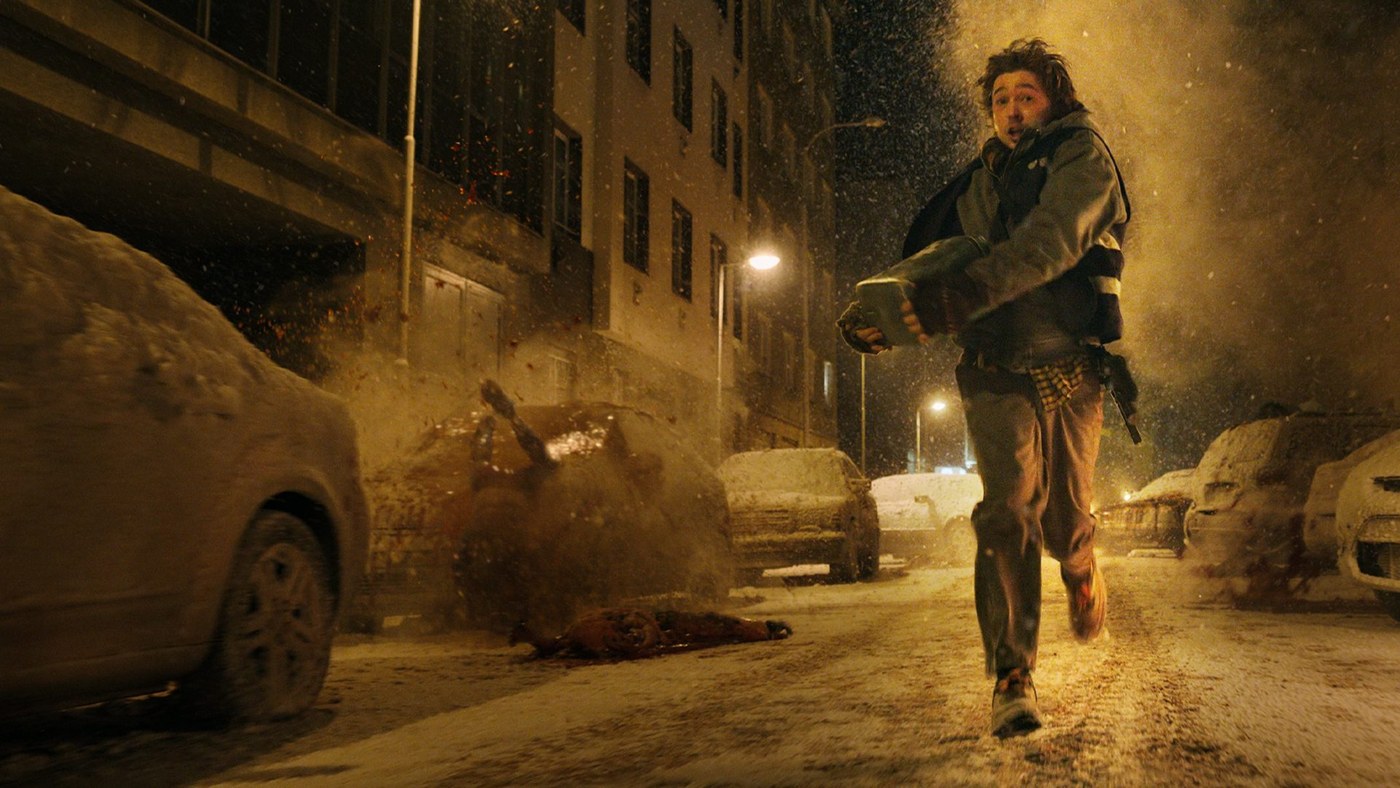
Luke, Phil, Hutch and Dom, deep in the Swedish forest. Credit: Netflix.
The forest does the early scaring
The film’s smartest choice is restraint. Cinematographer Andrew Shulkind shoots the forest as something that resists being read — trees that block sightlines rather than framing them, fog that erases distance, a sense that the group has lost not just the trail but their ability to judge scale and direction at all. Ben Lovett’s score stays mostly quiet and low rather than sting-driven, which means the film earns dread through sustained discomfort instead of jolts. An abandoned, rune-marked cabin the group takes shelter in is the film’s creepiest location precisely because nothing definitively supernatural happens there yet — it’s wrong in a way none of the characters can articulate, which is more unsettling than a clear threat would be.
The creature, and where the film loses its nerve
This part is worth a spoiler note: the section below discusses the film’s supernatural threat and how it’s revealed.
For most of its runtime, the film only shows pieces of what’s stalking the group — antler-like shapes glimpsed through branches, animal carcasses arranged with clear intent, movement that’s always slightly out of frame. That partial visibility is the film’s most effective horror tool, because it lets the audience’s imagination do worse work than any effect could. When the creature is eventually shown in fuller form, its design — something that reads as part deer, part something upright and human-shaped, moving with a wrongness that doesn’t map cleanly onto either — is genuinely well conceived, and the reveal itself is staged with real confidence.
The finished film identifies the creature by name in its own dialogue, as an entity called “Moder,” described within the story as an ancient, god-like being tied to Norse mythology. That’s the film’s own internal explanation, not something the movie needed to reach for — and once it’s given, along with the cult mythology and sacrifice logic surrounding it, the back half trades mystery for exposition. The threat becomes more visually explicit and, at the same time, less frightening, because an explained monster is a smaller one than an unexplained silhouette in the fog.
Where a 7.5 comes from
The last act isn’t bad — it’s tenser as pure survival filmmaking than as horror, and it resolves Luke’s guilt in a way that feels earned rather than tacked on. But it’s a noticeably different, more conventional film than the one that preceded it, trading the unknowable dread of the first two-thirds for a more standard monster-and-cult climax. Combined with three underwritten supporting characters, that’s enough to keep this from the very top tier of the genre, even though the atmosphere, Spall’s performance, and the creature’s design make it a genuinely good horror film worth recommending — especially to anyone who wants dread that builds instead of jump scares that reset.
Verdict: 7.5/10
The Ritual is at its strongest when it trusts the forest, the guilt and the fraying friendship to be frightening on their own, and it’s still a good film once it starts explaining itself — just a smaller one. Rafe Spall’s performance and a genuinely well-designed creature carry it through a familiar structure and a final act that swaps mystery for spectacle.
Sources
Make Red Reactions a preferred source
Choose Red Reactions as a preferred source in Google Search.
Confirm your choice on Google.
Related coverage
Dungeons & Dragons: Honor Among Thieves Review: A Flawed Adventure That Deserved a Bigger Audience
A likeable, uneven adventure whose cast and humour deserved a far bigger audience than its box office ever found.
UNABOMBER Review: Strong Performances, a Simplified Theory, and a 7/10 Result
Strong performances and an effective dual timeline are held back by a simplified psychological thesis.
Aliens Review: A War Movie That Remembers the Horror
James Cameron turns Alien's isolated nightmare into a squad mission, but Ripley's trauma and the Marines' collapsing confidence keep the sequel tense.
Casino Royale Review: Bond Learns How Much a Win Can Cost
Daniel Craig gives 007 a rough edge, Eva Green makes the poker game personal, and Martin Campbell keeps the action tied to character.
About the author
Kenza Benouna
Movies, TV & Horror Writer
Kenza Benouna writes about movies and television, with a substantial archive in horror. Her Red Reactions work includes reviews, supernatural and franchise lore, story explainers and analysis of character, atmosphere and adaptation.
Coverage: Horror · Movies · TV · Reviews · Lore & Features
More from Kenza Benouna