Movies Review
Spoiler-light on the main plot; the post-credits scene is called out separately.Green Lantern (2011) Review: A Great Universe Trapped Inside a Bad Movie
Ryan Reynolds isn't the problem. Green Lantern's real failure is a screenplay that rushes past its best ideas — Oa, the Corps, Sinestro — to make room for a thin, familiar origin story.
 By Aram Anwar8 min read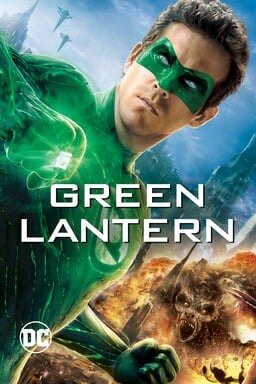
Green Lantern is a 3/10: a poor superhero movie with just enough good material sitting inside it to make the failure frustrating instead of boring. The 2011 film, directed by Martin Campbell and starring Ryan Reynolds as Hal Jordan, has real mythology to work with — the Corps, Oa, an entire spectrum of emotion-powered rings — and consistently rushes past the parts of that mythology that actually work in favor of a generic fear-and-destiny origin story that never earns its own ending.
Ryan Reynolds and a Hal Jordan the script doesn’t finish writing
Reynolds gets blamed for this movie more than he deserves. His comedic instincts aren’t the wrong instincts for Hal Jordan — the character in the comics is a hotshot with an ego, and Reynolds’ natural charm fits that description on paper. The problem is that the screenplay keeps switching what kind of scene he’s in without giving him time to build a performance across it. One scene wants smirking test-pilot swagger, the next wants raw childhood trauma about watching his father die in a plane crash, and the film cuts between them so quickly that neither register gets to land. Reynolds is often more convincing as “guy who is charming” than as “guy working through a specific fear of following in his father’s footsteps,” but that’s as much a structural problem as a casting one — the script never gives his fear enough screen time to become a real arc instead of a stated one.
His chemistry with Blake Lively’s Carol Ferris fares similarly: individual moments between them work, mostly because both actors are naturally likable, but their relationship is asked to carry emotional stakes — his recklessness, her disapproval, his need to prove himself — that the film states more than it dramatizes. Reynolds’ natural charisma props up scenes that the writing hasn’t fully earned; that’s a genuine asset, not proof he was miscast.

Ryan Reynolds and Blake Lively as Hal Jordan and Carol Ferris. Credit: Warner Bros. Pictures.
The movie’s biggest missed opportunity: everything about the Corps
This is where a 3/10 for this specific film stings the most. Green Lantern mythology is unusually good source material — an intergalactic police force powered by willpower, an entire rainbow of alternate Lantern Corps built on different emotions, thousands of alien members with wildly different designs. The film knows this material is good; you can feel it trying to sell you on Oa and the Guardians in its opening minutes. But once Hal actually reaches Oa, the movie treats it as a stopover rather than a destination. Kilowog gets one training-montage’s worth of gruff mentorship. Tomar-Re exists mostly to deliver exposition. The Guardians are glimpsed, explained in a sentence, and moved past.
None of that is because the film “barely shows” this material — Oa gets a real amount of screen time, more than a rushed cameo. The issue is proportion: for a movie built around introducing audiences to an entire cosmic institution, remarkably little of that time is spent making any single alien, custom, or corner of Oa feel specific rather than functional. The ring constructs — objects and shapes Hal builds out of pure willpower — are the film’s best remaining idea, and even those get used mostly for one action set piece rather than as an ongoing demonstration of character or creativity.
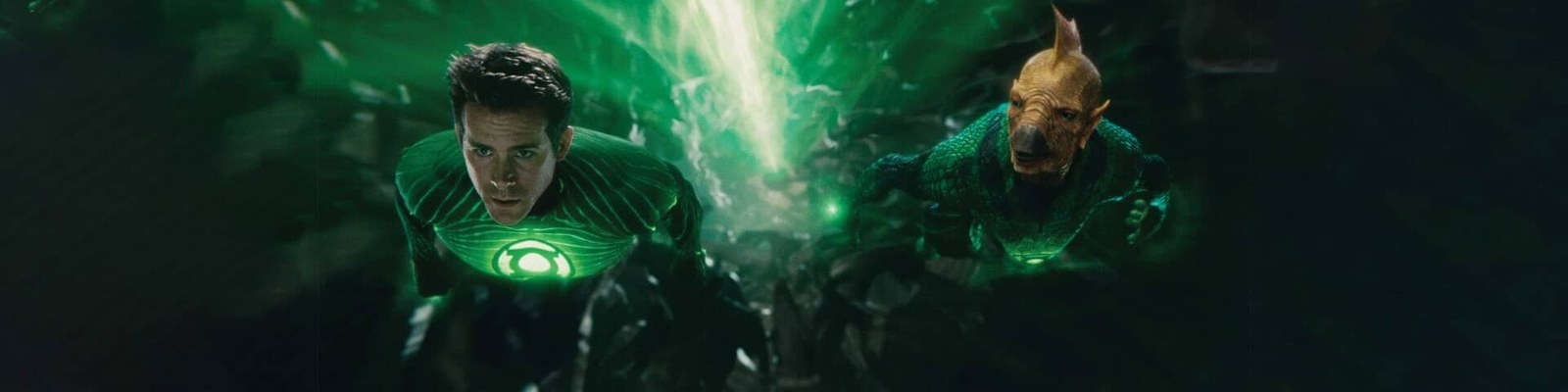
Hal Jordan among the Green Lantern Corps on Oa — the film’s richest material, and its most underused. Credit: Warner Bros. Pictures.
Sinestro deserved to show up an hour earlier
Mark Strong’s Sinestro is the film’s clearest success, and it’s worth being specific about why. Strong plays him with total conviction — authority, discipline, a kind of contained impatience with everyone around him that makes him feel like the most competent person in every scene he’s in. His scenes with Reynolds work because Strong treats Hal as a genuine disappointment rather than a rival, which is a more interesting dynamic than the film does anything with elsewhere. The design of his uniform and presence on Oa also sells the character better than almost anything else the movie does visually.
The frustration is timing. Sinestro is functionally a supporting player for most of the runtime, present but not yet significant, and the film only turns him into something more compelling in its final stretch and post-credits scene — which, without spoiling specifics, exists purely to set up a sequel that never got made. Strong’s performance suggests a much better version of this movie that puts Sinestro’s tension with Hal at the center far earlier instead of saving it for a coda.
Two villains, neither one connected to the story they’re in
Peter Sarsgaard’s Hector Hammond has a reasonable premise — a scientist humiliated by Hal in front of Carol, who Hal has known and half-competed with since childhood — and Sarsgaard plays the character’s physical and psychological unraveling with real commitment. The problem is that Hammond’s arc barely intersects with the film’s actual plot. He’s motivated by jealousy over Carol and resentment toward Hal, which is a personal, human-scale story; the film’s larger threat is Parallax, a fear-eating cosmic entity with no personal connection to Hal at all. Hammond ends up functioning as connective tissue between two stories that don’t otherwise touch, and his transformation, however committed the performance, never clarifies what he actually wants once he has power.
Parallax fares worse. As a swirling mass of animated fear, it has no face, no voice with personality, and no way to generate tension through performance — everything has to be carried by scale and by other characters reacting to it. That could work if the film built Parallax’s connection to fear thematically throughout, but “fear” as a theme mostly stays at the level of Hal’s dialogue rather than the film’s actual structure. The final confrontation is largely Hal overcoming fear by asserting that he isn’t afraid, which restates the theme instead of dramatizing it.
Suits, effects and a tone that never settles
The decision to render Hal’s Green Lantern suit entirely with CGI rather than practical costuming is a real artistic choice worth judging on its own terms, separate from how dated the 2011-era rendering now looks. Conceptually, a fully digital suit makes sense for a character whose powers are pure willpower given form — it’s meant to look like something projected rather than sewn. In practice, the suit reads as slick and weightless in a way that keeps Reynolds’ face looking slightly detached from his own body, and it never resolves the tension between wanting Hal to look human and wanting him to look like a being of living light.
That tension mirrors the film’s larger tonal problem. Reynolds’ blockbuster humor, a serious childhood-trauma backstory, a workplace romance, and a genuinely cosmic mythology are all present in the same 114-minute runtime, and the movie moves between them by cutting rather than blending — Earth-set scenes and Oa-set scenes feel like they belong to two different movies competing for the same lead character, rather than one story that happens to span two settings.
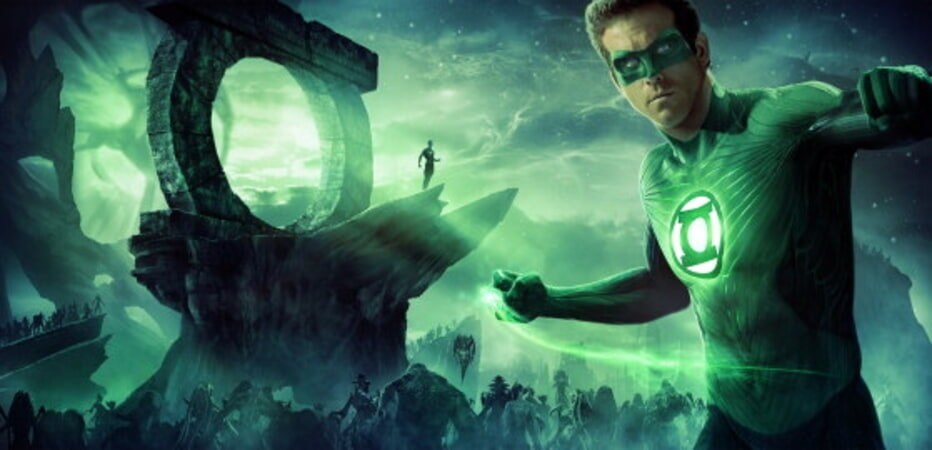
The fully CGI Green Lantern suit against Oa’s skyline — a defensible idea that the execution never fully sells. Credit: Warner Bros. Pictures.
What still works
It isn’t nothing. Strong’s Sinestro is a legitimately good performance in a movie that doesn’t deserve him yet. James Newton Howard’s score gives several scenes more emotional weight than the screenplay does on its own, particularly around Hal’s father. Martin Campbell — a director who has handled tone shifts well elsewhere — finds isolated moments, mostly quiet character beats between Hal and Carol or Hal and Sinestro, where the film briefly settles into something more grounded than its effects-driven reputation suggests. And the basic concept of Oa and the Corps remains good enough that you can see, scene by scene, what a more patient version of this movie could have built.
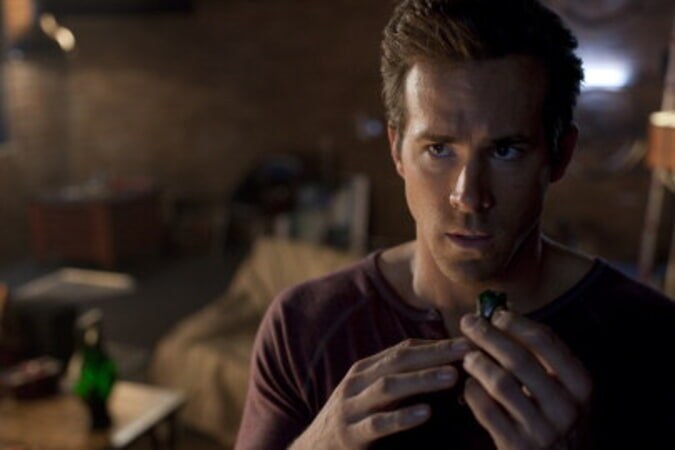
Hal Jordan and the ring that chooses him — one of the film’s better quiet character moments. Credit: Warner Bros. Pictures.
Verdict: 3/10
Green Lantern isn’t a movie where nothing works — Strong’s Sinestro, the score, and the underlying mythology all suggest a better film sitting just underneath this one. But a poor screenplay, a tonally scattered structure, and a decision to rush past its most interesting material in favor of a generic origin-story shape add up to a genuinely weak entry in its era’s superhero cycle. Warner Bros. abandoned its sequel plans within months of release, and watching the finished film, that decision tracks: there’s a good Green Lantern movie somewhere in this footage, but it isn’t the one that got made.
Readers wanting the Green Lantern mythology this film barely develops can continue to the site’s Lantern Corps explainer or John Stewart’s own Green Lantern origin.
Sources
Make Red Reactions a preferred source
Choose Red Reactions as a preferred source in Google Search.
Confirm your choice on Google.
Related coverage
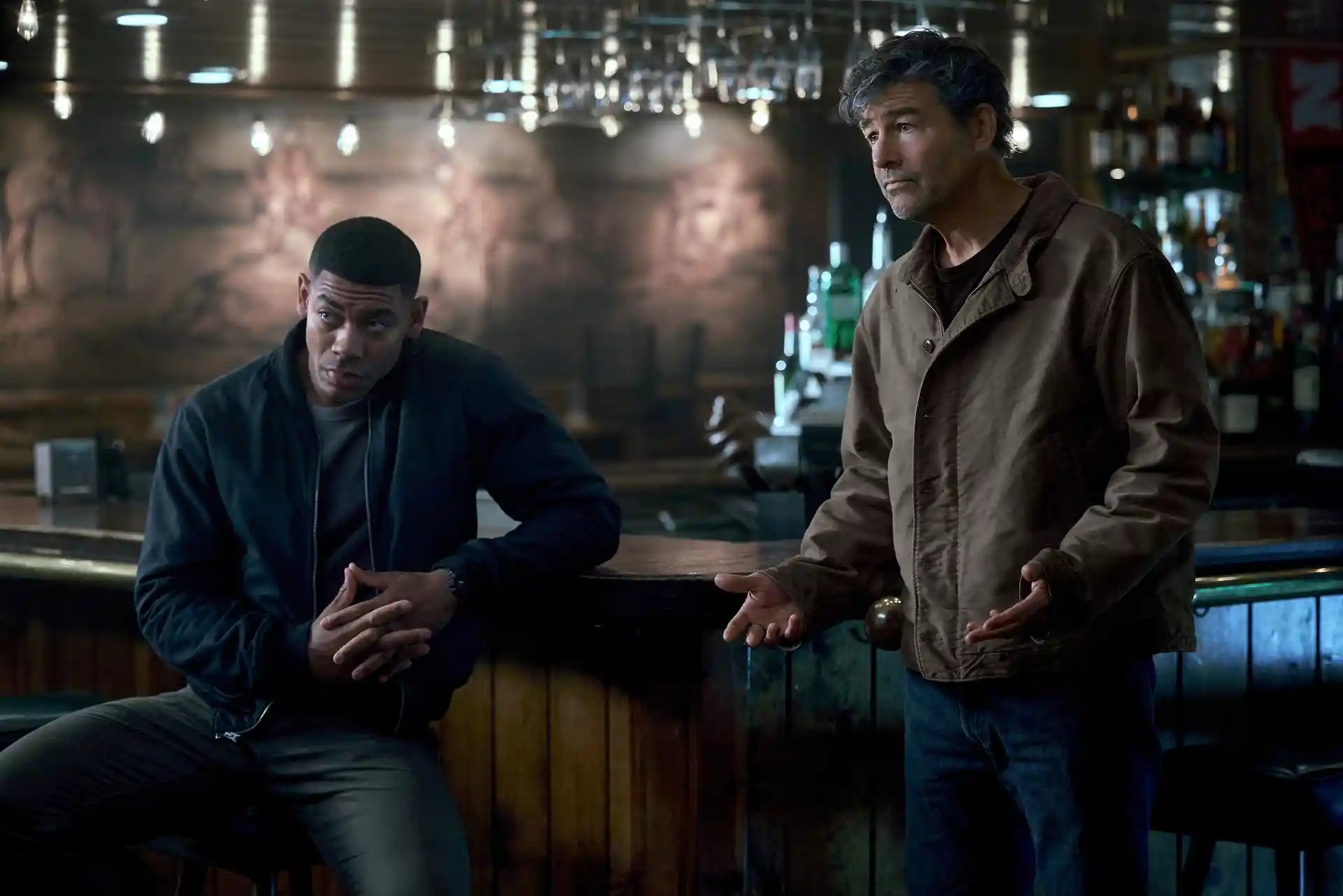
Lanterns: Hal Jordan and John Stewart Explained — Their Powers, Differences and DCU Roles
Hal Jordan is the reckless veteran; John Stewart is the disciplined recruit. Here's how the two Green Lanterns differ in the comics, what HBO's Lanterns confirms about their dynamic, and how their construct styles actually work.
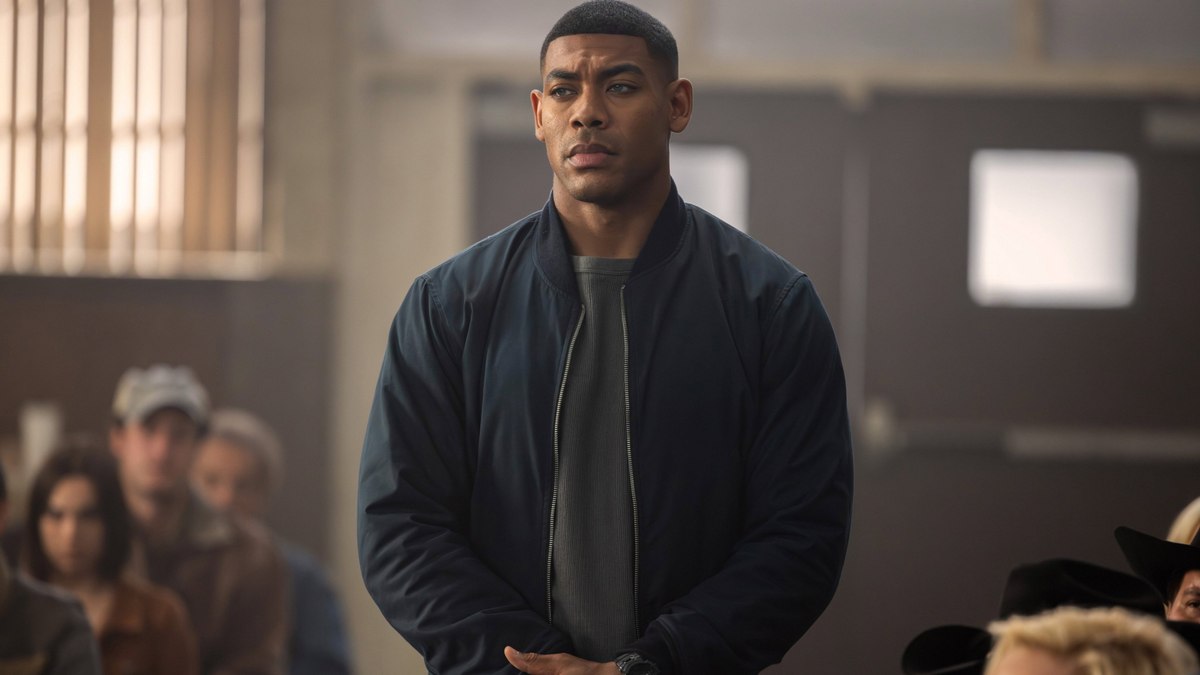
John Stewart Explained: Green Lantern Origin, Powers and How Lanterns Changed His Story
John Stewart's real comic-book history — architect, Marine, Hal Jordan's alternate, the third human Green Lantern — and how HBO's Lanterns rewrites his origin around his parents.
The Dark Knight Review: Gotham's Crime Story Tests Its Hero
Ledger's Joker disrupts the city, but Nolan's best choice is to keep Batman and Harvey Dent inside the moral pressure he creates.
James Gunn Called Lanterns Episode 3 'One of the Best' — John Stewart's New Origin Is Dividing Viewers
OutKast reveals how John's parents and the Guardians prepared him for the ring. What the interview, childhood tests and military fallout mean for his new origin.
About the author
Aram Anwar
Founder & Editor
Aram Anwar founded Red Reactions and writes across comics, gaming, movies and television. His work includes franchise guides and large Lore / Explained features, with an emphasis on separating confirmed details from reports, theory and speculation.
Coverage: Comics · DC & Marvel · Gaming · Movies & TV · Lore / Explained · Guides
More from Aram Anwar