Movies Review
The Dark Knight Review: Gotham's Crime Story Tests Its Hero
Ledger's Joker disrupts the city, but Nolan's best choice is to keep Batman and Harvey Dent inside the moral pressure he creates.
 By Bamo Anwar3 min read
The Dark Knight earns 8.5/10 as a crime thriller that makes its superhero answer for the city around him. Christopher Nolan’s 2008 film pits Christian Bale’s Batman against Heath Ledger’s Joker, but the struggle reaches the police, prosecutors and ordinary citizens as well. Ledger is extraordinary; the movie is strongest when it uses his disruptions to test other people rather than asking his performance to do all the work. Its dense second half and some uneven action coverage keep it from feeling as clean as its reputation suggests.
The Joker changes everyone else’s choices
Ledger makes the Joker unpredictable without playing him as random. He watches how people behave under pressure and creates situations designed to expose their rules. His voice, stillness and sudden shifts of energy make him compelling, but the performance has a structural purpose: each appearance narrows somebody else’s room for an easy decision.
Bale’s Bruce Wayne is quieter by design. He has built a symbol intended to help Gotham move beyond him, then has to consider what happens when that symbol draws a more destructive opponent. The film sometimes leaves him in the Joker’s shadow, yet the central dilemma remains his. Gary Oldman’s Gordon and Aaron Eckhart’s Harvey Dent make the city’s response more than a private duel between hero and villain.
Action as a moral problem
The truck pursuit works through a chain of tactical adjustments: a route changes, a vehicle becomes vulnerable, a rescue creates a new exposure. The scale is impressive, but the scene’s real force comes from what Batman is willing to do to stop the threat. The interrogation compresses that question into a room where physical power cannot guarantee the information he needs. The ferry sequence expands it to strangers deciding what kind of people they will be.
Not every stretch is equally lucid. Some close fighting is cut and framed less clearly than the larger vehicle action. The film also stacks developments in its final section so quickly that Harvey’s trajectory can feel compressed, even though Eckhart gives it emotional force. Nolan’s interest in moral systems is compelling; the screenplay sometimes states the test after the scene has already shown it.
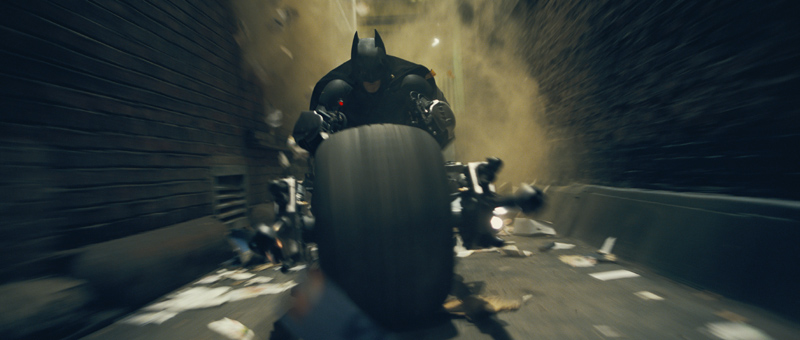
The larger vehicle action gives Batman’s choices a clear physical scale. Credit: Warner Bros. Pictures / DC.
The film’s achievement is to make a Batman adaptation feel accountable to a city, not just to an icon. For another DC movie review, see Green Lantern, whose cosmic worldbuilding finds less dramatic focus. Casino Royale offers a different kind of hero whose methods are questioned by the story around him.
Sources
Related coverage
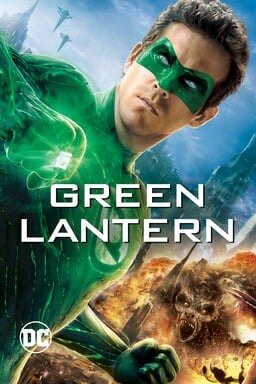
Green Lantern (2011) Review: A Great Universe Trapped Inside a Bad Movie
Ryan Reynolds isn't the problem. Green Lantern's real failure is a screenplay that rushes past its best ideas — Oa, the Corps, Sinestro — to make room for a thin, familiar origin story.

Batman: Knightfall Part 2 Trailer Puts Azrael in the Cowl — What Knightquest Actually Confirms
Warner Bros. released the official Batman: Knightfall Part 2: Knightquest trailer on Batman Day 2026. Here's what the footage actually shows about Jean-Paul Valley's more violent Batman, separated from what's still unconfirmed.
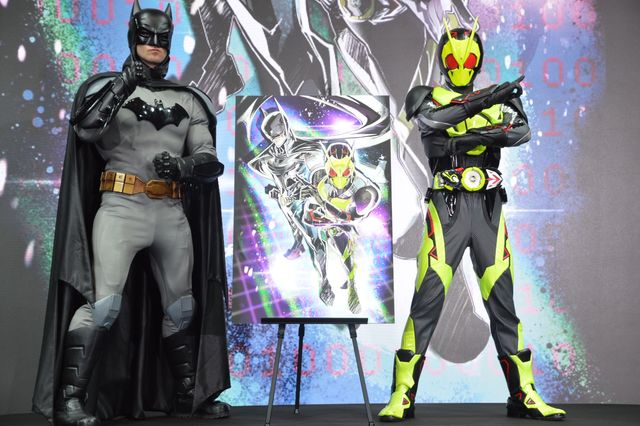
Batman x Kamen Rider Zero-One Comic Crossover Announced — What LEGENDS UNITE Actually Includes
DC and Toei announced Batman x Kamen Rider ZERO-ONE LEGENDS UNITE at Batman Day 2026 in Tokyo. Here's exactly what's confirmed about the original comic and Bandai merchandise — and what's still unannounced.
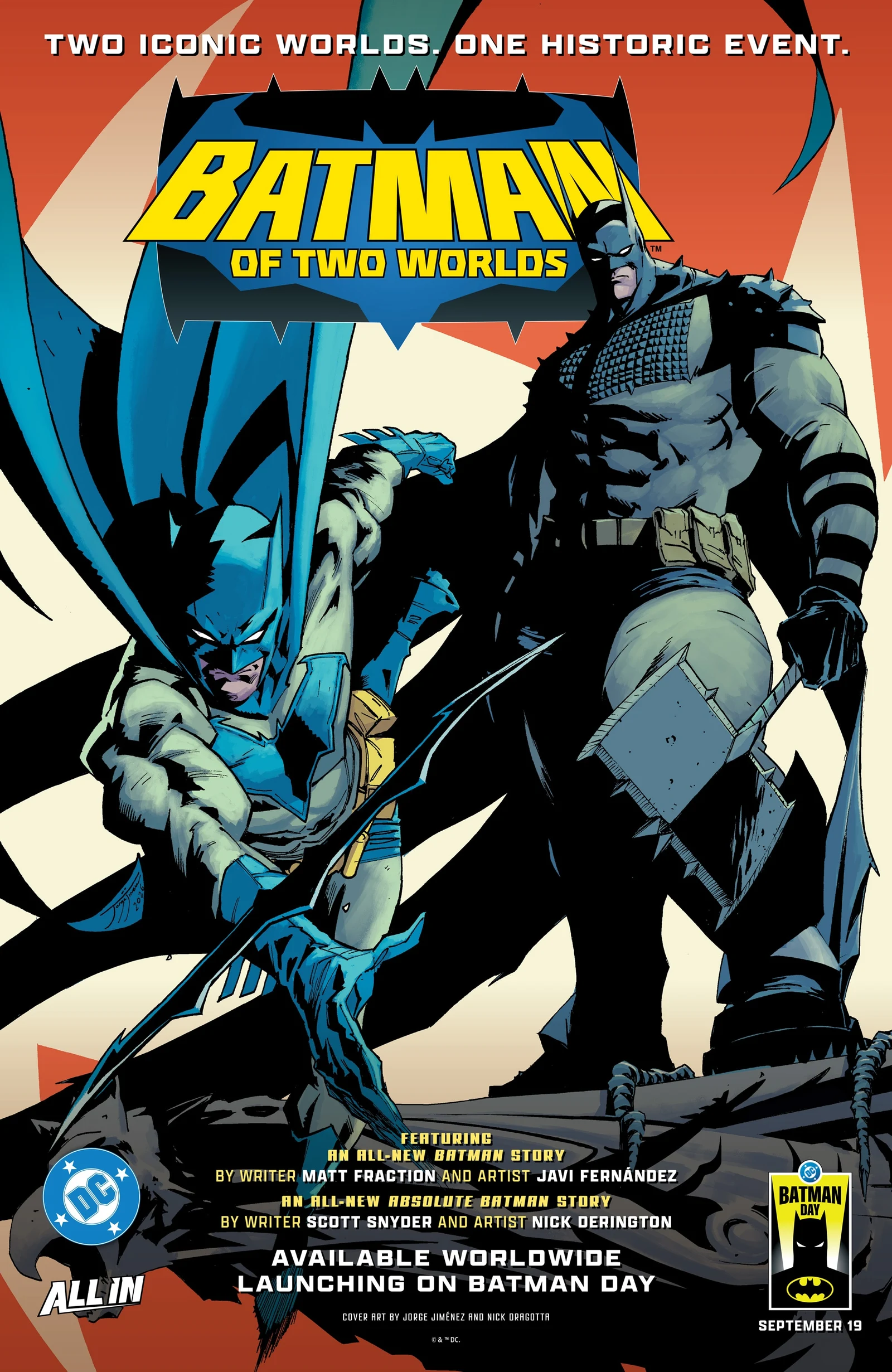
Batman of Two Worlds Explained — How Main DC Batman and Absolute Batman Solve the Same Crime
DC's Batman Day 2026 one-shot Batman of Two Worlds puts mainstream Batman and Absolute Batman in the same issue — but not the same story. Here's exactly how the comparison works, and whether the two Bruce Waynes actually meet.
About the author
Bamo Anwar
Anime & Gaming Writer
Bamo Anwar covers anime and gaming for Red Reactions. His work ranges from release news and detailed trailer breakdowns to beginner guides, watch orders and explainers designed to make large franchises and game systems easier to enter.
Coverage: Anime · Gaming · Beginner Guides · Watch Orders · Explainers
More from Bamo Anwar