lore · tv / comics
Lanterns: Hal Jordan and John Stewart Explained — Their Powers, Differences and DCU Roles
Hal Jordan is the reckless veteran; John Stewart is the disciplined recruit. Here's how the two Green Lanterns differ in the comics, what HBO's Lanterns confirms about their dynamic, and how their construct styles actually work.
 By Aram Anwar6 min read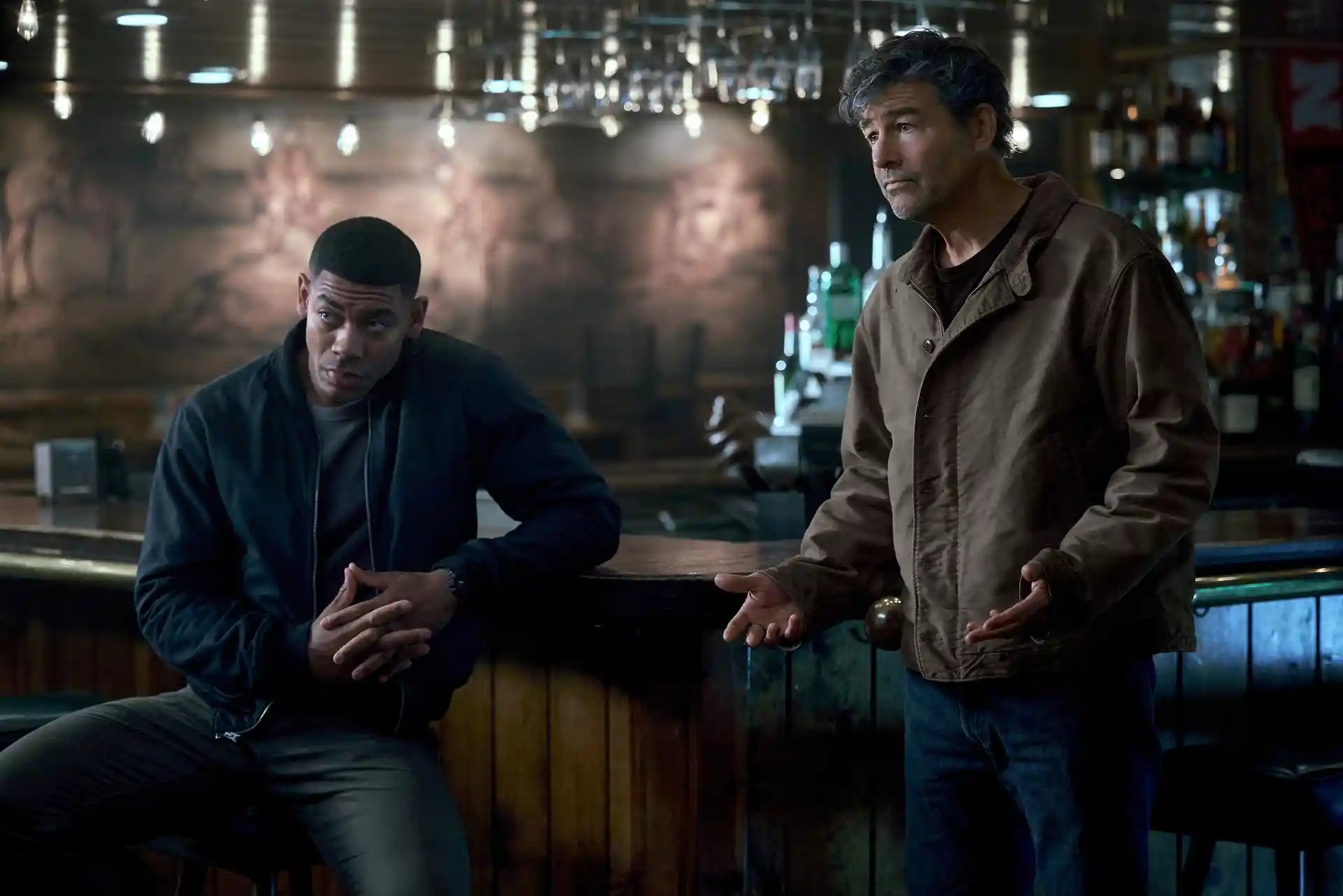
Lanterns casts Hal Jordan and John Stewart as veteran and recruit, and that’s a real inversion of decades of comic-book shorthand where John was mostly known as “Hal’s backup.” Here’s how the two actually differ — in the comics, in their powers, and in what HBO’s series has confirmed about the dynamic between them so far.
Who Is Hal Jordan?
Hal Jordan first appeared in Showcase #22 (1959), created by John Broome and Gil Kane. He’s a test pilot who receives his ring when the dying alien Green Lantern Abin Sur crash-lands on Earth and commands the ring to find a worthy successor. Hal becomes the Green Lantern of Space Sector 2814 — Earth’s sector — and, for most of the character’s modern history, DC’s default, flagship Green Lantern.
He’s also, canonically, difficult. Reckless, arrogant, allergic to taking orders — Hal has one of the messiest histories of any DC hero, including an extended stretch written as an outright villain (Parallax) before being restored to heroism. That instability is part of the character, not an aberration from it.
Who Is John Stewart?
John Stewart debuted twelve years later, in Green Lantern (Vol. 2) #87 (1971), created by Denny O’Neil and Neal Adams specifically as Hal’s backup — the Guardians of the Universe needed an alternate for Sector 2814, and Adams wanted that alternate to actually reflect the world it protected. John was an architect by trade, with an explicit distrust of authority that made him an odd fit for a role built on discipline. He’s since become the third human to hold a ring and, across long stretches of DC history, Earth’s primary or sole active Green Lantern rather than a permanent understudy — a status casual fans who grew up on the Justice League and Justice League Unlimited cartoons already take for granted.
Powers: Same Ring, Different Construction Style
Both characters’ rings run on the same basic mechanic: willpower, converted into solid green light constructs. The difference is how each of them builds.
Hal’s constructs are improvisational — he imagines a shape and trusts the ring to hold it together on the fly. John’s are engineered. DC’s own character profile is explicit: his constructs “are never hollow. He always builds them from the inside out, down to the last nut and bolt.” That’s a direct extension of his architecture background, and it’s the one piece of his 1971 origin that’s never been retconned away, because it does real characterization work — John’s imagination is paired with structural discipline in a way Hal’s generally isn’t.
One more difference worth noting: Hal, like most Lanterns, conceals his identity to some degree. John generally doesn’t wear a mask — a pointed choice when the character debuted in 1971, and one that’s stuck.
Their History Together, in the Comics
The relationship the comics actually establish is asymmetric. John was the Guardians’ choice, not Hal’s — in his first appearance, Hal objects to giving John a ring at all, citing his “disregard for authority,” and the Guardian assigning John shuts that down flatly: “We are not interested in your petty bigotries.” From there, John spent decades functioning as Hal’s designated alternate, called up whenever Hal was unavailable, before growing into one of DC’s central Lanterns in his own right — including extended periods leading the Corps in a tactical capacity while Hal was out of the picture entirely.
That’s the shape Lanterns inverts by having Hal actively train John from the show’s start, rather than the comics’ pattern of John stepping in only when Hal wasn’t around.
What Lanterns Confirms About Hal and John’s Dynamic
Kyle Chandler plays Hal as the senior partner training John Stewart, and the show has been explicit that this isn’t a comfortable mentorship. Hal’s methods are unorthodox — an early trailer has him bailing out of a moving car to force John to solve the crash himself — and official trailer material shows him withholding a ring from John for a stretch of the season before John finally gets to produce constructs of his own.
The tension DC’s own marketing has leaned into directly: is John actually training under Hal, or is he there to replace him? Showrunner Chris Mundy has framed the whole season around that question — when someone should step aside, and when it’s time for the next person to take over. Sinestro, revealed in the show as Hal’s own former trainer, tells Hal outright in Episode 4 that he “will need to kill John Stewart” — a line multiple outlets covering the episode read as raising the stakes on that succession question rather than resolving it. Mundy has separately confirmed the show’s version of the mentorship chain runs the same direction as the comics’ basic structure: “Hal was trained by Sinestro, Hal is training John.”

The show casts Hal as John’s active trainer from the start — a real departure from the comics’ original “call him up when Hal’s unavailable” dynamic. Credit: HBO Max.
John’s path to that point is also new. Episode 3, “OutKast,” rewrites his origin from the ground up: the ring approaches his father, John Stewart Sr., years before it ever reaches Hal, and rejects him after he admits his fear. His mother, Bernadette, then negotiates directly with a Guardian and, with John Sr., raises their infant son to be fearless enough the ring could never reject him the same way. None of that childhood material comes from the comics, where John’s path runs through architecture, the Marines and Hal choosing him — not a Guardian actively engineering his upbringing.
What’s Comic-Accurate vs. What Lanterns Changed
Kept from the comics: Hal as the established, reckless veteran Lantern of Sector 2814. John’s construct style being more disciplined and structural than Hal’s, once he actually gets a ring. Sinestro as Hal’s own trainer, forming a chain of mentorship the show has confirmed runs the same direction the comics generally depict it.
Changed for the show: John’s entire origin — the show invents his parents’ history with the ring, his father’s rejection, and a childhood built around forcing his own qualification. The comics never depicted anything like it. The show also compresses the comics’ decades-long “John as occasional Hal replacement” arc into an active, present-tense training dynamic between the two men from the start, rather than something that develops only after years of John working independently. Whether the show’s Hal carries any of the comics’ darker history — the Parallax period, in particular — hasn’t been confirmed either way, and shouldn’t be assumed.
Their Roles in the DCU Going Forward
Beyond this season, official material hasn’t confirmed how either character’s future in David Corenswet’s DCU is structured. What’s clear from the show itself is the throughline both comics and TV agree on: Hal is Sector 2814’s established Lantern, and John is the one the story keeps building toward as his successor — whether that’s a comics-style permanent handoff, or something the show resolves differently.
For John’s full comic-accurate history and powers, see our dedicated John Stewart explainer. For everything else the show has confirmed — cast, schedule and premise — see our complete Lanterns guide, and for the wider mythology behind the ring itself, every Lantern Corps in DC’s emotional spectrum. For who the Guardians actually are — and how HBO’s version already differs from the comics — see our Oa and Guardians of the Universe explainer.
Sources
Related coverage

John Stewart Explained: Green Lantern Origin, Powers and How Lanterns Changed His Story
John Stewart's real comic-book history — architect, Marine, Hal Jordan's alternate, the third human Green Lantern — and how HBO's Lanterns rewrites his origin around his parents.

Do You Need to Watch Anything Before Lanterns? DCU Watch Guide
You can start HBO's Lanterns without watching another DC project. Here's what is actually useful, what is optional, and which older Green Lantern stories you can skip.

James Gunn Called Lanterns Episode 3 'One of the Best' — John Stewart's New Origin Is Dividing Viewers
James Gunn praised Lanterns Episode 3 as one of the season's best hours before it aired. The John Stewart origin episode that followed has split critics and viewers over its handling of race and family.

Lanterns Premiere Reviews: Strong Early Response to HBO's Green Lantern Mystery
This launch-roundup records Lanterns' early critical response, including praise for Kyle Chandler and Aaron Pierre's chemistry and its grounded DC mystery.
About the author
Aram Anwar
Founder & Editor
Aram Anwar founded Red Reactions and writes across comics, gaming, movies and television. His work includes franchise guides and large Lore / Explained features, with an emphasis on separating confirmed details from reports, theory and speculation.
Coverage: Comics · DC & Marvel · Gaming · Movies & TV · Lore / Explained · Guides
More from Aram Anwar