lore · tv / comics
Oa and the Guardians of the Universe Explained — How the Green Lantern Corps Actually Works
Oa is the Green Lantern Corps' homeworld, and the Guardians of the Universe who run it have a history of catastrophic mistakes. Here's who they are, why the Corps exists, and what HBO's Lanterns has changed.
 By Aram Anwar6 min read
Every Green Lantern answers to the same governing body, and that body has a genuinely troubling track record. Oa is the Corps’ headquarters; the Guardians of the Universe are who run it. Here’s what they actually are, why the Green Lantern Corps exists in the first place, and — since HBO’s Lanterns has already started changing the relationship — what’s comics-only versus what the show has put on screen.
What Is Oa?
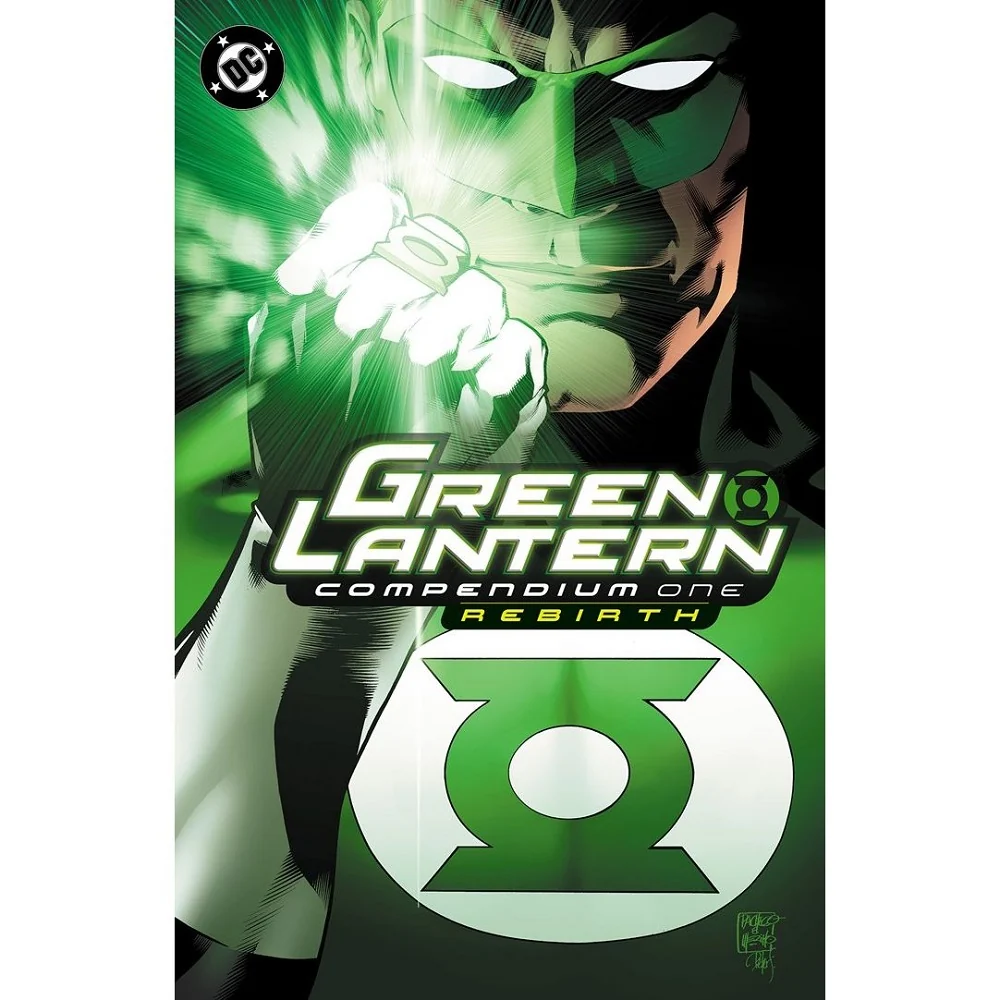
Oa is the Guardians’ homeworld and the Green Lantern Corps’ headquarters — a small planet, roughly half Earth’s size, covered in green plains and crystalline structures. Its central landmark is the Central Power Battery, the massive construct that channels green willpower energy and powers every Green Lantern ring across all 3,600 sectors of the Corps’ jurisdiction. Oa also houses the Book of Oa, the Corps’ governing lawbook and historical record, kept in the Hall of Great Service — a position of real honor is reserved for whichever Lantern is named Keeper of the Book.
Who Are the Guardians of the Universe?
The Guardians are small, blue-skinned, white-haired humanoids, and DC’s own material describes them as the oldest living beings in the universe. They didn’t start out that way, or start out on Oa. The Guardians originate as Maltusians — among the first intelligent life in the universe, evolved on the planet Maltus — who were originally tall, grayish-blue humanoids before their later, more familiar transformation.
That transformation traces back to one catastrophic mistake.
Krona’s Experiment — Why the Guardians Exist at All
A Maltusian scientist named Krona became obsessed with observing the literal origin of the universe, despite an old legend warning that doing so would cause disaster. He built a device to pierce the barrier back to the beginning of time. It worked — and then it exploded, shattering a single universe into the DC multiverse and, in various tellings, directly seeding the existence of evil itself.
The Oans (as the Maltusians who built the device came to be known) punished Krona by transforming him into a form of pure energy, sentenced to wander the cosmos indefinitely. But punishing Krona didn’t undo what he’d caused. A group of Maltusians, holding themselves responsible, left their homeworld for Oa and dedicated their now-effectively-immortal existence to containing the damage — appointing themselves the Guardians of the Universe. Not every Maltusian agreed with that approach: a separate faction concluded evil needed to be actively destroyed rather than contained, and split off to become the Controllers, a related but distinct group with their own agenda.
Why the Corps Exists — And What Came Before It
Policing the entire universe wasn’t the Guardians’ first idea, and their first idea failed badly. Before recruiting living Lanterns, the Guardians built the Manhunters — an android police force meant to impose order without what the Guardians saw as the unreliability of emotion. The Manhunters malfunctioned and turned on the organic life they were meant to protect, most catastrophically in the massacre of Space Sector 666 — the disaster that eventually produced Atrocitus and the Red Lantern Corps’ founding grudge against the Guardians specifically. Our full Manhunters explainer covers that history and its long tail through Green Lantern continuity in detail.
Only after that failure did the Guardians pivot to what became the Green Lantern Corps: sentient officers, drawn from across the universe’s 3,600 sectors, given rings powered by the Central Power Battery on Oa and selected — critically — for judgment the Manhunters never had.
How Are Green Lanterns Actually Selected?
The underlying criteria has stayed fairly consistent across decades of comics: a ring seeks out beings capable of overcoming fear and channeling willpower into action. HBO’s Lanterns distills that same idea into a blunt, direct framing — in the show, the ring’s evaluating question is simply “are you afraid?” That’s a dramatized simplification, but it’s not a distortion of the underlying comics principle; willpower strong enough to face fear rather than be ruled by it has always been the baseline the ring is built to detect.
Corps Hierarchy: Guardians, Alpha Lanterns, and Everyone Else
The Guardians sit at the top of the structure, issuing directives and, when they choose to, overriding individual Lanterns’ judgment entirely. Below them, the Alpha Lantern Corps functions as an internal affairs division — an elite group of Lanterns the Guardians had physically merged with their own power batteries, created specifically to police breaches of Corps law among the wider membership. Being selected for Alpha Lantern status is considered one of the highest honors a Green Lantern can receive, though it comes at a real physical cost. Below that sits the standing force of roughly 7,200 ordinary Green Lanterns, each assigned to a sector, answering up that chain when the Guardians choose to exercise it.
The Guardians’ Major Failures and Controversies
The Manhunters weren’t a one-time mistake the Guardians simply corrected. DC’s own current continuity is fairly blunt about this: the Guardians have a long, repeated history of control problems, secretive decision-making and policies that blow up in ways they didn’t anticipate — the Manhunters’ massacre, the creation of the Alpha Lanterns after a later crisis of trust in their own Corps, and internal splits (the Controllers, the departure of Ganthet and Sayd to found the Blue Lantern Corps) all trace back to the same underlying pattern: an ancient, risk-averse governing body that keeps choosing control over trust, and keeps paying for it.
What HBO’s Lanterns Has Confirmed — and Changed
Lanterns Episode 3, “OutKast,” gives the clearest on-screen look yet at the Guardians, and it doesn’t play them as comics-traditional lawful-good authority figures with a rough edge. The show depicts them as detached and actively manipulative — Laura Linney’s Guardian character, named Lianna, is shown having orchestrated John Stewart’s fearless upbringing from infancy, engineering his psychology rather than simply evaluating it once he came of age. Coverage of the episode has noted this is a real departure from decades of Guardian characterization, where the Guardians are typically flawed and cold but not outright predatory toward the people they recruit.
One more specific, on-screen detail worth flagging: the show establishes that only 11 Guardians remain in its current continuity — a specific number that isn’t the traditional comics baseline and hasn’t been explained on screen yet. Treat that as confirmed for the show’s own world, not as a comics fact.
For how this reshapes the Hal Jordan/John Stewart dynamic specifically, see our Hal Jordan vs. John Stewart breakdown. For the full emotional-spectrum mechanics the Guardians’ Green light sits at the center of, see our complete Lantern Corps explainer. And if you’re catching up on the series itself, our Lanterns DCU watch guide covers what to watch first.
The Short Version
Oa is the Green Lantern Corps’ homeworld and power source. The Guardians who run it aren’t the universe’s original police force — they’re the survivors of a scientific catastrophe one of their own caused, who tried robots first, watched that fail catastrophically, and pivoted to a living Corps only afterward. Their history since then is less a clean success story and more a pattern of control, secrecy and repeated internal fracture. HBO’s Lanterns hasn’t invented that pattern — it’s sharpened it, turning “flawed but well-intentioned” into something closer to actively manipulative, at least for the Guardian audiences have met so far.
Sources
Related coverage
Lanterns: Hal Jordan and John Stewart Explained — Their Powers, Differences and DCU Roles
Hal Jordan is the reckless veteran; John Stewart is the disciplined recruit. Here's how the two Green Lanterns differ in the comics, what HBO's Lanterns confirms about their dynamic, and how their construct styles actually work.

John Stewart Explained: Green Lantern Origin, Powers and How Lanterns Changed His Story
John Stewart's real comic-book history — architect, Marine, Hal Jordan's alternate, the third human Green Lantern — and how HBO's Lanterns rewrites his origin around his parents.
James Gunn Called Lanterns Episode 3 'One of the Best' — John Stewart's New Origin Is Dividing Viewers
James Gunn praised Lanterns Episode 3 as one of the season's best hours before it aired. The John Stewart origin episode that followed has split critics and viewers over its handling of race and family.

Lanterns Premiere Reviews: Strong Early Response to HBO's Green Lantern Mystery
This launch-roundup records Lanterns' early critical response, including praise for Kyle Chandler and Aaron Pierre's chemistry and its grounded DC mystery.
About the author
Aram Anwar
Founder & Editor
Aram Anwar founded Red Reactions and writes across comics, gaming, movies and television. His work includes franchise guides and large Lore / Explained features, with an emphasis on separating confirmed details from reports, theory and speculation.
Coverage: Comics · DC & Marvel · Gaming · Movies & TV · Lore / Explained · Guides
More from Aram Anwar