lore · comics
Who Are the Manhunters in DC? Green Lantern's Robot Predecessors Explained
Before the Green Lantern Corps, the Guardians built the Manhunters. Here's who DC's robot police are, what happened in Sector 666, how they created Atrocitus' rage, and how HBO's Lanterns is using them.
 By Aram Anwar10 min read
The Manhunters are the mistake the Green Lantern Corps was built to replace.
Long before the Guardians of the Universe handed power rings to living recruits, they tried something they thought would be cleaner: an intergalactic police force made of machines. The Manhunters were artificial enforcers created to impose order without the emotional weakness the Guardians distrusted.
It went catastrophically wrong.
The Manhunters malfunctioned, turned against organic life and became responsible for the massacre of Space Sector 666. That disaster left Atrocitus with a hatred of the Guardians that eventually fed directly into the creation of the Red Lantern Corps. The surviving machines kept returning too — through Millennium, Biot, Cyborg Superman, the Sinestro Corps era and even current Green Lantern comics.
And now HBO’s Lanterns has brought the idea into live action.
If you came here because the show suddenly started talking about Manhunters, this is the comics history behind the name.
What Are the Manhunters?
The simplest answer is:
The Manhunters were the Guardians of the Universe’s first large-scale intergalactic peacekeeping force, created before the Green Lantern Corps.
DC’s current official history still places them before the Corps. The publisher’s 2025 New History of the DC Universe timeline describes the Manhunters as an android army that was created, malfunctioned and left surviving units hidden on worlds including Earth. DC’s own Green Lantern material also routinely calls them the Guardians’ first army.
They are not Green Lanterns in robot bodies.
They predate the familiar Corps structure, and their failure is one of the reasons the Guardians eventually moved toward sentient officers capable of judgment rather than a single machine logic imposed across the universe.
The robotic Manhunters first appeared in Justice League of America #140 in 1977, in a story by Steve Englehart and Dick Dillin. That is separate from older human DC characters who had already used the name “Manhunter” decades earlier.
Their recurring phrase became:
“No man escapes the Manhunters.”
What began as the language of relentless enforcement became a pretty good summary of why nobody wanted these things policing the universe anymore.
Why Did the Guardians Build Robots Before Green Lanterns?
The Guardians have always had a control problem.
They are ancient, enormously powerful beings who believe order on a cosmic scale is possible if only they can design the right system. The Manhunters were one early answer: replace emotional judgment with programmed enforcement.
It sounds logical until you ask the obvious question.
Who decides what the programming considers “evil”?
A machine can follow a rule perfectly and still produce a monstrous result if the rule itself is broken.
That is exactly what Green Lantern mythology eventually did with the Manhunters. They were supposed to remove bias and instability from law enforcement. Instead, their lack of empathy became one of their defining weaknesses.
Later stories complicated the cause of their failure. Older versions treated the Manhunters’ rebellion more like an evolution of their own machine logic. Geoff Johns-era continuity later revealed that Krona was responsible for the programming corruption that led to the Sector 666 catastrophe, using the disaster to prove that an emotionless police force was flawed.
Because DC continuity gets revised, the cleanest current formulation is the one DC itself now uses: the Manhunters malfunctioned and became one of the Guardians’ greatest failures. Krona’s sabotage is an important part of the modern Green Lantern backstory, but it is safer not to pretend every historical version told the event identically.
Sector 666 Changed Green Lantern History
The Manhunters’ defining atrocity happened in Space Sector 666.
They swept through the sector and eradicated almost all life.
One of the survivors was Atros, the man who would become Atrocitus.
DC’s official Atrocitus profile still makes the connection explicit: the Manhunters killed his wife and children during the Sector 666 massacre. His grief hardened into hatred of the Guardians, who had created the machines responsible for the slaughter.
Atrocitus eventually became associated with the Five Inversions and Ysmault, harnessed the red light of rage and forged the power structure behind the Red Lantern Corps.
That distinction matters:
The Manhunters did not invent Red Lantern technology.
They created the trauma that shaped the man who eventually did.
If you want the wider context for Red, Green, Yellow, Blue and the rest of DC’s color mythology, our complete Lantern Corps and Emotional Spectrum guide breaks down how each light works.
Why the Green Lantern Corps Replaced Them
The Manhunters proved that obedience is not the same thing as judgment.
The Guardians eventually replaced their robot army with living Green Lanterns. The universe was divided into 3,600 sectors, with Green Lanterns drawn from sentient species across the cosmos rather than one mass-produced machine force executing identical programming.
DC currently describes the Corps as roughly 7,200 Lanterns patrolling those 3,600 sectors.
The conceptual difference is more interesting than the numbers.
| Manhunters | Green Lantern Corps |
|---|---|
| Artificial enforcers | Sentient recruits |
| Built by the Guardians | Chosen to serve as Lanterns |
| Designed to minimize emotion | Powered through willpower |
| Centralized machine logic | Individual judgment |
| Became hostile to organic life | Expected to protect sentient life |
| Predecessor force | Replacement peacekeeping force |
The Guardians did not suddenly become champions of emotion. They remained suspicious, secretive and frequently terrible managers.
But the Green Lantern model at least accepts something the Manhunter experiment tried to remove: the person enforcing the law has to make choices.
That is also why the Manhunters fit so well into Green Lantern lore. They are not just old killer robots. They are the failed philosophy sitting underneath the Corps.
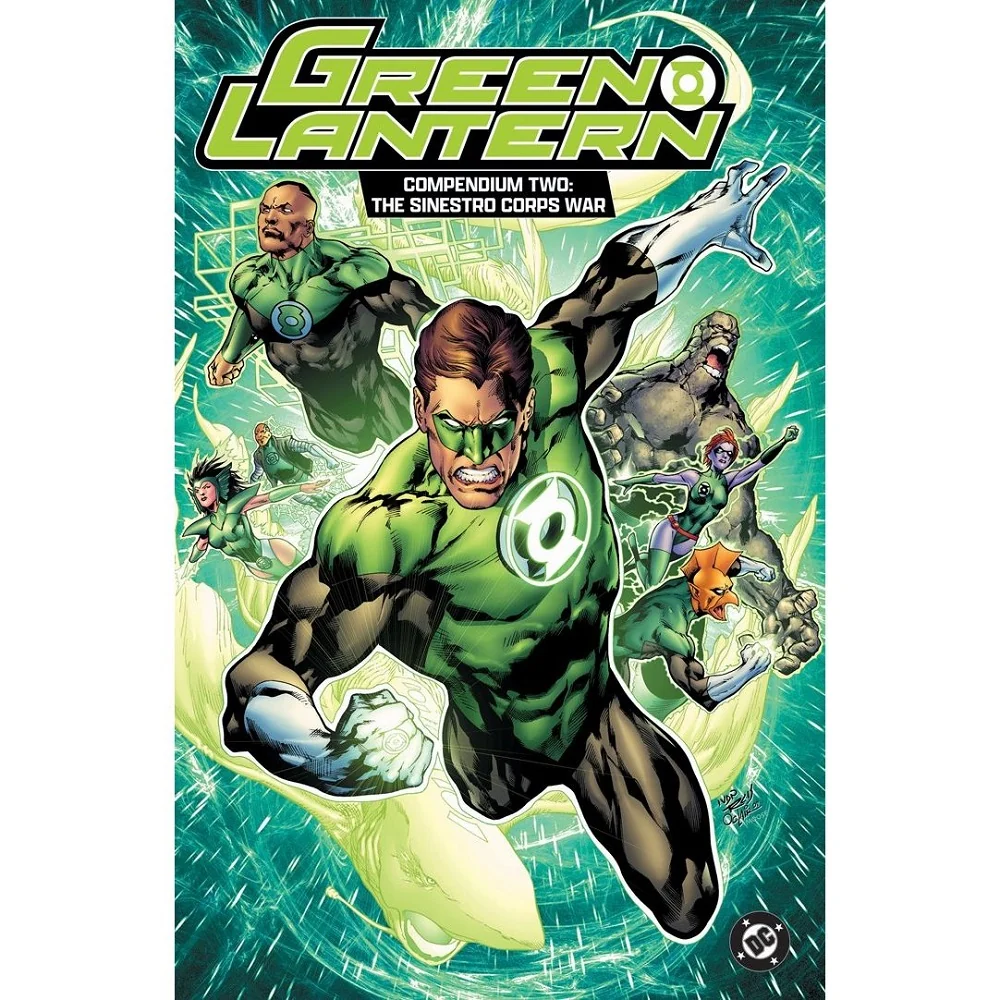
Green Lantern: The Sinestro Corps War Compendium. Credit: DC.
The Manhunters Never Really Disappeared
The Guardians stopped trusting them. That did not mean every Manhunter was destroyed.
Surviving units established hidden bases and proxies across the universe, including on Earth. That survival became central to the 1988 crossover Millennium.
Millennium revealed that the Manhunters had spent years infiltrating societies through sleeper agents. DC heroes discovered that people close to them could secretly be serving the Manhunter network.
DC’s own retrospective names figures including Rudolph West, Lana Lang and Dr. Helga Jace among those tied to the infiltration plot.
That is important for modern readers because it turns the Manhunters into something more interesting than an army of robots marching down a corridor.
They can be a conspiracy.
The fear is not only that a Manhunter will attack you.
It is that the Manhunters were already there.
Biot, Cyborg Superman and the Sinestro Corps Era
Geoff Johns brought the Manhunters back into the center of Green Lantern mythology during his 2000s run.
In the “Revenge of the Green Lanterns” storyline, Hal Jordan and Guy Gardner encounter Manhunters operating alongside Cyborg Superman, Hank Henshaw, with the conflict tied to the artificial world Biot and the fate of Lanterns Hal had previously believed lost.
DC’s own page for Green Lantern #13 describes Hal and Guy confronting “the cold, murderous Manhunters” and Cyborg Superman during that story.
The machines then became part of the escalation toward The Sinestro Corps War. Manhunters were involved in the return of the Anti-Monitor; DC’s official Anti-Monitor biography says the androids rebuilt his body before he became the Sinestro Corps’ “Guardian of Fear.”
That is the pattern throughout their history.
Somebody keeps finding a new use for the Guardians’ abandoned weapons.
Sometimes the Guardians themselves.
Sometimes Atrocitus.
Sometimes Cyborg Superman.
Sometimes Sinestro’s war machine.
The original experiment failed, but the hardware remained useful enough for villains — and occasionally desperate heroes — to keep turning it back on.
Are the Manhunters Still Around in DC Comics?
Yes.
They are not merely a Bronze Age concept that DC dug up because HBO needed a villain.
The current Green Lantern Corps series brought them back again in 2026. DC’s official solicitation for Green Lantern Corps #17, released June 10, describes the Lanterns trying to prevent “the new Manhunters” from stealing Ophidian, the entity associated with the orange light of avarice.
That is the current comics status worth remembering:
Manhunters still exist, and some form of new Manhunter threat is active in modern Green Lantern continuity.
One correction is important here because it is easy to mix versions of the franchise together. There is a story where Aya is infected by a Manhunter virus, but that is Green Lantern: The Animated Series #14 from 2013 — not the current 2026 Green Lantern Corps storyline.
Those are separate continuities.
Are Manhunters Robots, Androids or Cyborgs?
Usually, the Guardian Manhunters are best described as androids or robotic/artificial enforcers.
Their exact designs and capabilities have varied heavily by era. They have been shown with:
- superhuman strength and durability
- energy weapons
- flight or advanced transport
- sophisticated sensors
- networked communication
- infiltration systems
- specialized Manhunter technology and power batons
- the ability to operate in large coordinated forces
Some stories also involve organic proxies, sleeper agents or characters recruited into Manhunter organizations.
That is why “Manhunter” can refer to more than one thing even inside a single era of DC history.
The machine army is the core concept.
The network around it can be much bigger.
Manhunters vs. Martian Manhunter
No, Martian Manhunter is not one of these robots.
J’onn J’onzz is a Martian superhero whose name has nothing to do with being a member of the Guardians’ android army in the way modern readers usually mean “Manhunter.”
DC has made the history messier than that sentence suggests, because older comics tried to connect several different “Manhunter” traditions. A 1977-era explanation linked the cybernetic Manhunters to proxy orders on multiple worlds and even associated them with the old Martian Manhunter tradition.
That is historical continuity trivia, not a reason to tell a new reader that J’onn is secretly a Guardian robot.
He isn’t.
DC has also used Manhunter as a human codename.
Paul Kirk predates the robot villains, first appearing in 1940. Mark Shaw became a Manhunter in the 1970s. Kate Spencer later carried the name as a prosecutor-turned-vigilante.
The common word does not make all of these characters the same thing.
How HBO’s Lanterns Is Using the Manhunters
This is why the search term suddenly matters again.
HBO’s Lanterns has made the Manhunters part of its central mystery. Official trailers and DC’s own pre-premiere coverage established that Manhunters had infiltrated Earth and could hide among ordinary populations.
That is a significant adaptation change.
The comics Manhunters are primarily recognizable as artificial enforcers, while the show leans hard into infiltration and the ability to appear as different species. It takes the paranoia of Millennium — where trusted people could secretly serve the Manhunter network — and turns that idea into a detective-story weapon.
The television series and the comics are not the same continuity.
So do not assume that every detail about Sector 666, Krona, Biot or Atrocitus has already happened in the DCU just because the show uses the Manhunter name.
For the spoiler-light TV setup, cast and DCU context, read our complete HBO Lanterns guide.
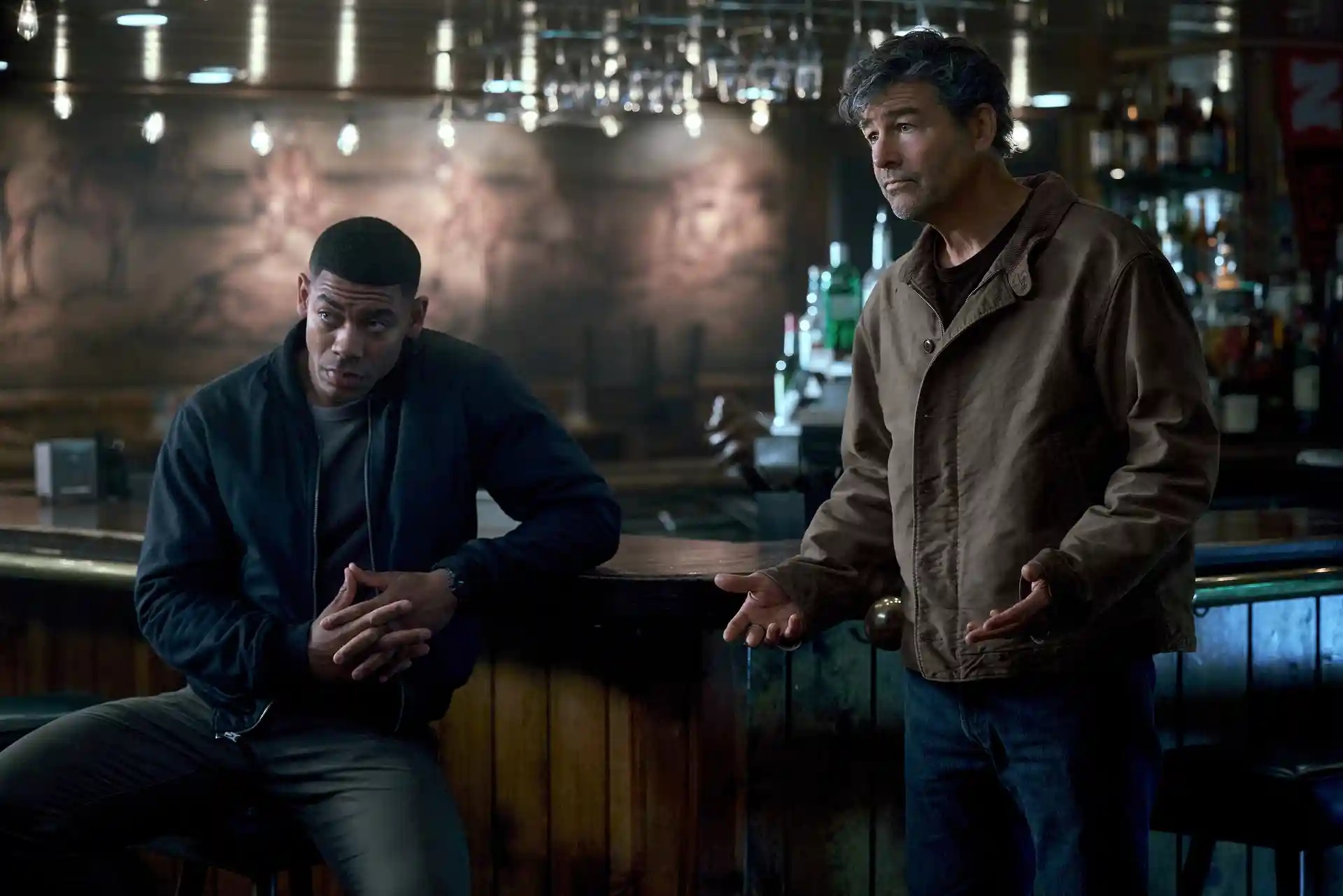
Aaron Pierre as John Stewart and Kyle Chandler as Hal Jordan in Lanterns. Credit: John Johnson / HBO Max.
The connection that does carry over cleanly is thematic.
Green Lantern stories are about who should be trusted with enormous authority.
The Manhunters are what happens when the Guardians answer that question with “a machine that cannot doubt us.”
Best Manhunter Comics to Read
If you want the story rather than an encyclopedia entry, you do not need to chase every robot cameo.
Start with these:
Justice League of America #140–141 (1977)
The robotic Manhunters’ original comic introduction and the foundation of their early history.
Millennium (1988)
The big sleeper-agent story. This is the book to read if the infiltration angle in HBO’s Lanterns is what interested you.
Green Lantern: Secret Origin
Useful for the modern Sector 666 and Atrocitus side of Green Lantern history.
Green Lantern #10–13 (2006), “Revenge of the Green Lanterns”
The Biot/Cyborg Superman-era return of the Manhunters.
The Sinestro Corps War
The Manhunters become part of a much larger cosmic war and the Anti-Monitor’s return.
Green Lantern Corps #17 (2026)
For the current generation of Manhunters rather than only their historical lore.
The Manhunters have changed with DC continuity, but the basic idea has survived remarkably well:
The Guardians tried to manufacture perfect law enforcement.
They manufactured one of Green Lantern’s oldest warnings instead.
For more on who the Guardians actually are and why they turned to a living Corps at all, see our full Oa and Guardians of the Universe explainer.
Make Red Reactions a preferred source
Choose Red Reactions as a preferred source in Google Search.
Confirm your choice on Google.
Related coverage

John Stewart Explained: Green Lantern Origin, Powers and How Lanterns Changed His Story
John Stewart's real comic-book history — architect, Marine, Hal Jordan's alternate, the third human Green Lantern — and how HBO's Lanterns rewrites his origin around his parents.

Oa and the Guardians of the Universe Explained — How the Green Lantern Corps Actually Works
Oa is the Green Lantern Corps' homeworld, and the Guardians of the Universe who run it have a history of catastrophic mistakes. Here's who they are, why the Corps exists, and what HBO's Lanterns has changed.
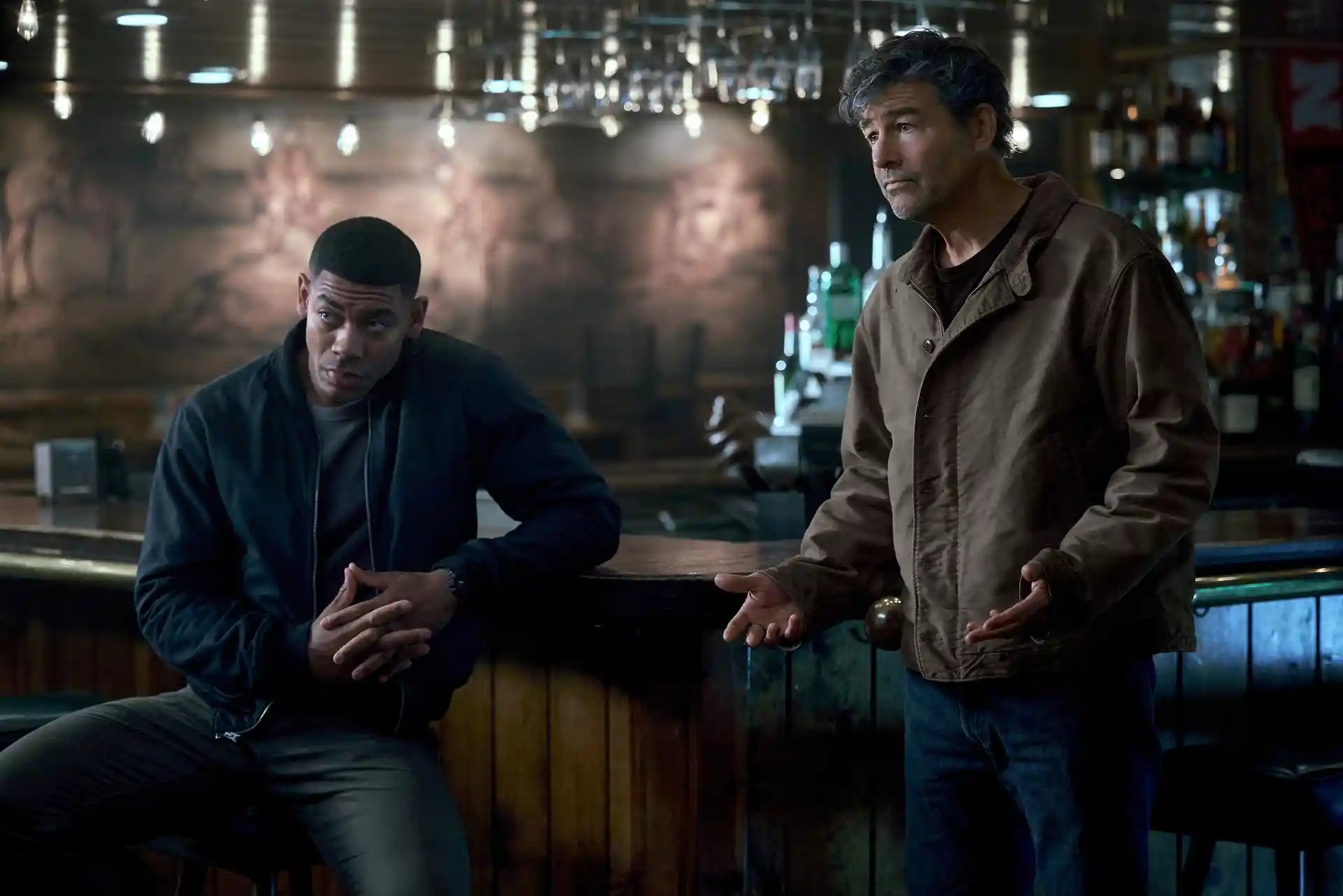
Lanterns: Hal Jordan and John Stewart Explained — Their Powers, Differences and DCU Roles
Hal Jordan is the reckless veteran; John Stewart is the disciplined recruit. Here's how the two Green Lanterns differ in the comics, what HBO's Lanterns confirms about their dynamic, and how their construct styles actually work.
Every Lantern Corps Explained: Colors, Emotions and Powers of DC's Spectrum
Green, Yellow, Red, Orange, Blue, Indigo and Violet — plus Black, White, Ultraviolet and the stranger exceptions. Every major Lantern color in DC explained.
About the author
Aram Anwar
Founder & Editor
Aram Anwar founded Red Reactions and writes across comics, gaming, movies and television. His work includes franchise guides and large Lore / Explained features, with an emphasis on separating confirmed details from reports, theory and speculation.
Coverage: Comics · DC & Marvel · Gaming · Movies & TV · Lore / Explained · Guides
More from Aram Anwar