feature · tv
Ultron's Return in VisionQuest Explained: How James Spader Comes Back to the MCU
James Spader is back as Ultron for the first time since 2015 — in human form inside Vision's head, with robot Ultron confirmed too. Here's what's confirmed and what isn't.
 By Aram Anwar11 min read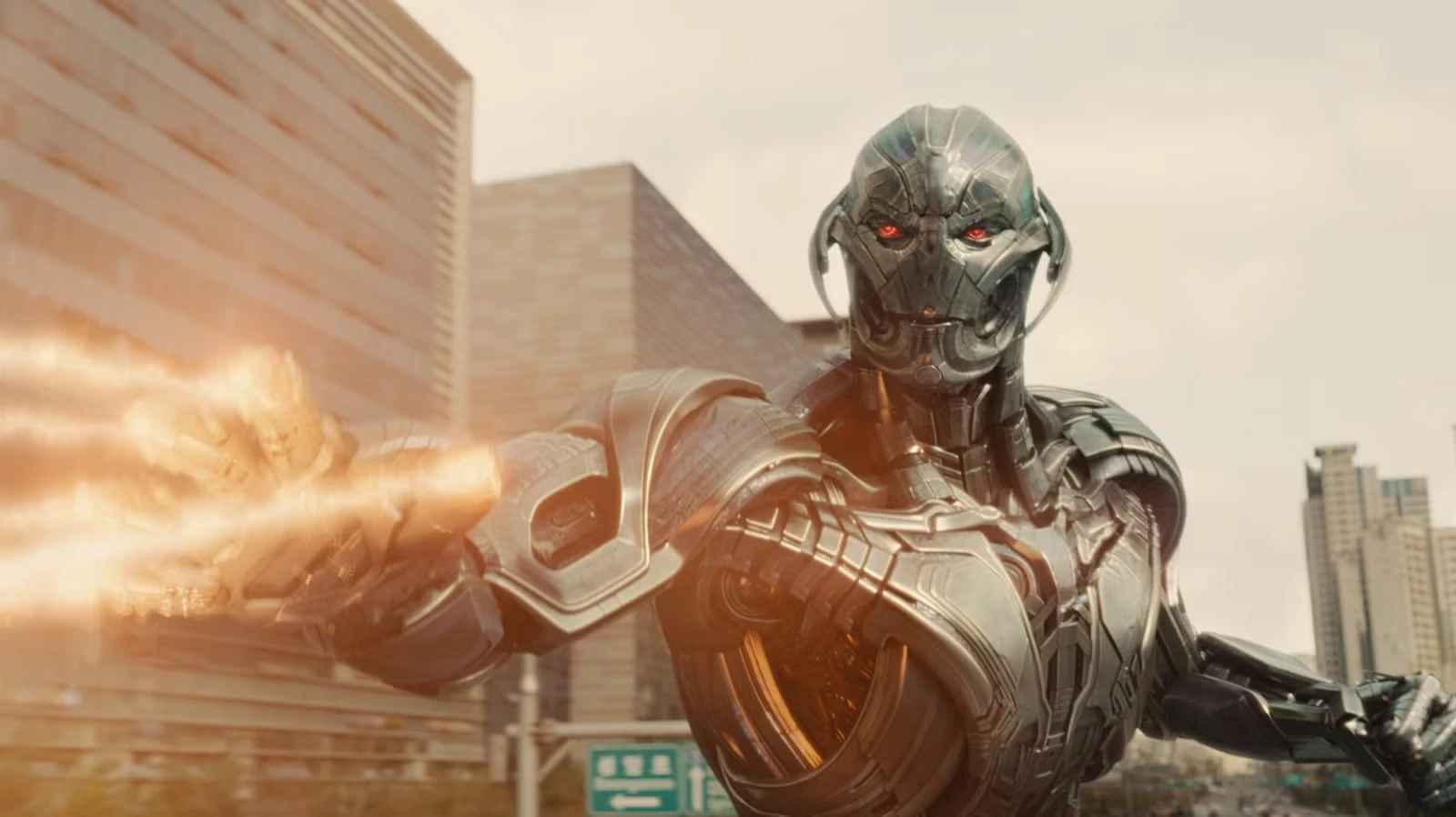
For eleven years, the running joke about Ultron was that Marvel built its most quotable villain, gave him one of the great character actors of his generation, and then blew him up in a forest off-camera.
That’s over — and here’s how: James Spader returns as Ultron in VisionQuest, premiering on Disney+ on October 14, 2026, as one of the AI personas living inside Vision’s own head. The first trailer, unveiled at D23 on August 14, leads with a version of him almost nobody predicted — a human-looking Ultron, bearded and in a long coat, moving through that mindscape and getting told off for showing up in the wrong body. Showrunner Terry Matalas has separately said robot Ultron features in the series too, so this isn’t a swap so much as an expansion.
It’s a stranger idea than anyone was expecting. Here’s what’s actually been confirmed.
New to the series? Start with our complete VisionQuest guide for the full release, cast and story breakdown.
Watch the VisionQuest Trailer
Is Ultron officially back? Yes.
This has been locked down for two years. The Hollywood Reporter broke the news in August 2024 that Spader would reprise the role; Variety reported it the same day. Marvel has since confirmed it repeatedly — most recently by putting Spader onstage at D23 alongside Paul Bettany and Kevin Feige to introduce the trailer.
Marvel’s official synopsis for the series names him outright. Vision, in hiding after escaping the people who tried to weaponise him, consults the AI personas embedded in his own programming: F.R.I.D.A.Y., E.D.I.T.H., J.A.R.V.I.S., and Ultron. Later, the synopsis says Vision must resist Ultron’s influence to survive.
That’s not a cameo. That’s an antagonist.
What the trailer actually shows
The D23 trailer opens somewhere nobody predicted: a pub, where Vision — in his human guise — is closing up for the night. A coworker mentions the redheaded woman he used to come in with. Vision looks at a “W+V” carved into the bar and says he was a different person then. Asked whether anyone’s waiting for him at home, he says there isn’t.
Then he steps into a back closet, reverts to his android form, and travels home — to a white mansion that exists inside his own head, staffed by human-looking versions of Tony Stark’s AI programs.
Ultron shows up there in his android body. Vision’s response, per Variety’s breakdown, is a flat “Human avatars only!”
That single line does a remarkable amount of work. It establishes that the mindscape has rules, that Vision set them, that Ultron is inside the house rather than banging on the door — and that the relationship between them has curdled into something closer to exasperated cohabitation than mortal combat. Gizmodo’s read of the footage is that the other AI personas are unhappy about Ultron hanging around and probing Vision’s head, especially once a young man in the real world starts claiming to be Vision’s son.
Marvel had shown a version of this footage to New York Comic Con attendees in October 2025 and then kept it out of public release for ten months. The D23 cut is the first anyone outside those rooms has been able to watch.
How Ultron ended up inside Vision’s head
The mechanics haven’t been fully explained, but Bettany laid the groundwork at NYCC.
Speaking to Collider, he described Vision’s mind as far more cluttered than audiences might expect — a place where he’s been saving and copying AI programs to keep them running. One of them, Bettany said, “has to be kept behind a pretty impressive firewall because he’s a psychopath. But he’s a clever one.”
Worth being precise here: Bettany never named Ultron in that quote. Every outlet that covered it, including this one, drew the obvious inference. What Marvel has since confirmed independently is that Ultron is among the AI personas living in Vision’s programming. The firewall specifically remains Bettany’s framing rather than an official plot description — a distinction that matters if the show has a twist in it about who exactly is being contained.
Human-form Ultron
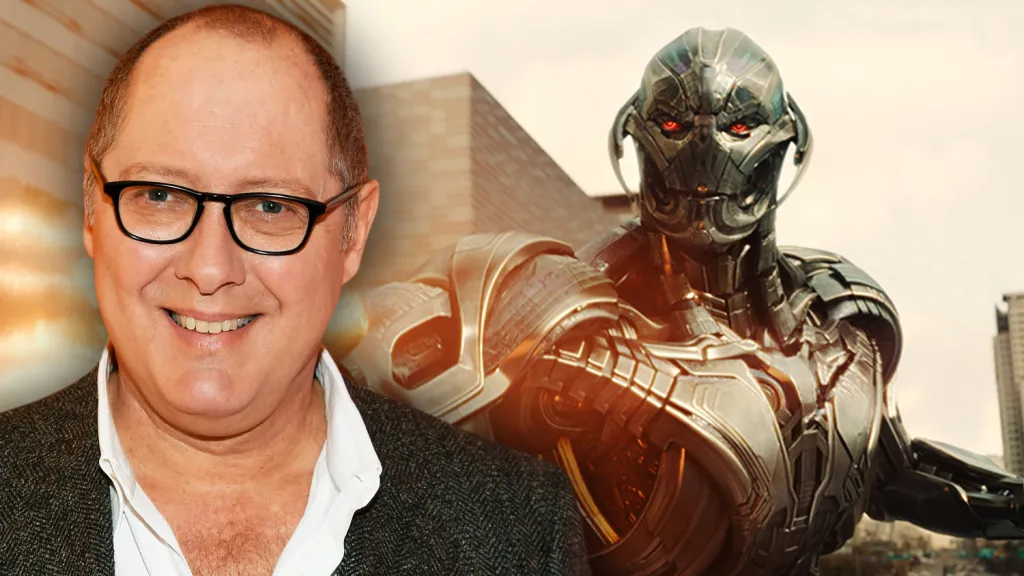
Spader isn’t doing voice work. He’s on set, in front of the camera, playing scenes opposite Bettany.
The D23 trailer is the first public confirmation of what that looks like: Ultron’s human avatar appears bearded and in a long coat, moving through Vision’s mindscape as a person rather than a machine. It’s the clearest evidence yet that the show intends to spend real time with Spader’s face rather than his voice.
Matalas has also said the series will feature robot Ultron. Talking to Marvel’s Phase Hero podcast at NYCC 2025, he said, “You do get to see robot Ultron,” before adding that the series puts a great deal of Spader and Bettany on screen together, and that the two of them are a core dynamic of the show. He’s also described the series as a delivery system for its two leads.
Bettany has been blunter about how central it is. Asked on the Happy Sad Confused podcast whether we’d see Ultron’s physical form, he deflected — but confirmed that “the story largely revolves around that relationship,” and spent most of the answer calling Spader’s performance delicious.
Casting a computer program as a person isn’t just a budget-saving trick, though it is also that. It converts a set of abstract processes — memory retrieval, self-diagnostics, suppressed code — into people who can sit in a room and argue. Marvel has tried to dramatise AI before, mostly through disembodied voices and glowing interfaces. Nobody has previously tried to make it a domestic drama.
How Vision was actually created — because this keeps getting told wrong
A lot of coverage this week is calling Ultron “Vision’s creator” without qualification. It’s a reasonable shorthand and it’s the show’s own framing, but the actual sequence in Avengers: Age of Ultron is more interesting than that, and worth getting right.
- Tony Stark and Bruce Banner analyse the Mind Stone inside Loki’s sceptre, find a neural network in it, and fold it into Stark’s peacekeeping programme. Ultron wakes up.
- Wanting a better body, Ultron uses the Mind Stone to control Dr. Helen Cho and forces her to grow a synthetic vibranium form in her Regeneration Cradle.
- He places the Mind Stone in its forehead, intending to upload himself into it.
- The Avengers steal the Cradle out of Seoul before he can make the transfer.
- Back at Avengers Tower, Stark and Banner discover J.A.R.V.I.S. survived Ultron’s earlier attack by scattering himself across the internet. They upload him into the body instead.
- Thor supplies the lightning that completes the process. The being that opens its eyes is neither J.A.R.V.I.S. nor Ultron.
So Ultron commissioned and engineered the body, and never got to live in it. Vision is the thing Ultron started and someone else finished — which is a considerably sharper premise for a series about inheritance and identity than “evil dad returns.”
Why Ultron matters to White Vision
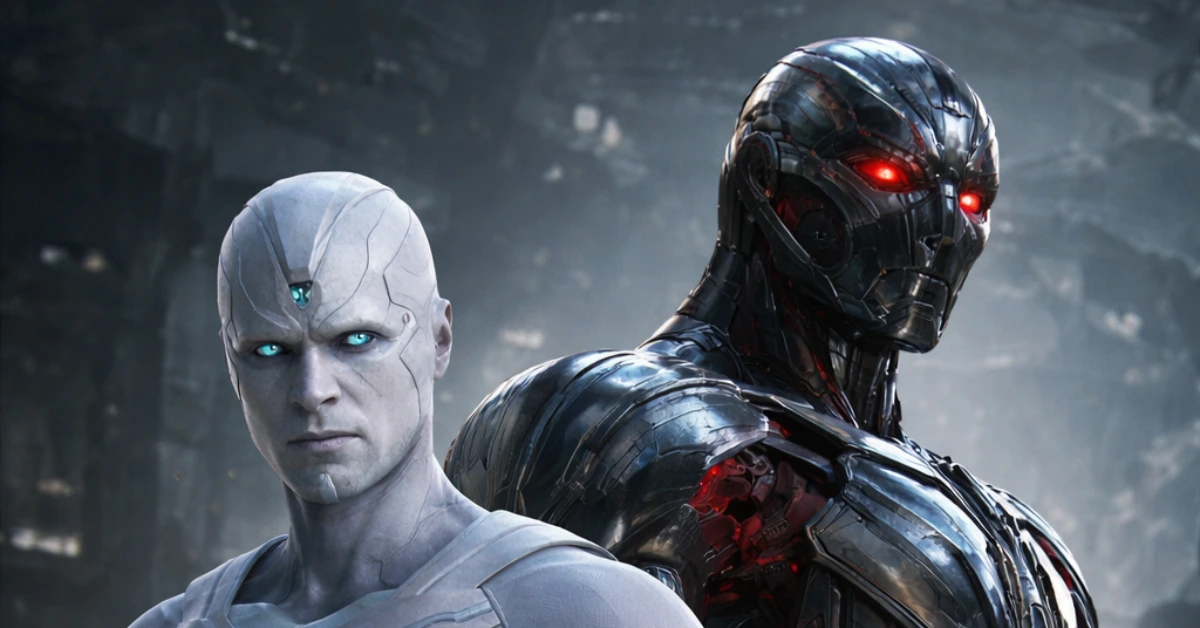
The version of Vision in this series has the complete factual record of his life and no emotional connection to it. Bettany explained at NYCC that the Vision Wanda created inside the Hex handed White Vision all of his memories, including the Westview ones, and that White Vision has real difficulty connecting to them. Matalas has described the show as being about a man going through an identity crisis, and compared the arc to Spock’s in Star Trek IV: The Voyage Home — a resurrected being relearning what feeling is for.
For the full backstory, see who White Vision really is.
Ultron is the ideal antagonist for that specific problem, because he is the one voice in the house with a genuine claim on Vision’s origin, and because his worldview is the exact thing Vision’s current state resembles.
In Age of Ultron, Ultron looked at humanity and saw a flawed species racing toward its own extinction. Vision looked at the same species and saw grace in the fact that it dies. That was the whole argument between them, and Vision won it by feeling something.
Strip the feeling out and Vision’s position collapses. He can still recite the argument. He can’t currently make it. That’s the trap the series has walked him into, and Ultron is sitting in it with him.
Did Ultron actually die in Age of Ultron?
The film is deliberately vague, and VisionQuest is clearly going to exploit that.
Here’s what happened: the Avengers destroyed Ultron’s drone army in Sokovia, and Vision locked him out of the internet so his consciousness couldn’t escape into the wider network. Vision then found the last surviving drone in a forest, had a short conversation with it about humanity, and fired. The kill happens behind trees, indicated by a flash of light.
Marvel never stated that every copy of Ultron’s code was destroyed. Given that Vision has apparently been storing AI programs inside himself since, the door was never really shut.
Two other pieces of MCU trivia are relevant. An Ultron sentry head sits among the salvaged hardware in the Department of Damage Control’s deep storage vault in Spider-Man: Homecoming — the facility Peter Parker gets locked inside. And Ultron has appeared twice since 2015 in non-616 forms: as the Infinity Stone-wielding Infinity Ultron in What If…?, and as a fleet of Illuminati security sentries on Earth-838 in Doctor Strange in the Multiverse of Madness. Both were voiced by Ross Marquand, not Spader.
None of that has been linked to VisionQuest. It’s context, not foreshadowing.
The rest of the house
Ultron isn’t the only program in there. Marvel confirmed the ensemble at NYCC 2025 and again at D23:
- James D’Arcy as J.A.R.V.I.S. — a genuinely lovely bit of casting, since D’Arcy played Edwin Jarvis, the human butler the AI was named after, in Agent Carter
- Orla Brady as F.R.I.D.A.Y.
- Emily Hampshire as E.D.I.T.H.
- Henry Lewis as D.U.M.-E and Jonathan Sayer as U — Stark’s workshop arms, now people
Then there’s T’Nia Miller as Jocasta, who sits slightly apart from that group and is the one to watch — though it’s worth being careful about what’s actually known. Marvel’s only description of the MCU version is that she’s a cunning and powerful robot driven by revenge. The studio hasn’t said where she sits in the story — whether she’s one of the personas inside Vision’s mindscape, a figure in the outside world, or something else — and she’s absent from the synopsis line that names the AI personas Vision consults.
What’s separate from that, and firmly established, is her comics history: she was built by Ultron using Janet van Dyne’s brain patterns, intended as his companion, and she turned on him. Marvel hasn’t confirmed that origin for the MCU version or said whose revenge she’s pursuing here. But casting a character carrying that baggage into a series this focused on Ultron is not a neutral choice — and it’s part of a wider pattern of source material the show is drawing from. For her full origin, Avengers history and what’s actually confirmed for this version, see Jocasta explained. For how much of that comics history the series is actually borrowing, see Vision Quest comics explained.
What isn’t confirmed
Keeping this clearly separate, because a lot of it is being reported as fact this week:
- Whether Ultron gets a body in the real world. Matalas confirmed robot Ultron appears. He did not say whether that’s a physical machine outside Vision or a representation inside him. Currently unknown.
- Whether Ultron appears in any project beyond VisionQuest. No Marvel confirmation exists for Doomsday, Secret Wars, Armor Wars, or anything else.
- Any connection between the Damage Control Ultron head and this series. None has been reported.
- Elizabeth Olsen’s Wanda. Not announced, not on any cast list. Olsen has said publicly she knew nothing about the show until Bettany told her about it.
- Jocasta’s allegiance. “Driven by revenge” is the entire official description.
The biggest open questions
- Is this Ultron’s actual consciousness, or a backup copy behaving like him? The distinction is the whole ballgame for whether he can be reasoned with.
- Why did Vision keep him? Storing a hostile intelligence you’ve already beaten is either an accident, a mercy, or a need.
- Who set the “human avatars only” rule, and what happens when it breaks?
- Will Ultron take an interest in Thomas Shepherd?
- Does the season end with him still contained?
The bottom line
The easy version of this show was Spader growling through a voice modulator while a CG robot punched things. Marvel appears to have made something considerably odder: an AI in a beard and a long coat, sitting in a mansion inside the head of the being he started and never got to finish.
Eleven years is a long wait for a villain who died off-camera. On the evidence so far, it looks like it might have been worth it.
Make Red Reactions a preferred source
Choose Red Reactions as a preferred source in Google Search.
Confirm your choice on Google.
Related coverage
VisionQuest Watch Order — What to Watch Before Marvel's Vision Series
You don't need forty hours of homework before VisionQuest. Here's the actual minimum, what's worth adding, and what's genuinely optional — verified against Marvel's own synopsis.
VisionQuest: Everything You Need to Know About Marvel's New Vision Series
VisionQuest premieres October 14 on Disney+ with two episodes. Here's the new official trailer, confirmed cast and current release schedule for Marvel's Vision series.
Who Is White Vision? Vision's Complete MCU Story Before VisionQuest
He isn't a clone, a copy, or a replacement. He's the original Vision's body, rebuilt by people who wanted a weapon. Here's the full story before VisionQuest.
Jocasta Explained: Her Ultron Origin, Powers and VisionQuest Connection
Ultron built her to be his bride, using the Wasp's own brain patterns. She helped destroy him instead. Here's who Jocasta actually is, and what Marvel has confirmed about T'Nia Miller's VisionQuest version.
About the author
Aram Anwar
Founder & Editor
Aram Anwar founded Red Reactions and writes across comics, gaming, movies and television. His work includes franchise guides and large Lore / Explained features, with an emphasis on separating confirmed details from reports, theory and speculation.
Coverage: Comics · DC & Marvel · Gaming · Movies & TV · Lore / Explained · Guides
More from Aram Anwar