lore · tv
Sylar Explained: Powers, Abilities and Why He Became Heroes' Greatest Villain
Who is Sylar in Heroes? A complete guide to Gabriel Gray's origin, intuitive aptitude, stolen powers, hunger, redemption arc and why Zachary Quinto's villain became the show's defining threat.
 By Aram Anwar15 min read
Few television villains from the 2000s were introduced with as much menace as Sylar. Before Heroes fully showed him, he was almost a horror-movie presence: a name connected to bodies, opened skulls and people with extraordinary abilities who suddenly disappeared. By the time Zachary Quinto’s Gabriel Gray stepped into the light, the mystery had already done much of the work.
But Sylar was never simply a serial killer who happened to have superpowers. His original ability was stranger than that, his method of taking powers was more complicated than the show first suggested, and his obsession with being “special” turned him into a dark mirror of nearly every major character in Heroes.
This is the full story of Sylar: who Gabriel Gray was, how his power actually worked, which abilities mattered most, why he killed other evolved humans, how he eventually learned he did not need to kill at all, and why he remains the villain most closely associated with Heroes.
Major spoilers for all four seasons of Heroes follow.
For the bigger story of the series itself, read our full breakdown of the rise, fall and legacy of Heroes.
Who Is Sylar in Heroes?
Sylar’s real name is Gabriel Gray. Before becoming one of the most dangerous evolved humans in the series, Gabriel worked as a watchmaker. That occupation was not random background detail. It established the central idea behind his natural ability: Gabriel could look at a complicated system, understand how its pieces fit together and identify what made it work.
The tragedy was that understanding machinery was not enough for him.
Gabriel wanted to matter. He wanted proof that he was exceptional. When geneticist Chandra Suresh began searching for people with extraordinary abilities, Gabriel became desperate to be one of them. Initial testing failed to reveal an obvious power, leaving him feeling ordinary again.
Then he met Brian Davis, a man with telekinesis.
Gabriel realized that his own ability was not flashy. He could intuitively understand how things worked — including, horrifyingly, the biological mechanism behind another evolved human’s power. He killed Brian, examined his brain and emerged able to use telekinesis himself.
That murder changed Gabriel Gray permanently.
He later adopted the name Sylar, taken from a watch brand, and began hunting other people with abilities.
What Is Sylar’s Original Power?
Sylar’s natural ability is generally known as intuitive aptitude.
The simplest explanation is that he can understand how complex systems work with extraordinary speed and precision. A watch is one kind of system. A human brain is another.
That distinction matters because Sylar’s actual power is often described too loosely as “power stealing.” That is not quite what Heroes establishes.
His intuitive aptitude allows him to understand the mechanism behind another person’s ability. By examining the relevant part of an evolved human’s brain, he can reproduce that ability in himself. The series intentionally leaves some of the biology vague, but the connection between Sylar’s analytical gift, the brain and his acquisition of powers is fundamental to the character.
It is also why his watchmaking background works so well thematically. Gabriel begins as a man who repairs mechanisms. Sylar becomes a man who dismantles people.
The same basic gift is operating in both cases.
Does Sylar Eat People’s Brains?
No — at least, the series never establishes that Sylar eats the brains of his victims.
That became an early fan assumption because victims were frequently discovered with the tops of their skulls removed, while the exact process of acquiring their powers happened off-screen.
The show later gives viewers a clearer look at what he does. Sylar studies the brain to understand the source of an ability. The horror comes from the examination itself, not from cannibalism.
The distinction sounds minor, but it says something important about him. Sylar is not driven by hunger in the ordinary physical sense. His “hunger” is tied to understanding, acquisition and his obsessive need to become more special than everyone around him.
Why Does Sylar Kill People With Powers?
At first, Sylar believes killing is simply part of the process required to gain an ability. But Heroes gradually makes the problem much more psychological.
Gabriel is deeply insecure. He has spent much of his life believing he should be more than an ordinary watchmaker, and once he discovers that other people possess extraordinary gifts, he becomes consumed by the idea that those abilities should belong to him.
His intuitive aptitude intensifies that compulsion. He does not merely see a power — he wants to understand it.
Once he discovers that understanding another evolved human can let him reproduce their ability, every new person becomes a mechanism waiting to be opened.
That is the real terror of Sylar in Season 1. He is not pursuing a political ideology or trying to rule the world. If you have something extraordinary inside you, that alone can make you his target.
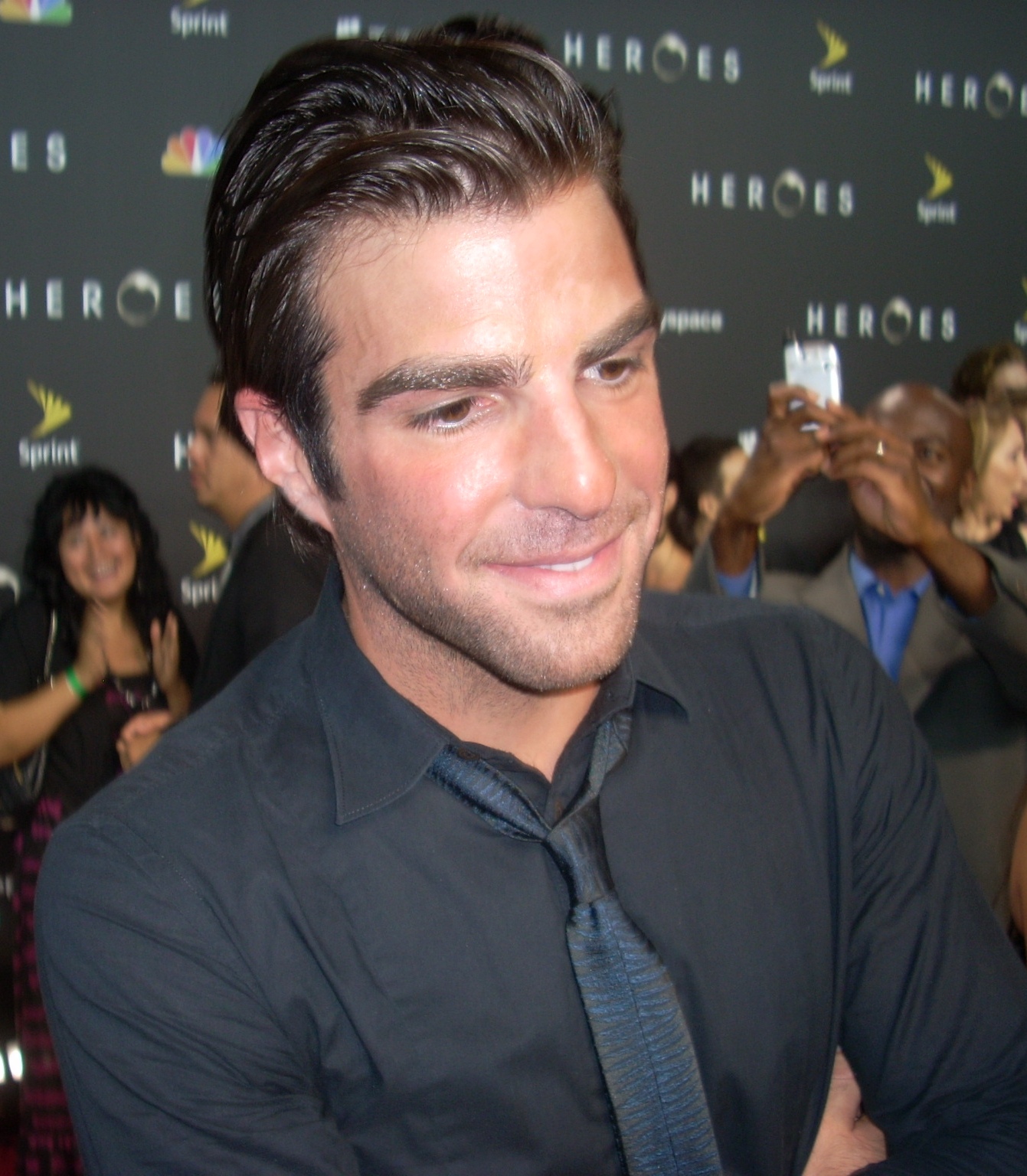
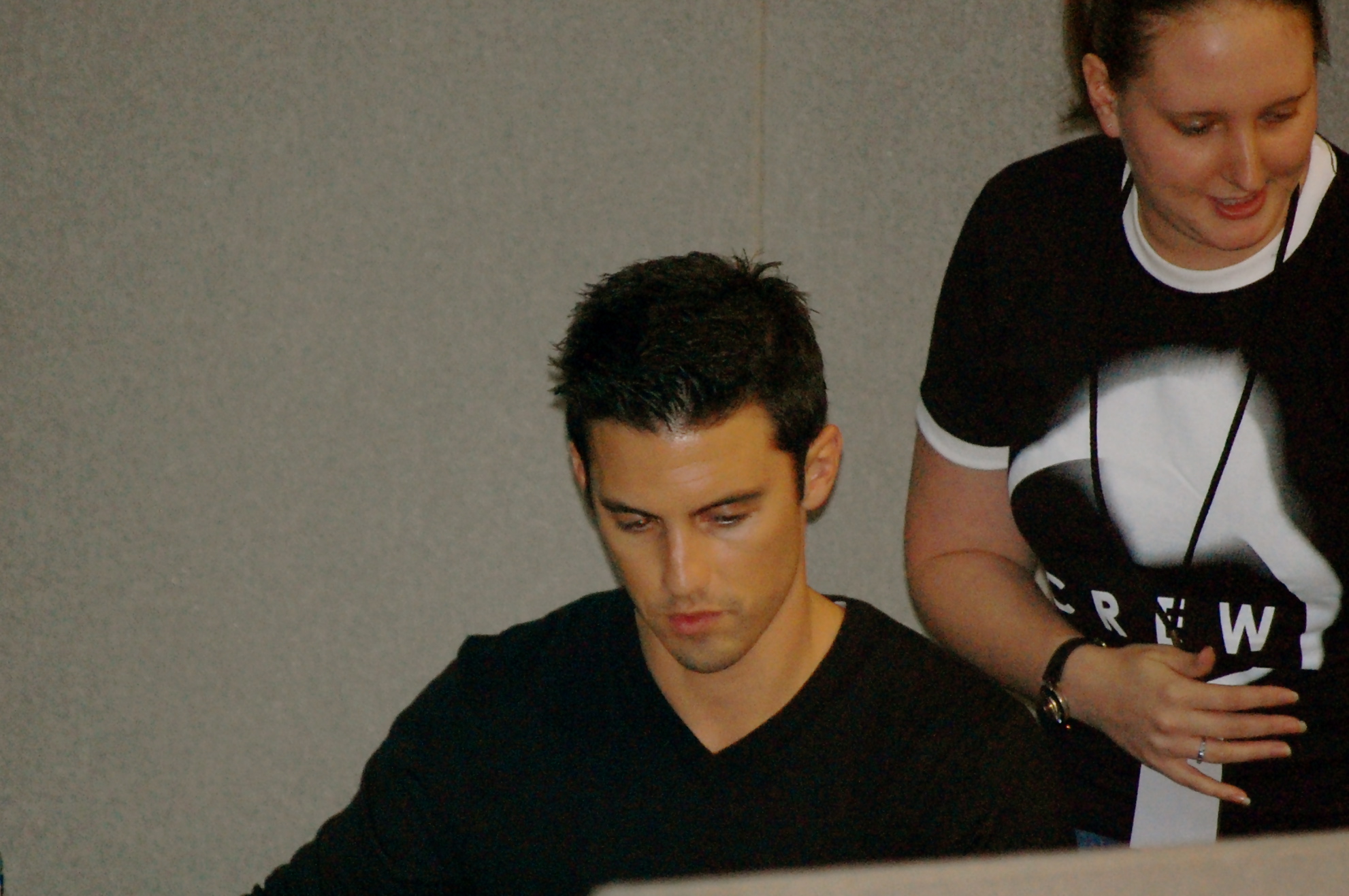
Photo: watchwithkristin / CC BY-SA 2.0 / Wikimedia Commons.
Sylar’s Most Important Powers
Sylar accumulates a large number of abilities over the original series, and the exact collection changes as the story resets, removes or replaces parts of his arsenal. Rather than treating every temporary ability as equally important, these are the powers that matter most to understanding the character.
Intuitive Aptitude
This is the foundation of everything.
Intuitive aptitude is Sylar’s natural ability and the source of his almost compulsive need to understand how things work. It is what enables his brutal method of studying other evolved humans and reproducing their abilities.
It also makes him unusually quick at mastering powers once he obtains them.
Telekinesis
Telekinesis becomes Sylar’s signature combat ability after he acquires it from Brian Davis.
He uses it with far more sophistication than its original owner, moving objects, throwing opponents, pinning people in place and making extremely precise cuts. The now-iconic gesture of Sylar moving a finger across someone’s forehead while telekinetically cutting into the skull became one of Heroes’ most recognizable visual threats.
Even when his collection of abilities changes, telekinesis remains central to the character.
Rapid Cellular Regeneration
One of Sylar’s biggest upgrades comes when he targets Claire Bennet.
Claire’s regenerative ability allows her body to recover from injuries that would kill an ordinary person. When Sylar finally examines her brain in Season 3, he acquires regeneration without killing her.
From that point onward, simply damaging Sylar becomes an even less reliable way to stop him.
Combined with his telekinesis and growing experience, regeneration helps move him from dangerous serial killer to something approaching a near-unkillable superhuman threat.
Electric Manipulation
Sylar gains Elle Bishop’s electrical ability in one of the most important scenes in his entire arc — not because electricity is his strongest power, but because he acquires it without killing her.
That revelation changes the meaning of everything that came before it.
Shapeshifting
Later in the series, Sylar acquires the ability to alter his physical appearance. This becomes especially important during the storyline involving Nathan Petrelli, because the series begins using Sylar’s body, identity and memories as parts of the same conflict.
The power is useful in a fight, but its real value to the story is psychological. A character already struggling to decide whether he is Gabriel Gray, Sylar, a monster or something else gains the ability to literally become other people.
Other Abilities
Across the series, Sylar also acquires or demonstrates powers including enhanced hearing, precognition, induced radioactivity, alchemical transmutation, psychometry, lie detection, disintegration and flight, among others.
The important point is not simply that he collects a long list. It is that Sylar’s power set is never static. His threat comes from the possibility that the next evolved human he meets can become his next upgrade.
Why Telekinesis Became Sylar’s Signature Power
If Sylar can possess so many abilities, why does telekinesis define him?
Because it perfectly matches the character.
Telekinesis lets him be violent without looking physically frantic. He can stand still while someone else is thrown across a room. He can immobilize a victim with a small movement of his hand. He can perform the precise skull-cutting technique that became synonymous with his murders.
That restraint made him more frightening than a villain who constantly needed giant visual effects.
Sylar often looked like he was doing very little — and that was the point.
The contrast also suited Zachary Quinto’s performance. His version of Sylar could move from awkward Gabriel Gray to cold predator without changing the scale of the scene. Telekinesis allowed the power to follow the performance rather than overwhelm it.
The “Hunger” Explained
One of the more complicated ideas in Sylar’s story is his hunger.
The series treats it as an obsessive drive connected to his intuitive aptitude: the need to understand an ability, take it apart and make it his own. At different points, other characters discuss the hunger almost as though it is an unavoidable consequence of what he is.
But Heroes ultimately undermines that excuse.
Sylar can choose.
His ability may push him toward understanding, but murder is not biologically required. That becomes undeniable once he discovers another way to acquire powers.
This is where Sylar becomes more interesting than a villain controlled by an uncontrollable supernatural appetite. If he truly had no choice, much of his moral responsibility would disappear.
Instead, Heroes reveals that another path exists — and Sylar repeatedly struggles with whether he wants to take it.
Sylar Can Take Powers Without Killing
Season 3 reveals one of the biggest twists in the character’s mythology: Sylar does not actually need to cut open someone’s skull to gain their ability.
Arthur Petrelli recognizes that Sylar can form an emotional understanding of another person and acquire a power through that connection. The clearest demonstration comes with Elle Bishop.
Rather than murdering Elle and examining her brain, Sylar connects with her emotionally. He understands her pain, and he gains her electrical ability without killing her.
This places him much closer to Peter Petrelli than the early seasons initially suggest. Peter’s defining trait is empathy, and his original ability allows him to mimic powers through his connections with others. Sylar arrives at a darker version of a similar idea: understanding can replace dissection.
That creates the central irony of his character.
The serial killer who spent years tearing people apart to understand them eventually learns that genuinely understanding another person can give him what he wanted all along.
He simply finds emotional connection much harder than murder.
Gabriel Gray vs. Sylar
As Heroes continues, the conflict inside the character becomes less about whether Sylar is powerful enough and more about who he believes he is.
Gabriel Gray represents the insecure watchmaker: lonely, vulnerable and desperate to be important.
Sylar is the identity he builds to destroy that weakness. Sylar is powerful. Sylar is feared. Sylar does not have to accept being ordinary.
The problem is that Gabriel never completely disappears.
The series repeatedly gives him opportunities to imagine another life — family, love, a child, forgiveness, even heroism. Those possibilities do not erase his crimes, but they expose the weakness underneath the persona. For someone obsessed with being special, Sylar spends an enormous amount of time wanting one of the most ordinary things imaginable: to belong somewhere.
That desire makes him easy to manipulate. Angela and Arthur Petrelli exploit his need for family, while the later revelation of Samson Gray as his biological father offers anything but the validation Gabriel had spent his life seeking.
The more Sylar learns about himself, the less satisfying his accumulated powers become.
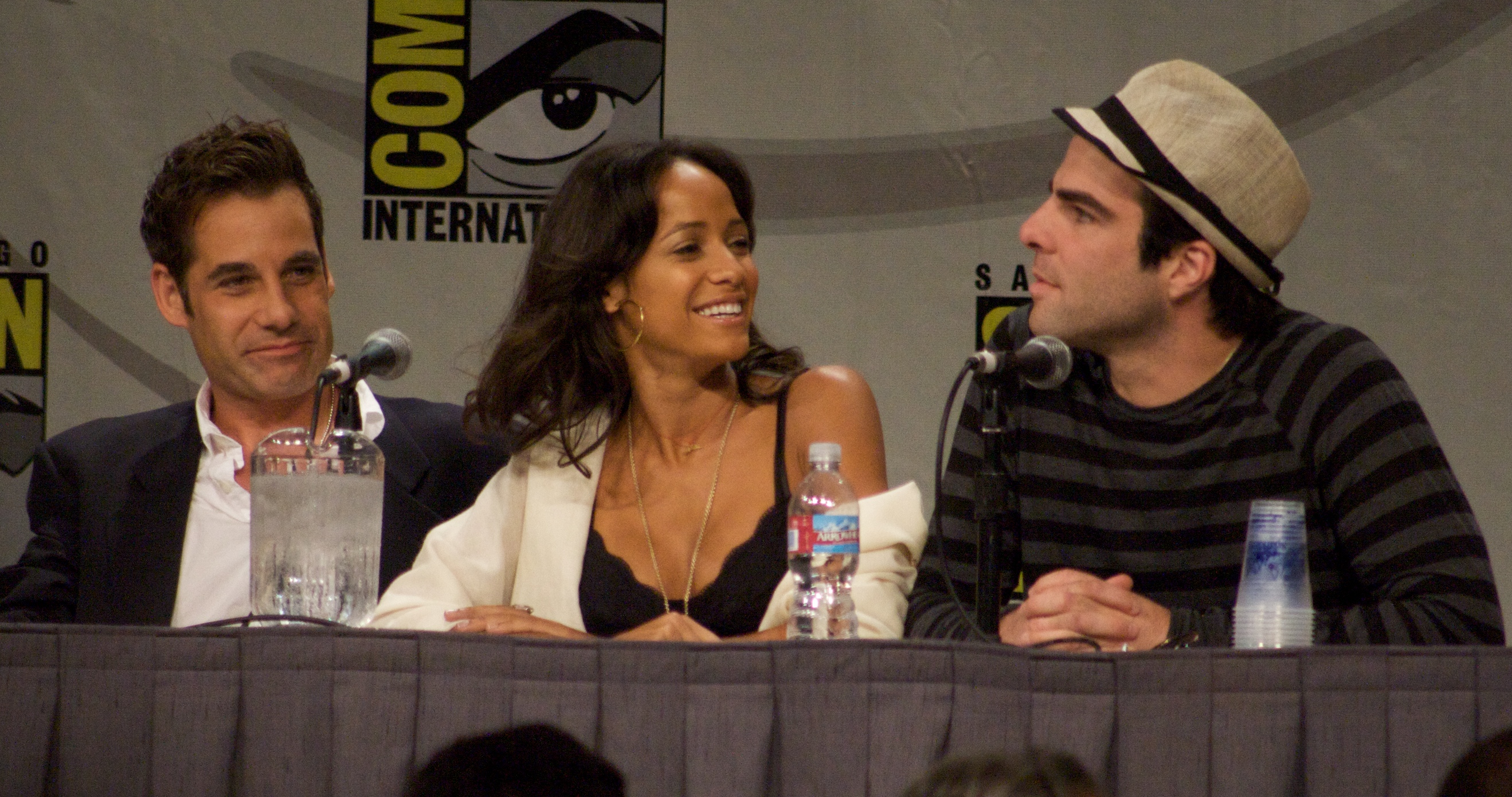
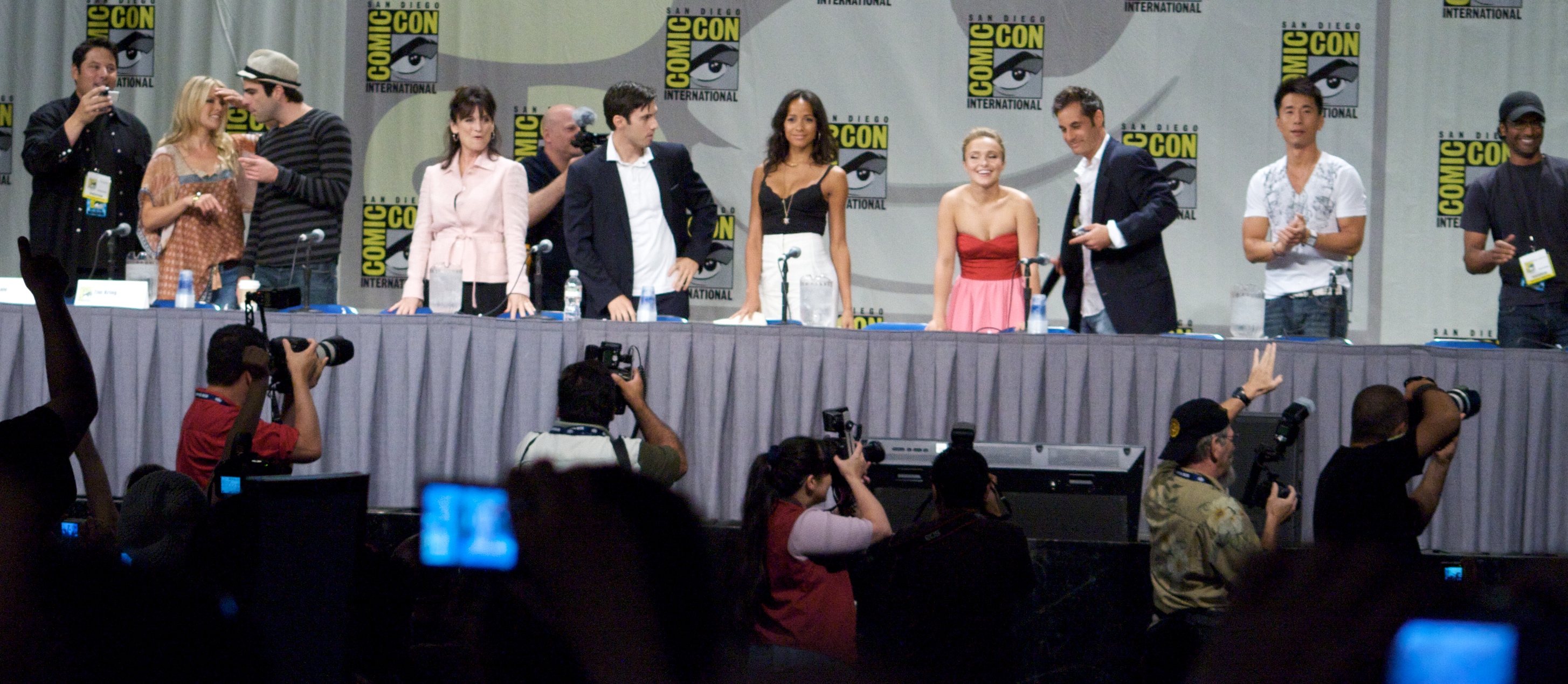
Photo: Ewen Roberts / CC BY 2.0 / Wikimedia Commons.
What Happened With Sylar and Nathan Petrelli?
The Nathan Petrelli storyline is where Heroes pushes Sylar’s identity theme to its most extreme point.
At the end of Season 3, Sylar kills Nathan. Rather than accept Nathan’s death, Angela Petrelli and Noah Bennet force Matt Parkman into an extraordinary solution: use his mental ability to make Sylar believe that he is Nathan Petrelli.
Sylar’s shapeshifting body assumes Nathan’s appearance, while Nathan’s memories and personality dominate his conscious identity.
It is not a resurrection. Nathan is dead.
The plan effectively buries Sylar beneath an implanted identity, and Season 4 spends significant time showing that the burial cannot hold. Sylar’s original consciousness begins fighting its way back, while the false Nathan identity breaks down.
The storyline is deliberately messy because the character himself has become messy. By this stage, Sylar is no longer just stealing powers. The show is asking whether identity comes from the body, memory, guilt, choice or something deeper.
Does Sylar Become a Hero?
By the end of the original series, yes — Sylar chooses to act as a hero, although calling that a clean redemption would oversimplify what happens.
In Season 4, Sylar reaches a point where his immortality and isolation become terrifying to him. Matt Parkman traps him inside a mental prison, and Peter Petrelli later enters that world to retrieve him.
Subjectively, Peter and Sylar spend years trapped together.
The experience forces Sylar into something he has avoided for much of the series: sustained human connection without an easy escape. He confronts guilt, loneliness and the possibility that he deserves punishment. Peter, meanwhile, has to deal with the fact that Sylar murdered Nathan.
Eventually the two escape the mental prison after Peter accepts that Sylar has genuinely changed.
In the series finale, Sylar fights on the heroes’ side and rescues Emma from Eric Doyle’s control. The original show ends with him identifying himself with heroism rather than the monster he spent years choosing to be.
That does not erase his victims. Heroes never had enough time after that moment to explore what a long-term redemption would actually look like, because the episode became the series finale when NBC cancelled the show.
Sylar therefore ends in a fascinating unresolved position: a mass murderer who finally chooses the right side, but who never receives another season in which to prove what that choice would mean.
Did Heroes Keep Sylar Around Too Long?
There is a strong argument that Sylar was both one of Heroes’ greatest strengths and one of its biggest long-term storytelling problems.
Zachary Quinto has openly discussed that tension. In comments from a convention panel later reported by Popverse, Quinto said the character had originally been intended to die much earlier and argued that keeping Sylar alive eventually pushed the series into breaking its own rules.
That criticism is especially interesting because it comes from the actor whose performance helped make Sylar so popular in the first place.
The first-season version works partly because he is limited by mystery. The audience does not always know where he is, what he can do or who he will target next. Every new ability makes him more dangerous, but also makes the writers’ job harder. The more indestructible and versatile Sylar becomes, the more elaborate the story has to become to keep him involved without letting him simply overpower everyone.
His popularity created another problem: a villain designed as a terrifying threat gradually became a co-lead who needed new motivations every season.
That gave the show some of its most interesting character material — but it also produced repeated cycles of villainy, attempted reform, manipulation, relapse and another attempt at redemption.
Both things can be true. Heroes may have kept Sylar around too long, and Heroes without Sylar is difficult to imagine.
Why Sylar Was Heroes’ Greatest Villain
Heroes introduced other major threats, from Adam Monroe and Arthur Petrelli to Samuel Sullivan. Some had larger plans. Some commanded organizations. Some were capable of catastrophic destruction.
None became as inseparable from the identity of the series as Sylar.
Part of that came from timing. He was the monster at the center of Season 1, when Heroes was at its cultural peak. Part came from Zachary Quinto’s performance and the decision to reveal the character gradually. In a 2024 retrospective interview, Quinto described the first season as special and credited Sylar’s slow introduction with building audience anticipation before viewers fully understood who Gabriel Gray was.
But the biggest reason is thematic.
Sylar represents the corrupted version of the show’s central fantasy.
Heroes asks what ordinary people would do if they discovered they were extraordinary. Peter wants to save people. Hiro treats his power as a responsibility and an adventure. Claire spends much of the series trying to understand what being different means for her life.
Gabriel Gray answers the question differently.
He discovers that he is special — and immediately decides that being special is not enough. He needs to be more special. Other people’s gifts become proof of what he lacks, so he takes them.
That makes Sylar more than the villain the heroes need to defeat. He is the nightmare hidden inside the premise itself: if powers make people exceptional, what happens when someone decides exceptional is never enough?
That is why, nearly two decades after Heroes began, the image most associated with its villains is still a watchmaker raising one finger toward somebody’s forehead.
Sylar FAQ
What is Sylar’s real name?
Sylar’s real name is Gabriel Gray. He adopts the name Sylar from a watch brand as he leaves his old identity behind.
What is Sylar’s natural power?
His original ability is intuitive aptitude, which allows him to understand how complex systems work. He applies that ability to the brains of evolved humans and learns how their powers function.
How does Sylar steal powers?
His most infamous method is to examine the brain of another evolved human, understand the mechanism behind the ability and reproduce it himself. Season 3 later establishes that he can also gain abilities through emotional understanding without killing the other person.
What is Sylar’s strongest power?
There is no single official answer. His combination of intuitive aptitude, telekinesis and Claire’s rapid cellular regeneration makes him exceptionally difficult to defeat. His greatest advantage, however, is his ability to keep expanding his arsenal.
Can Sylar die?
After gaining Claire’s regeneration, killing him becomes extremely difficult, but Heroes does not establish him as absolutely immune to every possible form of death. It is safer to describe him as extraordinarily hard to kill rather than literally omnipotent or indestructible.
Does Sylar become good?
By the end of Season 4, Sylar has undergone a genuine change and chooses to help the heroes, including rescuing Emma in the finale. Because the series ended immediately afterward, viewers never saw whether that redemption would last over a longer period.
Is Sylar in Heroes Reborn?
No. Zachary Quinto did not reprise Sylar in the 2015 event series Heroes Reborn.
The Character Heroes Could Never Fully Let Go
Sylar began as a mystery, became a serial killer, evolved into a superpowered predator, spent years searching for an identity and ended the original series trying to become something he had once hunted: a hero.
That journey was not always clean. In fact, the show’s refusal to let go of him contributed to some of its most complicated storytelling decisions.
But it also explains why he lasted.
Sylar could be frightening, pathetic, charismatic, cruel, lonely and strangely sympathetic without ever becoming easy to categorize. His powers made him dangerous; Gabriel Gray’s insecurity made him interesting.
And when Heroes was at its best, the combination made him unforgettable.
Make Red Reactions a preferred source
Choose Red Reactions as a preferred source in Google Search.
Confirm your choice on Google.
Related coverage
Peter Petrelli Explained: His Powers, Story and What Happened to Him in Heroes
Peter Petrelli's empathic mimicry made him the most powerful character Heroes ever wrote — and then the show had to figure out what to do with him. Here's how his powers actually worked, what happened to them, and where he ends up.
What Happened to Heroes? The Rise, Fall and Legacy of NBC's Superhero Phenomenon
Why did Heroes become a TV phenomenon, and why did it fall so quickly? A look at Season 1, the writers' strike, cancellation and its legacy.
Silo Timeline Explained: From the Before Times to Silo 18 and Silo 1
How Apple TV's Silo actually fits together in order — from the Before Times and the founding of the 51-silo project through Silo 17's collapse to Juliette Nichols' present, with confirmed dates kept separate from educated guesses.
Who Is Troy in Silo? Daniel Keene's Real Identity Explained
Troy is what Silo 1 turned Daniel Keene into after centuries of cryosleep and memory suppression. Here's who Daniel was before the silos, what Troy actually remembers, and why it matters for Season 4.
About the author
Aram Anwar
Founder & Editor
Aram Anwar founded Red Reactions and writes across comics, gaming, movies and television. His work includes franchise guides and large Lore / Explained features, with an emphasis on separating confirmed details from reports, theory and speculation.
Coverage: Comics · DC & Marvel · Gaming · Movies & TV · Lore / Explained · Guides
More from Aram Anwar