news · tv / movies
Patrick Stewart Dies at 86: Remembering the Humanity Behind Picard and Professor X
Patrick Stewart has died at 86. Aram Anwar remembers the humanity behind Picard and Professor X, his theater career and his work beyond the screen.
 By Aram Anwar10 min read
— Family announcement and spokesperson confirmation checked against Reuters and AP; October 28 death distinguished from October 29 announcement. Career checked against primary sources.

Sir Patrick Stewart has died at 86. His family announced his death on Thursday, October 29, Reuters reported. The actor died on Wednesday, October 28, at his home in Los Angeles. His spokesperson, Kelly Bush Novak, told the Associated Press that he had been living with Alzheimer’s disease and Lewy body dementia. For audiences who knew him as Jean-Luc Picard, Charles Xavier or through his work on stage, the news brings a difficult goodbye.
There is something deeply comforting about an actor who can make you believe that the person in charge is listening. Stewart had that gift. A pause could carry consideration. A measured reply could suggest that another person’s dignity mattered. Even inside an enormous fictional universe, surrounded by impossible technology and extraordinary powers, he could bring a scene back to the people in it.
That is a good place to begin remembering him. There are famous roles to revisit and a long career to honor. There is also the quality that connected so much of that work: the sense that strength could have patience, intelligence and tenderness in it.
Picard made responsibility feel personal
Stewart played Captain Jean-Luc Picard across seven seasons of Star Trek: The Next Generation and later returned to the character in Star Trek: Picard. The official series history traces that continuing relationship with a character who could command a starship while still having much to learn about himself.
Picard’s authority depended on the conviction that a decision deserved thought. Stewart gave that conviction weight. The captain could be stern, impatient or emotionally guarded, yet his seriousness made sense: people were trusting him with their lives. His composure suggested the effort involved in carrying that responsibility.
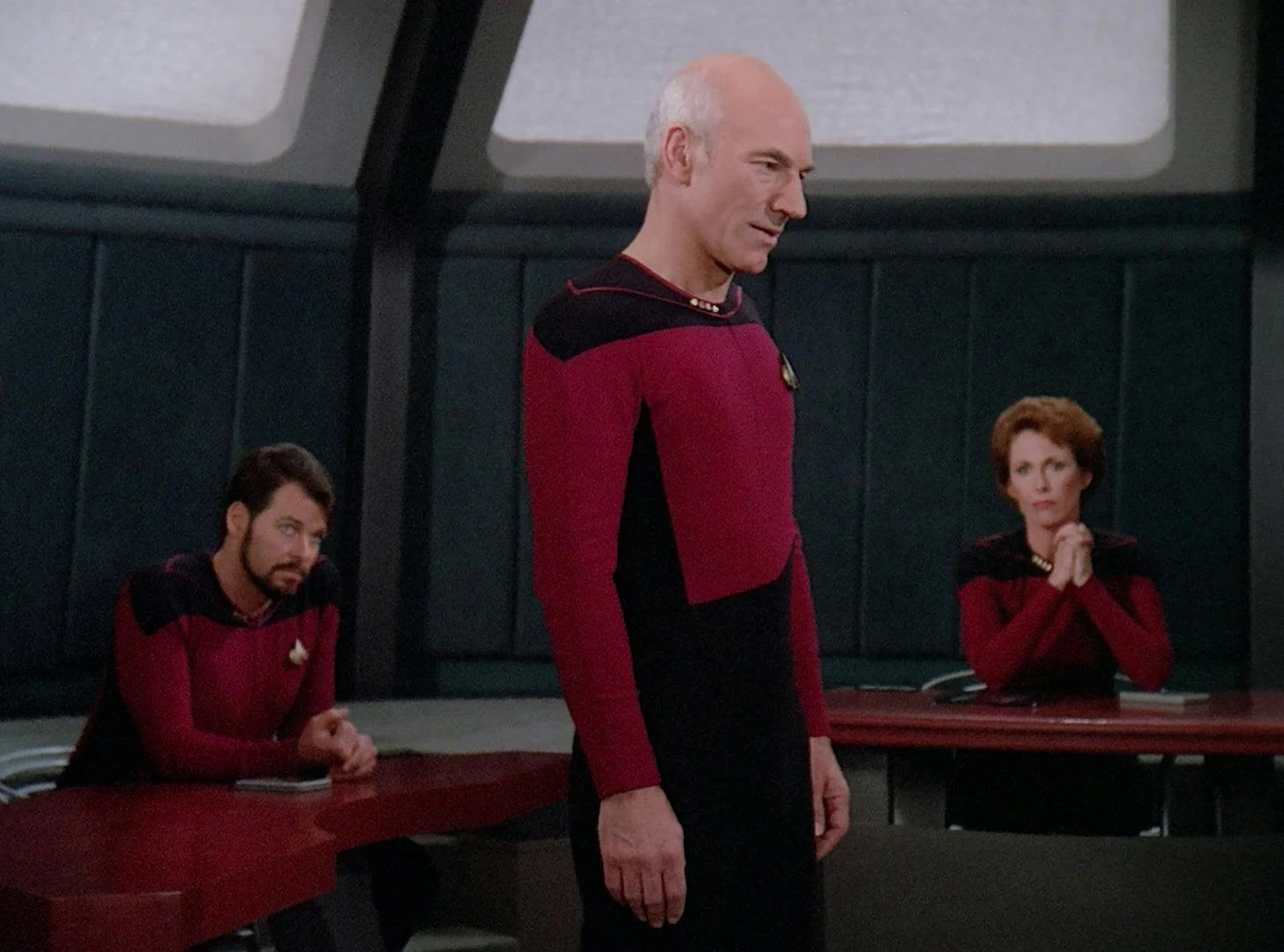
“The Measure of a Man” gives that performance a particularly clear purpose. In the 1989 episode, Picard defends Data’s freedom and argues for his rights as a sentient being. StarTrek.com’s account of the episode sets out the question at its heart: whether a person can be reduced to something another institution owns.
Stewart makes that argument matter through his attention to the person whose future is being decided. The ideas have consequences for a friend standing in the room. That brings warmth to the reasoning and urgency to the language.
It is an enduring example of what a performance can do for science fiction. A story can ask a large question about humanity and still feel intimate. Picard’s words carry the scale of the problem; Stewart’s presence keeps us aware of the individual who could be hurt by the answer.
The appeal of that kind of leadership survives the setting. You do not need a starship to recognize the value of someone who takes time to understand a problem, accepts the burden of deciding and remembers whom the decision affects.
The vulnerability behind the uniform
“The Inner Light” opens another part of Picard to the audience. Through an alien probe, he experiences a lifetime as Kamin, a man on the dying world of Kataan. The official Picard watch guide describes how the experience leaves him carrying the memory of a civilization that is gone.
The episode asks Stewart to make an extraordinary premise feel like an ordinary human life. Its emotional force comes from attachment: to people, to a home, to the small routines through which a life becomes your own. His capacity for restraint gives those attachments room to grow.
That vulnerability belongs in any remembrance of him. The celebrated voice and the commanding presence were part of his skill, but so was the ability to let uncertainty show. He could make a character seem changed by something that would be difficult to explain to anyone else.
Stories leave us with different things at different times. Sometimes it is an argument we want to hold onto. Sometimes it is the recognition of a loss we cannot neatly describe. Stewart could make both feel fully human.
Charles Xavier, and the care beneath the power
For another audience, the doorway into Stewart’s work was X-Men. The American Film Institute’s record of the 2000 film places him as Xavier alongside Hugh Jackman’s Logan and Ian McKellen’s Magneto. It is a casting combination that gave the film’s extraordinary world a persuasive emotional center.
As Xavier, Stewart brought the attentive presence of a teacher to a story about people who were feared for being different. His authority could offer reassurance. The character’s power was immense, but the promise of understanding was what made that power feel safe to approach.
There is a particular generosity in making that kind of role convincing. A mentor has to seem interested in the people around him. The audience needs to believe that he sees more than a useful ability or a problem to solve. Stewart could suggest a mind already considering how to help, even before a scene reached its explanation.
Xavier also gave his exchanges with McKellen room for disagreement that felt rooted in history. Their presence together helped the conflict retain its human scale. Beneath the competing ideas were people who understood enough about each other to make their divisions painful.
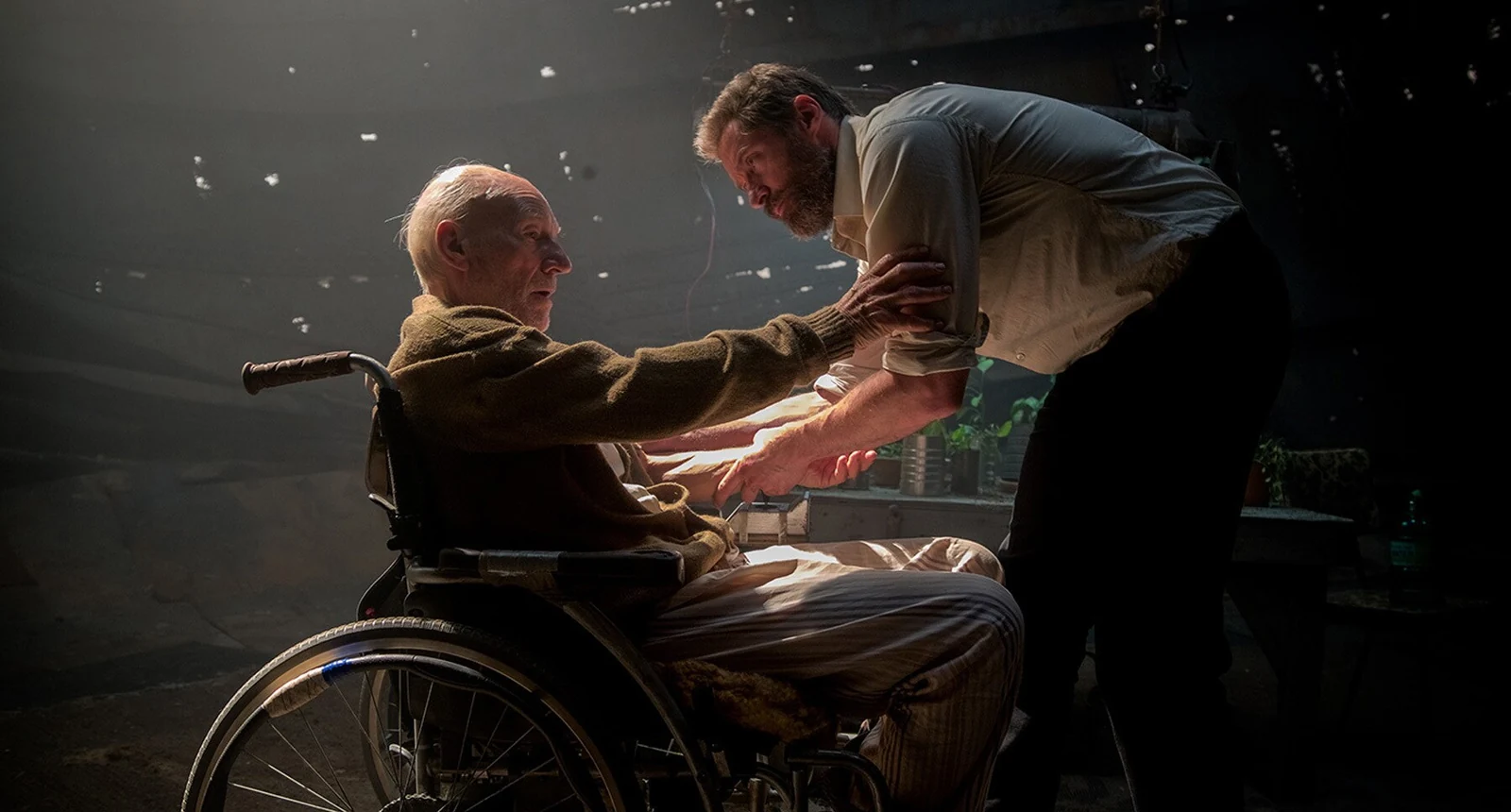
Years later, Logan asked something more exposed of Xavier. The studio’s description of the 2017 film begins with Logan caring for an ailing Professor X, far from the reassuring structure of the school. James Mangold’s film places dependency and responsibility inside the relationship audiences already know.
Stewart allows Xavier to be difficult, vulnerable and still recognizably himself. The affection in that relationship has to survive exhaustion and frustration. Care becomes something people do when they are tired, when the conversation goes badly, when patience is running short.
The old authority is still there, with other people now helping to carry it. Stewart keeps the person recognizable through the discomfort of that change.
It is a moving part of his work to remember because it understands how complicated tenderness can become. Love may be present in an awkward exchange or a practical act of help. Stewart gives those moments their due.
The stage was part of the whole life
Born in Mirfield, Yorkshire, in 1940, Stewart briefly worked on a local newspaper before pursuing acting. The University of Huddersfield’s biography credits a schoolteacher with encouraging his love of Shakespeare. The path toward those familiar screen roles began with language and the stage.
Picard and Xavier brought Stewart into homes around the world, while the theater remained a substantial part of his working life. The Royal Shakespeare Company records that he joined in 1966. Its account of his roles includes Shylock, Titus Andronicus, Henry IV, Antony, Prospero and Claudius.
Those parts ask very different things of an actor. They involve ambition, grief, persuasion, cruelty, exhaustion and love. Remembering that range helps restore the full size of a career that two beloved screen characters can sometimes dominate in conversation.
His work in Macbeth offers a route back to that stage life. PBS’s account of Rupert Goold’s production documents its London, Brooklyn and Broadway runs and Stewart’s Tony-nominated performance, followed by the filmed adaptation. It preserves a chance to encounter him working with a different kind of authority: a man whose ambition has become destructive.
There is something valuable about following a familiar actor into unfamiliar work. Recognition gets you through the door. Then the performance asks you to pay attention again, to notice what has changed in the voice or the bearing, to let go of the character you expected to find.
Stewart’s stage career invites that attention. Shakespeare was a continuing part of his craft, with all the demands that live performance places on language, movement and listening. The screen roles belong beside that work in the remembrance of him.
Room for something unsettling
His range also includes Green Room, Jeremy Saulnier’s 2016 thriller. A24’s film page identifies Stewart among the cast of a story about a band trapped after witnessing a crime. His role as club owner Darcy puts that familiar composure into disturbing territory.
The contrast with his protective characters makes the performance unsettling. Calm can reassure, and it can also make a threat feel horribly deliberate. The familiar voice and face carry an audience’s expectations into the film, where the performance turns that recognition into unease.
There is room for that work in a respectful tribute. Affection for an actor includes admiration for the choices that surprised us. Stewart’s career leaves space for viewers to discover another register, another character, another reason to look more closely.
A voice used beyond the screen
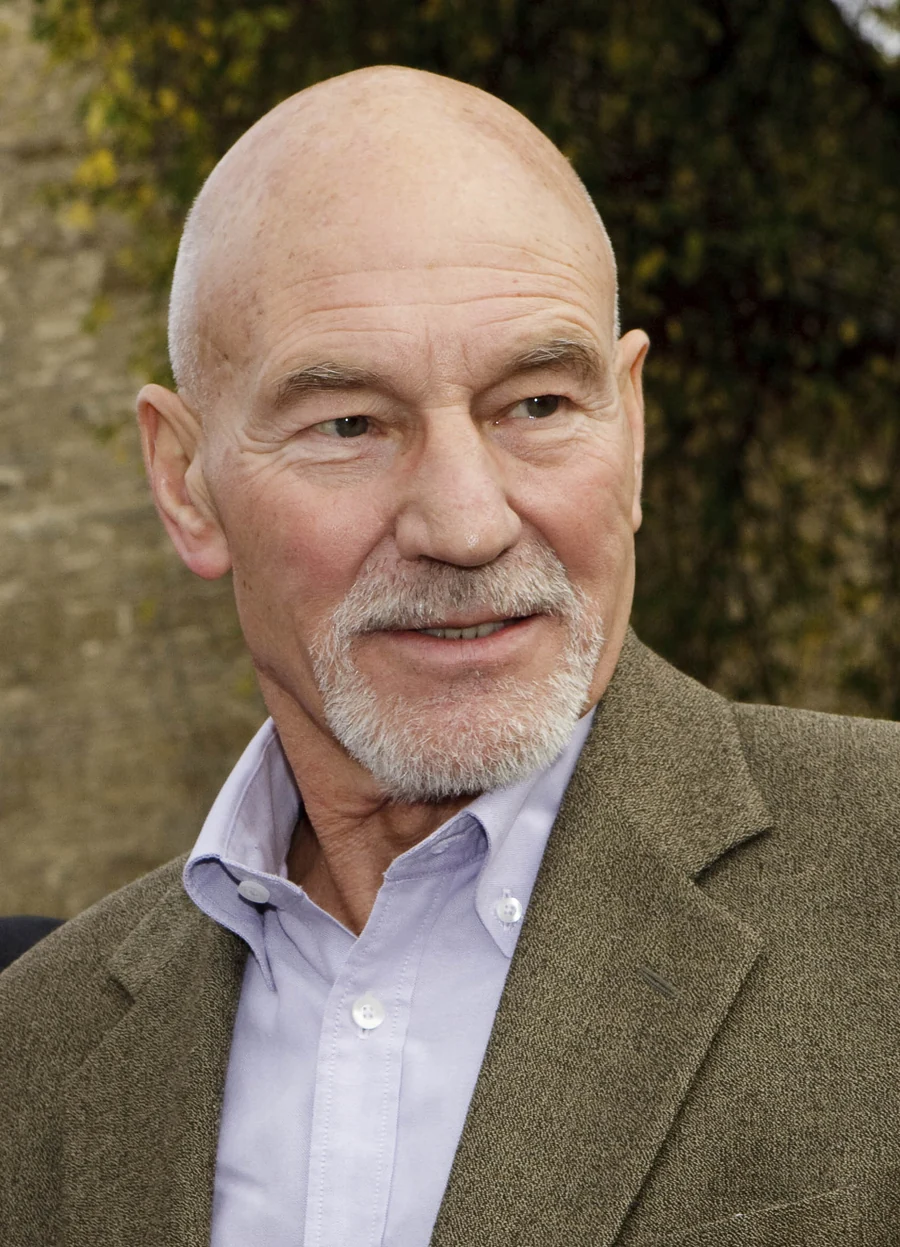

The people he played are only part of what deserves to be remembered. Stewart also gave his support to causes involving people who needed safety and help.
Refuge lists him among its ambassadors and publishes his account of witnessing violence against his mother as a child. He connected that experience to his determination to speak about domestic abuse and support survivors.
That is a difficult part of a person’s history to share publicly. In an obituary, it deserves care. The significance is in the purpose he gave that disclosure: making it easier to talk about abuse and harder to leave the people experiencing it unheard.
The International Rescue Committee also records his work as an ambassador, including more than a decade of raising awareness and funds for its humanitarian work. These were practical commitments alongside the performances for which he was celebrated.
It would be too simple to treat an actor as identical to his most admirable characters. A life is larger and more complicated than a role. What we can acknowledge here is the documented choice to use a public platform for people facing danger, displacement and violence. That belongs in the picture of Patrick Stewart, too.
What remains with the audience
There will be many ways to remember him. Some people will return to the Enterprise. Others will choose X-Men, Logan, a Shakespeare performance or something from his career they have never seen. The work allows each viewer a different point of connection.
One small scene offers a fitting place to pause. In the Next Generation finale, “All Good Things…,” Picard finally joins his officers at their poker table. The official anniversary retrospective recalls that moment at the close of the series’ seven-year run.
Its warmth comes from being included. The captain has a place among the people beside whom he has lived and worked. After so much responsibility, there is room simply to sit with them.
That feels close to the affection Stewart earned through his performances. Across very different stories, he could make intelligence welcoming, dignity vulnerable and authority compassionate. Those qualities gave his characters a lasting place in people’s lives.
Today, the first thoughts belong with his family, friends and everyone who knew and loved him personally. They have lost someone whose life extended far beyond anything an audience could see.
For the rest of us, there is the work, and the gratitude it leaves behind.
Rest peacefully, Sir Patrick Stewart. Thank you for everything you gave to the stage, the screen and the people watching.
Hero image: Patrick Stewart as Jean-Luc Picard, from the official season-three promotional gallery. Credit: StarTrek.com / Paramount+ / CBS Studios. Archival promotional photograph, resized for this tribute.
Sources
- Reuters — family announcement, death date and age
- Associated Press — spokesperson confirmation
- StarTrek.com — Picard series history
- StarTrek.com — The Measure of a Man retrospective
- StarTrek.com — Picard watch guide and The Inner Light
- American Film Institute — X-Men (2000) cast
- 20th Century Studios — Logan (2017) and official gallery
- Royal Shakespeare Company — Stewart joined in 1966 and selected roles
- University of Huddersfield — Yorkshire background and career biography
- PBS Great Performances — Macbeth stage and screen production
- A24 — Green Room
- Refuge — ambassador Patrick Stewart
- International Rescue Committee — Patrick Stewart humanitarian work
- StarTrek.com — All Good Things retrospective
- StarTrek.com — official Picard season-three promotional photographs
- StarTrek.com — Picard and Riker archival still
- Terry Harris / Urbantog — portrait source and CC BY-SA 3.0 license
Make Red Reactions a preferred source
Choose Red Reactions as a preferred source in Google Search.
Confirm your choice on Google.
Related coverage

Star Trek: Starfleet Academy Season 2 Sets March 2027 Premiere, Adds Bill Nighy and Rosemarie DeWitt
Paramount+ sets Starfleet Academy's final season for March 2027. Bill Nighy and Rosemarie DeWitt join as relatives of Nahla Ake and Tarima.

Avengers: Doomsday Watch Order — What You Actually Need to Watch Before the Movie
Not a 40-film homework list. Here's the minimum route into Avengers: Doomsday, what's worth adding for the Fantastic Four and X-Men context, and what's genuinely optional.

X-Men '97 Characters and Powers Explained
Meet the main X-Men '97 characters and learn what Cyclops, Storm, Wolverine, Rogue, Gambit, Magneto and the rest can actually do.
X-Men '97 Explained: Story, Characters, Timeline and Everything You Need to Know
X-Men '97 explained: how it continues the original animated series, its story, timeline, main characters, Season 2, Apocalypse and what's next.
About the author
Aram Anwar
Founder & Editor
Aram Anwar founded Red Reactions and writes across comics, gaming, movies and television. His work includes franchise guides and large Lore / Explained features, with an emphasis on separating confirmed details from reports, theory and speculation.
Coverage: Comics · DC & Marvel · Gaming · Movies & TV · Lore / Explained · Guides
More from Aram Anwar