lore · comics / gaming
Weapon X Explained: How Wolverine Got His Adamantium and Lost His Memories
Weapon X didn't create Wolverine's mutant powers — it bonded adamantium to a skeleton and claws he already had, then tried to erase his mind. Here's what the program actually did, and what came later.
 By Aram Anwar8 min read
Weapon X did not make Wolverine a mutant. Logan already had his healing factor, and under current Marvel continuity, he already had bone claws — the program’s actual contribution was kidnapping him, bonding adamantium to a skeleton he already owned, and trying to condition his mind into something it could control. That distinction gets lost in a lot of casual summaries, and it’s worth getting right before anything else, especially with a new Insomniac game about to put its own spin on Logan’s buried past.
What Weapon X actually is
Weapon X is the Canadian-operated offshoot of a much larger government program called Weapon Plus, the same initiative that produced Captain America. Marvel’s own material is direct about the naming: Weapon X was the tenth iteration of the program — the X is the Roman numeral for ten, not a stylistic flourish. Barry Windsor-Smith’s Weapon X serial in Marvel Comics Presents (1988) #72–84, published in 1991, is the definitive telling of what the program did to Logan specifically.
Worth flagging early: “Weapon X” covers more than one thing across Marvel’s history — the program itself, Logan as its most famous subject, and later organizations that reused the name for different operations with different staff. They’re not all the same laboratory.
Logan was already a mutant before Weapon X
Before any of this, Logan already had an accelerated healing factor, enhanced senses, and — as current continuity establishes — claws that were a natural part of his own skeleton, not an implant. Weapon X didn’t invent any of that. What it did was take an already-dangerous mutant and make him more dangerous, then try to make him controllable.
How Weapon X bonded adamantium to his skeleton
The bonding process begins in Marvel Comics Presents #73. Working from a procedure developed by Dr. Abraham Cornelius and Dr. Carol Hines, Weapon X coated Wolverine’s skeleton in adamantium in a process brutal enough that other test subjects hadn’t survived it. Logan did, specifically because his mutant healing factor let his body accept the metal instead of rejecting or dying from it.
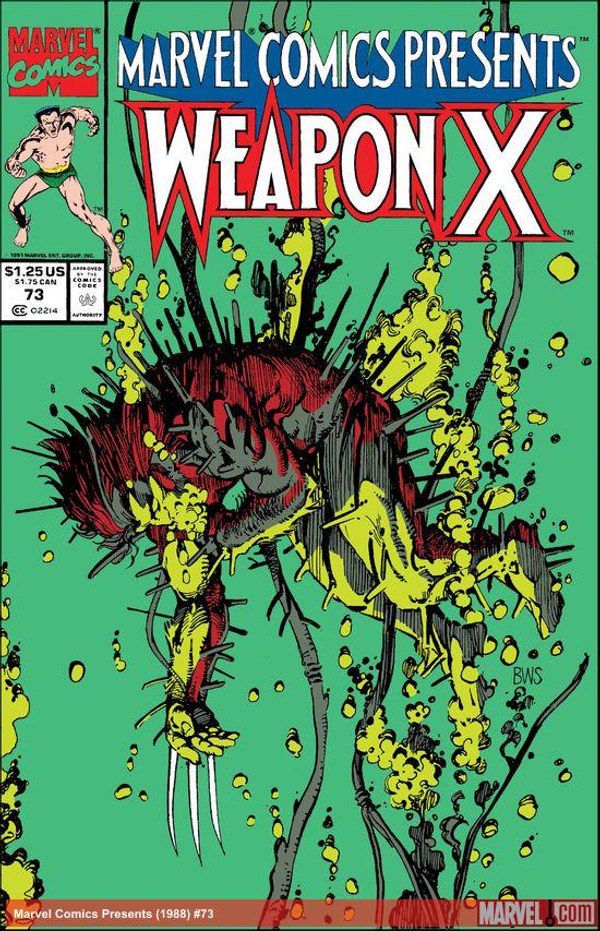
Marvel Comics Presents #73 — where the bonding process actually starts. Credit: Marvel Comics.
The result is a specific alloy Marvel calls Adamantium Beta: fused to Logan’s bones, indestructible, but structured in a way that still lets his bone marrow function normally. The adamantium also reinforced his musculature, giving him some added strength and speed, and it overloaded his already-present healing factor rather than granting it to him for the first time — the healing factor is what kept him from devolving further into the animal-like state the process pushed him toward.
Did Weapon X give Wolverine his claws?
No — and this is the part that trips up a lot of readers, because the answer changed over time.
Under current Earth-616 continuity, Wolverine’s claws are a natural part of his mutant skeleton. Weapon X coated those existing claws in adamantium; it didn’t build or surgically install them. But that’s not what the 1991 story itself told readers. Barry Windsor-Smith’s Weapon X never says Logan’s claws are bone underneath — because at the time, nobody knew that yet. Marvel’s own account of the story is explicit that Logan comes out of the process believing his claws are the result of the experimentation, not his mutation, because Weapon X’s conditioning had wiped away the memories that would have told him otherwise.
The actual reveal came years later. During 1993’s Fatal Attractions crossover, Magneto — enraged during a confrontation with the X-Men — used his magnetic powers to rip every trace of adamantium out of Logan’s body on a molecular level in X-Men (1991) #25. Logan barely survived it. Once he’d healed, he instinctively popped his claws for the first time since the attack and, in agony, discovered they were bone. That moment, not the original Weapon X story, is when the modern claws-are-natural origin actually entered the comics.
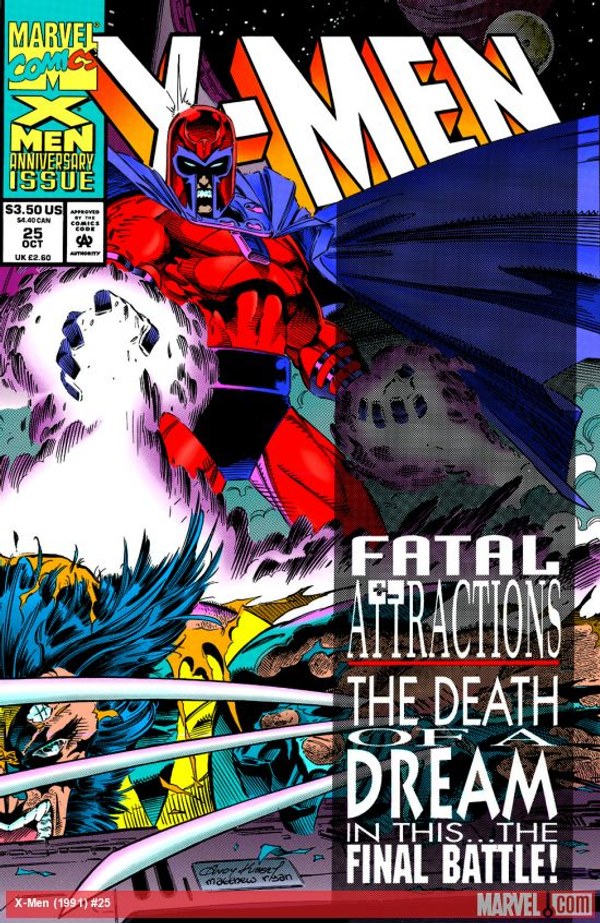
X-Men #25 — where Magneto’s attack strips the adamantium away and reveals Logan’s claws were bone all along. Credit: Marvel Comics.
What happened to Logan’s memories
Weapon X’s role here is real but specific: the program used intense brainwashing and operant conditioning to erase Logan’s memory and push him toward becoming, in the story’s own terms, “the perfect killing machine.” He briefly breaks free of that control, fights his way out of the facility, and escapes into the Canadian wilderness with a fractured, unreliable mind — genuinely unsure at that point whether his claws were mutation or manufacture.
That said, don’t trace every memory problem Logan has ever had back to this single procedure. His long publication history has piled on more sources of manipulated memory since — Team X, the covert unit Logan belonged to well before Weapon X captured him, had its own members implanted with false memories by a telepathic operative called Psi-Borg, specifically to turn them into unwitting sleeper agents. Layer that kind of manipulation on top of decades of amnesia arcs, retcons and other characters tampering with his mind, and it’s genuinely accurate to say Logan spent years unable to fully separate real memories from fabricated ones — but that’s the result of an accumulated publication history, not one clean event.
Who were Cornelius, Hines and the Professor?
Dr. Abraham Cornelius and Dr. Carol Hines are the two scientists most directly responsible for the bonding procedure itself. Above them sits a figure the 1991 story calls simply “the Professor” — the coldest of the three, and the one most fixated on making Logan a controllable weapon.
Here’s where Marvel’s own material genuinely disagrees with itself: one current Marvel.com article names him Professor Thornton; another calls him Truett Hudson, “more formally known as the Professor.” Both are official, current descriptions of the same character, which is exactly the kind of inconsistency worth flagging rather than papering over. What’s not in dispute is that this person is not James Hudson. James and Heather Hudson are the couple who find and rehabilitate Logan after he’s escaped Weapon X — allies who help him recover, not the men who ran the program that broke him down in the first place.
Weapon X vs. Team X
These two are not interchangeable, and Marvel’s own history makes the order clear: Team X came first.
In the 1960s, several mutant operatives — Wolverine, Sabretooth, Maverick, Wraith, Mastodon and Silver Fox among them — were organized into Team X, a covert black-ops unit run under the Weapon Plus program’s CIA-linked umbrella. It’s this earlier unit whose members got the false-memory treatment from Psi-Borg. Team X was disbanded by the early 1970s.
Weapon X, in the form most readers know from Barry Windsor-Smith’s story, came later: a scientist backed by the ancient mutant Romulus specifically tracked down Logan and other former Team X operatives for the adamantium-bonding experiments. So the chronology runs Team X first, disbandment, then Weapon X’s capture and experimentation on some of Team X’s former members — not one continuous operation under a single name.
What Marvel’s Wolverine changes with Earth-1048’s Team X
Marvel’s Wolverine launches September 15, 2026 on PS5, and it’s telling its own original story rather than adapting Barry Windsor-Smith’s comic directly. Insomniac’s Earth-1048 continuity uses the Team X name, but builds a different version of it: Nathaniel Essex — the man comic readers know as Mister Sinister, explored in more depth in our Mister Sinister explainer — formed this Team X as a task force to protect mutants from Bolivar Trask’s anti-mutant operations, with Mystique and Sabretooth among Logan’s teammates. Essex is also the one who found Logan years earlier in a feral, memory-wiped state, and the game’s opening sends Logan back into Team X three years after leaving it.
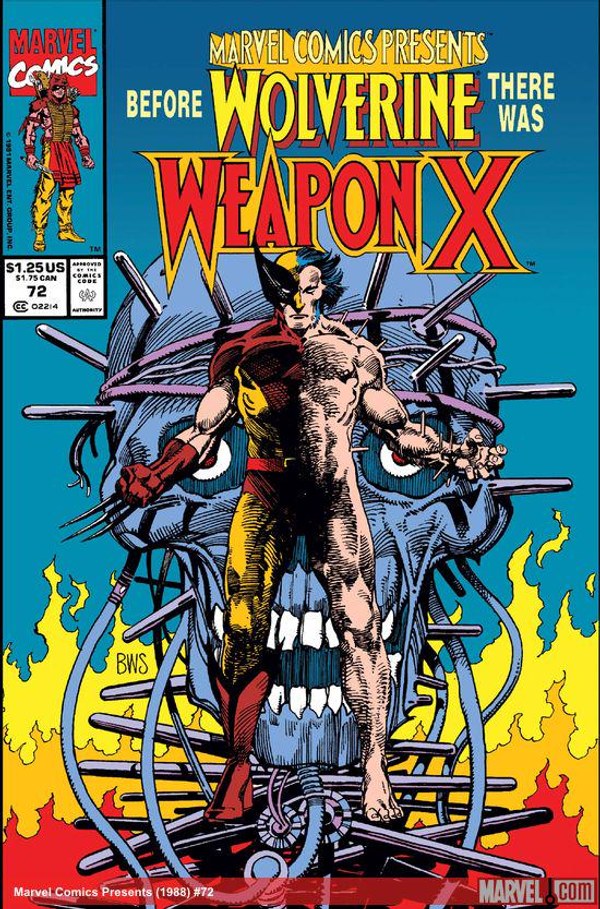
The classic story this whole history traces back to — Marvel Comics Presents #72, 1991. Credit: Marvel Comics.
What the game has — and hasn’t — confirmed
Don’t assume Insomniac’s Earth-1048 Team X is a retelling of the classic comic Weapon X program. Nothing officially released says Nathaniel Essex ran Weapon X, bonded Logan’s adamantium, or that the Cornelius/Hines/Professor laboratory exists anywhere in this continuity. PlayStation has offered Weapon X-inspired cosmetics for the game, and collectible whisky bottles are confirmed to unlock pieces of Logan’s forgotten past during play — but a cosmetic reference and a missing-memory plot device aren’t proof that the classic 1991 event happened the same way here, or at all.
What is fair to say is that the themes overlap on purpose: a mangy, feral Logan with a buried past and unreliable memories is deliberately familiar territory for anyone who knows the comics. Insomniac is building its own answer to “what happened to Logan before this,” and until the studio explicitly says that answer is the classic Weapon X story, the two should be treated as related but separate — background noise the game clearly wants you to notice, not a confirmed retelling.
For the rest of what’s actually confirmed about the game itself — release date, cast, combat systems, editions — see our full Marvel’s Wolverine guide.
Sources
Make Red Reactions a preferred source
Choose Red Reactions as a preferred source in Google Search.
Confirm your choice on Google.
Related coverage
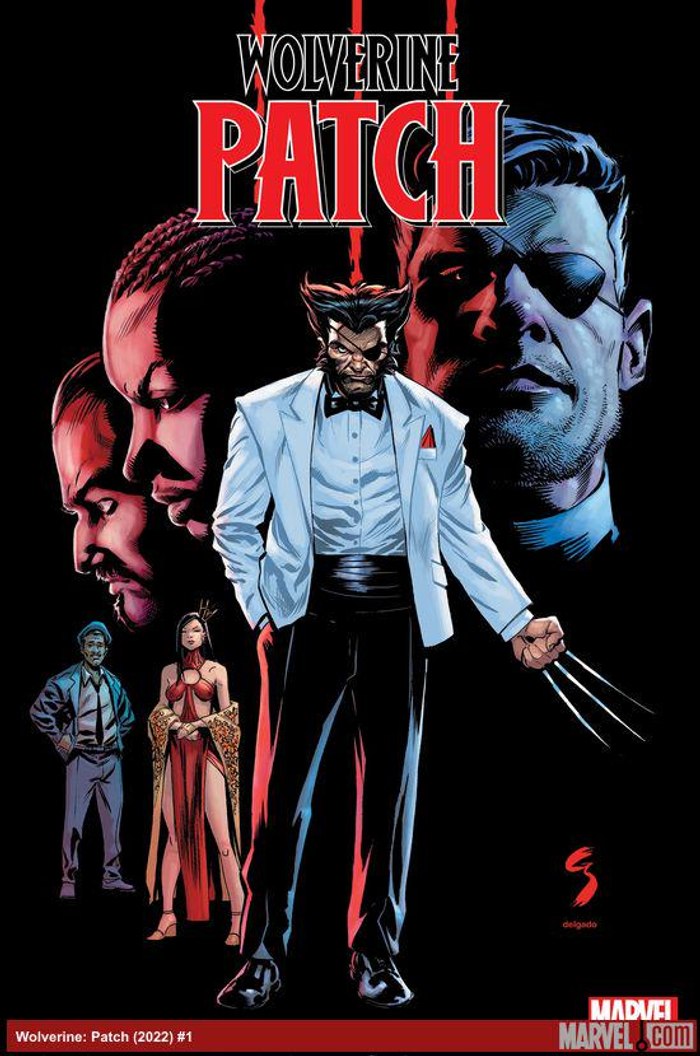
Madripoor Explained: Wolverine's Patch Era, Lowtown and Marvel's Wolverine
Madripoor is Marvel's fictional island port. Explore Hightown and Lowtown, Wolverine's Patch identity, the Princess Bar, and its separate Earth-1048 game version.
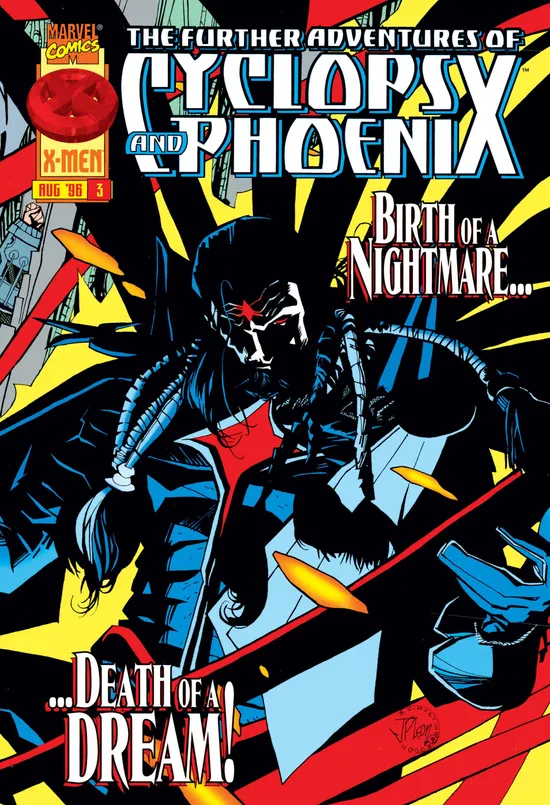
Mister Sinister Explained: Origin, Powers and X-Men History
Nathaniel Essex, Apocalypse, the Marauders, Madelyne Pryor, Cable, Krakoa and Sins of Sinister — the full story of the X-Men's coldest villain, and why killing him never sticks.
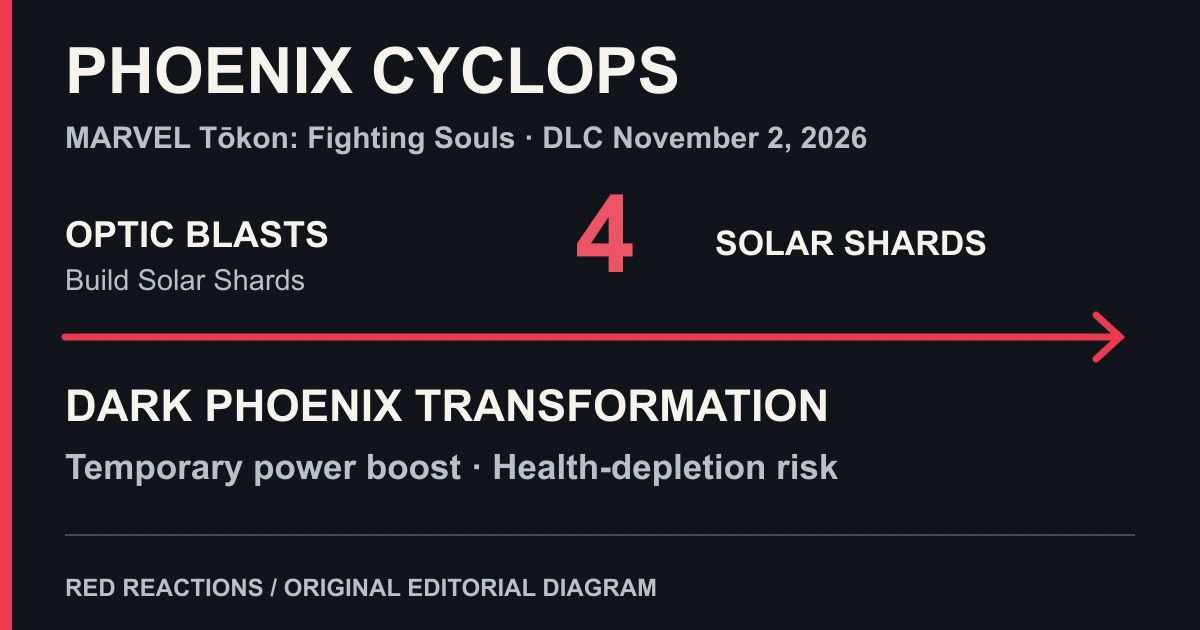
Phoenix Five Explained: Why Cyclops Has the Phoenix Force in Marvel Tōkon
Phoenix Cyclops isn't a new Tōkon invention. Here's the Avengers vs. X-Men story it's based on — why the Phoenix Force split between five mutants, and how Cyclops ended up holding it.
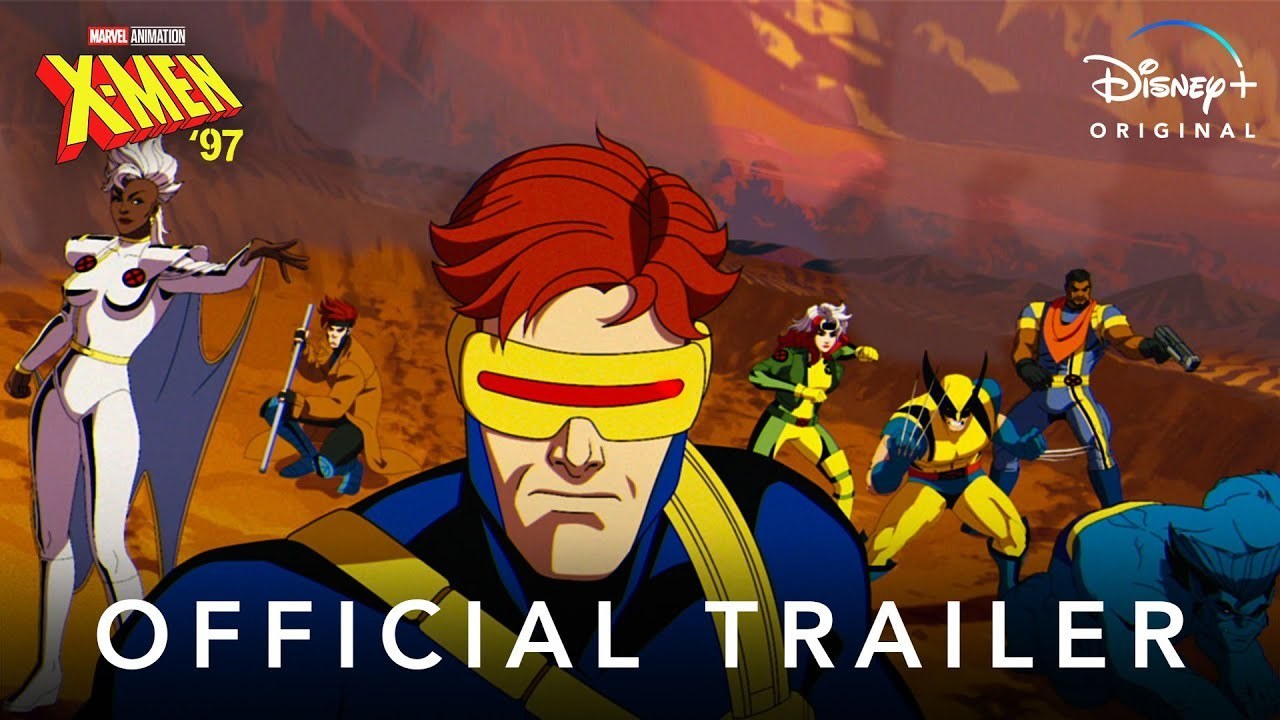
X-Men '97 Characters and Powers Explained
Meet the main X-Men '97 characters and learn what Cyclops, Storm, Wolverine, Rogue, Gambit, Magneto and the rest can actually do.
About the author
Aram Anwar
Founder & Editor
Aram Anwar founded Red Reactions and writes across comics, gaming, movies and television. His work includes franchise guides and large Lore / Explained features, with an emphasis on separating confirmed details from reports, theory and speculation.
Coverage: Comics · DC & Marvel · Gaming · Movies & TV · Lore / Explained · Guides
More from Aram Anwar