lore · movies
Why Michael Myers' Mask Was a Captain Kirk Mask — and How Halloween Changed It
Yes, Michael Myers' original Halloween mask began as a Captain Kirk costume mask. Here's what Tommy Lee Wallace changed in 1978 and how the 2018 film recreated its aged look.
 By Kenza Benouna6 min read
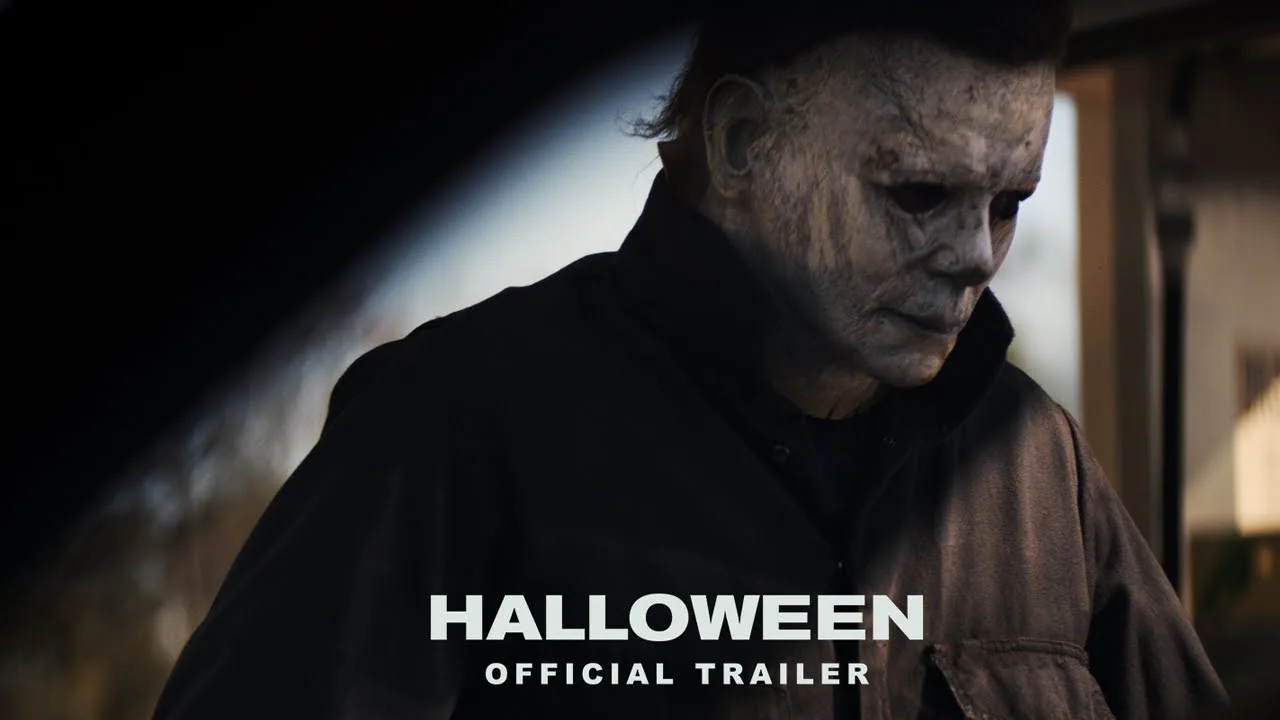
Yes. Michael Myers’ famous white mask in John Carpenter’s Halloween (1978) began as a commercially available Captain Kirk mask based on William Shatner’s face. Production designer Tommy Lee Wallace altered it so thoroughly that the finished prop no longer looked like the Star Trek character. Forty years later, the 2018 film commissioned a newly sculpted, weathered version of that iconic design rather than simply putting the original 1978 prop back on screen.
The story is stranger — and much more interesting — than the shorthand that Michael Myers “wears William Shatner’s face.” There are three separate things to understand: the mask sold in stores, the changes made for Carpenter’s film, and the remake of the look for its modern continuation.
How did a Captain Kirk mask end up in Halloween?
The original film was made with a tight production budget, so its team looked to everyday shops for props and costumes. The franchise’s official behind-the-scenes history says Wallace visited Burt Wheeler’s Magic Shop on Hollywood Boulevard and purchased a Captain Kirk mask for $1.98.
The production had considered a clown mask. But for the adult Michael Myers — the almost expressionless figure called The Shape — the Kirk mask had the unsettlingly ordinary human features the filmmakers wanted. This was a practical prop-shop choice, not a secret in-universe connection between Halloween and Star Trek.
StarTrek.com later published a firsthand account by illustrator Rick Sternbach, who worked on Halloween II (1981). When the sequel’s production needed more masks, he identified the Don Post Studios markings on a surviving original-series mask and learned directly from the manufacturer that it was their Captain Kirk model. That production account independently supports the story behind the unusual prop.
What did Tommy Lee Wallace change?
Wallace did not just take a store mask out of the package and put it in front of a camera. The official Halloween history describes alterations that transformed its appearance: he enlarged the eye holes and painted the face a pale, bluish white. Accounts from the people involved also describe changing the hair and removing features that gave away its familiar television origins.
The result is deliberately difficult to read. Michael’s eyes disappear into dark openings, and the pale face barely reacts to anything. That absence of an expression matters more to the character than the identity of the actor who inspired the original mold.
It’s also why the “William Shatner mask” fact can be misleading. The base costume was a Captain Kirk mask; the final on-screen Michael Myers face was a modified horror prop. The finished design was not an untouched Shatner likeness.
Why does the mask look different in Halloween (2018)?
The 2018 Halloween follows the 1978 film’s story while ignoring the intervening sequels. In that continuity, four decades have passed since the original night in Haddonfield. Universal’s film description explicitly frames Laurie Strode’s return around that forty-year gap.
Effects artist Christopher Nelson was responsible for bringing Michael’s mask back to the screen. In a detailed interview on the official franchise website, Nelson explained that he and Vincent Van Dyke designed and sculpted a 2018 mask based on multiple references and feedback from the filmmakers and rights holders.
The goal wasn’t to make a clean replica that looked brand-new. In an earlier 2018 interview with Halloween Daily News, Nelson described studying old masks and how their materials change — including their wrinkles and deterioration — to imagine what the original design might look like after decades. He also stressed that the way the mask sits on the performer, catches the lighting and changes with camera angle contributes to the character.
So there are two different kinds of age at work. Within the film’s story, Michael’s mask is decades old. Behind the scenes, the production made a new prop designed to communicate that age.
The design at a glance
| Version | What it actually is | Why it looks the way it does |
|---|---|---|
| Store-bought Captain Kirk mask | A commercially sold Don Post Studios costume mask | The starting object Wallace found for the 1978 production |
| Halloween (1978) | Wallace’s modified mask used for Michael Myers | Enlarged eye holes, altered coloring and styling create a blank, uncanny face |
| Halloween (2018) | Newly designed and sculpted aged interpretation | Nelson’s effects team recreated the feel of a mask that had existed in the story for forty years |
These are production-design distinctions, not three separate supernatural explanations for Michael Myers. The fictional character, the real-world mask and the different series continuities are separate questions.
Does every Halloween movie use the exact same mask?
No. The franchise has had different productions, performers, effects departments and continuities. An on-screen mask may resemble the 1978 original without being the same physical object or even belonging to the same fictional timeline.
For which films actually connect, start with our complete Halloween movies watch order and timeline guide. It explains why the 1981 sequels, the H20 branch, Rob Zombie’s remakes and the 2018 trilogy shouldn’t all be read as one uninterrupted story.
Michael also appears in a different medium in Halloween: The Game, where the emphasis shifts from movie framing to how the killer and the people of Haddonfield behave in play. Our killer-versus-survivor guide covers those game mechanics, not the movie prop’s history. For readers exploring the genre more broadly, see our horror movies for new viewers.
Frequently asked questions
Is Michael Myers’ mask really William Shatner’s face?
Its original commercial starting point was a Captain Kirk costume mask modeled on Shatner, but the 1978 production modified it. It would be inaccurate to describe the finished movie mask as an unchanged likeness.
Who made the original Michael Myers mask?
Tommy Lee Wallace modified the store-bought Captain Kirk mask for the 1978 film. Don Post Studios made the underlying commercial costume product; those are different contributions.
Is the Halloween (2018) mask the actual prop from 1978?
No. Christopher Nelson and his collaborators created a new interpretation for the 2018 film, designed to look like Michael’s mask had aged for forty years in that movie’s continuity.
Why is Michael Myers’ mask white?
The white face came from Wallace’s alterations to the original store mask. The filmmakers wanted an almost expressionless, vaguely human face, not the familiar appearance of Captain Kirk.
Does this mean Halloween and Star Trek are connected?
No. The films do not share a fictional universe because one production reused the design of a commercially sold costume mask.
Image source and rights context: the photograph above comes from Universal Pictures’ official 2018 trailer. Its existing 1280 × 720 WebP asset was reused from Red Reactions’ Halloween timeline guide, with the original frame intact. Editorial identification is the intended use; no Creative Commons or public-domain licence is asserted.
Sources
- Official Halloween website — Halloween (1978) behind the scenes
- Official Halloween website — Christopher Nelson on recreating the mask for Halloween (2018)
- Halloween Daily News — interview with effects artist Christopher Nelson
- StarTrek.com — Was Michael Myers' Halloween mask William Shatner's face?
- Universal Pictures — Halloween (2018) official film information
- Universal Pictures — Halloween (2018) official trailer
Make Red Reactions a preferred source
Choose Red Reactions as a preferred source in Google Search.
Confirm your choice on Google.
Related coverage
Halloween: The Game Beginner Guide — Single Player vs. Multiplayer, Michael Myers and How Haddonfield Works
Halloween: The Game has both a single-player Story Mode and 1v4 multiplayer, and they work differently. Here's how Michael Myers, the Heroes of Haddonfield, and the town's NPC residents actually function at launch.
Halloween: The Game Killer vs. Survivor Strategy Guide — Beginner Mistakes and Best First-Match Tactics
Beyond the basics: how to actually play Michael Myers and the Heroes of Haddonfield well in Halloween: The Game, including Stalking, Bloodlust, common beginner mistakes and what changed in the post-launch patches.
Halloweentown 5 Is in Early Development at Disney, Report Says
TheWrap reports a fifth Halloweentown movie is in script development for Disney Channel and Disney+. Here are the writers, casting status and release unknowns.
Family Guy's Happy Hell-o-ween Trailer Sends Brian and Stewie to Hell
Hulu's 2026 Family Guy Halloween special premieres October 5. Brian and Stewie take over the underworld, with Kieran Culkin guest starring as the Devil.
About the author
Kenza Benouna
Movies, TV & Horror Writer
Kenza Benouna writes about movies and television, with a substantial archive in horror. Her Red Reactions work includes reviews, supernatural and franchise lore, story explainers and analysis of character, atmosphere and adaptation.
Coverage: Horror · Movies · TV · Reviews · Lore & Features
More from Kenza Benouna