feature · gaming
Final Fantasy Resonance Beginner Guide — How Visions, Stagger, Resonances and Espers Actually Work
Final Fantasy Resonance's combat runs on four connected systems: a visible action timeline, Stagger, character-bound Visions, and Esper summons. Here's how each one actually works, verified against Square Enix's own material.
 By Bamo Anwar7 min read
Final Fantasy Resonance launches October 22, 2026 on PlayStation 5, Nintendo Switch, Nintendo Switch 2, Xbox Series X|S, and PC via Steam and the Microsoft Store, with a free demo already out since September 3 covering the entire first chapter. Its combat looks like classic turn-based Final Fantasy at a glance, but four systems — the action timeline, Stagger, Visions, and Espers — connect in ways that aren’t obvious from a single screenshot. This guide explains how they actually work, based on Square Enix’s own material rather than assumption.
Final Fantasy Resonance Combat in 60 Seconds
Turns for every combatant, ally and enemy, are visible in advance on an action timeline at the top of the screen. Attacking an enemy’s weakness fills a Stagger gauge; emptying it skips that enemy’s next turn and lowers its defense. Each character can equip a Vision — a crystallized echo of a classic Final Fantasy character — that teaches them new abilities as they win battles. Stagger every enemy in a fight simultaneously and you trigger a Sweeping Stagger, which opens an Extra Phase; at the end of that phase, each Vision can unleash its own signature Resonance attack. Separately, Espers are summonable allies that fight alongside the party for three turns before closing with a finishing move.
How the Action Timeline Works
The action timeline isn’t decoration — Square Enix’s battle screens show upcoming ally and enemy turns lined up in order before they happen. That visibility is the reason Stagger matters as much as it does: since you can see exactly when an enemy is due to act, breaking its Stagger gauge to skip that turn is a deliberate disruption of a plan you can already see, not a blind gamble. Square Enix doesn’t describe the system as purely turn-based or purely real-time in its own material, so it’s best understood as a turn-order system you can actively manipulate rather than a fixed queue.
What Stagger Actually Does
According to Square Enix, “depleting the stagger gauge displayed beneath an enemy’s HP bar will stagger them, preventing them from acting on their turn and lowering their defense.” That’s two effects at once: the enemy’s upcoming turn is skipped, and it takes more damage while staggered. The gauge fills faster when you exploit an enemy’s elemental or physical weakness. This isn’t Final Fantasy VII Remake’s stagger system transplanted wholesale — the shared name doesn’t mean shared mechanics, and Resonance’s version is built specifically around denying turns shown on the timeline rather than just building toward a damage window.

What Visions Are
Visions are, in Square Enix’s framing, crystallized essences of classic Final Fantasy characters that a party member can equip. Equipping a Vision and winning battles with it unlocks new abilities tied to that Vision — Cloud’s Vision, for example, has been shown granting enhanced physical attacks and lightning-elemental options. Any Vision can be equipped by any character, so this functions less like a rigid job system and more like a flexible loadout: the original character isn’t joining your party, only the abilities associated with them are. Square Enix has confirmed at least Cecil, Bartz, Terra, Cloud, Squall, Zidane, Tidus, Lightning, Noctis, Clive, and Y’shtola among the roster, with more planned but not all publicly detailed yet.
How Ability Carryover Works
The practical payoff of the Vision system is combination-building. A character learns an ability by using a given Vision in battle, and that ability can stay available even after the character switches to a different Vision — Square Enix describes multiple Vision abilities being able to “stack within cost limits” to create synergies. In other words, a character doesn’t lose what they’ve learned just because you’ve changed what they’re currently equipped with; the limiting factor is a cost or slot system, not memory. Square Enix hasn’t published the exact numbers behind that cost system, so treat specific caps as unconfirmed until the full release documents them.
Sweeping Stagger, Extra Phase and Resonance Explained
These three terms describe one sequence, not three separate systems:
- Sweeping Stagger happens when every enemy in the current encounter is staggered at the same time, not just one.
- That triggers an Extra Phase — a bonus phase the party gets specifically because the whole field is staggered at once.
- At the end of the Extra Phase, each character can unleash their equipped Vision’s unique Resonance — a stronger finishing move Square Enix has described as more powerful than a standard limit burst, with effects varying by which Vision is equipped in that slot.
Because Resonance is tied to whichever Vision is currently equipped, changing a character’s Vision before a fight changes which Resonance move becomes available to them during a Sweeping Stagger — that’s the direct link between the build system and the payoff move.
How Espers Work
Espers are a separate system from Visions: where a Vision changes a character’s own abilities, an Esper is a summoned ally that fights independently. Square Enix confirms Espers are earned through story progression and side quests, and that a summoned Esper fights alongside the party for three turns before finishing with its own closing move. Some Espers, like Siren, are available from earlier in the game, while others are found and fought in optional dungeons scattered across the overworld before they can be summoned.

How Legacy Final Fantasy Characters Fit In
Beyond their role as Visions, at least one legacy character has a more direct presence: Sephiroth appears as an optional boss encounter, confirmed on the PlayStation Blog as something players can “find and challenge… in hopes of winning and unlocking a special reward.” Square Enix hasn’t detailed what that reward is. Nothing in the official material suggests Sephiroth or any other Vision character is part of Resonance’s main story cast — they’re framed as crossover-style encounters and equippable abilities, not participants in the plot itself.
How Resonance Connects to Brave Exvius
Final Fantasy Resonance adapts the first story arc of the mobile game Final Fantasy Brave Exvius, but Square Enix is explicit that this isn’t a straight port: producer Keisuke Nakashima has said the team rewrote scenario content, revised dialogue throughout, and in places rearranged plot order to make the story work as a standalone console RPG. The gacha mechanics from the mobile original are gone entirely. It’s more accurate to call this a ground-up reconstruction of Brave Exvius’ opening story than a remaster or direct adaptation — Square Enix’s own description is “extensively rebuilt as a full-fledged console-quality RPG experience,” and notably, the company doesn’t use the words remake, reimagining, or reconstruction itself.
What the Demo Includes
The free demo, available since September 3 on every launch platform, covers the game’s opening through the entire first chapter. Progress made in the demo carries over into the full game when it releases October 22 — but only on the same platform. A Switch demo save won’t transfer to a PS5 purchase, for example, so it’s worth starting the demo on whichever platform you plan to buy the full game on.
What New Players Should Learn First
Before anything else, get comfortable reading the action timeline — every other system exists to let you manipulate it. Then focus on landing weakness hits to build Stagger quickly, since a fast Stagger is what opens the door to a Sweeping Stagger against multiple enemies at once. Don’t worry about optimizing Vision combinations early; the ability-carryover system rewards experimentation more than a settled build, since nothing you learn is lost when you switch Visions later.
Bottom Line
Final Fantasy Resonance’s systems are built to interlock: the timeline creates the incentive for Stagger, Stagger creates the path to a Sweeping Stagger, and a Sweeping Stagger is what unlocks a Vision’s Resonance. Espers sit alongside that loop as an independent, story-earned power boost rather than part of the same chain. None of it requires Brave Exvius knowledge to follow, and Square Enix’s own material is specific enough on most of it that new players don’t need to guess.
Already playing the demo and want a practical checklist for what to do with it before October 22, see our Final Fantasy Resonance demo guide.
For more Square Enix coverage, see Final Fantasy VII Revelation’s April 8, 2027 release date and combat details and what Kingdom Hearts IV’s Quadratum actually is.
Sources
- PlayStation Blog — Final Fantasy Resonance PS5 demo available today, Sephiroth revealed — September 3, 2026
- Square Enix Store — FINAL FANTASY RESONANCE — September 9, 2026
- Kotaku — The First HD-2D Final Fantasy Is a Port of a Mobile Gacha Game, But Square Enix Says It's Been Extensively Rebuilt — June 9, 2026
- Steam — FINAL FANTASY RESONANCE — September 9, 2026
- FINAL FANTASY RESONANCE - Official Gameplay Trailer — June 9, 2026
Make Red Reactions a preferred source
Choose Red Reactions as a preferred source in Google Search.
Confirm your choice on Google.
Related coverage
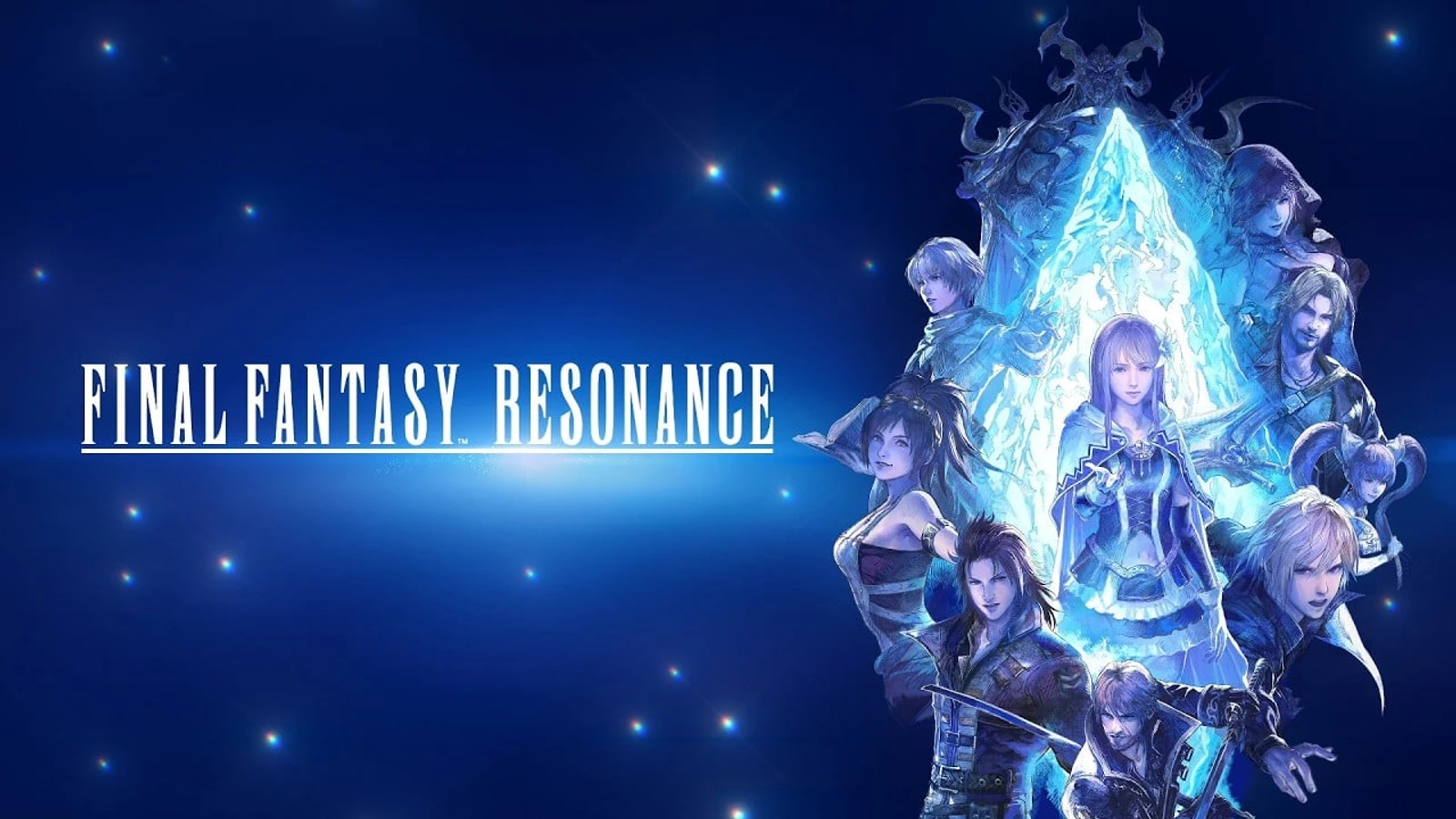
Final Fantasy Resonance Demo Guide — What Carries Over and What to Do Before Release
The Final Fantasy Resonance demo covers the Prologue through Chapter 1 and its save data carries over to the October 22 full game. Here's a practical checklist for what to do before launch.
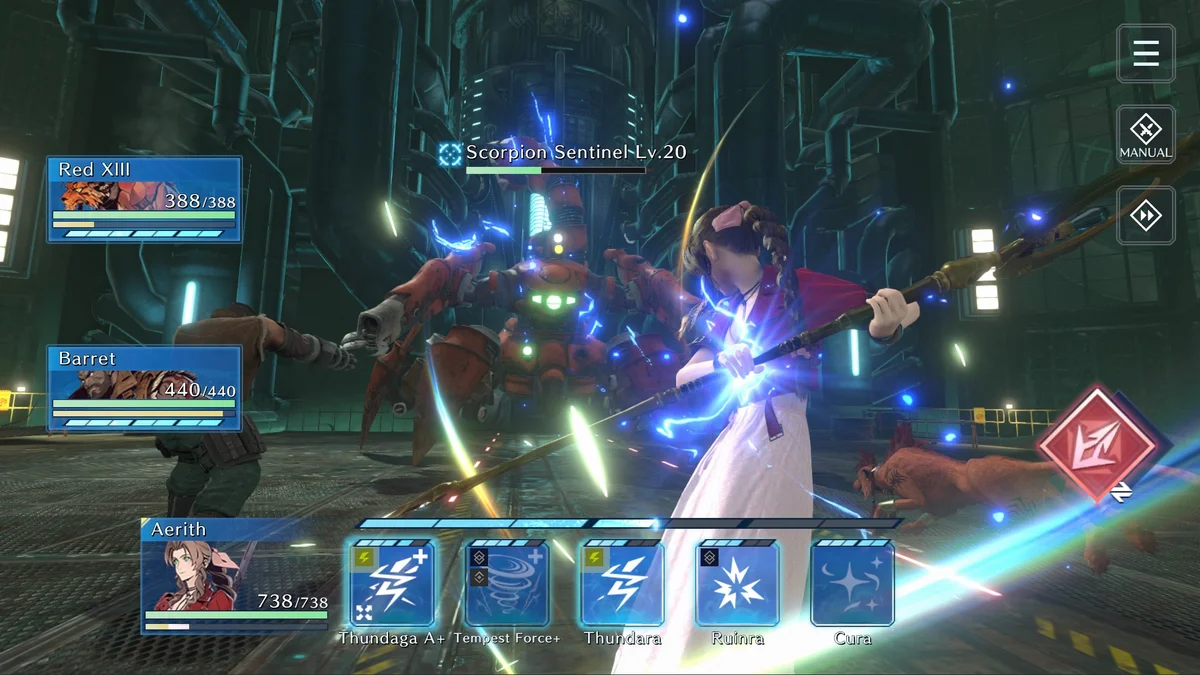
Final Fantasy VII Ever Crisis Has Shut Down — Steam Status, Refunds and What Remains Unconfirmed
Ever Crisis ended global service October 6 PDT, October 7 in Sweden. Check Steam delisting, still-visible mobile listings and the follow-up deadline for accepted Taiwan refunds.
Resident Evil 2, 3 or 4 on Switch 2 — Which One Should You Play First?
Resident Evil 2, 3 and 4 all launch on Switch 2 the same day. Here's how the three remakes actually compare on story, horror-vs-action balance, length and beginner-friendliness — and which one to buy first.
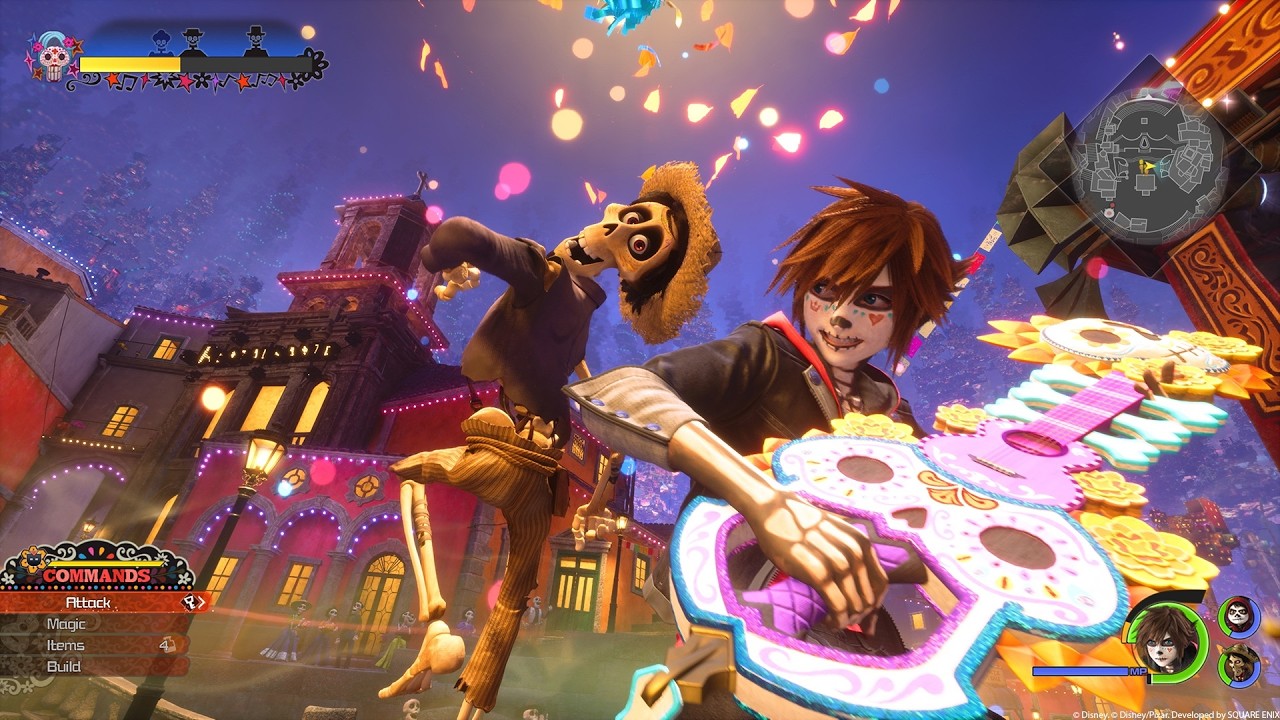
Kingdom Hearts IV: Everything We Know About the Story, Worlds, Characters and Release
Kingdom Hearts IV is targeting late 2027 on Switch 2, PS5, Xbox Series X|S and PC. Here's every confirmed detail about Sora's journey through Quadratum, the Coco world, the returning cast and what's still unknown.
About the author
Bamo Anwar
Anime & Gaming Writer
Bamo Anwar covers anime and gaming for Red Reactions. His work ranges from release news and detailed trailer breakdowns to beginner guides, watch orders and explainers designed to make large franchises and game systems easier to enter.
Coverage: Anime · Gaming · Beginner Guides · Watch Orders · Explainers
More from Bamo Anwar