lore · anime
The Nine Titans Explained — Every Titan Power, Inheritor and How the System Actually Works
All Nine Titans in Attack on Titan explained: every power, every named inheritor, how inheritance actually works, the 13-year Curse of Ymir, and what happens to Titan power by the end of the story.
 By Bamo Anwar12 min read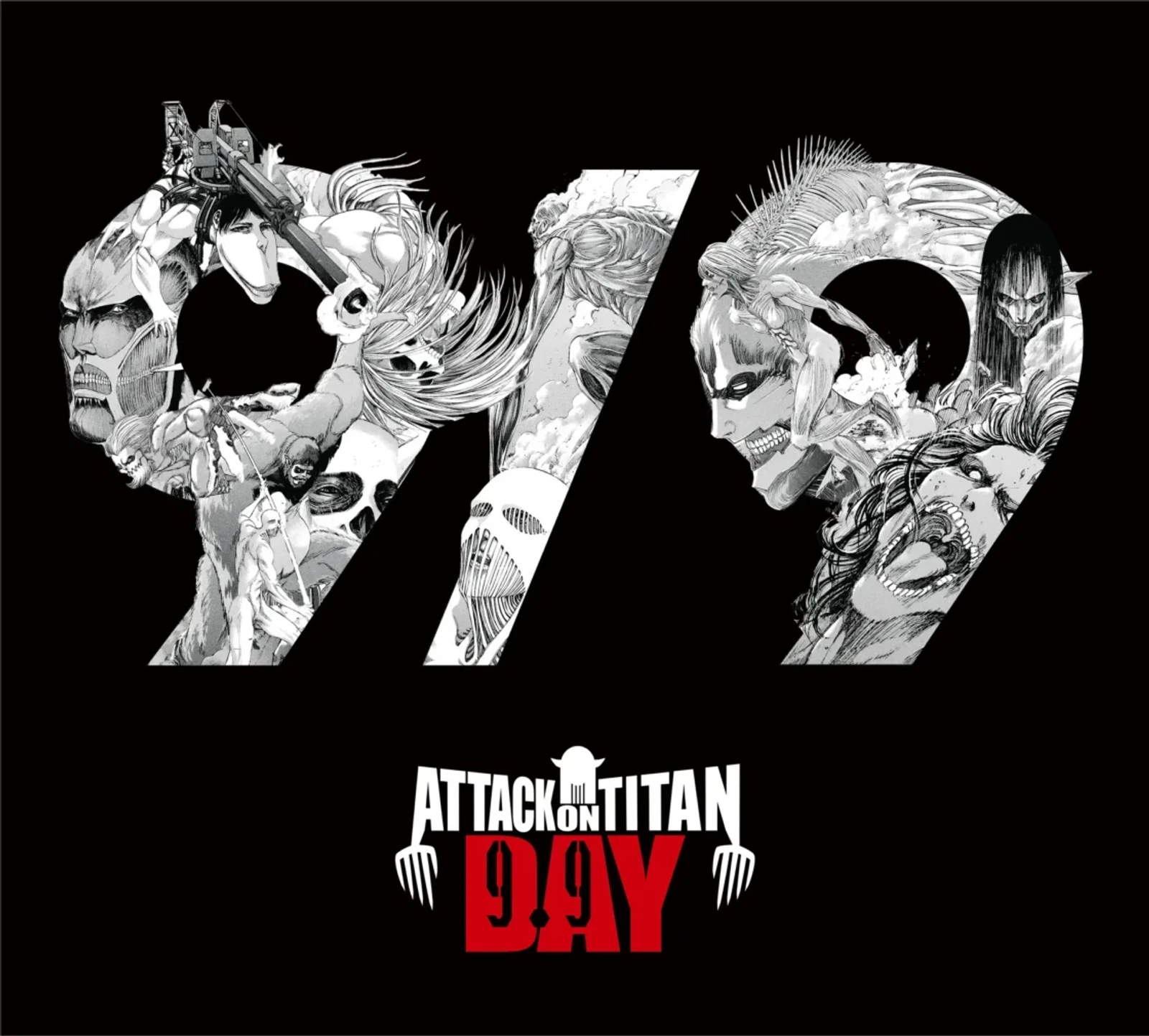
The Nine Titans are the nine inheritable Titan powers descended from Ymir Fritz’s original Titan power. Unlike the mindless Pure Titans that make up most of the series’ threat, a Nine Titans holder keeps their human intelligence and can transform back and forth at will — but the trade-off is steep: inheriting one of the Nine starts a 13-year countdown under the Curse of Ymir. Each of the nine has its own distinct powers, restrictions, and history of holders, and more than one can end up in the same person at once.
The Nine Titans at a Glance
| Titan | Core ability | Major named inheritors |
|---|---|---|
| Founding Titan | Control over Subjects of Ymir and Titans through the Paths, memory alteration, biological control — restricted without royal blood | Frieda Reiss, Grisha Yeager, Eren Yeager |
| Attack Titan | Access to memories of past and future inheritors | Eren Kruger, Grisha Yeager, Eren Yeager |
| Colossal Titan | Roughly 60-meter form, immense strength, steam release, explosive transformation | Bertholdt Hoover, Armin Arlert |
| Armored Titan | Extensive hardened plating, high durability, armor can be shed for speed | Reiner Braun |
| Female Titan | Combat versatility, hardening, a scream that draws Pure Titans | Annie Leonhart |
| Beast Titan | Animal-like traits that vary by holder | Tom Ksaver, Zeke Yeager |
| Jaw Titan | Small, agile, powerful jaws capable of cutting hardened material | Marcel Galliard, Ymir, Porco Galliard, Falco Grice |
| Cart Titan | Quadrupedal, exceptional endurance, can stay transformed and re-transform repeatedly | Pieck Finger |
| War Hammer Titan | Generates hardened weapons and constructs, can be operated remotely | Lara Tybur, Eren Yeager |
This is a guide to the system, not a complete historical roster — the manga names some holders across roughly 2,000 years of Titan history and leaves most of them unnamed.
Pure Titans vs. the Nine
Every mindless Titan roaming the story descends from people Ymir Fritz’s power turned into Titans, but that doesn’t make them one of the Nine. Pure Titans lose their human minds entirely; they can’t transform back, and they aren’t tracked as named power-holders. The Nine Titans are a separate category: nine specific powers whose human inheritors — commonly called Titan Shifters — retain their intelligence, choose when to transform, and pass their power on when they die in a specific way. Not every giant in this story is one of the Nine, and the distinction matters for basically everything that follows.
Where the Nine actually came from is deliberately left incomplete. Ymir Fritz was the first person to gain the Power of the Titans; after her death, that power was passed on, and over time it came to exist as nine separate, distinct powers. The manga doesn’t walk through the exact mechanics of that split, so treat “how it became nine” as one of the story’s genuine gaps rather than something with a clean, fully shown answer.
How Titan Inheritance Works
A Subject of Ymir gains one of the Nine Titans by consuming the current holder — devouring their body, which includes ingesting the holder’s spinal fluid — while that holder is in Titan form, then returning to human shape as the new inheritor. It’s grim by design and the series doesn’t shy away from that, but the guide doesn’t need to dwell on it either.
There’s a second path that matters just as much: if a Nine Titans holder dies without being eaten, their power doesn’t vanish. It transfers, through the Paths, to a Subject of Ymir baby born afterward. The story doesn’t spell out exactly how that recipient is selected or how far the effect can reach — it’s presented as an established rule of the Paths system, not a mechanic with documented selection criteria.
The Curse of Ymir: Why Shifters Get 13 Years
Every one of the Nine Titans comes with a fixed lifespan: 13 years from the moment of inheritance, not 13 years of age. Someone who inherits at 10 dies around 23; someone who inherits at 30 dies around 43. The in-story explanation is mythological rather than medical — no inheritor’s body can outlast Ymir Fritz’s own 13 years of bearing the power, so the curse repeats itself down every line of holders. It’s presented as an absolute rule the story never shows anyone escaping.
Can One Person Hold Multiple Titan Powers?
Yes, and Eren Yeager is the clearest proof. He ends up holding three of the Nine at once: Attack, Founding, and War Hammer. The chronology matters here — Grisha Yeager already carries the Attack Titan when he also takes the Founding Titan from Frieda Reiss, meaning Eren inherits both powers together when he later takes them from his father. He separately consumes the War Hammer Titan’s holder and gains that power too. None of this creates a tenth Titan or some hybrid form outside the original nine — it’s the same nine powers, just concentrated in one person instead of spread across nine. The story doesn’t establish a hard cap on how many one person could theoretically hold.
Founding Titan
The Founding Titan is the most powerful and most restricted of the nine. Through the Paths, its holder can influence Subjects of Ymir, exert control over Titans, alter memories, and — under the right conditions — affect the bodies of Subjects of Ymir directly. It’s also the seat of the Coordinate, the connective concept tying the Paths system together.
Possessing the Founding Titan and being able to use it fully are two different things. Eren holds the power after inheriting it from Grisha, but Eren isn’t royal-blooded, and the Founder’s deepest abilities are gated behind contact with someone who is. That’s the role Zeke Yeager plays — Zeke carries royal blood but never possesses the Founding Titan himself; it’s the combination of Eren holding the power and Zeke’s blood entering the equation through the Paths that opens the door to the Founder’s full reach. Zeke owning the Founder and Eren simply touching any royal-blooded person are both wrong readings of how this works.
There’s a second restriction layered on top of royal blood: Karl Fritz’s Vow Renouncing War, a binding commitment that constrained royal-line Founders like Frieda Reiss for generations, keeping them from using the Founder’s power offensively. Royal blood alone doesn’t equal unrestricted access — the vow is a separate, additional limitation specific to the Reiss/Fritz royal holders. And when Historia has physical contact with Eren, it can surface memories and connections through the Paths — that’s a real effect, but it isn’t the same thing as freely activating the Founder’s complete power on demand.
Attack Titan
The Attack Titan’s signature trait is access to the memories of its inheritors — including, notably, memories belonging to future holders of the same power. That’s a real and confirmed ability, but it isn’t unrestricted precognition. An Attack Titan holder can’t simply choose to view any future event at will; the mechanism runs through memory, not open-ended clairvoyance, and what surfaces isn’t guaranteed to be complete or immediately understood by the person experiencing it.
This is the ability behind Eren Kruger recognizing Mikasa and Armin decades before they existed — a genuinely unsettling moment precisely because it’s memory-based rather than simple fortune-telling. Eren Yeager’s own use of the ability later gets tangled up with the Founding Titan and the Paths as well, which is part of why the Attack Titan’s power alone shouldn’t be read as “sees everything.”
Colossal Titan
The Colossal Titan’s shifter form stands roughly 60 meters tall, dwarfing every other Titan power, and its holder can vent enormous amounts of steam and unleash transformations violent enough to level city walls. That destructive burst comes from the holder consuming their own muscle mass to fuel the transformation — it isn’t a fixed, automatic explosion of identical scale every time. The series shows holders exercising real control over how much of that force gets released, so one Colossal Titan’s transformation isn’t necessarily as catastrophic as another’s just because they share the same power. Bertholdt Hoover and Armin Arlert are the named holders worth knowing.
Armored Titan
Reiner Braun’s Armored Titan carries dense, hardened plating across most of its body, giving it durability few other Titans can match in a direct collision. That armor comes at a cost to mobility, and the series shows Reiner shedding or reducing it in situations that call for speed over defense instead. Hardening itself isn’t exclusive to this power — other Titans demonstrate their own forms of it — the Armored Titan’s distinction is how much of its body stays plated and how consistently.
Female Titan
Annie Leonhart’s Female Titan combines high mobility, hardening, and a distinctive scream capable of drawing Pure Titans toward her position — a genuinely dangerous crowd-control tool in the wrong hands. Later material also points to a broader adaptability tied to this power, describing an ability to take on traits associated with other Titans under specific circumstances; the story is careful not to frame this as copying any power freely or perfectly; it’s a narrower trait than that. It’s also worth separating what the Titan power actually does from what Annie herself brings to a fight — her hand-to-hand combat skill is her own training, not something the Female Titan grants automatically to anyone who holds it.
Beast Titan
The Beast Titan’s form and traits shift noticeably from holder to holder, taking on different animal characteristics depending on who carries it. Tom Ksaver and Zeke Yeager are the named holders, and Zeke’s version is where most of the confusion around this power comes from.
Zeke is a devastatingly accurate long-range thrower, but that’s a product of his specific Beast Titan form, his physical build, and his own skill and experience — not a universal ability every Beast Titan holder shares. Separately, Zeke can weaponize his spinal fluid, using his scream to transform affected Subjects of Ymir into Titans and exert control over them. That ability is tied specifically to Zeke’s royal blood, not to the Beast Titan power itself. Reading either trait as “what the Beast Titan does” misses that both are Zeke-specific, not generic to the ninth power.
Jaw Titan
The Jaw Titan is comparatively small and fast, built around jaws and claws strong enough to cut through hardened material that stops other Titans cold. Its named holders — Marcel Galliard, Ymir, Porco Galliard, and Falco Grice — show real variation in exactly how that form manifests.
Falco is the trickiest case to get right. He becomes the Jaw Titan after being exposed to Zeke’s spinal fluid, and his resulting form develops avian, Beast-like traits, eventually including flight. That doesn’t mean Falco ends up holding two of the Nine Titans — the story doesn’t describe him as possessing both the Jaw and the Beast Titan. He remains a Jaw Titan holder whose specific transformation carries Beast-like characteristics because of how he was exposed to that power, not because he inherited a second one.
Cart Titan
Pieck Finger’s Cart Titan is built for endurance rather than raw combat: a quadrupedal form that can stay transformed far longer than most other Titans and re-transform with far less strain, making it useful for sustained operations and transport. Marley outfits the Cart Titan with mounted guns, armor plating, and artillery hardware — but that’s equipment bolted onto the Titan, not a biological power the Titan generates on its own. The Cart Titan doesn’t naturally produce weapons; Marley’s engineers do. Pieck’s own tactical judgment, similarly, is her skill, not an innate trait of the power she holds.
War Hammer Titan
The War Hammer Titan generates hardened constructs on demand — hammers, spikes, blades, crossbows, environmental structures — with far more flexibility than ordinary Titan hardening allows. Its named holders include Lara Tybur, from the Tybur family that has carried the power, and later Eren Yeager.
Its most striking demonstrated trait is remote operation: a holder can stay encased safely underground while directing the Titan body at a distance through a flesh-like tether. That’s a real capability the story shows in use, but nothing establishes it as mandatory — the War Hammer Titan doesn’t have to be piloted remotely every time it’s used, and the ability appears to carry a real energy and stamina cost when relied on.
What Happens to the Nine Titans at the End?
This is full spoiler territory for the series’ ending. When Mikasa kills Eren, the bond tying Ymir Fritz to centuries of servitude finally breaks. Titan power disappears from the Subjects of Ymir entirely — people who had just been transformed return to human form, and the shifters who were still alive lose their Titan powers for good. The Curse of Ymir ends along with everything else, because there’s no more Titan power left for it to apply to.
The story’s final imagery, set generations later, includes a suggestive shot of the tree where it all began — deliberately ambiguous rather than a clear statement about the future. It’s fair to read that as the story leaving room for a similar cycle to happen again in some form, but that’s thematic ambiguity, not a shown return of the Nine Titans. Nothing in the completed story brings any of the nine powers back.
Why This Matters Right Now
The Nine Titans are the reason Attack on Titan Day leans so heavily on the number nine this year — the anniversary campaign’s own key visual, shown above, renders all nine powers inside a “9/9” design marking September 9 as Attack on Titan Day. That’s useful context for why this system is getting fresh attention, not the reason to understand it — the powers, restrictions, and inheritance rules above hold regardless of the anniversary.
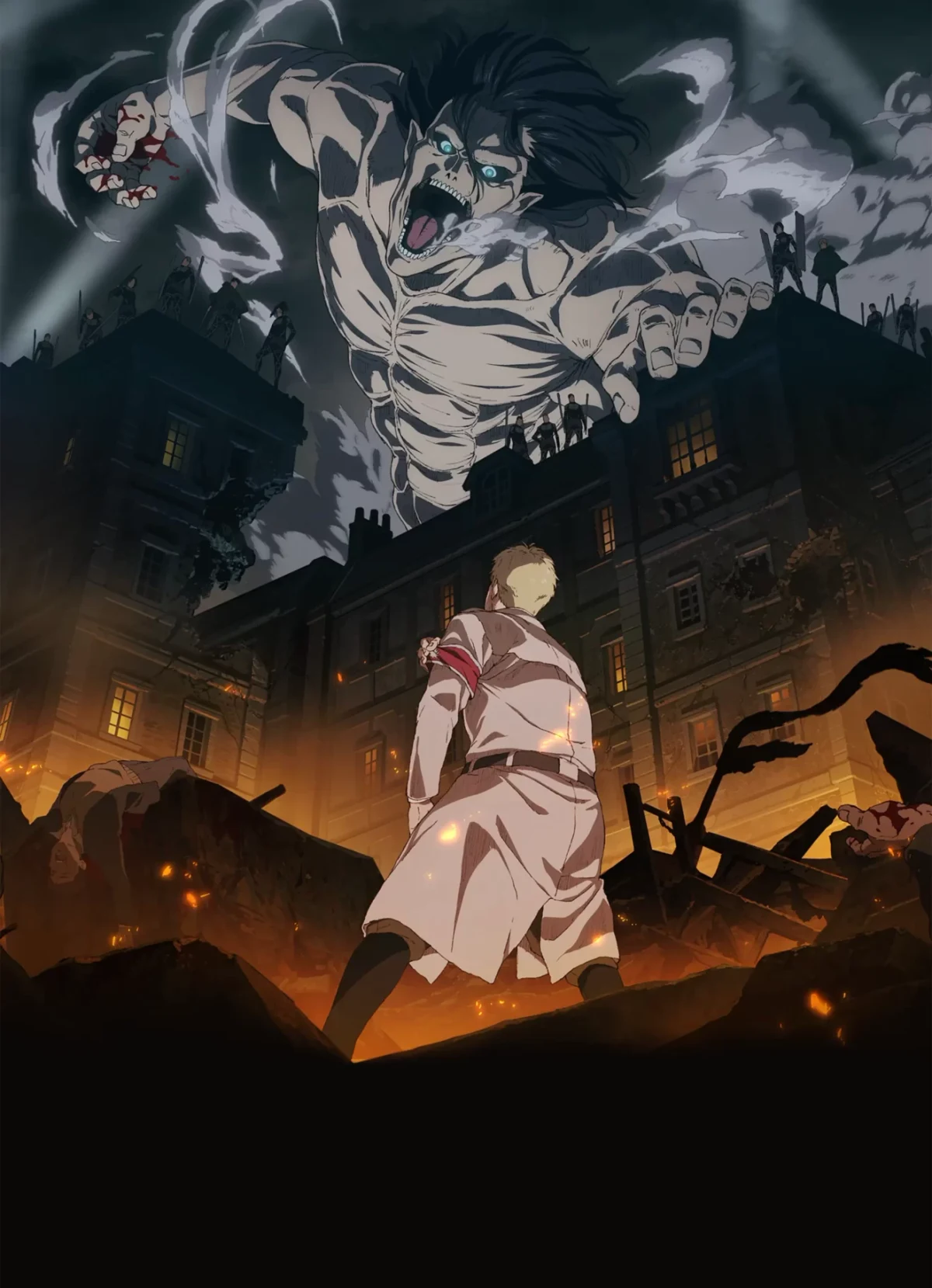
Official Attack on Titan Final Season key visual. Credit: MAPPA / Kodansha / Attack on Titan Production Committee.
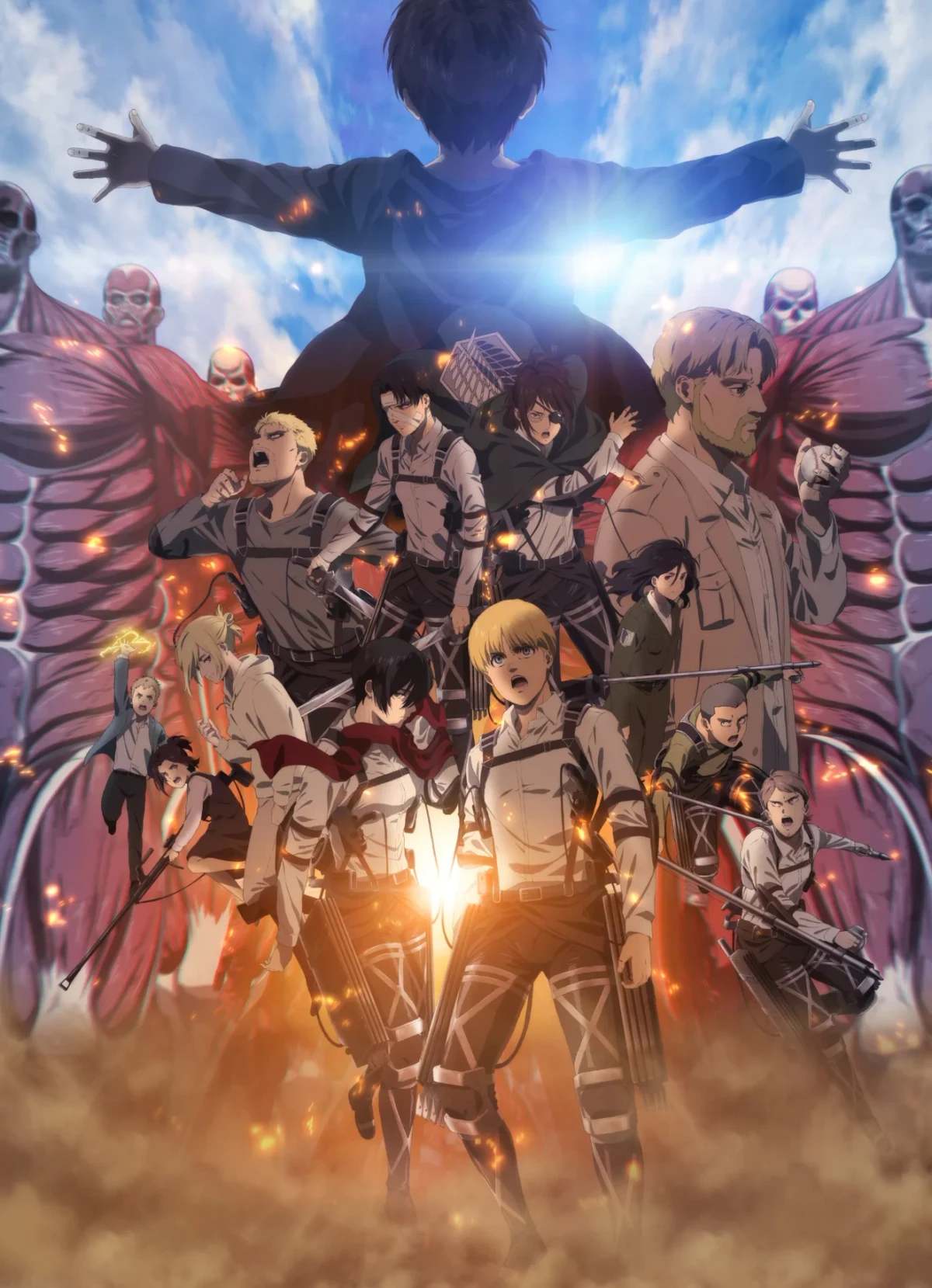
Official key visual for THE LAST ATTACK*. Credit: MAPPA / Kodansha / Attack on Titan Production Committee.*
For more on this year’s anniversary campaign, see our breakdown of Attack on Titan Day’s 99 announcements. For more anime coverage, visit our Anime hub, and for more franchise deep dives like this one, browse Lore & Explained.
Sources
Make Red Reactions a preferred source
Choose Red Reactions as a preferred source in Google Search.
Confirm your choice on Google.
Related coverage
About the author
Bamo Anwar
Anime & Gaming Writer
Bamo Anwar covers anime and gaming for Red Reactions. His work ranges from release news and detailed trailer breakdowns to beginner guides, watch orders and explainers designed to make large franchises and game systems easier to enter.
Coverage: Anime · Gaming · Beginner Guides · Watch Orders · Explainers
More from Bamo Anwar