feature · gaming
Pokémon Champions Regulation M-C Explained — Every New Mega Evolution and What Changed
Regulation Set M-C runs in Pokémon Champions through December 2026, adding six new Mega Evolutions and 24 newly available Pokémon. Here's exactly what changed and what it means for team-building.
 By Aram Anwar5 min read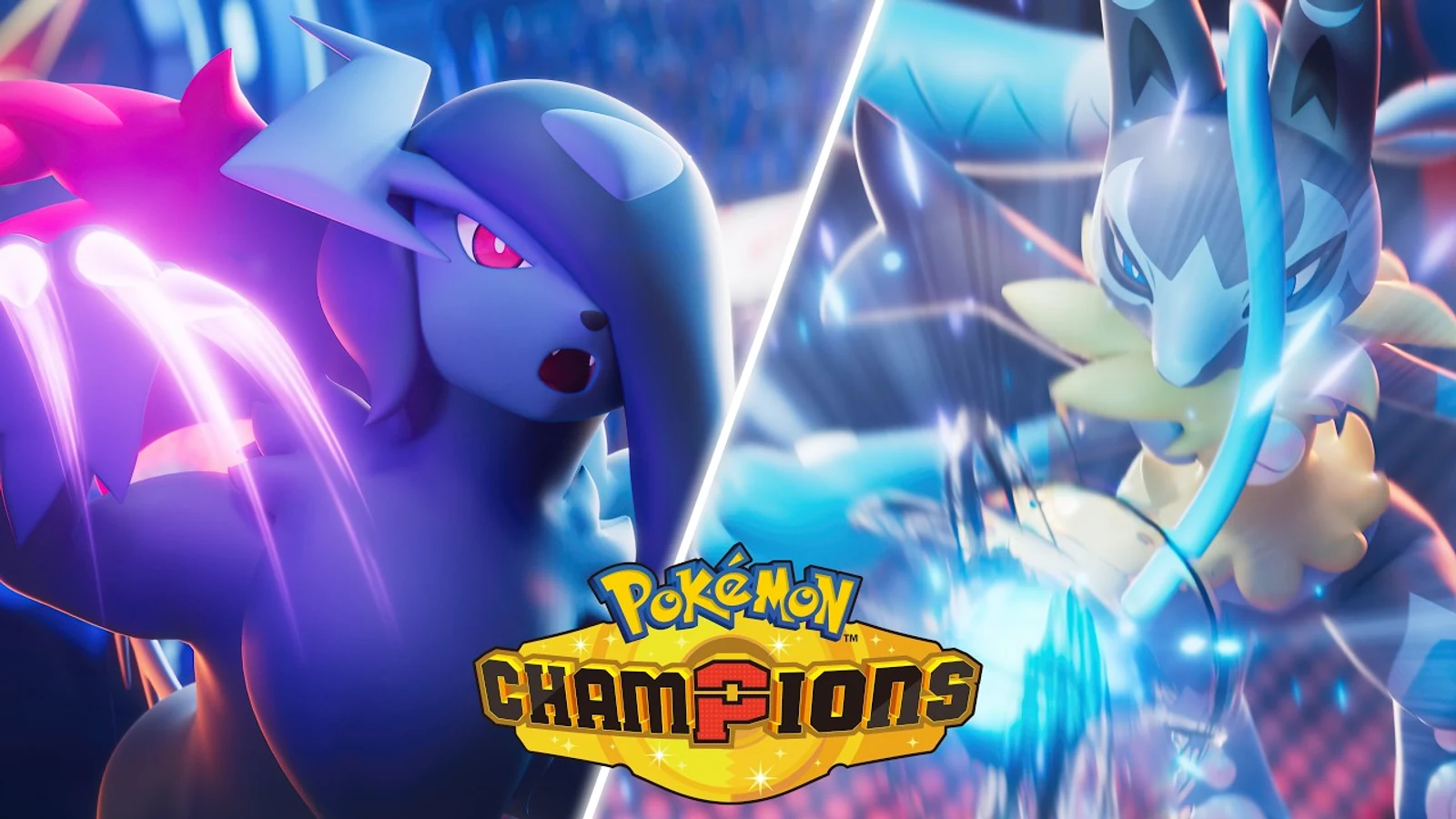
Pokémon Champions’ Regulation Set M-C is live, running from September 8, 2026 at 7:00 p.m. PDT through December 1, 2026 at 5:59 p.m. PST (worldwide, that’s effectively September 9 through December 2 in most other timezones). It’s the biggest single roster update the game has had, adding six new Mega Evolutions and 24 newly battle-eligible Pokémon on top of everything already legal under Regulation Sets M-A and M-B.
What Regulation M-C Actually Changes
M-C doesn’t replace the prior roster — it adds to it. Everything legal under M-A and M-B stays legal. The two things worth understanding are what’s new: three ordinary Mega Evolutions (Mega Salamence, Mega Golisopod, Mega Baxcalibur) and, distinct from those, three Z Mega Evolutions (Mega Absol Z, Mega Garchomp Z, Mega Lucario Z) — a separate category explained in full in our Z Mega Evolution guide, since the mechanic works differently enough to deserve its own explanation rather than a repeat here.
The Three New Ordinary Mega Evolutions
Mega Salamence gets the Ability Aerilate, which converts Salamence’s Normal-type moves into Flying-type and boosts their power — a real shift for a Pokémon whose movepool already leans Normal-type, since moves that previously matched its dual Dragon/Flying typing awkwardly now hit as a third, boosted type.
Mega Golisopod becomes Steel/Bug-typed with the Ability Tough Claws, which boosts the power of contact moves. That typing combination leaves it with only one type weakness — Fire — a notably narrow profile for a Mega Evolution.
Mega Baxcalibur gets Thermal Exchange, an Ability that converts incoming Fire-type hits into an Attack boost instead of a burn. Combined with Baxcalibur’s existing Dragon/Ice typing and a Mega Evolution’s usual stat and bulk increase, that Fire immunity-plus-boost pattern makes its own Ice- and Dragon-type attacks meaningfully harder to answer for teams built around Dragon, Flying or Ground-type cores that would otherwise threaten it.
The 24 Newly Available Pokémon
Pokémon.com’s own announcement highlights Rillaboom by name as a Pokémon “that has made an impact in past VGC tournaments,” while directing players to the in-game Recruit menu for the complete roster rather than publishing an exhaustive list itself. Specialist tracking coverage lists the full 24 as: Wigglytuff, Persian, Alolan Persian, Farfetch’d, Mr. Mime, Swalot, Salamence, Gogoat, Golisopod, Rillaboom, Cinderace, Inteleon, Thievul, Toxtricity, Grapploct, Perrserker, Sirfetch’d, Pincurchin, Indeedee, Pawmot, Arboliva, Squawkabilly, Mabosstiff and Baxcalibur.
Worth noting: Salamence, Golisopod and Baxcalibur appear on both lists — they’re newly available as base Pokémon and they’re the three species getting new ordinary Mega Evolutions this regulation, which is why Pokémon.com singles them out as headline additions rather than treating the Mega Evolutions and the roster expansion as two unrelated updates.
What Changes Strategically
This is worth being disciplined about: Pokémon Champions is a live, ongoing competitive game, and Regulation M-C is ten days old as of this writing. There isn’t meaningful tournament or ladder data yet to support claims about what’s actually dominant, and this guide isn’t going to manufacture a tier list to fill that gap.
What can be said with confidence, based on verified Ability text rather than results: Mega Baxcalibur’s Thermal Exchange gives it a genuine answer to Fire-type attacks that would otherwise threaten a Dragon/Ice typing, which matters against any team leaning on Fire coverage specifically to check Dragon-types. Mega Golisopod’s Steel/Bug typing with only a Fire weakness is a defensively narrow profile that’s unusual for a Mega Evolution, most of which trade bulk for exploitable weaknesses elsewhere. Mega Salamence’s Aerilate turns an already-established attacker’s Normal-type options into a third offensive type, which is a real answer to teams that built specifically around resisting Dragon and Flying-type damage from standard Salamence.
None of that is the same as saying any of the three “breaks” the format — that’s a claim only actual tournament results can support, and this article isn’t going to get ahead of the data that doesn’t exist yet.
Early Team-Building Considerations
With confirmed Abilities and typings as the only solid ground to build on this early into the regulation, a few practical starting points: teams that previously relied on Fire-type coverage specifically to answer Dragon-types now have to account for Mega Baxcalibur turning that matchup around. Teams built around exploiting a second type weakness on Bug or Steel-type Pokémon get less mileage against Mega Golisopod specifically, given how narrow its weakness profile is. And Rillaboom’s return to legal status is worth factoring into any team already planning around Grassy Terrain support, given its established VGC track record.
Beyond that, the honest advice is to wait for actual results. Six new Mega Evolutions and 24 newly legal Pokémon is a large enough shift that early theorycrafting is more likely to be wrong than right.
What Changed From M-B
The core distinction between M-B and M-C is additive, not a rules overhaul: no eligibility restrictions were lifted from the prior regulation, and nothing legal under M-B lost its legal status. M-C is a roster expansion — six new Mega Evolutions and 24 newly available Pokémon layered on top of an unchanged existing legal pool, rather than a format reset.
For the mechanical breakdown of how Z Mega Evolution specifically works — including why it doesn’t behave the same way in Pokémon Champions as it does in Pokémon Legends: Z-A — see our full Z Mega Evolution explainer, which covers Mega Absol Z, Mega Garchomp Z and Mega Lucario Z in detail.
Sources
- Pokémon.com — Get Ready for Regulation Set M-C in Pokémon Champions — August 30, 2026
Related coverage
Z Mega Evolution Explained — How Mega Lucario Z, Garchomp Z and Absol Z Work in Pokémon Champions
Mega Lucario Z, Mega Garchomp Z and Mega Absol Z are now live in Pokémon Champions. Here's what Z Mega Evolution actually means, and why the Legends: Z-A mechanic doesn't carry over the way you'd expect.

Mimikyu Explained: Why It Looks Like Pikachu — and What Pokémon Has Never Shown Us
Mimikyu isn't a damaged Pikachu or a ghost in a doll. It's its own Ghost/Fairy Pokémon wearing a homemade disguise, and nearly a decade later, Pokémon still hasn't shown what's actually underneath.
Pokémon TCG Pocket Dual-Type Cards Explained: How Mega Mewtwo X ex Changes Deck Building
Pokémon TCG Pocket is adding dual-type cards in October, starting with the Psychic/Fighting Mega Mewtwo X ex. Here's what's confirmed about the new mechanic and what it could mean for deck building.
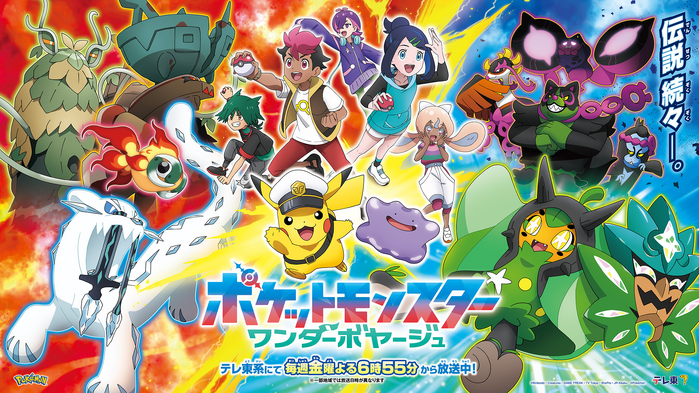
Pokémon Horizons Heads to Kitakami — Ogerpon and the Loyal Three Take Over the New Trailer
A new official Japanese promo previews Pokémon Horizons' next Wonder Voyage chapter, set in the Land of Kitakami with Ogerpon, the Loyal Three and the Treasures of Ruin. Here's what's actually confirmed before the September 25 episode.
About the author
Aram Anwar
Founder & Editor
Aram Anwar founded Red Reactions and writes across comics, gaming, movies and television. His work includes franchise guides and large Lore / Explained features, with an emphasis on separating confirmed details from reports, theory and speculation.
Coverage: Comics · DC & Marvel · Gaming · Movies & TV · Lore / Explained · Guides
More from Aram Anwar