Movies Review
Spoiler-lightThe Nun Review: Gothic Horror Does the Heavy Lifting
The Nun (2018) is thin on story and character, but its Romanian abbey setting, gothic atmosphere and Bonnie Aarons' Valak still make it one of the best-looking entries in The Conjuring Universe.
 By Kenza Benouna7 min read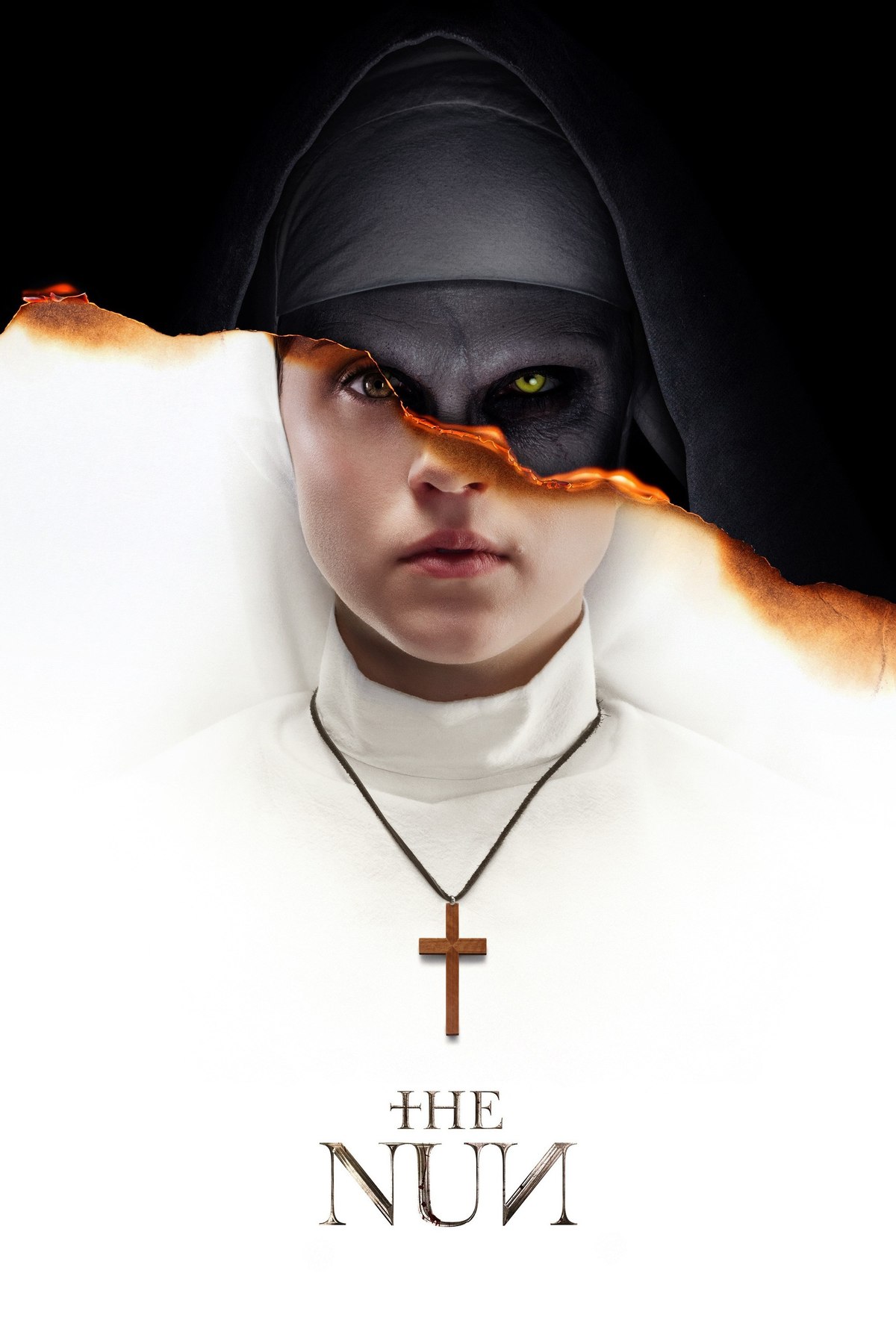
The Nun is not a great script. It is a genuinely great haunted-abbey movie, and those two things can both be true at once.
Corin Hardy’s 2018 prequel sends Father Burke and Sister Irene into a Romanian monastery to investigate a nun’s suicide, and what they find is Valak, the demon that would go on to define the visual identity of The Conjuring Universe more than any other single image. The story around that discovery is simple, occasionally sloppy, and not particularly interested in its characters as people. The abbey it’s set in, and the thing that lives there, are another matter entirely.
Spoiler-light. This review discusses setup, characters and the film’s general shape. It does not spell out the ending.
The setup
It’s 1952. A nun named Sister Victoria has just hanged herself inside Saint Cârța Abbey, a remote Romanian monastery the Vatican otherwise has no idea what to make of. The Church sends Father Burke (Demián Bichir), a priest with his own history of unresolved trauma, and Sister Irene (Taissa Farmiga), a novitiate who hasn’t yet taken her final vows, to investigate. Frenchie (Jonas Bloquet), the local trader who found the body, guides them there and sticks around once things go wrong.
What they find isn’t a ghost. It’s Valak, a demon that has been holding the abbey’s darkest secret in check for centuries, and whose grip is failing.
That’s about as much plot as the film actually needs, and to its credit, it doesn’t try to complicate it much further. The screenplay, credited to Gary Dauberman from a story by James Wan and Dauberman, treats the abbey itself as the real subject.
Atmosphere carries this movie
This is where The Nun earns its reputation, and where it separates itself from most of the rest of the franchise.
Saint Cârța Abbey is filmed like a character with its own logic: stone corridors that don’t connect the way you’d expect, a graveyard cut into the hillside, a crypt lined with crosses that seem to multiply the deeper the characters go. Hardy and cinematographer Maxime Alexandre lean into candlelight and lantern light almost exclusively, so most of the film is shot in genuine near-darkness rather than the desaturated blue-grey that passes for “dark” in a lot of modern horror. When Irene walks a corridor with a single oil lamp and Valak is standing somewhere behind her in the black, the geography of the shot is doing more work than any music cue.
The religious iconography isn’t decoration, either. Crosses, habits, incense, last rites — the film understands that inverting Catholic imagery is unsettling specifically because it still means something to the characters using it. Burke’s exorcism training and Irene’s faith aren’t just plot devices that let them fight the demon; they’re the reason the demon is attacking their faith rather than just chasing them through hallways. Sound design matters just as much: doors, wind and off-screen movement do more of the unsettling work than the score does, and an abbey with no phones and no easy way out gives the back half real claustrophobia.
Valak is the best thing in the movie
Bonnie Aarons had already introduced Valak in The Conjuring 2, but The Nun is where the design gets to breathe. Grey, sunken skin, yellow eyes, a habit that reads as both religious and predatory — it’s an effective piece of horror iconography specifically because it corrupts something familiar instead of inventing something alien. A demon that simply looked monstrous wouldn’t land the same way a demon dressed as a nun does.
Aarons’ physical performance sells it. Valak doesn’t move like a person, and the film is smart enough to let that stillness and wrongness do the work instead of constant jump-scare choreography. The best shots of Valak in this movie are the ones where it’s just standing there, in frame, not doing anything yet.
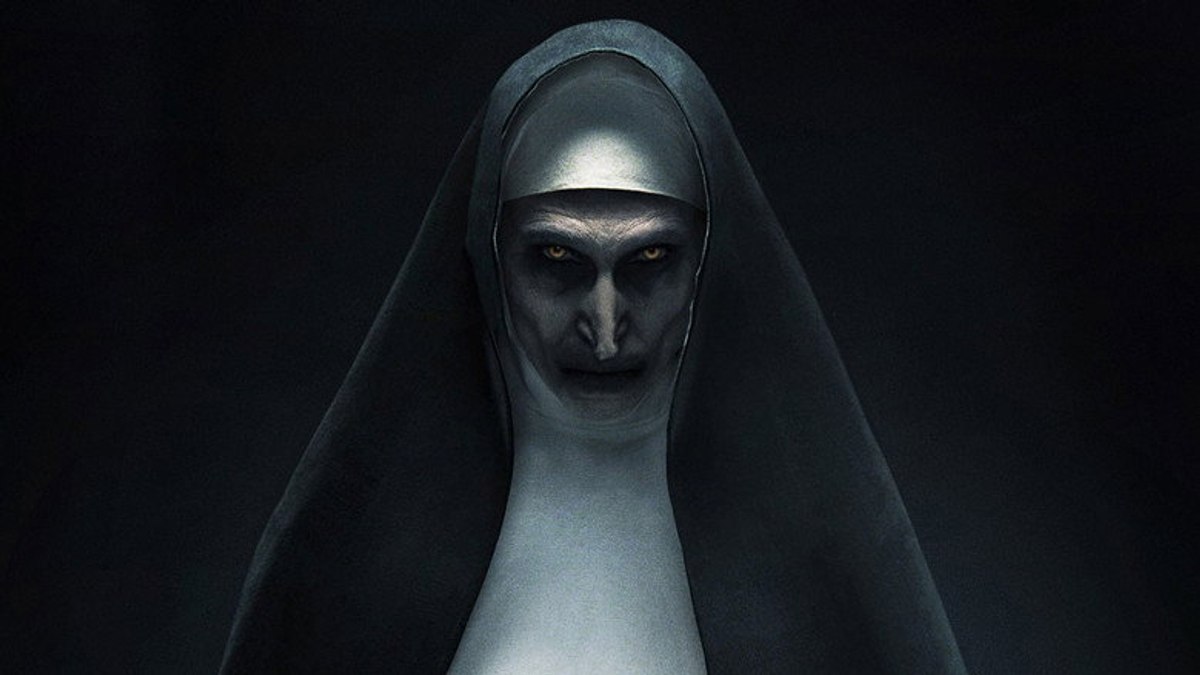
Bonnie Aarons as Valak. The design corrupts something familiar rather than inventing something alien. Credit: Warner Bros. Pictures / New Line Cinema.
Characters and performances
This is the part of the film that doesn’t hold up as well.
Farmiga plays Irene as earnest and quietly resolute, and it works, but the script gives her one defining trait — devout, curious, brave — and doesn’t build much past it. Bichir’s Burke has a stronger foundation on paper, a priest carrying guilt over a past exorcism that went wrong, but the film mostly tells you about that guilt rather than letting it shape his choices moment to moment. Bloquet’s Frenchie handles comic relief fine, though he’s given less to do once the scares escalate.
None of the three performances are bad. There’s a believable dynamic between Irene and Burke in particular, a mentor-and-novice relationship with enough texture to carry the investigation scenes. But this is a film built around a place and a monster, not people, and it doesn’t pretend otherwise. If you’re coming in expecting the character work of The Conjuring’s Ed and Lorraine Warren, you’ll notice the gap.
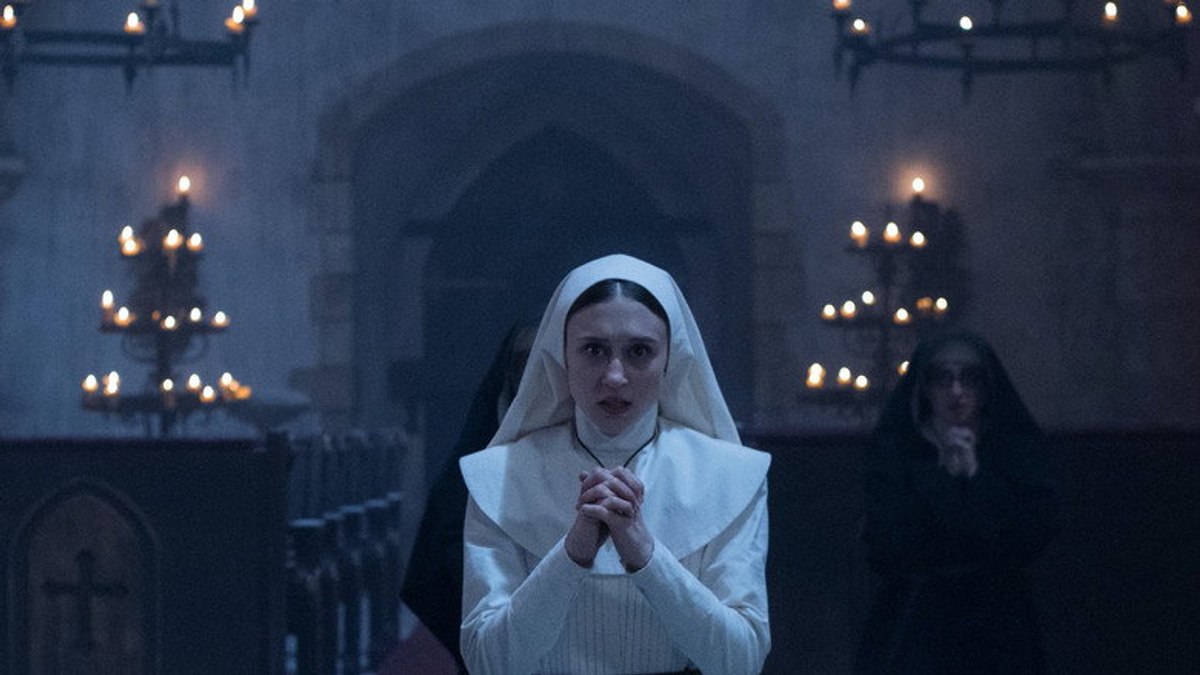
Taissa Farmiga as Sister Irene. The performance is earnest, but the script gives her one defining trait and doesn’t build much past it. Credit: Warner Bros. Pictures / New Line Cinema.
How scary is it, actually?
Split this into two categories, because the film performs very differently in each.
As dread: it’s strong. The slow-burn stuff — walking a corridor, opening a door, noticing something is slightly wrong about a room — is where Hardy’s direction is most confident, and it’s the reason the abbey setting gets so much credit in this review.
As jump scares: it’s the most familiar version of modern horror filmmaking, sudden stings, a hand grabbing from off-frame, a loud sound cue timed to a slow push-in. They work in the moment. They’re also the part of the film least likely to stick with you afterward, and The Nun leans on them more than its atmosphere-first sections suggest it needs to.
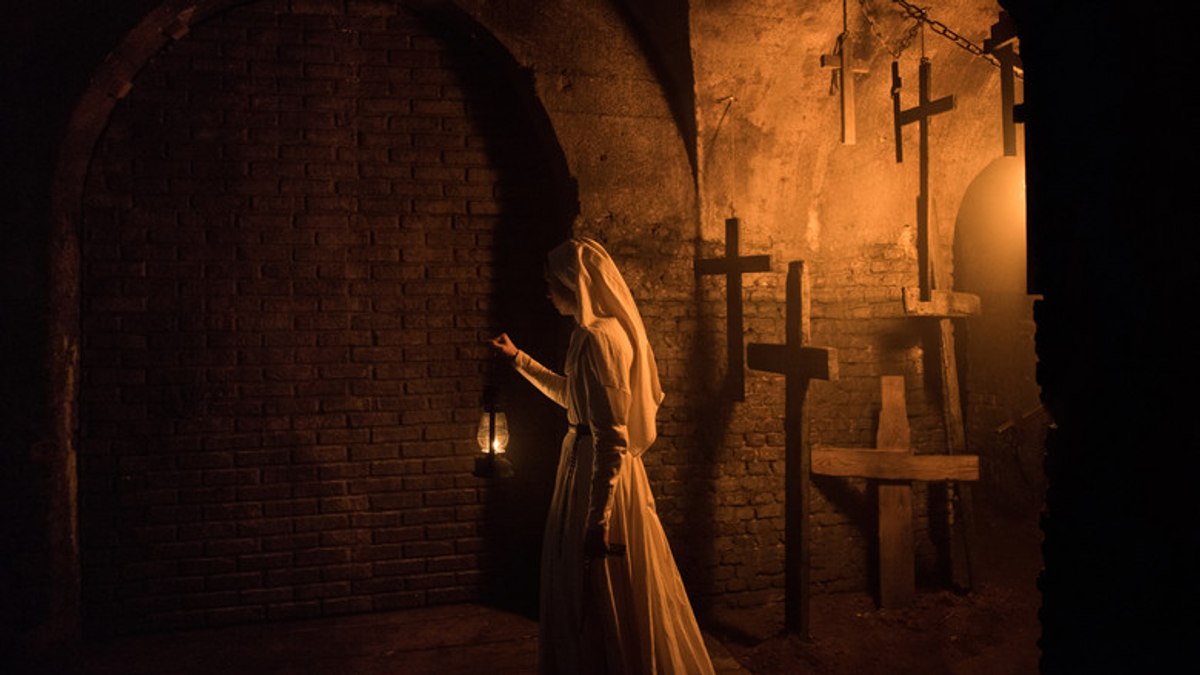
Saint Cârța Abbey’s crypt. The setting does more sustained work than any individual scare. Credit: Warner Bros. Pictures / New Line Cinema.
Where the film actually falls short
An 8 isn’t a 10, and the gap is mostly about writing, not craft.
The investigation plot is thin enough that it occasionally needs characters to make questionable decisions just to keep moving — splitting up in a haunted abbey at night is exactly the choice you’d expect this movie to make, and it makes it. The abbey’s specific rules around Valak’s containment, what breaks it, what restores it, get explained mostly through exposition rather than earned through what the characters discover, which makes the back half feel more told than shown. And for a film that spends so long building Valak up as ancient and patient, the confrontation resolves a little too quickly for how much dread it spent 80 minutes accumulating. None of that erases what works, but it’s the difference between a very good genre film and a genuinely great one.
Where it fits in the Conjuring Universe
The Nun is one of the earliest stories chronologically in The Conjuring Universe, even though it released in 2018, after The Conjuring, The Conjuring 2, Annabelle and Annabelle: Creation. Its ending connects directly to Frenchie’s later role in the Perron farmhouse events that open The Conjuring, and Valak here is the same demon that later possesses its way into The Conjuring 2’s Enfield haunting. For how that mythology fits together across the films, Valak’s full Conjuring Universe history is broken down here.
You don’t need to have seen The Conjuring first. The Nun stands on its own as a period piece with its own setting and its own central threat; the connections mostly reward people who already know the franchise rather than gatekeeping people who don’t.
Verdict: 8/10
The Nun is a film you watch for atmosphere, imagery and a genuinely effective monster, not for a script that respects its characters as much as it respects its location. That’s a real limitation, and it keeps this from being the best thing the Conjuring franchise has produced.
It’s also enough. A haunted-abbey movie this committed to its setting, carried by a design as strong as Valak’s, doesn’t need a perfect screenplay to be worth your time. It needs to make you nervous about what’s standing in the dark end of a hallway, and it does that reliably from beginning to end.
For more horror coverage, see Deadites Explained and our retrospective review of Supernatural.
Make Red Reactions a preferred source
Choose Red Reactions as a preferred source in Google Search.
Confirm your choice on Google.
Related coverage
Valak in The Conjuring Universe Explained: Powers, Timeline, and Why It Looks Like a Nun
Valak's full Conjuring Universe story explained — why the demon looks like a nun, what powers it actually shows, how The Nun films connect to The Conjuring 2, and what is canon.
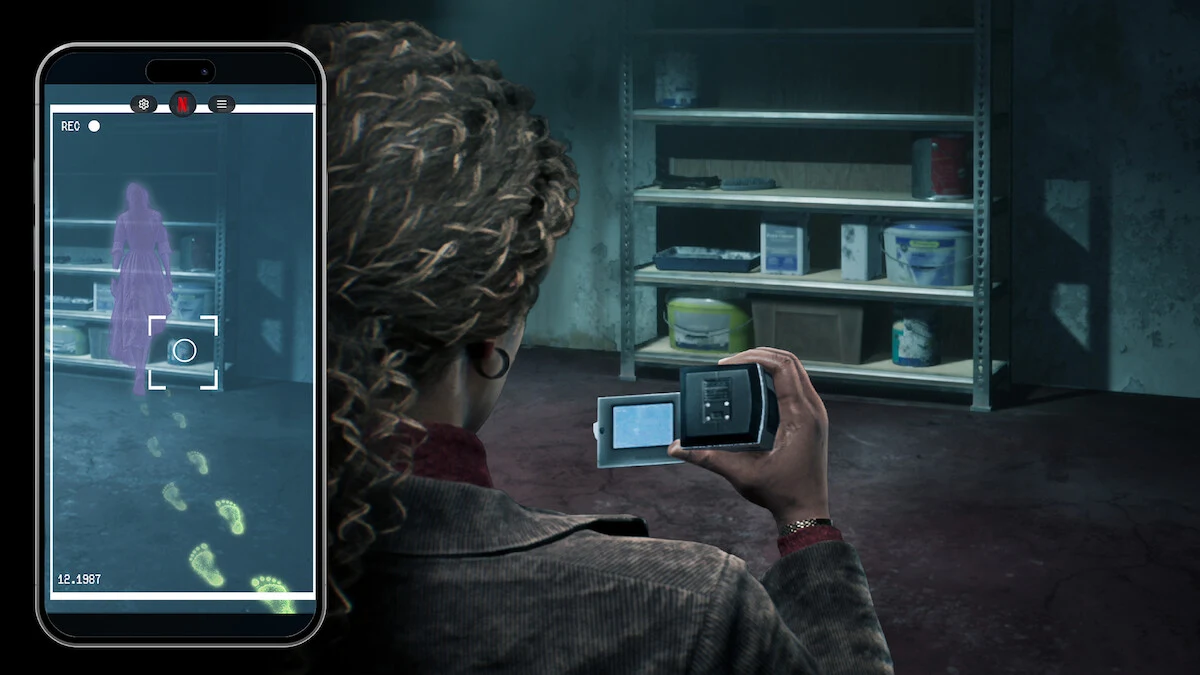
The Conjuring: Unspoken Is on Netflix — How to Play With Your Phone
Netflix says The Conjuring: Unspoken has arrived. Check TV and browser setup, phone controller requirements, story perspectives and beta access limits.
Insidious: Out of the Further Review: The Franchise Finds a Genuinely New Idea
Insidious: Out of the Further gives the franchise its best villain in years and a genuinely fresh supernatural hook in Gemma's Courier ability, even when the plot around it gets crowded.
UNABOMBER Review: Strong Performances, a Simplified Theory, and a 7/10 Result
Strong performances and an effective dual timeline are held back by a simplified psychological thesis.
About the author
Kenza Benouna
Movies, TV & Horror Writer
Kenza Benouna writes about movies and television, with a substantial archive in horror. Her Red Reactions work includes reviews, supernatural and franchise lore, story explainers and analysis of character, atmosphere and adaptation.
Coverage: Horror · Movies · TV · Reviews · Lore & Features
More from Kenza Benouna