TV & Streaming Review
Spoiler-lightSupernatural Review: 15 Seasons Later, It's Still One of the Best Genre Shows Ever Made
327 episodes. Two brothers. One Impala. A retrospective review of Supernatural — what it got right, what it got badly wrong, and why it still works.
 By Aram Anwar7 min read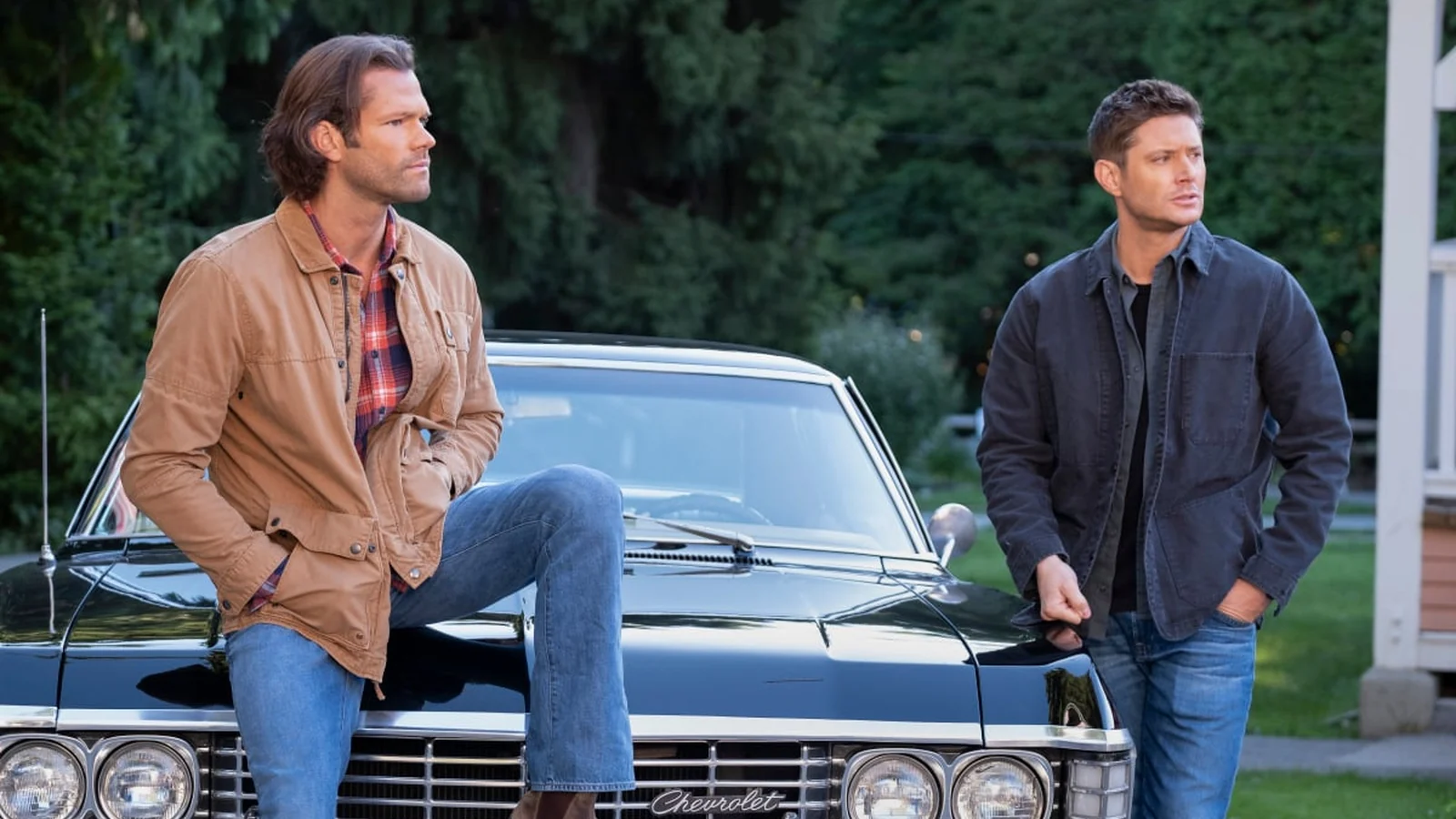
In 2005, a network that would disappear the following year put a low-budget horror show about two brothers in a car on its schedule. Fifteen years and 327 episodes later, Supernatural was still on the air — the longest-running American live-action fantasy series ever made, and the last survivor of either The WB or UPN.
Nothing about that should have happened. The reasons it did are the same reasons the show is still worth your time.
Spoiler-light. Broad arcs and famous episodes are discussed throughout. Finale details are confined to one clearly flagged section.
The verdict
The good
- Fifteen years of lead chemistry between Jared Padalecki and Jensen Ackles that never once faltered
- Tonal range no other network drama has matched — real horror one week, fourth-wall demolition the next
- Seasons 1–5 remain a masterclass in serialised genre escalation
- A supporting bench — Castiel, Bobby, Crowley — that would carry most shows on its own
- The Impala and the classic rock: an aesthetic identity recognisable in three seconds
The bad
- Post-Season 5 fatigue: the same trust-and-betrayal loop, run repeatedly
- Death stopped meaning anything somewhere around the fourth resurrection
- Later villains, from the Leviathans to the British Men of Letters, rarely justified themselves
- A finale scaled down by the pandemic that left major arcs unresolved
The premise that shouldn’t have worked
Two brothers drive across America in a 1967 Chevy Impala hunting things that shouldn’t exist. Their mother died on a nursery ceiling in 1983; their father raised them as hunters and has now gone missing.
That’s the whole pitch. Fake FBI badges, motel rooms, a journal full of lore, salt and iron and silver. Eric Kripke had originally floated something closer to Kolchak — a reporter in a van chasing urban legends — before reworking it into a road movie about family.
The blue-collar cheapness was the point. This was horror in gas stations and diners and dying Midwestern towns, and the low ceiling on the budget forced the show to be about people rather than spectacle. It’s why the early seasons hold up: a shapeshifter wearing your brother’s face is scarier than any amount of CGI, and “Skin” worked that out in 2005.
Sam and Dean
The show lives or dies on two performances, and for fifteen years it lived.
What Padalecki and Ackles built wasn’t a double act. Dean was parentified at four and has never stopped being responsible for Sam; Sam left for Stanford and a shot at law school, and has never stopped feeling guilty about wanting out. Every conflict between them across 327 episodes is a version of that.
The writing knew it. The show is explicitly about codependency, and honest that the bond is both heroic and unhealthy — these two will burn the world down for each other, and the world notices. The thesis was never save everyone. It was save each other from what saving everyone costs.
Their chemistry is also what makes the tonal swings survivable. You believe these men would argue about pie during an apocalypse, so the show can drop them into a sitcom parody and lose nothing.
The first five seasons
The Kripke era is why Supernatural gets taken seriously.
Kripke has been clear he never had a scene-by-scene plan, but by Season 2 the shape existed: local folklore, then the Yellow-Eyed Demon, then Hell’s gates, then angels, then an apocalypse nobody wanted. Each season inherits the previous one’s consequences instead of resetting them.
Season 1 sets the rules. Season 2 makes sacrifice cost something. Season 3 puts a clock on it. Season 4 arrives with Castiel walking into a barn and doubles the size of the universe. Season 5 pays all of it off.
And “Swan Song” resolves a war between two archangels not with a fight, but with a man seeing plastic army men jammed in a car ashtray and remembering who he is. It’s the best thing the show ever did, and it’s essentially a scene about a car.
Getting weird
The other thing nobody else managed: Supernatural could be genuinely funny without breaking itself.
“Mystery Spot” traps Sam in a time loop killing Dean in increasingly stupid ways, then turns brutal. “Changing Channels” throws the brothers through television genre parodies. “The French Mistake” dumps them into our world as two actors named Jared Padalecki and Jensen Ackles. “Fan Fiction,” the 200th episode, is a high school musical about the show, made with real affection for the people who write fan work. “Scoobynatural” is an animated Scooby-Doo crossover with no business being as good as it is.
And “Baby” — Season 11, shown entirely from the Impala’s perspective — is the show’s quiet masterpiece, and proof the later years still had range.
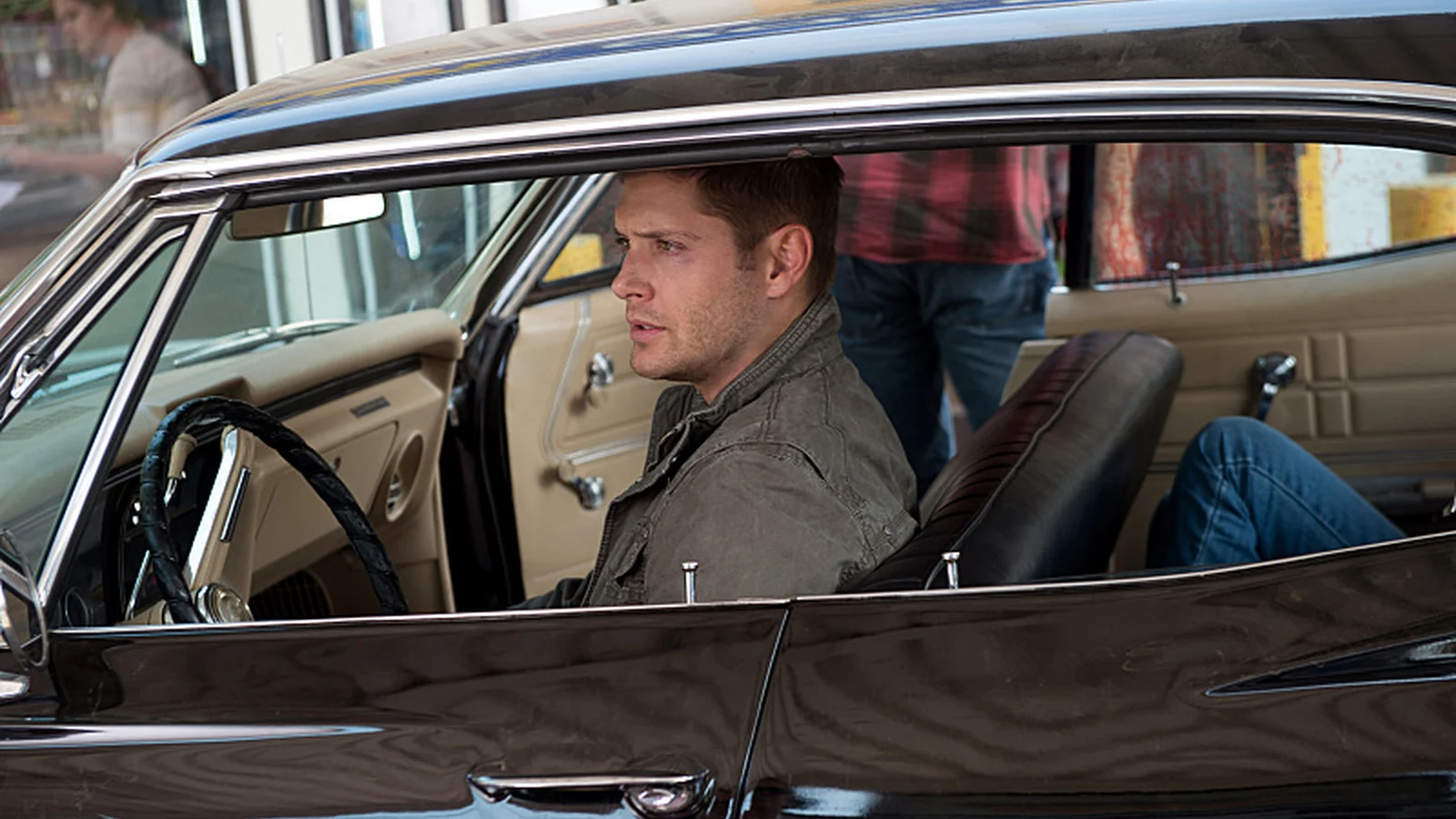
The supporting bench
Castiel’s entrance in Season 4 is one of the great genre introductions: lights exploding, doors blowing open, a man in a trench coat who cannot read a room. Misha Collins turned Castiel into a central third pillar of the series.
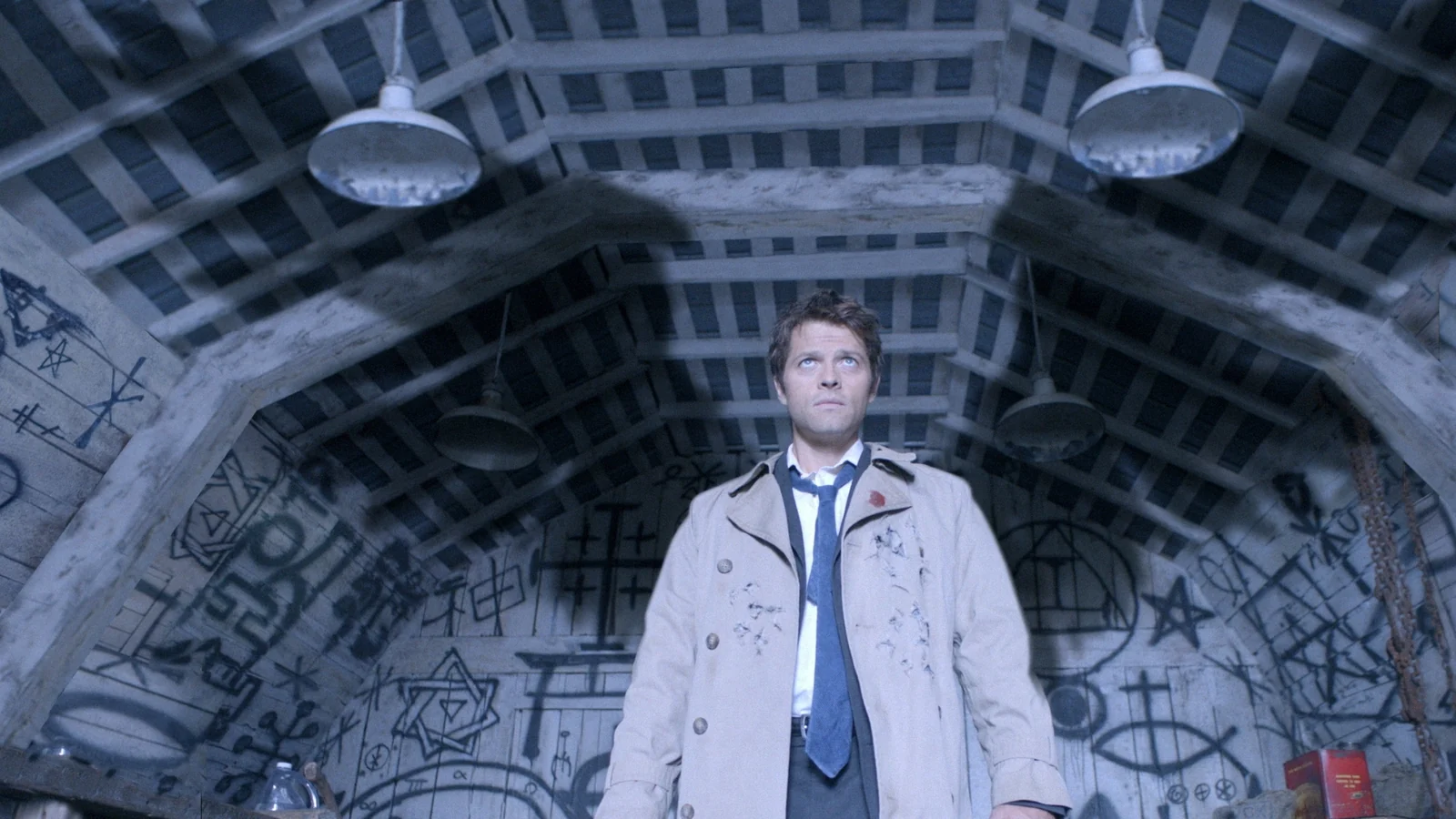
Jim Beaver’s Bobby Singer was the surrogate father the Winchesters actually deserved, and handed the show its moral thesis — family don’t end with blood. Mark Sheppard’s Crowley made Hell funny without making it toothless. Julian Richings’ Death, introduced over a cover of “O Death,” is still the most unnerving cosmic entity network television has produced.
Yes, it went on too long
It did. This isn’t a defence.
After Season 5 the show had to keep raising stakes it had already maxed out, and the result was inflation. Threats escalated from small-town hauntings to the author of reality itself, and everything below that stopped mattering. Monsters that once took a full episode became speed bumps. Characters died and returned so routinely that death became a scheduling matter.
Season 6 never recovered from following Season 5. Season 7 traded cosmic horror for corporate satire and killed Bobby doing it. Season 9 reset the brothers’ trust for the third or fourth time. Season 12’s British Men of Letters felt small after the Darkness.
The counterargument is real, though. The volume is the point. Nobody watches 327 episodes for plot — they watch because after two hundred hours these are people you know. That’s a bond prestige television, with its eight-episode seasons, structurally cannot buy. And a show that stopped at five never gives you “Baby,” “Fan Fiction” or “Scoobynatural.”
The finale
Spoilers for the series finale in this section only.
“Carry On” is divisive, and it deserves context before judgement.
Production shut down in March 2020 with two episodes left to film, resuming under Vancouver quarantine rules in August. Showrunner Andrew Dabb has since confirmed what was lost: Sam and Dean’s Heaven was meant to be a rebuilt Harvelle’s Roadhouse packed with all the people the boys had met along the way
, with Kansas performing “Carry On Wayward Son” as the house band. The set was built. It was never used.
What aired instead is small. Dean dies on an ordinary hunt. Sam grows old and raises a son. They meet again on a bridge.
Be precise about the blame, though: Dabb has also said Dean’s death and Sam’s life in fast-forward were always the plan. The pandemic cost the ending its scale and its returning faces — not its shape. It doesn’t account for the abruptness of Dean’s death, the aging prosthetics, or Castiel’s total absence two episodes after his confession in “Despair,” still the most-argued-about scene the show ever produced.
The bottom line
Supernatural is not a flawless show. It’s a show with roughly five perfect seasons, several bad ones, and a lead partnership strong enough to hold the rest together anyway.
Its real achievement is that it stayed itself. Fifteen years, multiple showrunner eras, and a cosmology that eventually included God — and it never stopped being about two men in a car who only have each other.
Nothing else has combined this much horror, comedy, sincerity and road. Twenty years on from the pilot, nothing has repeated it.
Make Red Reactions a preferred source
Choose Red Reactions as a preferred source in Google Search.
Confirm your choice on Google.
Related coverage
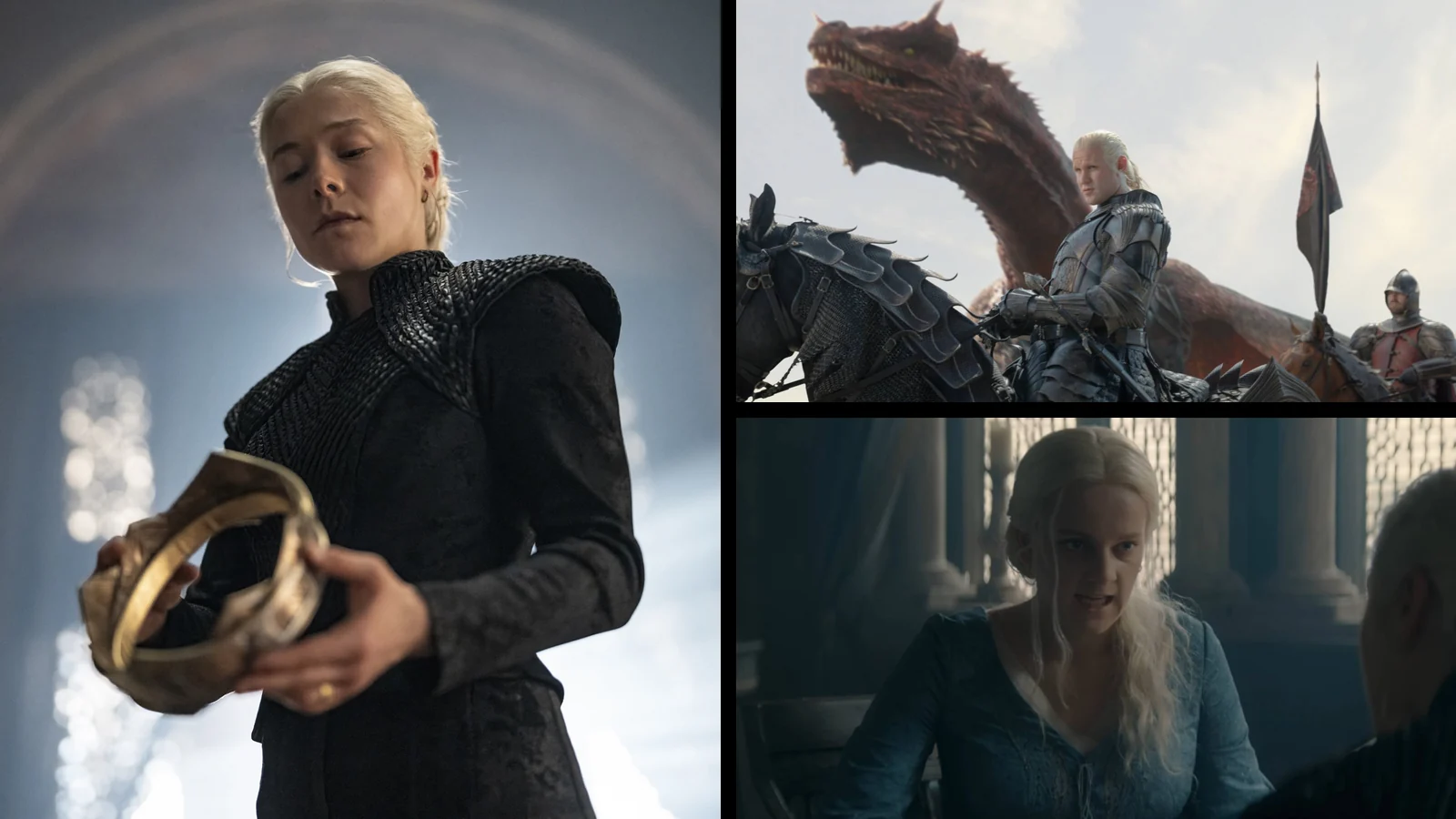
House of the Dragon Season 3 Finale Review: Rhaenyra Crosses the Point of No Return
Tumbleton burns, Helaena falls, and the Realm's Delight becomes something else entirely. Our review of 'The Treasons at Tumbleton' — full spoilers.
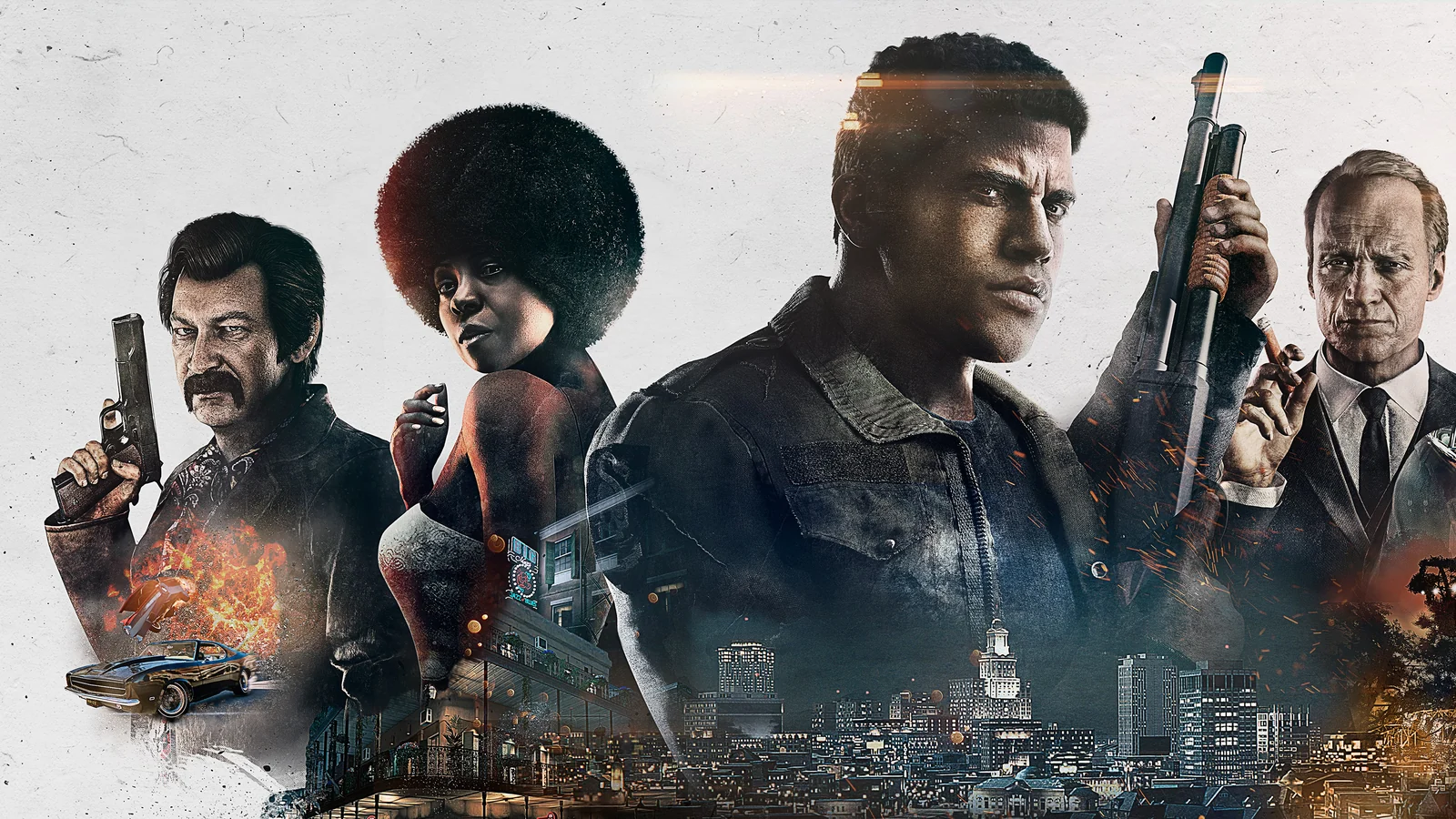
Mafia III Review in 2026: A Great Story Trapped in a Repetitive Game
Nearly ten years on, Lincoln Clay's revenge story is still one of the best in open-world gaming. The game around it is still the problem.
Reacher Season 6 Is Official — What Prime Video Has Confirmed So Far
Prime Video has renewed Reacher for Season 6. Here is what Amazon has confirmed about Alan Ritchson's return and what remains unknown about the book and release date.
Stephen King's Crouch End Is Becoming a Prime Video Horror Series
Prime Video has ordered a six-part Crouch End limited series, adapting Stephen King's Lovecraftian London horror story with Paul Tomalin writing and Tom Shankland directing.
About the author
Aram Anwar
Founder & Editor
Aram Anwar founded Red Reactions and writes across comics, gaming, movies and television. His work includes franchise guides and large Lore / Explained features, with an emphasis on separating confirmed details from reports, theory and speculation.
Coverage: Comics · DC & Marvel · Gaming · Movies & TV · Lore / Explained · Guides
More from Aram Anwar