Movies Review
Spoiler-lightThe League of Extraordinary Gentlemen Review: A Flawed Adventure That's Still Ridiculously Fun
Twenty-three years later, The League of Extraordinary Gentlemen is still messy, overstuffed and uneven — but its cast, steampunk world and pulp-adventure charm make it far more fun than its reputation suggests.
 By Kenza Benouna9 min read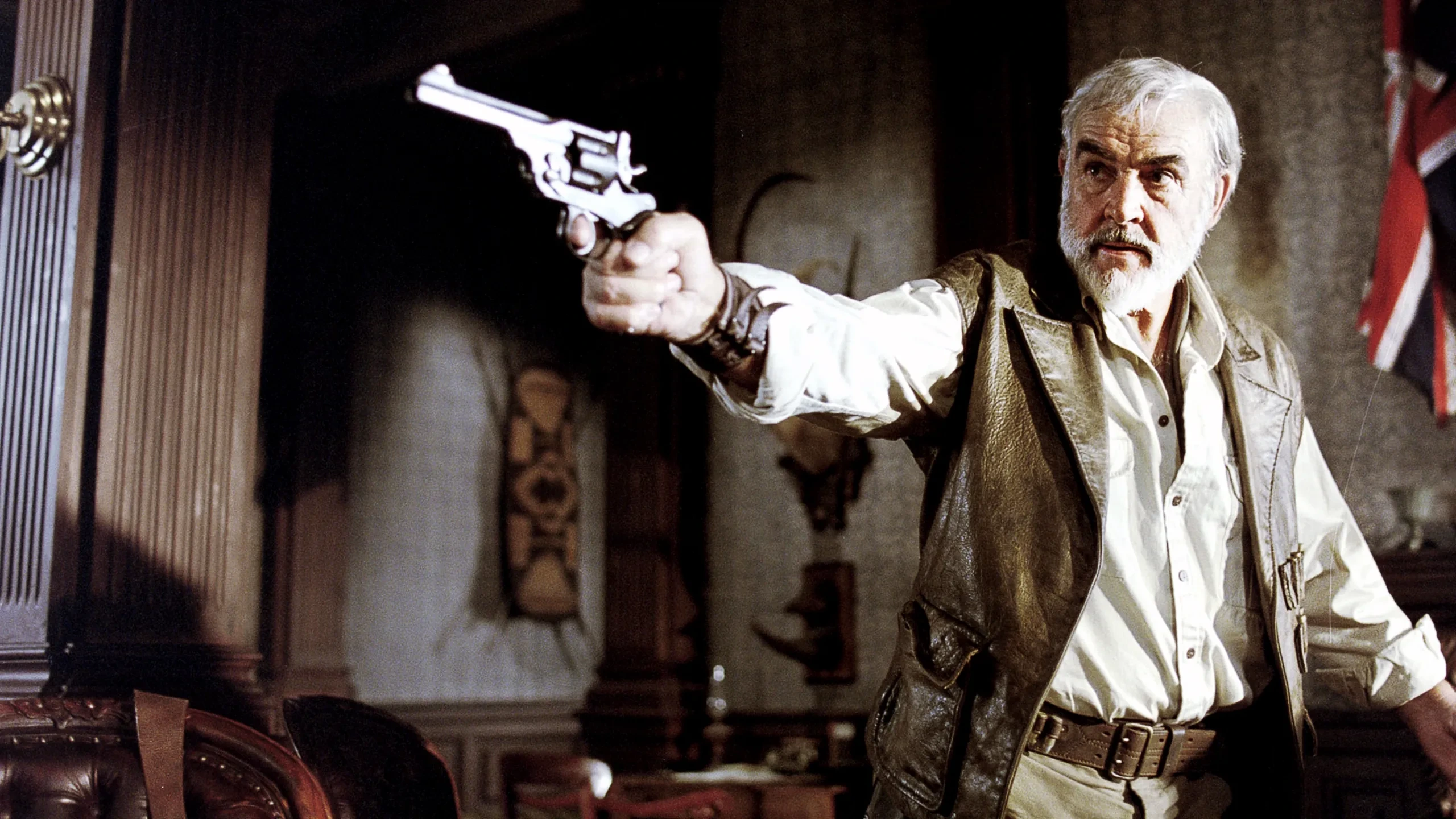
The League of Extraordinary Gentlemen has spent more than two decades being remembered as the movie that helped send Sean Connery into retirement.
That is a great piece of Hollywood trivia. It is also a pretty terrible way to judge the film.
Watching LXG now, 23 years after its 2003 release, I can see nearly every complaint that buried it. The story rushes. Characters come and go before the movie has really figured out what to do with them. Some of the visual effects have aged badly, and the villain plot becomes less interesting the more it explains itself.
And yet I still have a very good time with it.
There is something wonderfully unapologetic about a movie that throws Allan Quatermain, Captain Nemo, Mina Harker, Dorian Gray, Tom Sawyer, an invisible thief and Dr. Jekyll into the same room, puts them aboard an absurdly huge submarine and sends them off to stop a world war.
It is messy. It is ridiculous. It is also exactly the kind of pulpy fantasy blockbuster I wish Hollywood still made more often.
The verdict
The good
- Sean Connery gives the movie an old-school adventure-star presence it desperately needs
- Captain Nemo, Mina Harker and Mr. Hyde are genuinely fun interpretations of classic characters
- The Victorian-steampunk production design gives the movie a strong identity
- The Nautilus and its enormous car remain fantastic pieces of blockbuster design
- The action has a physical, early-2000s weight that often feels more satisfying now
- It is fast, self-contained and never afraid of being a little ridiculous
The bad
- The screenplay tries to introduce too many characters too quickly
- Several members of the League barely get enough development
- Some CGI and compositing have aged poorly
- The Venice sequence ignores physics with impressive confidence
- The villain is less interesting than the heroes he is fighting
- It changes Alan Moore and Kevin O’Neill’s comic so heavily that fans of the source material have plenty to be annoyed about
This team should not work — and that’s part of the fun
The basic idea remains brilliant.
Instead of superheroes, The League of Extraordinary Gentlemen builds its team from famous characters in Victorian and adventure literature. Sean Connery is Allan Quatermain. Naseeruddin Shah is Captain Nemo. Peta Wilson is Mina Harker. Jason Flemyng gets both Dr. Jekyll and Mr. Hyde. Stuart Townsend plays Dorian Gray. Tony Curran is Rodney Skinner, the film’s version of an invisible man, and Shane West joins them as an older Tom Sawyer.
On paper, it sounds like somebody emptied a library onto a table and decided every book belonged in the same cinematic universe.
The movie’s best scenes are the ones that simply enjoy that idea.
Nemo does not just arrive with a submarine. He arrives with the Nautilus, a gigantic silver vessel that looks as if Victorian engineering suddenly discovered science fiction. Dorian Gray gets to be elegant and insufferable because, of course, he does. Mina Harker is no longer simply the woman who survived Dracula; the movie turns her into one of the team’s most dangerous fighters.
Then there is Hyde.
Jason Flemyng’s transformation into this enormous, barely contained creature is exactly the kind of early-2000s monster work I have a soft spot for. It does not always look seamless, but Hyde has presence. He feels heavy. When he smashes through something, the movie understands that the fun comes from watching a monster occupy real space rather than treating him as a weightless visual effect.
The League itself could have used another 20 minutes together. The chemistry is there, but the screenplay is always rushing toward the next betrayal, explosion or location before everyone has had enough time to become a real team.
Still, when they are all standing together, the movie sells the fantasy.
Sean Connery is the reason the whole thing holds together
Connery was 72 when the film reached theaters, and LXG does not pretend Allan Quatermain is a young action hero.
That is one of its smartest decisions.
Quatermain is tired, experienced and already carrying the weight of a life spent surviving adventures that killed other people. Connery does not need to move like a superhero because the character’s authority comes from the fact that everybody believes he has already seen worse.
His relationship with Tom Sawyer is obvious from the moment they meet. Sawyer is the younger American who still thinks speed and confidence can solve almost anything; Quatermain is the veteran who knows exactly how quickly confidence can get somebody killed.
It is not the deepest mentor relationship ever put on screen, but it gives the movie a little heart under all the machinery.
Knowing that this became Connery’s final live-action film role makes the performance feel stranger in retrospect, although I do not think the movie deserves to be reduced to “the film that made Sean Connery quit.”
The production was undeniably difficult. Contemporary reporting from the Los Angeles Times described frequent conflict between Connery and director Stephen Norrington, and Norrington stepped away from some traditional post-production duties. Connery later spoke openly about how miserable he found the experience. Los Angeles Times production report
But none of that changes what is on screen: Connery still looks completely at home leading a ridiculous Victorian super-team.
The world looks better than the movie’s reputation
This is where LXG has aged surprisingly well.
Not every effect holds up. Some digital backgrounds look exactly like 2003, and the Venice chase is so committed to spectacle that geography and physics eventually surrender.
But the movie has texture.
The rooms look occupied. Nemo’s technology has ornamentation instead of the smooth anonymous surfaces that eventually took over so much science-fiction design. Costumes have character. Weapons are oversized and mechanical. Everything looks as if someone had to decide what it should physically look like rather than choosing a preset called “Victorian steampunk.”
The Nautilus car might be the best example.
This was not simply a CG vehicle invented for a few shots. A full-size running version was built for production on a Land Rover fire-tender chassis with a Rover V8, six huge wheels and a body designed by production designer Carol Spier. Propstore’s later auction catalogue documents just how enormous and impractical the thing really was. Propstore production-car catalogue
It is absurd.
I love it.
That car tells you almost everything you need to know about why the movie still works for me. Nobody needed to build something that extravagant. The movie did it anyway.
The script is where the cracks really show
The visuals are not the reason LXG struggles. The screenplay is.
There are simply too many people competing for 110 minutes.
Dorian Gray has enough personality to survive the compression. Nemo does too. Quatermain obviously gets the most room. But Skinner often feels like a joke waiting for another scene, while Mina is so potentially interesting that it is frustrating how little time the movie spends exploring what she has become.
Tom Sawyer is an even stranger addition.
He was not part of Moore and O’Neill’s original League. Shane West confirmed in a 2003 interview that the character was added partly for American appeal and to reach a younger audience. Shane West interview from 2003
You can feel the studio thinking behind that decision, but Sawyer is not actually the disaster he is sometimes made out to be. West gives the team youthful energy, and his dynamic with Quatermain works.
The bigger issue is that adding another hero to an already crowded movie makes an overstuffed film even more crowded.
Then the plot starts throwing twists around.
The mysterious Fantom, stolen technology, betrayals and plans for global war all keep the movie moving, but none of it is as interesting as simply watching these characters interact. Richard Roxburgh has fun with the villain role, yet the movie keeps trying to convince us that the conspiracy is the main attraction.
It isn’t.
The League is the attraction.
It is a terrible adaptation in some ways — but that does not make it a terrible movie
Alan Moore and Kevin O’Neill’s comic is sharper, stranger and far less interested in turning these literary characters into conventional superheroes.
The film changes that balance completely.
Quatermain becomes the leader. Mina becomes a vampire with action-movie powers. Tom Sawyer joins the team. Dorian Gray becomes central to the plot. The tone is broader and far more interested in spectacle.
If your main question is “Does this faithfully capture the comic?”, the answer is easy: not really.
But I also think judging every adaptation by accuracy alone can become boring.
The movie takes the premise and turns it into a loud studio adventure. Sometimes that produces terrible choices. Sometimes it produces Captain Nemo sword-fighting while Sean Connery shoots people and Mr. Hyde throws enemies through walls.
I am willing to accept the trade.
No, its box office was not quite the legendary disaster people remember
The movie’s reputation eventually became so bad that it is easy to assume nobody watched it.
That is not what happened.
Box Office Mojo lists a $78 million production budget and $179.3 million worldwide gross, including $66.5 million domestically. Box Office Mojo figures
That does not prove the film was profitable. Worldwide box office is not money the studio simply keeps, and marketing/distribution costs are separate from the production budget.
What it does prove is that calling it a straightforward theatrical bomb is too simple.
The real failure was bigger than one number: Fox did not get the durable franchise it wanted, critics hated the movie and there was no sequel.
The critical reaction remains brutal. Rotten Tomatoes currently has it at 17% from 181 reviews, while Metacritic sits at 30/100. Rotten Tomatoes Metacritic
I understand those scores.
I just do not agree with them.
Why I’m still giving it an 8/10
An 8/10 does not mean The League of Extraordinary Gentlemen suddenly became a perfectly written film.
It means I value what it does well more than I am bothered by what it does badly.
I like this cast. I like the ridiculous machines. I like that Captain Nemo’s car looks like something a Victorian billionaire would build after being told subtlety was illegal. I like Connery’s tired authority. I like Hyde. I like the gothic rooms, the elaborate costumes and the feeling that every member of the team wandered in from a completely different story.
Most of all, I like that the movie has a personality.
Modern blockbusters can be technically cleaner and dramatically safer while leaving almost nothing behind once the credits roll. LXG leaves behind a giant submarine, a six-wheeled ivory car, a vampire, an invisible thief, a monster and Sean Connery glaring at all of them like he regrets agreeing to the meeting.
That counts for a lot.
The movie is clumsy. Some effects are dated. The plotting gets silly, and fans of the comic have perfectly valid reasons for hating what was changed.
I would still rather rewatch this than plenty of more competent movies.
Make Red Reactions a preferred source
Choose Red Reactions as a preferred source in Google Search.
Confirm your choice on Google.
Related coverage

Mafia III Review in 2026: A Great Story Trapped in a Repetitive Game
Nearly ten years on, Lincoln Clay's revenge story is still one of the best in open-world gaming. The game around it is still the problem.

Supernatural Review: 15 Seasons Later, It's Still One of the Best Genre Shows Ever Made
327 episodes. Two brothers. One Impala. A retrospective review of Supernatural — what it got right, what it got badly wrong, and why it still works.
UNABOMBER Review: Strong Performances, a Simplified Theory, and a 7/10 Result
Strong performances and an effective dual timeline are held back by a simplified psychological thesis.

Aliens Review: A War Movie That Remembers the Horror
James Cameron turns Alien's isolated nightmare into a squad mission, but Ripley's trauma and the Marines' collapsing confidence keep the sequel tense.
About the author
Kenza Benouna
Movies, TV & Horror Writer
Kenza Benouna writes about movies and television, with a substantial archive in horror. Her Red Reactions work includes reviews, supernatural and franchise lore, story explainers and analysis of character, atmosphere and adaptation.
Coverage: Horror · Movies · TV · Reviews · Lore & Features
More from Kenza Benouna