news · movies
Danny Boyle Confirms Ink Uses Generative AI — After Warning AI Could Replace Journalists
Danny Boyle has confirmed his new film Ink uses about 30 seconds of generative AI, days after warning that AI could replace journalists and teachers. Here's exactly what he said and what the AI was used for.
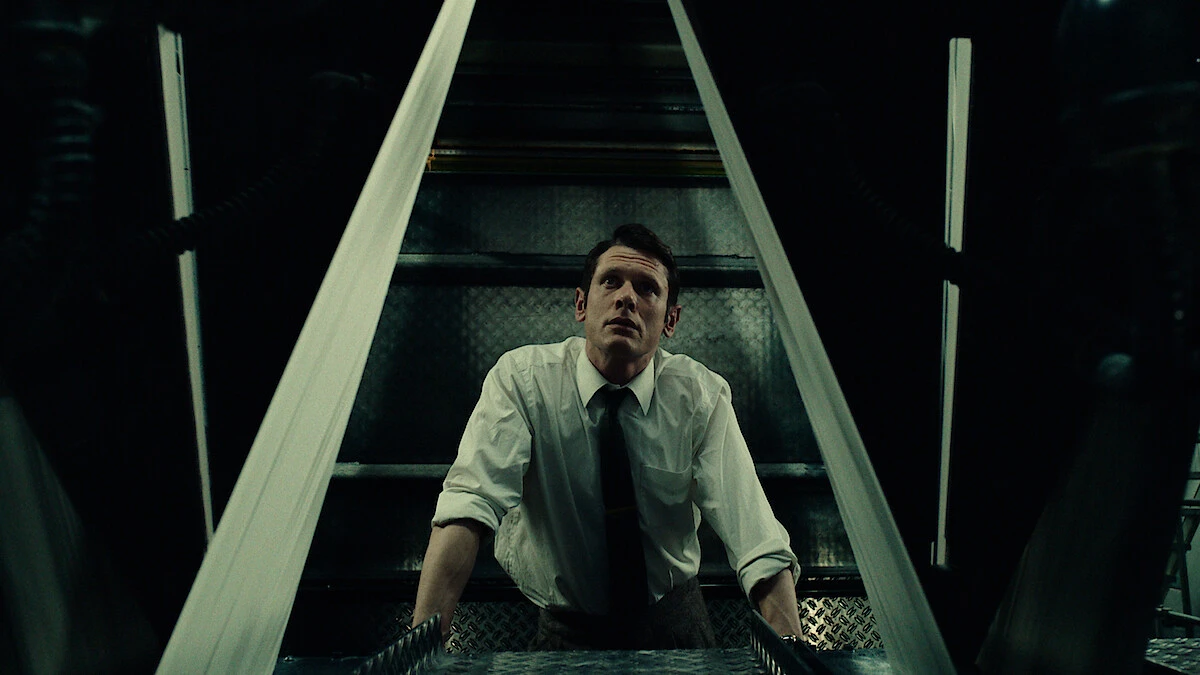
Danny Boyle has confirmed that Ink uses around 30 seconds of generative AI, primarily to animate old photographs and create a handful of digital mice. The disclosure, made to Vanity Fair, lands just days after Boyle used his Venice press rounds to warn that AI could replace journalists and teachers — a timing gap that’s drawn attention, even though the two comments aren’t addressing quite the same question.
What Boyle Actually Confirmed
Boyle told Vanity Fair that generative AI was used for about 30 seconds total in Ink, specifically to animate old photographs — including images of Margaret Thatcher and the Kray twins — and to create mice running around the newsroom of The Sun. That’s a specific, bounded use: limited archival-photo animation and a small amount of CG-style animal work, not whole scenes or performances generated by AI.
Boyle has a practical reason for using AI on the animals specifically. He’s said he ran into trouble with PETA over using real chimpanzees in 28 Days Later and has leaned on computer-generated animals ever since; generative AI, in his telling, is simply the newest version of that same workaround.
On AI as a tool more broadly, Boyle told Vanity Fair it’s “a very useful tool in many ways, provided you use it respectfully and provided you pay actors if you’re going to replace them with some kind of AI embodiment.” That’s a conditional endorsement — useful within limits, contingent on compensation — not a blanket defense of generative AI in film production.
Confirmed vs. Still Interpretation
| Question | Status |
|---|---|
| Did Ink use generative AI? | Confirmed by Boyle |
| Approximate amount | About 30 seconds |
| Whole scenes AI-generated? | No evidence of that |
| Old photographs animated? | Confirmed — Thatcher and the Kray twins |
| Mice imagery | Confirmed, generative AI |
| Did Boyle criticize AI days earlier? | Yes, at Venice on September 2 |
| Main concern in that criticism | AI replacing journalists and teachers |
| Did Boyle say all AI use is unacceptable? | Not established |
Before Boyle’s confirmation, some of this was speculation rather than fact. Critic Luke Hearfield initially flagged the Thatcher and Kray-twins imagery as looking AI-generated, then walked that back as more of a “knee-jerk response.” Separately, a “generative AI visual effects supervisor and producer” credit for Dillan Nicholls turned up on Ink’s crew listing. Boyle’s own statement to Vanity Fair is what actually settles it — not the earlier guesswork.
Is Boyle Contradicting His Own AI Criticism?
There’s an obvious tension worth examining, but it’s worth being precise about what Boyle actually said on each side of it. At Venice on September 2, his warning was specifically about AI replacing entire professions: “The danger with the tech giants and their AI is that they will be able to replace journalism,” he said, adding that teachers face the same risk because they’re “one of those tentpoles that hold up our society.” He called the trend “insane.”
That’s a statement about AI displacing human labor and judgment in journalism and education — not a claim that generative AI has no legitimate, limited role in filmmaking. Using AI to animate two archival photographs and generate a few background mice doesn’t replace a journalist, a teacher, or an actor’s performance. Whether that distinction fully resolves the tension is a fair thing for readers to weigh for themselves; the two positions aren’t automatically the same claim, and treating them as identical overstates what either statement actually says.
About Ink
Ink is Danny Boyle’s adaptation of James Graham’s stage play, starring Guy Pearce as Rupert Murdoch and Jack O’Connell as Larry Lamb, with Claire Foy as Jules Davies. It follows Lamb’s rise as editor of The Sun under Murdoch’s ownership in the newspaper’s early tabloid era. The film opened the 83rd Venice Film Festival on September 2 before moving on to Telluride, and Netflix has it booked for a limited theatrical run starting December 11 ahead of streaming in the U.S. and Latin America on January 8, 2027.
Sources
- TheWrap — Danny Boyle's 'Ink' Features AI Images for 'About 30 Seconds' — September 5, 2026
- Deadline — Danny Boyle Voices Fears For Journalism & Speaking Truth To Power In Age Of AI As Ink Debuts In Venice — September 2, 2026
- World of Reel — Did Danny Boyle's Ink Use AI to Recreate Margaret Thatcher? — September 4, 2026
Make Red Reactions a preferred source
Choose Red Reactions as a preferred source in Google Search.
Confirm your choice on Google.
Related coverage

Netflix Film Chief Dan Lin Exits; Peter Rice to Oversee Movies
Dan Lin is leaving Netflix Film. Peter Rice will oversee movies until a successor is named, while his wider chief content officer appointment begins October 26.
The Inbetweeners 3 Is Officially Filming at Netflix — Original Cast and Creators Are All Back
Netflix has confirmed The Inbetweeners 3 is a feature film now in production in the UK, with Simon Bird, James Buckley, Blake Harrison and Joe Thomas all returning and creators Damon Beesley and Iain Morris writing and directing.
Jeff Daniels Joins AMC and Netflix's Bannerman as Raymond Lesko
Jeff Daniels is set to play Raymond Lesko in Bannerman, Deadline reports. The role, spy-novel adaptation and AMC/Netflix territory plans explained.
Blue Eye Samurai Season 2 Adds Jonathan Pryce, Joel Kim Booster and Sherry Cola
Jonathan Pryce voices Old Violet, Joel Kim Booster plays Priest Ando and Sherry Cola is Kuma in Blue Eye Samurai Season 2. Here's what Netflix confirms.
About the author
Sara Avegaard
Movies & TV Writer
Sara Avegaard covers film, television and streaming for Red Reactions. Her archive spans entertainment news, production and release developments, trailer coverage and explainers that put new announcements in context.
Coverage: Movies · TV & Streaming · Entertainment News · Explainers
More from Sara Avegaard