lore · tv
Eleven Explained: Jane Hopper's Full Story, Powers and What the Ending Means
Who Eleven really is, where her powers actually come from, and what Stranger Things 5 decided to do with her at the end — Jane Ives, Jane Hopper, Number Eleven, all of it.
 By Kenza Benouna14 min read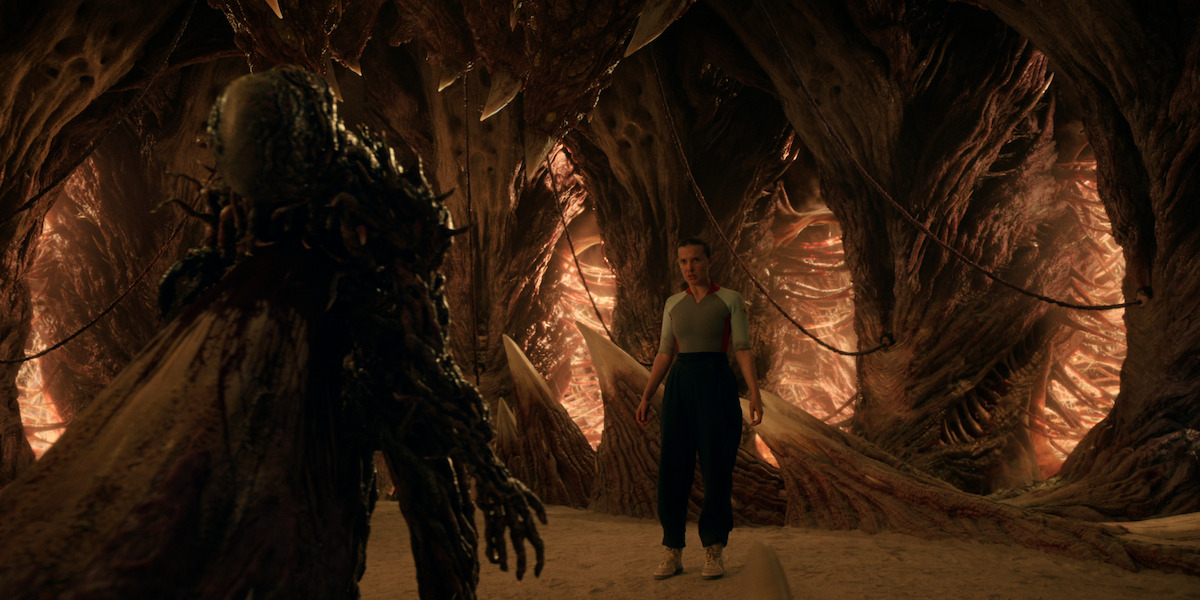
Spoiler warning: this article covers the complete run of Stranger Things, including the Season 5 finale. If you haven’t finished the show, everything past the next section will spoil it.
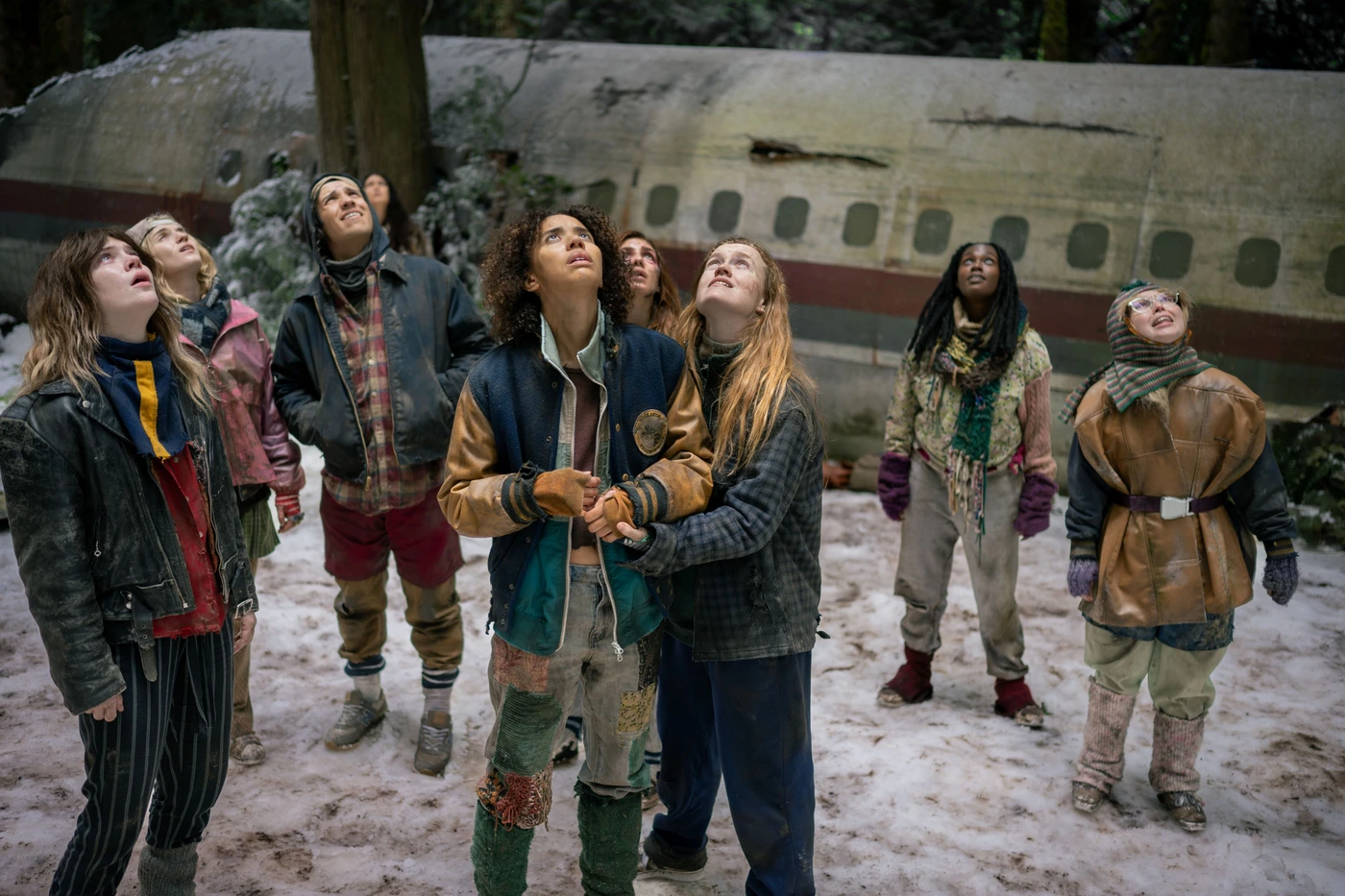
Eleven was never supposed to be the whole show. Season 1 introduced her as a mystery attached to somebody else’s disappearance — a shaved head, a hospital gown, a number tattooed on her wrist, found wandering the woods outside Hawkins the same night Will Byers vanished. Five seasons later, she is the reason the story has an ending at all, and the finale spends its last stretch deciding what to do with her rather than with anyone else.
That’s not an accident of plotting. Eleven is the character Stranger Things is actually about: a kid the adults around her spent years trying to turn into a weapon, and a girl who spent just as long trying to become a person instead. Everything else — the Upside Down, Vecna, the Party, Hawkins itself — exists partly to test which of those two things wins.
Who is Eleven?
Her name is Jane. Eleven is a lab designation, not an identity, and the show is precise about the distinction even when its characters aren’t.
She was born Jane Ives, the daughter of Terry Ives, a young woman who volunteered for a CIA-funded MKUltra program run out of Hawkins National Laboratory under Dr. Martin Brenner. Brenner took the infant from Terry shortly after birth and raised her inside the lab, cataloguing her not as a daughter but as Eleven — the eleventh in a series of children Brenner was testing for extrasensory ability. Terry was left to believe her baby had died, and years of grief and institutionalization followed before Eleven, as a teenager, tracked her down and learned the truth.
Inside the lab, Eleven had no real childhood. Brenner — whom she was trained to call Papa — used isolation, punishment and constant testing to keep her compliant and to push her abilities further. She grew up without friends, without a name she chose for herself, and without much reason to trust that affection from an adult didn’t come with strings attached. When she escapes the lab in the Season 1 premiere and stumbles into Mike, Dustin and Lucas hiding in their blanket fort, it’s the first time in the series’ timeline that anyone has treated her like a kid rather than an asset.
Mike is the one who renames her. Told her number and nothing else, he shortens Eleven to El — the first thing anyone gives her that sounds like a person’s name instead of an experiment’s label. By Season 2, after Chief Jim Hopper takes her in and eventually adopts her, she becomes Jane Hopper, and the show treats that surname as something closer to a plot point than a formality: it’s the clearest marker the series has for how far she’s moved from Brenner’s version of her.
Where Eleven’s powers actually come from
For most of the show’s run, the working explanation was straightforward: Terry Ives’s exposure to Brenner’s MKUltra testing while pregnant with Jane affected the child in the womb, and the abilities Eleven displays are the result. That’s the version Season 2 laid out through Terry’s own fragmented memories, and it’s still consistent with everything the show has shown on screen.
Season 5 complicates the picture without erasing it. Kali — subject Eight — reveals that Brenner’s later child test subjects were given their abilities using Henry Creel’s blood, and that most of them came out as “pale imitations.” Eleven is singled out in that same revelation as the one subject whose ability proved genuinely comparable to Henry’s own — a connection covered in more depth further below.
Put those two pieces together carefully, because the show does not spell out exactly how they interact. What’s established is this: Eleven’s ability appears to have a prenatal origin tied to her mother’s exposure to the lab’s experiments, and she is later identified as the one numbered child whose power output most closely rivals Henry’s. Whether the blood-based method Brenner used on the other numbered children was ever applied to Eleven herself, or whether her ability was simply the naturally occurring version everyone else’s was a diluted imitation of, is not something Stranger Things answers directly. Both readings are defensible from what’s on screen. Neither is confirmed as the whole story.
What the show does not do, at any point, is offer a hard scientific mechanism for how any of this actually works at the level of biology. That vagueness is deliberate — Stranger Things has always treated Eleven’s power as something closer to a fairy-tale gift than a lab result with a clean explanation, and Season 5 leans into that reading rather than away from it.
Eleven’s powers, explained
Eleven’s ability set expands across the series, but it’s built around a consistent core rather than a growing list of unrelated tricks.
Telekinesis. The most visible expression of her power: moving, crushing, throwing and holding objects and people using her mind alone, usually accompanied by a fixed stare and, at higher effort, a nosebleed. This is the ability she demonstrates first, in the Season 1 premiere, flipping a vending machine to get Mike’s attention, and it remains her signature tool in a direct confrontation.
Remote viewing and psychic search. Using sensory deprivation — first an improvised kiddie pool of salt water, later a proper isolation tank the show calls the bath — Eleven can project her consciousness outward to locate people, monsters or places she has some psychic connection to. This is how she tracks down Barb’s body in Season 1, finds Kali in Season 2, and searches for Vecna’s victims and hideouts in Season 4.
The Void. The featureless black space Eleven enters during sensory deprivation isn’t simply where she does remote viewing; it’s also where she can encounter and directly confront psychic entities, including Vecna himself. Season 4 makes the Void a battleground as much as a search tool, culminating in a direct psychic fight rather than a passive vision.
Opening the gate. Eleven’s exposure to the creature that becomes the Demogorgon during a lab experiment in 1983 is what first tears a hole between Hawkins and the Upside Down. That gate — and the version she reopens and later helps close at Hawkins Lab in Season 1 — establishes her as someone whose power operates on the boundary between the two worlds, not just within one of them.
Limits. The show is consistent about the cost. Sustained or extreme use causes nosebleeds, exhaustion, and in the most extreme cases — like the effort of closing the Season 1 gate — apparent physical collapse. Her power is not free, and Stranger Things uses that cost as a recurring source of tension rather than a rule it forgets about between seasons.
Loss and recovery. Eleven’s abilities are taken from her more than once — depleted after the Season 1 finale, suppressed by lab testing during Season 3, and stripped by government scientists again in Season 4 — and each time, getting them back is tied to an emotional beat rather than a technical fix. The clearest example is the Season 4 finale, where she recovers her power not through training but by remembering the people who see her as Jane rather than as a weapon. The show is telling you what actually powers her, and it isn’t voltage.
Eleven and the Upside Down
Eleven’s relationship to the Upside Down is foundational rather than incidental — she is, in a real sense, the reason it becomes reachable from Hawkins at all in the show’s original timeline, through the 1983 lab experiment that first tears the gate open.
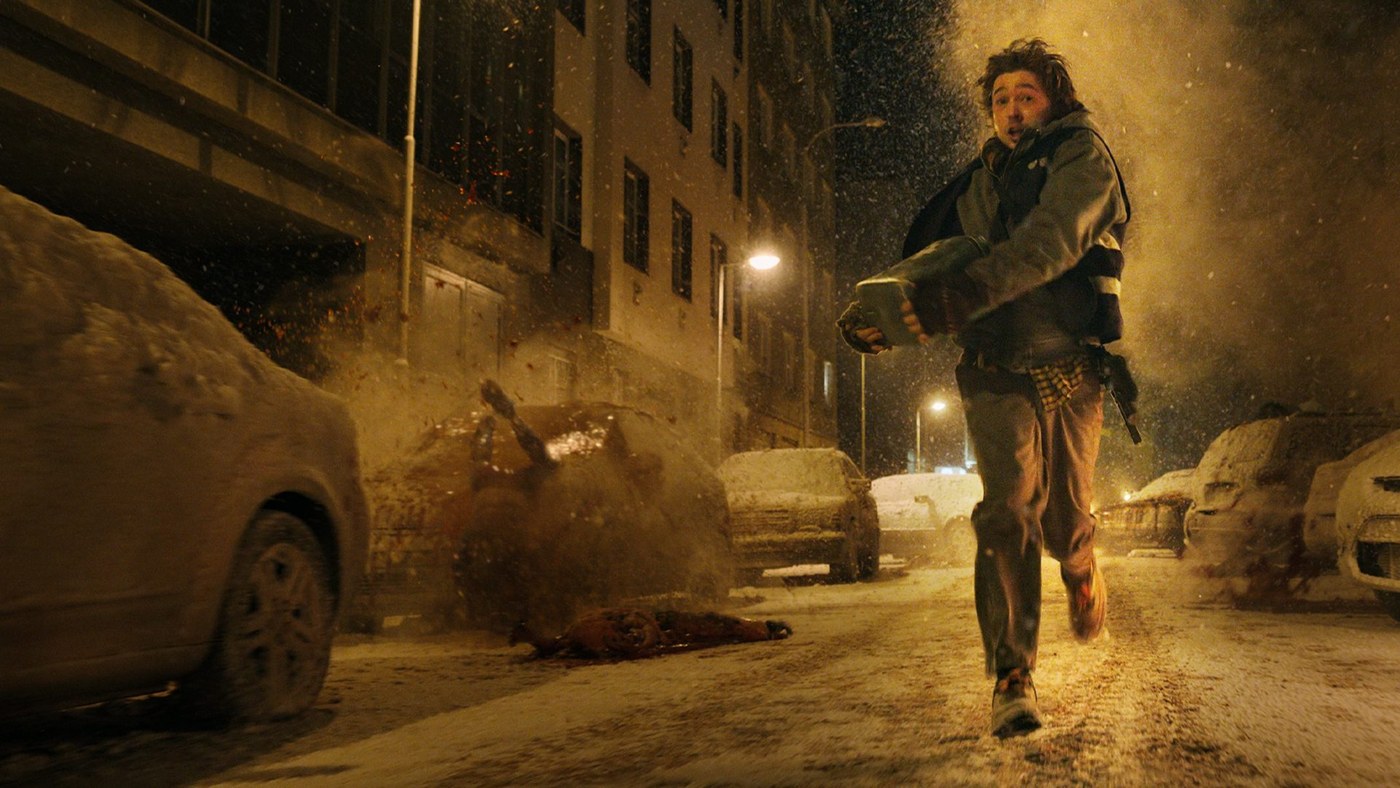
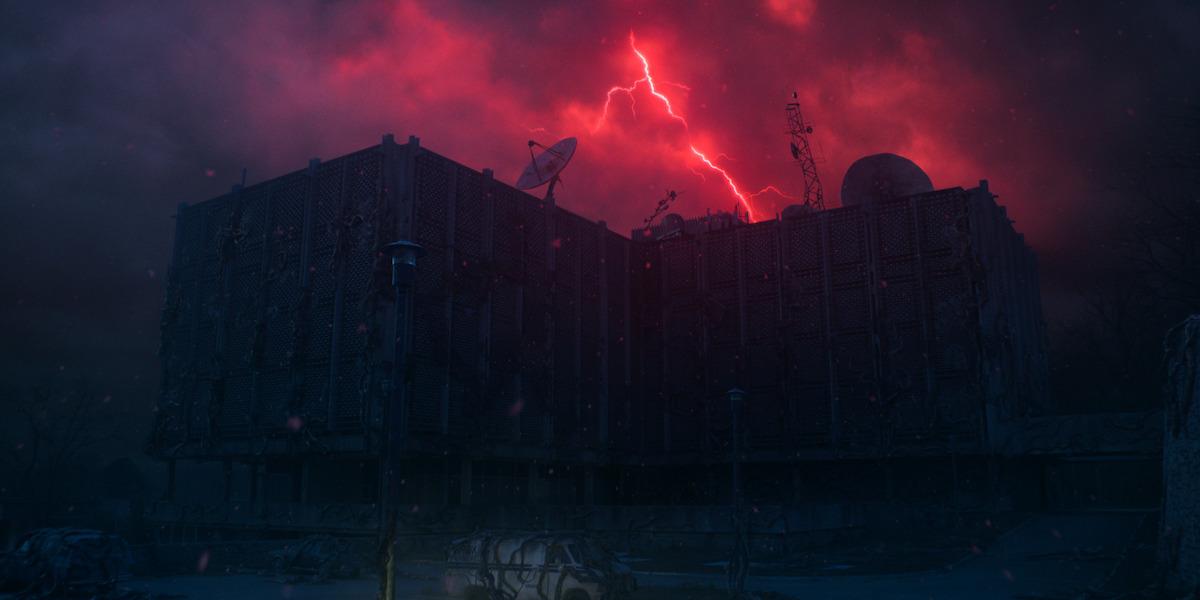
Season 5 adds an important correction to how that connection is understood. As The Upside Down Explained lays out, the dark, decaying copy of Hawkins that the show spent years calling “the Upside Down” isn’t the alien world itself — it’s a wormhole, formed in 1983 when Eleven makes remote psychic contact with the Abyss, the actual hostile dimension on the other side, while searching for the boy she’d banished there four years earlier. That means Eleven doesn’t just open a door into an existing space in 1983. Her contact is the event that creates the bridge in the first place.
That reframing matters for her character as much as for the show’s mythology. Eleven isn’t simply a girl with a useful power the adults around her exploited. She is, mechanically, the origin point of the entire crisis the show spends five seasons resolving — which makes her decision at the very end of the series, discussed below, land very differently than a straightforward heroic sacrifice would.
Eleven and Vecna
The relationship between Eleven and Henry Creel — One, later Vecna — is the show’s other load-bearing connection, and it starts years before either of them uses those names.
In 1979, at Hawkins Lab, Henry poses as a friendly orderly and singles out Eleven specifically because she’s isolated and an easy target for the kind of manipulation he’s already practiced on others. He tells her Brenner can’t be trusted, defends her against the other children, and eventually convinces her to remove the device suppressing his powers so they can escape together. She does. He kills almost everyone in the building.
Eleven finds him standing among the bodies, in the room Stranger Things calls the Rainbow Room, and that’s when he finally tells her who he actually is. His offer is that the two of them leave and remake the world on their own terms. She refuses, and the fight that follows is less a straightforward power struggle than a duel Eleven wins by reaching for the one thing in her life that was genuinely hers — the memory of her mother. Our complete Vecna explainer covers what happens to Henry after that moment, including the Season 5 correction that Eleven doesn’t banish him into the Upside Down — because in 1979 it doesn’t exist yet — but into the Abyss directly.
That 1979 confrontation is worth sitting with, because it establishes the shape of every fight the two of them have afterward. Henry’s pitch to Eleven was never really about escaping Hawkins. It was an offer of belonging from someone who understood exactly what she was, aimed at the loneliest kid he could find. Eleven says no. The show spends four more seasons asking what it costs her to keep saying no, and Vecna’s entire Season 5 plan — recruiting children the same way, through isolation and false understanding — is a direct echo of the pitch he first made to her.
Eleven’s relationships
Stranger Things is deliberately specific about which relationships change who Eleven is, rather than simply expanding her circle for the sake of it.
Mike Wheeler. The first person to treat her as a name instead of a number, and the one constant romantic relationship of the series. Their bond gives Eleven her earliest evidence that connection doesn’t have to be transactional — a lesson Brenner spent years training out of her.
Jim Hopper. Her adoptive father, and the source of the surname she carries for the rest of the show. Their relationship is built on mutual overprotection as much as love; Hopper’s instinct to hide and control her, born from real fear of the lab reclaiming her, mirrors the very dynamic she’s trying to escape, and the show doesn’t pretend that tension isn’t there.
Max Mayfield. Less a mentor relationship than a genuine friendship between equals, one that becomes central to Eleven’s Season 4 arc when Max’s survival depends on Eleven’s ability to reach her inside Vecna’s mindscape. Their bond is one of the clearest examples in the show of Eleven’s power being inseparable from who she cares about.
Joyce Byers. A steadier adult presence than Hopper in some respects, and one of the few authority figures in Eleven’s life who never treats her as fragile or as a project to be managed.
The Party. Dustin, Lucas, Will and the rest of the Hawkins group function as the closest thing Eleven has to a peer group untouched by the lab — the ordinary childhood Brenner never let her have, arriving late but arriving anyway.
Dr. Brenner. The relationship the entire show is reacting against. Brenner’s “Papa” dynamic with Eleven is presented with real complexity — he is capable of something that resembles genuine attachment to her, which is precisely what makes his willingness to use her as a weapon and a test subject so damning rather than simply villainous in a flat sense.
Eleven’s story through the series
The broad arc, without re-running every season beat: Season 1 establishes Eleven’s escape from the lab, her bond with the Party, and her apparent sacrifice defeating the Demogorgon and closing the gate — an act that seems to cost her life until Season 2 reveals she survived. Season 2 follows her recovery, her search for her mother and for Kali, and her choice to return to Hawkins and close the gate at the lab for good, regaining her powers at full strength in the process. Season 3 strips her of those powers through lab-adjacent testing and puts her through a more grounded, human stretch of the story — first heartbreak, first real vulnerability without her ability as a safety net — before restoring them in time for the Starcourt fight. Season 4 is the show’s biggest mythology expansion for her specifically: exile to California, the reveal of her 1979 history with Henry Creel, the Rainbow Room, and a direct psychic confrontation with Vecna in the Void that costs her everything before her friends’ voices bring her power back.
Season 5 closes the loop those four seasons built. Eleven fights alongside Kali and Max against Henry inside Camazotz, helps stop the merger between the Abyss and Earth, and takes part in the final assault that ends with Joyce delivering the killing blow. What she does immediately after that fight is the part the show’s marketing built the finale around — and it’s worth covering on its own.
The ending
In the finale, once Henry is dead and the wormhole is coming apart, Eleven makes a decision the show frames as entirely hers: she chooses to remain inside the collapsing bridge rather than escape with the others, so that her blood — the thing that let Brenner and the people who came after him treat her as a key rather than a person — can never again be used to force a passage between Hawkins and the Abyss.
That’s confirmed, on screen. What happens to her afterward is not.
The episode’s closing scene shows Mike, during one last Dungeons & Dragons session with the Hawkins group, offering an alternate version of events: that Kali used one final illusion to cover Eleven’s escape, and that she’s alive somewhere far away, safe, near the waterfalls the two of them had once imagined together. Netflix’s own account of the finale is explicit that this is presented as Mike’s story, not a confirmed epilogue — Millie Bobby Brown discussed the choice directly with Tudum, and the ambiguity is intentional on the writers’ part as well. Series co-creator Ross Duffer told Tudum that the writers’ room never considered an ending where Eleven simply rejoins the group, explaining, “For us and our writers, we didn’t want to take her powers away. She represents magic in a lot of ways and the magic of childhood.” Matt Duffer added that if Eleven is genuinely alive out there, the most her friends could ever have is belief rather than contact — which is precisely what the finale gives them.
So the honest answer is: the show does not confirm whether Eleven survives. It confirms that she chose to stay, that the wormhole came down, and that the people who loved her chose to believe she made it out anyway. Treating either the death or the survival as settled fact overstates what’s actually on screen — Netflix’s own creative team has said as much directly.
What the ending means
Strip away the ambiguity over survival, and the finale is still doing something clear with Eleven’s arc, because the choice itself — not its aftermath — is the point.
For five seasons, Eleven’s value to nearly every adult around her was measured by what her blood and her power could do. Brenner needed her ability. The lab needed her as a weapon. Even Hopper’s protectiveness, well-intentioned as it is, treats her partly as something fragile that needs to be hidden rather than a person who gets to decide things for herself. Her ending is the first time the show lets her make a decision entirely on her own terms, about her own body, for a reason nobody assigned to her: breaking a cycle that turned children into instruments before she’s able to.
That’s also why the show refuses to let the story end with her simply rejoining the group at the table, the way it does for Mike, Dustin, Lucas, Will and the rest. Doing that would resolve her arc the same way it resolves everyone else’s — settle down, move on, grow up — and Stranger Things has spent five years establishing that Eleven’s story was never really about assimilation into ordinary life. It was about whether she’d ever get to choose anything for herself after a childhood built entirely around other people’s choices. The finale lets her choose the ending. It just doesn’t let the audience see where that choice leads.
The waterfalls Mike imagines aren’t nothing, either. They’re the version of Eleven’s future that exists only because the people who love her decided to keep believing in it without proof — which is, in its own way, the most human thing anyone in Hawkins does for her across the entire series. Nobody in that final scene needs to be right. They just need to keep choosing her, the way she finally got to choose herself.
Make Red Reactions a preferred source
Choose Red Reactions as a preferred source in Google Search.
Confirm your choice on Google.
Related coverage
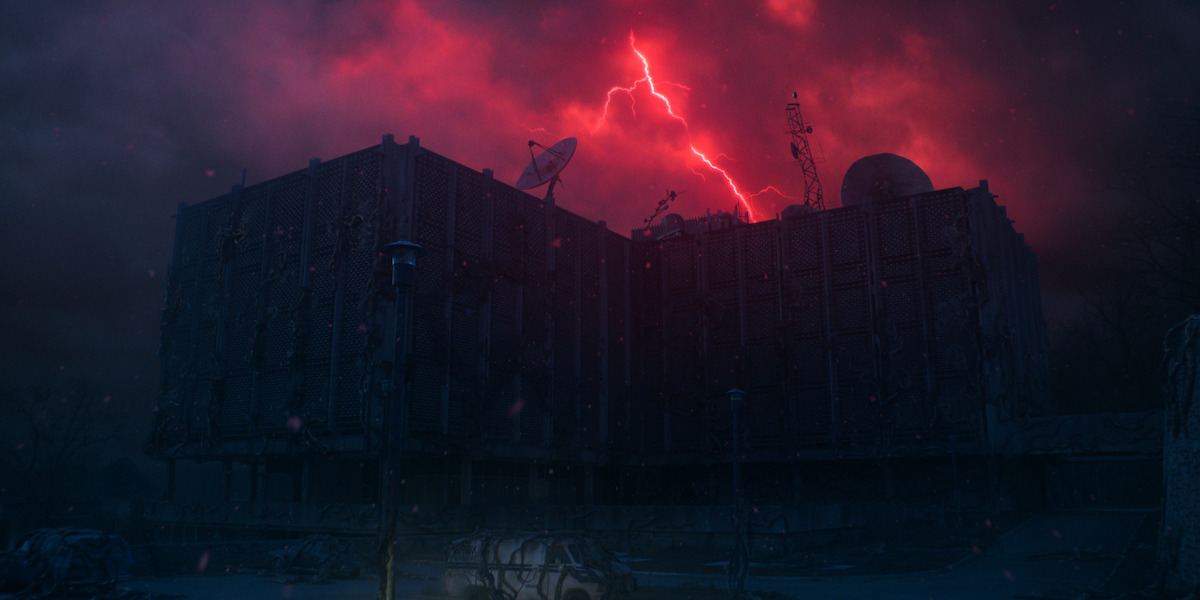
Vecna Explained: Henry Creel, Powers, the Mind Flayer and His Full Stranger Things History
Who Vecna really is, how Henry Creel became One, what Stranger Things 5 changed about the Mind Flayer, and how the story of Hawkins' villain actually ends.
The Upside Down Explained: What Stranger Things 5 Finally Revealed
Stranger Things 5 rewrote our understanding of the Upside Down. Here is how the wormhole, the Abyss, Eleven, Vecna and the frozen 1983 Hawkins copy actually connect.

Stranger Things: Tales From '85 Season 2: Release Date, Story and Where It Fits in the Timeline
Stranger Things: Tales From '85 Season 2 premieres September 17, 2026 on Netflix. Here's what the animated series actually is, where it picks up, who's returning, and when it takes place in the Stranger Things timeline.
The Demogorgon Explained: Every Form, the Hive Mind and How Stranger Things 5 Changed the Monster
What the Demogorgon actually is in Stranger Things: its life cycle, its link to Vecna's hive mind, and how Season 5 turned the monster into a weapon.
About the author
Kenza Benouna
Movies, TV & Horror Writer
Kenza Benouna writes about movies and television, with a substantial archive in horror. Her Red Reactions work includes reviews, supernatural and franchise lore, story explainers and analysis of character, atmosphere and adaptation.
Coverage: Horror · Movies · TV · Reviews · Lore & Features
More from Kenza Benouna