feature · gaming
Fate/EXTRA Record Explained — What the Remake Changes From the Original PSP Game
Fate/EXTRA Record launches January 28, 2027 on PS5, PS4, Switch 2, Switch and Steam. Here's exactly what the remake changes from 2010's Fate/EXTRA, how the new Command Card battle system works, and whether a newcomer can actually start here.
 By Bamo Anwar8 min read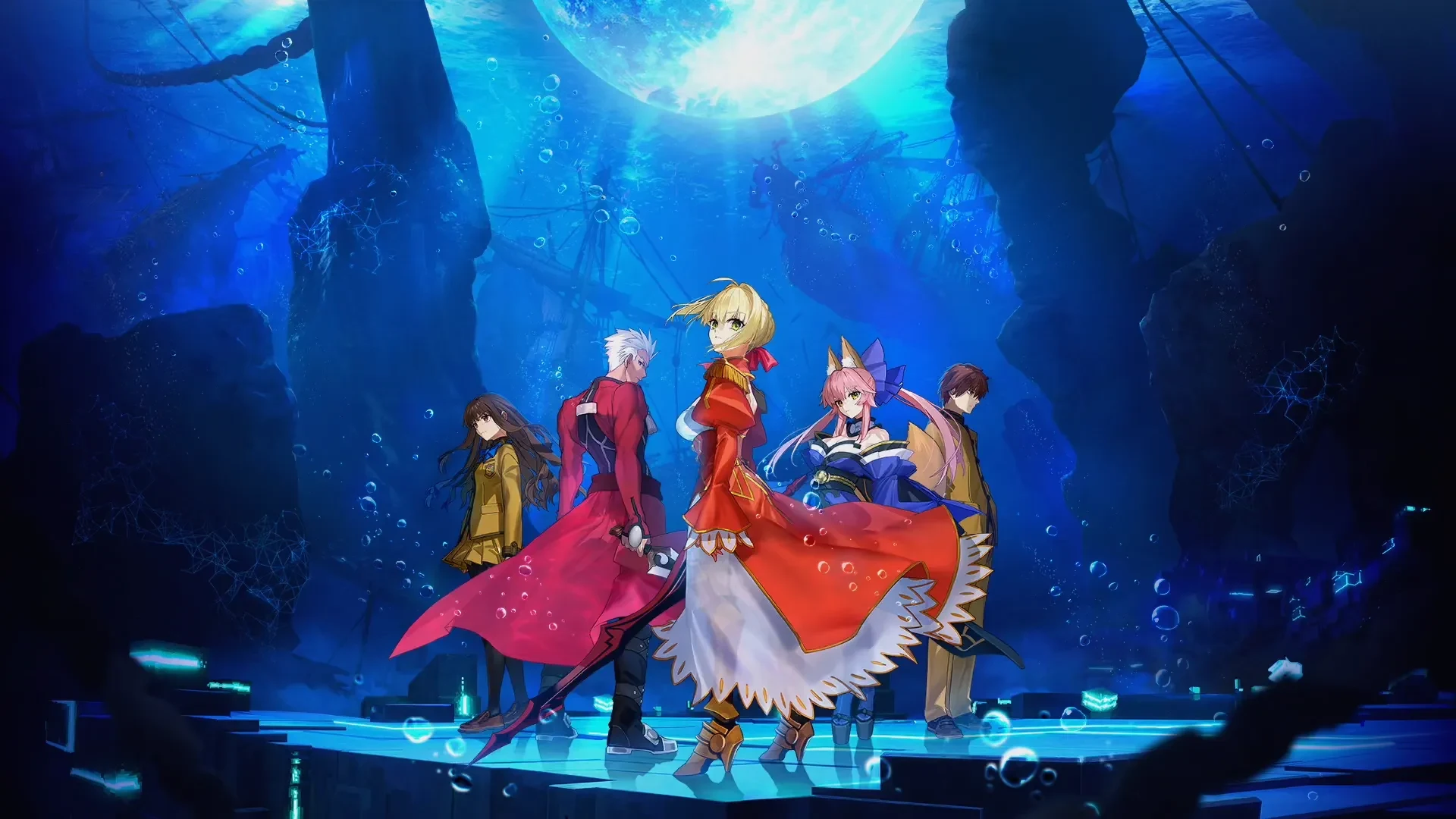
Fate/EXTRA Record now has a release date — January 28, 2027, worldwide, on PS5, PS4, Nintendo Switch 2, Nintendo Switch and Steam. It’s TYPE-MOON’s remake of 2010’s Fate/EXTRA, the PSP game that first put the Moon Cell and its Holy Grail War into the Nasuverse, and the project has had a rockier path to release than most: original publisher Bandai Namco stepped away in early 2026, director Kazuya Niino left the project for personal and health reasons, and Aniplex took over as publisher alongside developer Meteorise. Here’s what’s actually confirmed about the remake, how its new battle system works, and whether it’s a reasonable place to start with Fate at all.
Remake or Remaster?
Remake. TYPE-MOON’s own materials describe Fate/EXTRA Record as “completely rebuilding” the original for modern platforms — not a resolution bump or a compatibility patch. Per the current official site and Aniplex’s own release messaging, three things are changing at once: the story has been expanded, character graphics have been renewed, and the presentation has been updated for the modern era. On top of that, the entire battle system is new. A remaster preserves the original mechanics and just cleans up the visuals; Record is replacing the PSP game’s turn-based combat outright with a new Command Card system, which is remake territory by definition.
It’s worth being precise about the credits here, since they changed mid-development. As of the current official site, the project stands as: Planning by TYPE-MOON, Development by Meteorise, Publisher Aniplex, Story/Scenario Supervision by Kinoko Nasu, and Character Design by Arco Wada. Older previews that still list Bandai Namco as publisher or credit TYPE-MOON studio BB’s original director are describing a structure that no longer applies — Aniplex confirmed the publisher change and the studio’s internal reorganization on August 31, 2026, and the previous official site and social account closed shortly after. Regional physical distribution is separate from that global publisher role: XSEED Games handles physical release in North America and Marvelous Europe handles it in Europe, for PS5, Switch 2 and Switch specifically.
How the Original PSP Game Worked
Fate/EXTRA released on PSP in 2010, developed by TYPE-MOON and Image Epoch. It dropped its protagonist, a memory-wiped student at a virtual academy, into a Holy Grail War fought entirely inside a digital space called SE.RA.PH, hosted on the Moon Cell supercomputer. Structurally, it played like a dungeon crawler between duels — explore a level, then fight.
The combat itself was the game’s signature idea, and it wasn’t a conventional command menu. Each turn, you picked six actions in advance from three types — Attack, Guard, and Break — without seeing your opponent’s choices, then watched both sides play out simultaneously. The relationship between the three was rock-paper-scissors: Break crushes Guard, Guard deflects Attack, and Attack beats Break by landing first. Chaining hits built up damage, and stringing three consecutive successful moves together unlocked a powerful Extra Attack that couldn’t be countered. It rewarded reading an opponent’s pattern over several turns as much as raw stats.
Fate/EXTRA sits in an alternate continuity from Fate/stay night rather than the same timeline — the Nasuverse diverges around 1970 in this branch, mana disappears from the world, and magic survives instead as “magecraft” practiced through digital spiritron hacking. You don’t need any Fate/stay night background to follow it; it’s a self-contained spin-off war with its own rules; more on how self-contained it stays for a newcomer is below.
How Record’s New Command Card/Deck System Works
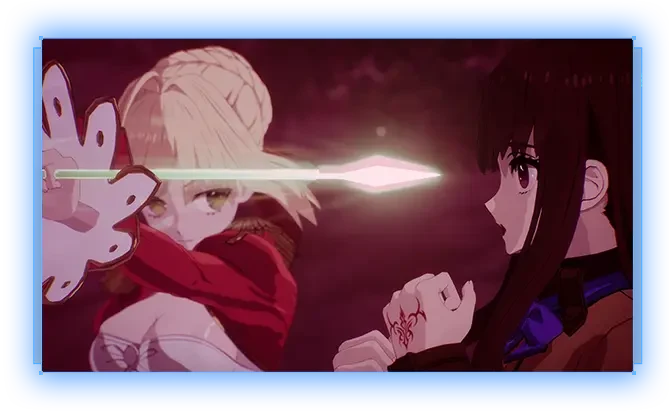
Record throws out the Attack/Guard/Break triangle and replaces it with what TYPE-MOON and Aniplex call a strategic deck-building Command Card battle system. Players build a customizable deck and draw from three Command categories during battle:
- Attack commands inflict damage on the enemy.
- Guard commands add to your shield to reduce incoming damage.
- Skill commands trigger a Servant’s unique abilities.
Per Aniplex’s own description, Commands aren’t a fixed loadout you’re handed at the start — you obtain them by opening treasure boxes found in the Arena and by defeating powerful enemies, then build your deck around whatever you’ve collected. That’s a meaningfully different loop from the original: instead of memorizing three fixed move types and reading an opponent’s pattern in real time, Record is asking you to build and refine a deck over the course of the game, closer to a strategic card battler layered on top of the same core Attack/Guard framing the original used. It keeps the series’ rock-paper-scissors DNA (Attack and Guard are still recognizably opposed roles) while adding deckbuilding and a Skill category the PSP game didn’t have.
What the Remake Changes in Story and Presentation
Two changes are confirmed directly: the scenario has been expanded, and the game has been rebuilt with renewed character graphics and updated presentation. What TYPE-MOON has not done is publish a scene-by-scene breakdown of what’s new versus what’s original. That distinction matters, because it’s tempting to guess — don’t. Nothing officially confirms which specific story beats, routes, or scenes have been rewritten, added, or cut; “expanded” is TYPE-MOON’s own word, and it’s being used here to describe scope, not a list of changes. Until TYPE-MOON details the scenario work further, treat any claim about specific new or altered scenes as speculation, not confirmed fact.
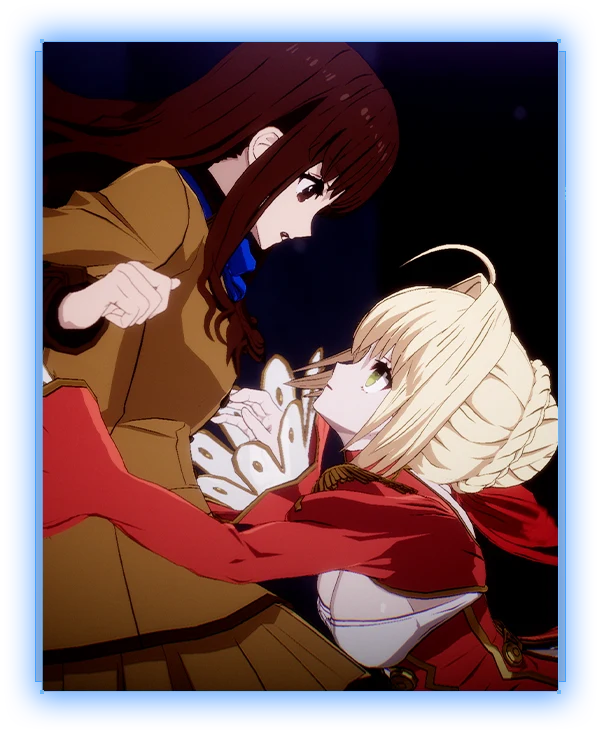
What is visible in official screenshots is the presentation shift itself: dungeon exploration now renders in a fully modeled 3D environment rather than the PSP’s more limited visuals, with an on-screen HUD tracking level, HP, MP and floor progress during exploration between duels — the same explore-then-duel structure as the original, running on rebuilt tech.
Saber vs. Archer vs. Caster — Confirmed Differences
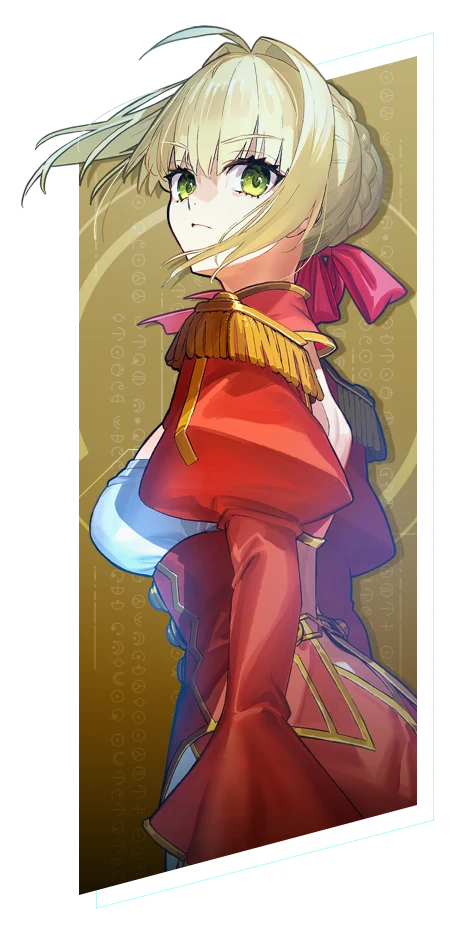
Players choose one of three Servants at the outset, and the official site describes each class in specific, limited terms — worth quoting directly rather than paraphrasing into something broader:
- Saber — “a class with outstanding swordsmanship and overwhelmingly well-balanced combat abilities.”
- Archer — “a class that specializes in combat using thrown and ranged weapons such as bows.”
- Caster — “a class that excels in magical combat and has excellent intelligence, although not good at hand-to-hand combat.”
That’s the extent of what’s officially confirmed: Saber as the balanced, sword-focused option, Archer built around ranged and thrown weapons, and Caster leaning hard into magic at the cost of melee strength. PlayStation’s own materials add that each Servant carries “unique abilities and strengths” and a “distinct fighting style,” and that a Servant’s True Name — revealed through play — ties directly into their combat style and weaknesses. Beyond those class-level descriptions, TYPE-MOON hasn’t detailed specific skill lists, stat spreads, or how the three compare against each other in practice.
What SE.RA.PH, the Moon Cell and the Moon Holy Grail War Are
SE.RA.PH is described in Record’s own materials as a digital world constructed by the Moon Cell Automaton, a supercomputer built into the moon. Inside it, the Moon Holy Grail War pits 128 Masters and their Servants against each other in a tournament-style competition; per the official site, players get seven days before each duel to gather intelligence on their opponent. The prize for the war’s victor is the Holy Grail itself, described as an artifact capable of granting any wish — the same basic premise that drives every Holy Grail War across the wider Nasuverse, just relocated into a virtual space instead of a physical city. That’s the frame the entire game runs on: duel, learn, deck-build, repeat, across a bracket of 128 pairs rather than the smaller wars Fate/stay night fans might already know.
Can a Fate Newcomer Start Here?
Yes, mechanically — Fate/EXTRA was designed as a self-contained spin-off in its own alternate continuity, not a direct sequel to Fate/stay night, and Record hasn’t changed that structural fact. You’re dropped into a Holy Grail War with its own rules, its own cast, and a premise (a digital tournament for a wish-granting Grail) that the game itself explains from the start. Nothing about the remake requires having played Fate/stay night, and nothing here requires watching any of the franchise’s anime adaptations first.
Where it gets slightly more complicated: Record is one entry point into a franchise with a lot of overlapping terminology — Servants, Masters, Holy Grail Wars and specific character names like Saber and Archer recur across multiple Fate titles with different specific identities behind those class names. A newcomer won’t be lost inside Record itself, but going in expecting these Servants to be the “same” Saber or Archer as in a different Fate game is the wrong assumption — each entry’s Servants are their own characters wearing a shared class label.
What TYPE-MOON Still Hasn’t Revealed
- Which specific scenes, routes or story beats were rewritten, added or cut as part of the “expanded” scenario — TYPE-MOON has confirmed the scope of the change, not its contents.
- A detailed skill list, stat breakdown, or direct comparative analysis of Saber, Archer and Caster beyond their one-line class descriptions.
- Full deck-building depth — how large a deck can get, how many Commands exist in total, or how Command rarity/power scales.
- Any pricing, edition contents or pre-order specifics beyond what’s already listed on the official site.
- Full voice cast and localization credits beyond the confirmed subtitle language list (English, French, Italian, German, Spanish, Japanese, Korean, Traditional Chinese and Simplified Chinese).
SHOWN IN OFFICIAL MATERIALS: the Command Card battle screen, dungeon exploration with a live HP/MP/floor HUD, and character art for all three selectable Servants. CONFIRMED BY OFFICIAL SOURCES: the January 28, 2027 worldwide date, the five-platform lineup, the Attack/Guard/Skill Command categories, how Commands are obtained, the 128 Master-Servant pair premise, and the current Planning/Development/Publisher/Scenario/Character Design credits. INTERPRETATION: that the new deck-building loop asks for more sustained strategic planning than the original’s real-time pattern-reading — a reasonable read of the confirmed mechanics, not a TYPE-MOON quote. STILL UNKNOWN: exactly what story content is new, how deep the deck-building system goes, and anything about the game beyond what’s been shown so far.
Sources
- Fate/EXTRA Record — Official Site
- Gematsu — Fate/EXTRA Record launches January 28, 2027 for PS5, Switch 2, PS4, Switch, and PC — September 3, 2026
- Gematsu — Fate/EXTRA Record to be published by Aniplex — August 31, 2026
- PlayStation Blog — Fate/Extra Record launches Jan 28 2027 on PS5, PS4 — September 3, 2026
- Siliconera — Fate/Extra Record Release Date Falls in January 2027 — September 3, 2026
Make Red Reactions a preferred source
Choose Red Reactions as a preferred source in Google Search.
Confirm your choice on Google.
Related coverage
Boltgun 2 Launch Guide: Platforms, Two Playable Heroes and the Steam Demo
Boltgun 2’s October 14 launch covers PC, PS5 and Xbox Series X|S. Compare Malum Caedo and Nyra Veyrath, check Steam demo availability and the later Switch 2 version.
Kingdom Hearts Collection on Switch 2: Storage, Cloud Upgrades and Included Games
Kingdom Hearts Collection launches October 8. Compare native Switch 2 editions, 131 GB versus 138 GB storage notices, Cloud-owner discounts and save transfers.

Muramasa: Revenant Blades Launches February 4 — What the Modern Version Actually Adds
Muramasa: Revenant Blades combines Muramasa: The Demon Blade and its Genroku Legends DLC into one definitive edition, launching February 4, 2027 on PS5, Switch 2, Switch and PC. Here's exactly what's new compared to the Wii and Vita originals.

Witch on the Holy Night Final Trailer: Song, Staff and Worldwide Cinema Dates
Witch on the Holy Night has a final trailer and supercell's theme song Yoru to Ao. See the confirmed staff, Japan premiere and country-by-country theatrical dates.
About the author
Bamo Anwar
Anime & Gaming Writer
Bamo Anwar covers anime and gaming for Red Reactions. His work ranges from release news and detailed trailer breakdowns to beginner guides, watch orders and explainers designed to make large franchises and game systems easier to enter.
Coverage: Anime · Gaming · Beginner Guides · Watch Orders · Explainers
More from Bamo Anwar