lore · movies / tv
The One Ring Explained: What It Does, Why Sauron Forged It and Why It Corrupts
The One Ring isn't just an invisibility device. Here's what Tolkien's text actually says it does, why Sauron needed it, why it corrupts through desire rather than mind control, and what Rings of Power Season 3 has confirmed about forging it.
 By Aram Anwar7 min read
The One Ring is not an invisibility ring that Sauron happened to be attached to. That’s the part the “put it on, vanish, evil wants it back” summary leaves out, and it’s the part that actually explains why the story around it works.
Sauron built the Ring as a tool of domination, poured a large share of his own native power into it to make that tool function, and lost most of that power the moment the Ring left his hand. Everything else — the invisibility, the corruption, the reason Gandalf won’t touch it — follows from that starting point, not from some separate list of magic effects.
What Sauron actually put into it, and why
By the Second Age, Sauron had spent centuries posing as Annatar, “Lord of Gifts,” teaching the Elven-smiths of Eregion the craft that produced the Rings of Power. He helped make many of those rings. The One, he made alone, in secret, at Orodruin — Mount Doom — specifically so it could dominate the others. To do that, Tolkien’s account makes clear Sauron committed a large portion of his own inherent power to it; his letters describe him as consequently dependent on the Ring to sustain that power in the world. He didn’t add a feature to an existing magic item. He built a master key and then bound a meaningful share of himself into the lock mechanism to make it work.
That’s also why losing the Ring cost him so much. When Isildur cut it from his hand, Sauron didn’t just lose a weapon — he lost the vessel holding a large part of what let him act with full strength in Middle-earth. His spirit survived, but for roughly a thousand years afterward he couldn’t take a physical form capable of contesting anyone directly. He needed the Ring back specifically because so much of his power was still inside it.
One popular shorthand worth retiring here: Tolkien never quantifies this as a “percentage of his soul.” That specific framing is fan shorthand, not his language. What the texts support is that Sauron placed a great deal of his native power into the Ring and became dependent on it as a result — a real and specific claim, just not the tidy percentage some summaries turn it into.
Built to rule the others, not just to sneak around
The line everyone knows — “one ring to rule them all… and in the darkness bind them” — is literally the Ring’s job description. The Three Elven Rings, Seven Dwarven Rings and Nine Rings given to Men were all meant to be dominated through the One once Sauron put it on. The Elves realized what was happening as soon as he did and took their Three off before he could seize control through them, which is why the Three stayed comparatively clean throughout the War of the Ring while the Nine turned their bearers into the Nazgûl entirely.
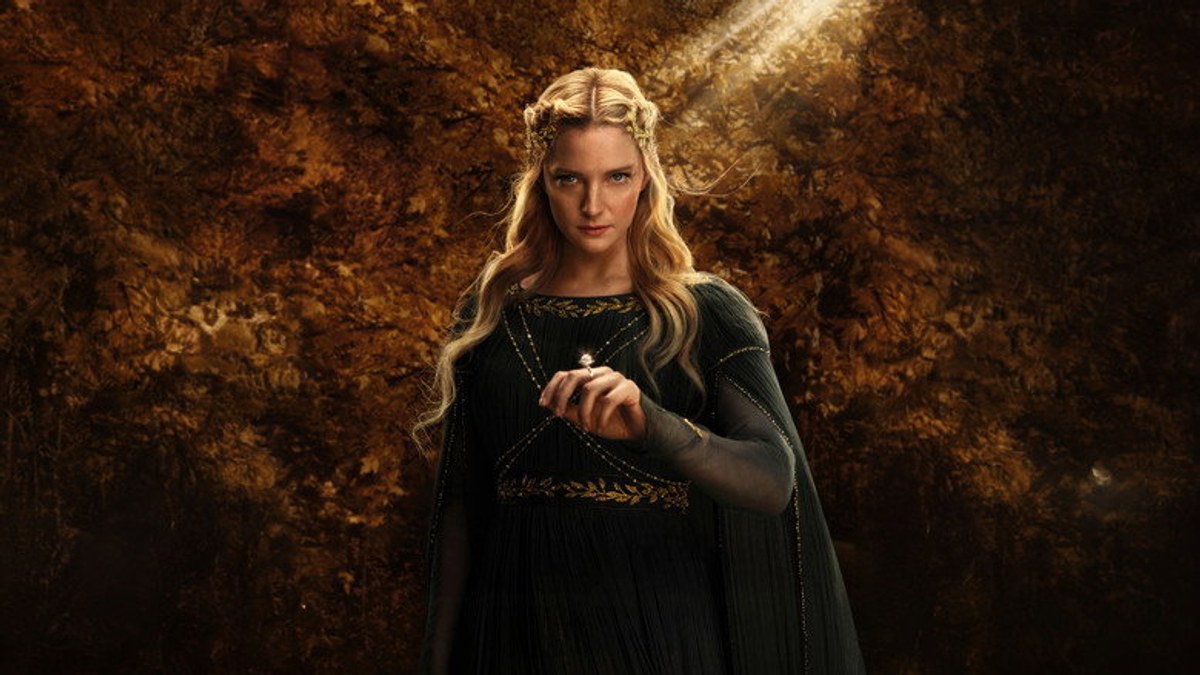
Galadriel with one of the Three Elven Rings — the rings the One was built to dominate, not merely to imitate. Credit: Amazon MGM Studios / Prime Video.
Why the Ring doesn’t do the same thing to everyone
This is where the “mind control” framing breaks down. The Ring doesn’t overwrite a bearer’s personality with a copy of Sauron’s; it amplifies whatever native capacity and desire the bearer already has. A powerful, ambitious wearer gets access to real power and real temptation toward domination. A hobbit gets something much smaller and slower, because a hobbit’s native capacity for that kind of power is small to begin with — which is precisely why Bilbo and Frodo can carry it for as long as they do without being consumed the way a King of Men wearing one of the Nine was.
Gollum is the clearest illustration of scale mattering. He held the Ring for roughly five hundred years and was warped by it, but slowly, and largely because he rarely wore it — long possession without much active use produced a different, more gradual corrosion than a powerful bearer actively wielding it would experience.
Invisibility isn’t safety
Putting the Ring on shifts a mortal wearer partway into what’s often called the wraith-world — a shadow existence where they become invisible to ordinary sight but exposed to things that see along that other plane, including the Nazgûl and, at sufficient range and provocation, Sauron’s own attention.
The clearest correction to the “invisibility equals safety” assumption comes late in the story, not early. When Sam wears the Ring approaching Mordor, he doesn’t feel hidden. He feels the opposite — “horribly and uniquely visible,” aware that something is actively searching for him. Frodo’s early uses, back in the Shire and at Bree, work more like simple concealment because he’s far from Mordor and not yet a serious target. Proximity to Sauron changes what invisibility actually costs.
Corruption through desire, not a switch that flips
The Ring’s real mechanism is temptation scaled to whoever’s holding it, not possession in the horror-movie sense. It works on what a bearer already wants.
Galadriel’s refusal makes this explicit. When Frodo offers it to her, she describes exactly what she’d become: “In place of the Dark Lord you will set up a Queen. And I shall not be dark, but beautiful and terrible as the Morning and the Night! Fair as the Sea and the Sun and the Snow upon the Mountain! Dreadful as the Storm and the Lightning! Stronger than the foundations of the earth. All shall love me and despair!” Then she declines it outright: “I pass the test. I will diminish, and go into the West, and remain Galadriel.” The temptation isn’t generic evil. It’s her own considerable power and will, offered a route to total authority instead of stewardship.
Gandalf’s refusal in “The Shadow of the Past” works the same way, from the opposite angle. He doesn’t fear becoming cruel for its own sake — he fears becoming good at conquering people for their own good, which he considers worse precisely because it would come wrapped in real virtue: “The way of the Ring to my heart is by pity, pity for weakness and the desire of strength to do good.” His conclusion is blunt: “I dare not take it, not even to keep it safe, unused.” Bilbo’s slow drift toward calling it “my precious,” long before Gollum ever does, is the same mechanism running at a much smaller scale.
Why destroying it actually ends Sauron’s threat
Because so much of Sauron’s native strength was bound into the Ring rather than merely channeled through it, unmaking the Ring in the fire that forged it doesn’t just remove a weapon from play. It destroys the anchor holding a large share of his remaining power in a form capable of acting in the world at all. When Gollum falls into the fires of Orodruin with the Ring still on his finger, Sauron’s forces collapse immediately and his spirit is left without the strength to threaten Middle-earth again as anything more than a diminished shadow. That’s not victory through symbolism. It’s the direct, mechanical consequence of where he chose to put his power in the first place.
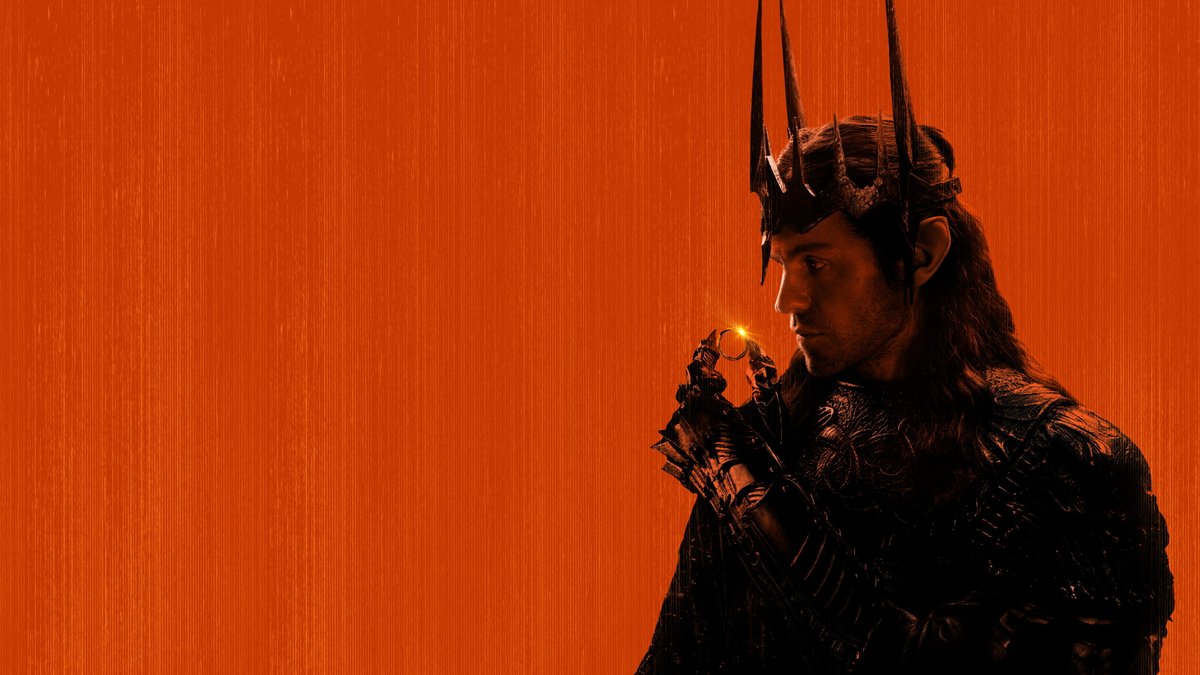
Sauron’s strength in the world was never fully separate from the Ring’s — which is exactly why losing it broke him and remaking it was worth centuries of waiting. Credit: Amazon MGM Studios / Prime Video.
What The Rings of Power has actually confirmed
The Rings of Power Season 3 premieres November 11, 2026 on Prime Video, and Amazon’s own synopsis puts Sauron’s forging of the One Ring at the center of the season: five years after Eregion’s fall, “deep in the land of Mordor, in his newly completed tower of Barad-dûr, the Dark Lord toils day and night, obsessed with harnessing a power that will bring the last of his enemies to their knees: One Ring to rule them all,” while the free peoples race to stop him from achieving “utter domination of all life.”
That’s a real, officially confirmed story beat — the show is dramatizing the forging itself, something Tolkien’s own text mostly reports after the fact rather than staging scene by scene. What it doesn’t confirm is exactly how the show will depict the mechanics described above: how literally it visualizes the transfer of Sauron’s power, whether it stages an equivalent to the Three being hidden from him in the moment he claims dominion, or how it handles bearer-dependent corruption on screen. A synopsis and a teaser establish that the forging is this season’s central event. They aren’t a scene-by-scene guide to how Tolkien’s mechanics get translated into television, and nothing here should be read as a preview of specific moments the show hasn’t aired.
For our full assessment of how the series has handled Tolkien’s Second Age material through two seasons, see our Rings of Power review.
Make Red Reactions a preferred source
Choose Red Reactions as a preferred source in Google Search.
Confirm your choice on Google.
Related coverage

The Rings of Power Review: Beautiful Middle-earth, but Not Enough Tolkien
A retrospective review of The Lord of the Rings: The Rings of Power through Season 2, ahead of Season 3's November 11, 2026 premiere. Gorgeous production, frustrating adaptation choices.

Carrie White's Powers Explained: Telekinesis, Emaline and the 2026 Series
What Carrie White can do, how her abilities work in Stephen King's novel and what Prime Video's 2026 finale reveals about Margaret and Emaline. Full spoilers.

Supergirl Explained — Kara Zor-El's Powers, Origin and Place in the DCU
Kara Zor-El is Superman's cousin, older than him despite arriving on Earth later, and her powers work the same way his do — with a few genuinely unique abilities of her own. Here's her origin and how the DCU film fits into decades of comics continuity.
Deadites Explained: What Are the Demons in Evil Dead?
What Deadites are, how possession works, why they are not zombies, and how Evil Dead has changed the rules from the original films through Evil Dead Burn.
About the author
Aram Anwar
Founder & Editor
Aram Anwar founded Red Reactions and writes across comics, gaming, movies and television. His work includes franchise guides and large Lore / Explained features, with an emphasis on separating confirmed details from reports, theory and speculation.
Coverage: Comics · DC & Marvel · Gaming · Movies & TV · Lore / Explained · Guides
More from Aram Anwar