lore · comics
Absolute Superman Explained: Origin, Powers, and Every Major Change
No traditional Kent upbringing. No familiar Daily Planet setup. DC's Absolute Superman grew up on Krypton, arrived on Earth as an adolescent refugee, and rebuilt the Man of Steel from the ground up.
 By Aram Anwar7 min read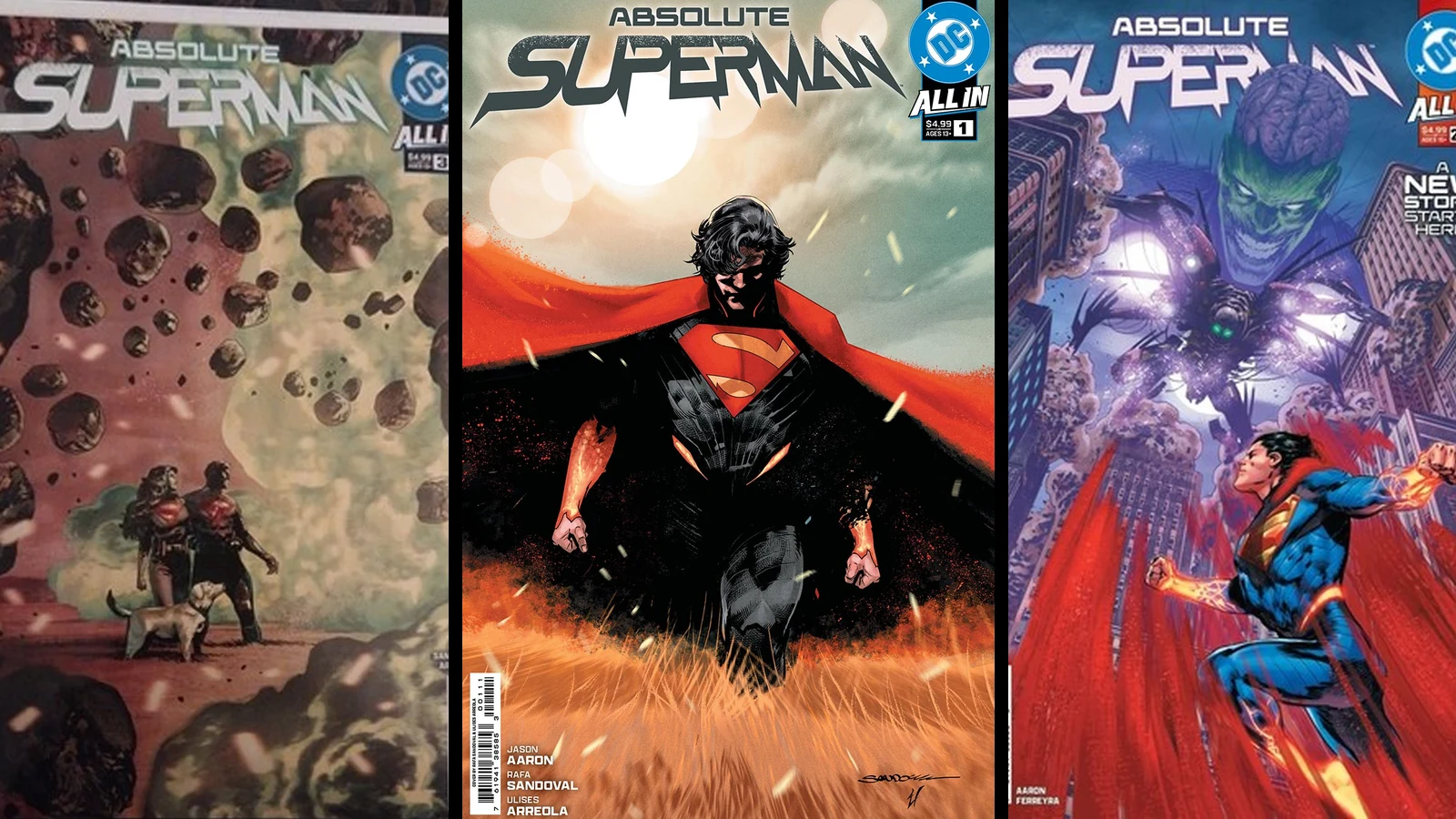
Strip Superman of the childhood on the Kent farm and you get something harder to write: a Kal-El who reaches Earth already carrying another world, another culture and another lifetime of memories.
Absolute Superman, by Jason Aaron and Rafa Sandoval, has been running since November 2024 and is currently published through issue #22. It’s the most structurally radical of DC’s Absolute Universe titles.
Kal-El was not sent to Earth as a baby. The experiment is not what if Kansas never existed. It is what if Superman never received the traditional Kent upbringing that normally defines Clark Kent from childhood?
Krypton, rebuilt as a class system
Traditional Superman stories often portray Krypton as an advanced society doomed partly by leaders who refuse to accept the planet’s danger. Absolute Krypton makes the social inequality itself central to the catastrophe.
The Science League controls governance, technology and wealth; independent research outside state sanction is illegal; and anyone who publicly questions policy is stripped of standing and cast down into the Labor Guild.
Guild members work the Sunstone mines and agricultural outposts: the People of Steel.
Krypton does not die as a simple natural disaster. It dies because the ruling class over-mined the planet’s core, suppressed the evidence, and quietly built evacuation ships for themselves while leaving the labouring majority to burn with the world.
The House of El are Labor Guild.
That recontextualises the single most recognisable symbol in comics. The S is not a family crest and it is not the Kryptonian glyph for hope. It’s the caste mark of the working class. When Kal-El wears it on Earth, he’s wearing a labourer’s uniform on purpose.
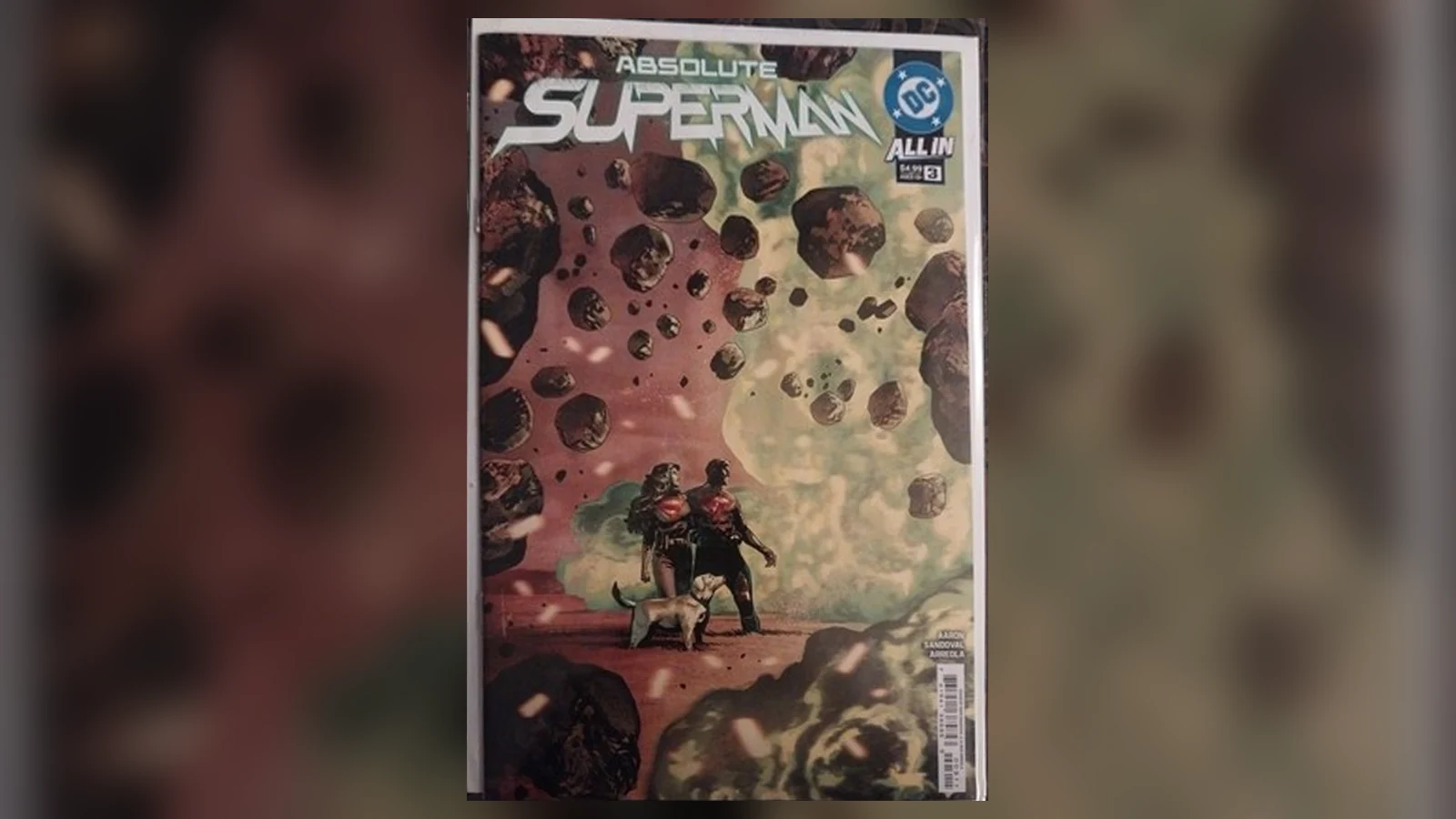
Jor-El and Lara, as dissidents
Both are reimagined as working-class activists rather than scientific aristocracy.
Jor-El was a promising mind expelled from the Science League after using a graduation speech to attack Krypton’s environmental policy. Reassigned as a safety inspector in the mines, he found the proof that the mining was destabilising the core — and when the League buried it, he went underground, stealing raw Sunstone to build an escape vessel for his community rather than for the elite.
Lara Lor-Van built a prototype space capsule at twelve, then wrote an essay criticising the League for abandoning interstellar exploration and was barred from the Academy for it. Sentenced to the Labor Guild, she worked as an agricultural mechanic — and designed the suit, the AI and the transport that got her son off the planet.
When shock troopers came for the family, both of them fought.
An adolescent with memories
Here’s the change everything else hangs on: Kal-El stayed on Krypton into adolescence. He leaves as a young Kal-El, not an infant.
So he remembers his parents, his culture and his home dying. He knows it was not a natural disaster, but a class of people who chose profit and then chose lifeboats.
Sandoval has described the Earth-side Kal as introverted and distrustful, with a temper that gets away from him. That’s not a darker Superman for the sake of it. That’s an adolescent processing a genocide nobody will ever acknowledge.
No traditional Kent upbringing
Absolute Superman does not erase Kansas. It changes what Kansas means. Kal arrives there already shaped by Krypton rather than being shaped there from infancy. Jonathan and Martha Kent offer him kindness, but they are not the parents who raise him into adulthood. Later, Kal takes the name Clark Kent and develops a connection to the Kent farm — turning the familiar Superman mythology into something he chooses rather than something he inherits as a child.
There is no traditional Smallville childhood or familiar Daily Planet civilian setup at this stage.
The opening issue introduces the adult/adolescent Earth-side Superman among exploited diamond miners in Brazil, showing immediately where Aaron’s version directs his attention: toward workers trapped beneath corporate power.
Aaron has said he went back to 1938, building the book around the ultimate immigrant story
. Siegel and Shuster’s Superman debuted fighting slumlords, crooked politicians and mine owners. This is a restoration.
Smallville later becomes central again during the Battle of Kansas, but it is never the idyllic childhood setting familiar from mainstream Superman. Kal comes to it as someone already formed by Krypton.
The suit, and Sol
The powers are broadly familiar: strength, durability, heat vision, speed, flight and enhanced senses. The constraint isn’t.
Kal wears a Sunstone suit built by his mother, housing an AI called Sol that regulates solar intake and distributes energy through his body. In #12, Kal names the AI Sol-El and accepts it as family — his brother by choice, not a biological sibling. Lose your temper and your output spikes, which drains the reserve — leaving him exhausted and genuinely vulnerable.
In #14, after Brainiac compromises it, Sol deletes its own program. The Sunstone cape and suit technology continue to function, but the AI that guided Kal is gone. For a focused breakdown of the suit, cape and solar mechanics, see our Absolute Superman powers explainer.
His anger is also his weakness.
The cape is not cloth either. The creative team has described its imagery in terms of carrying the ashes of Krypton with him. It moves with his kinetic output rather than the wind, making his connection to his lost world visible without over-explaining the physics.
Who he’s fighting
The antagonist isn’t a man, it’s a company.
The Lazarus Corporation controls energy, mining, private armies and politicians across the planet, and it’s run by Ra’s al Ghul — who doesn’t simply want Kal dead. He wants to break him, prove that violence is necessary, and take him on as a successor.
Its chief scientist is Brainiac, who makes Kal watch Krypton die again in virtual-reality simulations.
Enforcement falls to the Peacemakers, armoured shock troops, including a cyberised officer firing synthetic Kryptonite.
On Kal’s side: Lois Lane, a military operative who turns on her superiors, and Jimmy Olsen, an operative in the Earth-based Omega Men resistance. Their roles differ from the familiar Daily Planet setup.
Where the story is now
The published early structure runs Last Dust of Krypton (#1–6), Son of the Demon and The Battle of Kansas.
Issue #21 brought the King Shazam confrontation to its conclusion and was promoted with the line ‘Reign of the Superman begins here.’ But the series has already moved forward: issue #22, published August 5, begins ‘Get Brainiac,’ putting Metallo between Superman and Brainiac as the book starts its march toward issue #25.
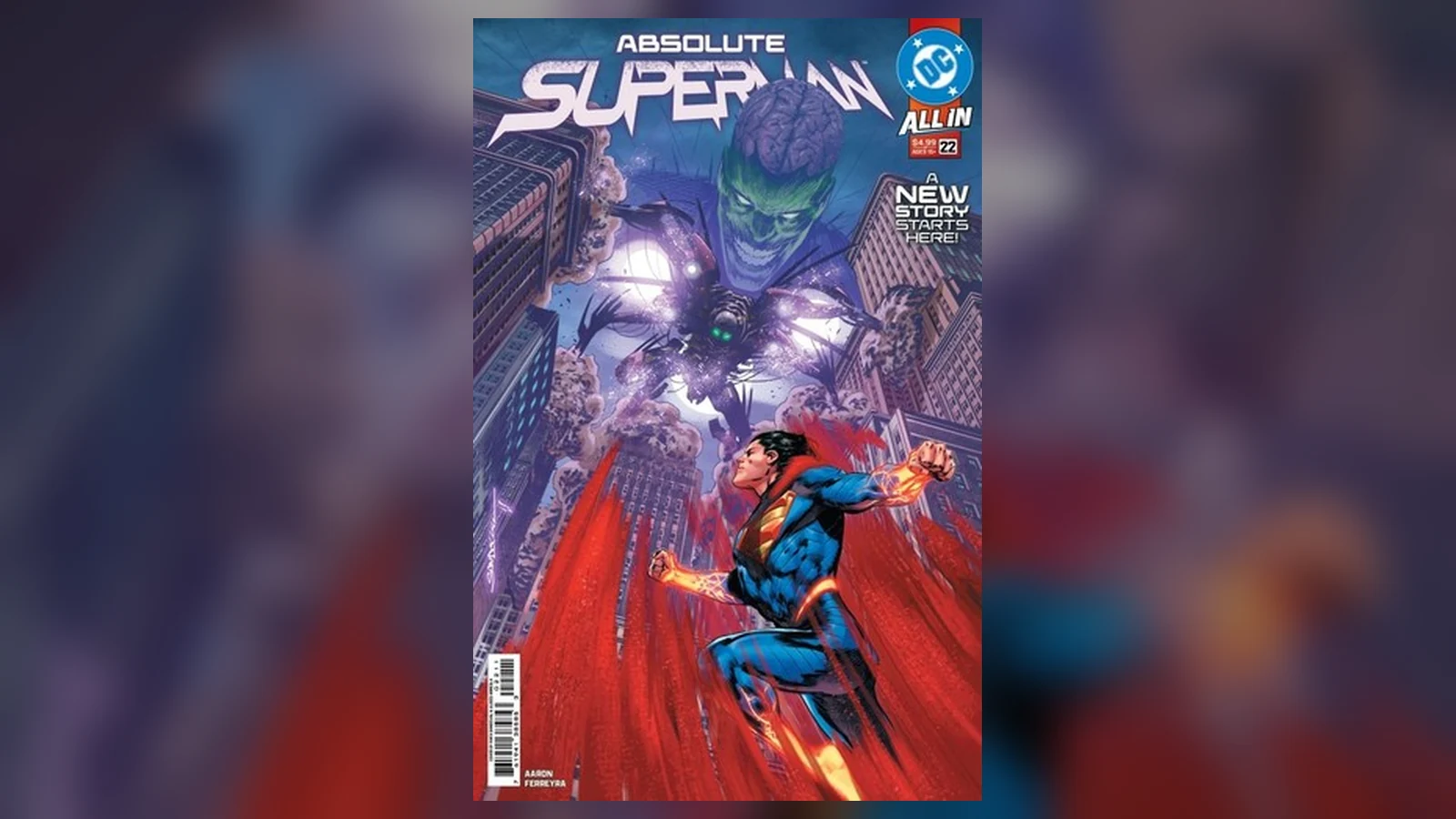
Juan Ferreyra’s stretch beginning with #15 expands the supporting world significantly. Hawkman becomes important around #16, while #17 puts this universe’s Lex Luthor into the spotlight as an unexpectedly contented family man.
Jason Aaron remains the writer, while Rafa Sandoval remains a defining co-creator and principal artist of the series. Juan Ferreyra provides the interior art for issue #22; Rafa Sandoval and Ulises Arreola handle its main cover.
Where to start
Absolute Superman #1, or Absolute Superman Vol. 1: Last Dust of Krypton, which collects issues #1–6. Vol. 2, Son of the Demon, is also available.
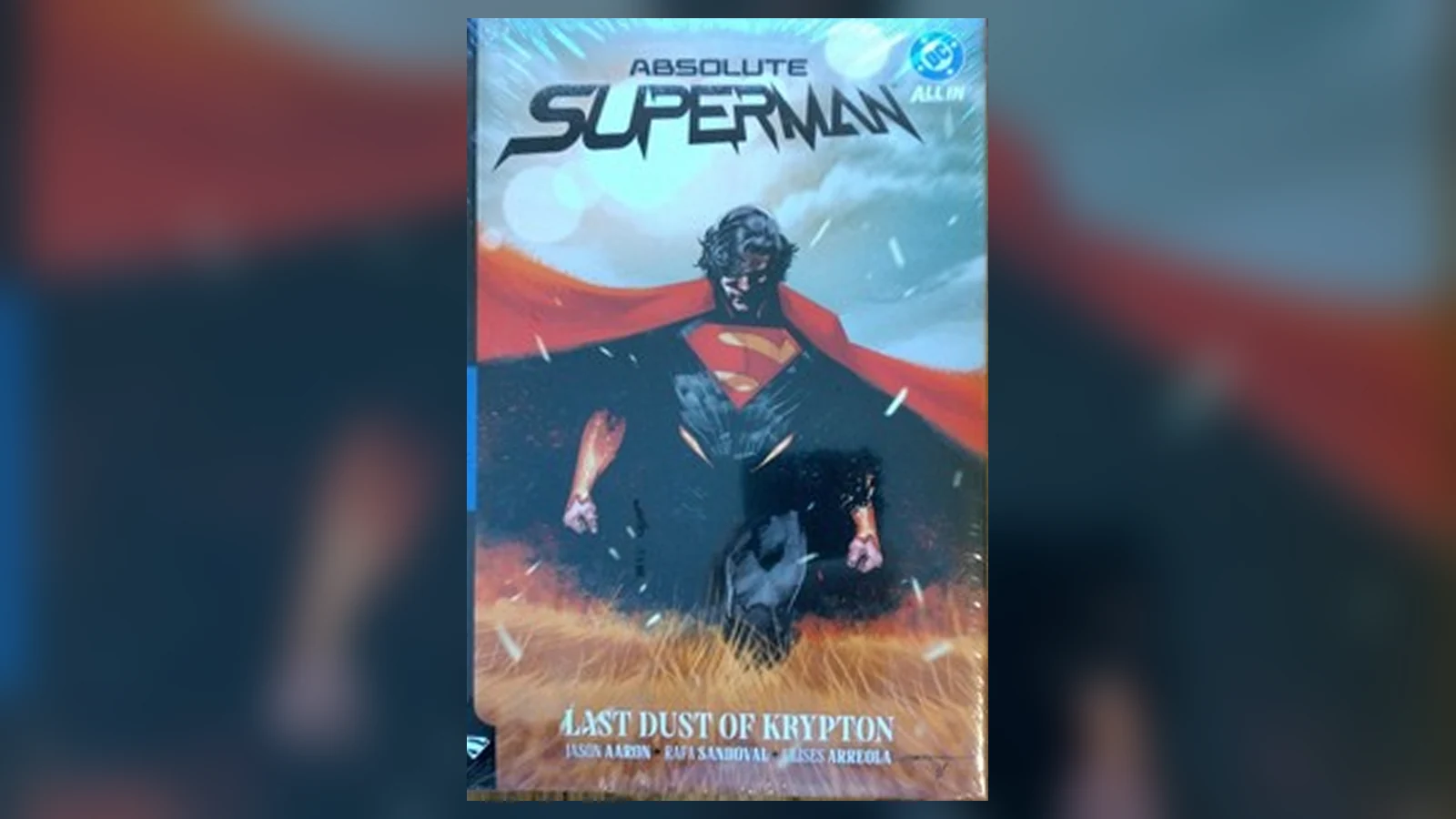
You don’t need Absolute Batman, you don’t need DC All In Special #1, and you certainly don’t need mainstream continuity. The first issue tells you everything. See our DC Absolute Universe reading order for where it fits alongside the rest of the line.
The bottom line
The test Aaron sets himself is whether Superman survives without the traditional Kent upbringing — whether the goodness was ever really created by the farm or whether Kal-El would find his way to it regardless.
This Kal-El saw a ruling class kill a planet and still came out of it helping people. He has every reason to be a cynic and isn’t one.
Make Red Reactions a preferred source
Choose Red Reactions as a preferred source in Google Search.
Confirm your choice on Google.
Related coverage
Absolute Superman Powers Explained: How His Suit, Cape and Solar Energy Work
Absolute Superman still has strength, flight and heat vision, but his solar reserves, Sunstone cape and Sol-powered suit make his abilities work very differently.
Absolute Batman Explained: Why This Bruce Wayne Is Completely Different
No manor, no money, no butler — and a chest emblem that doubles as an axe. DC's Absolute Batman reimagines Bruce Wayne as a working-class civil engineer.
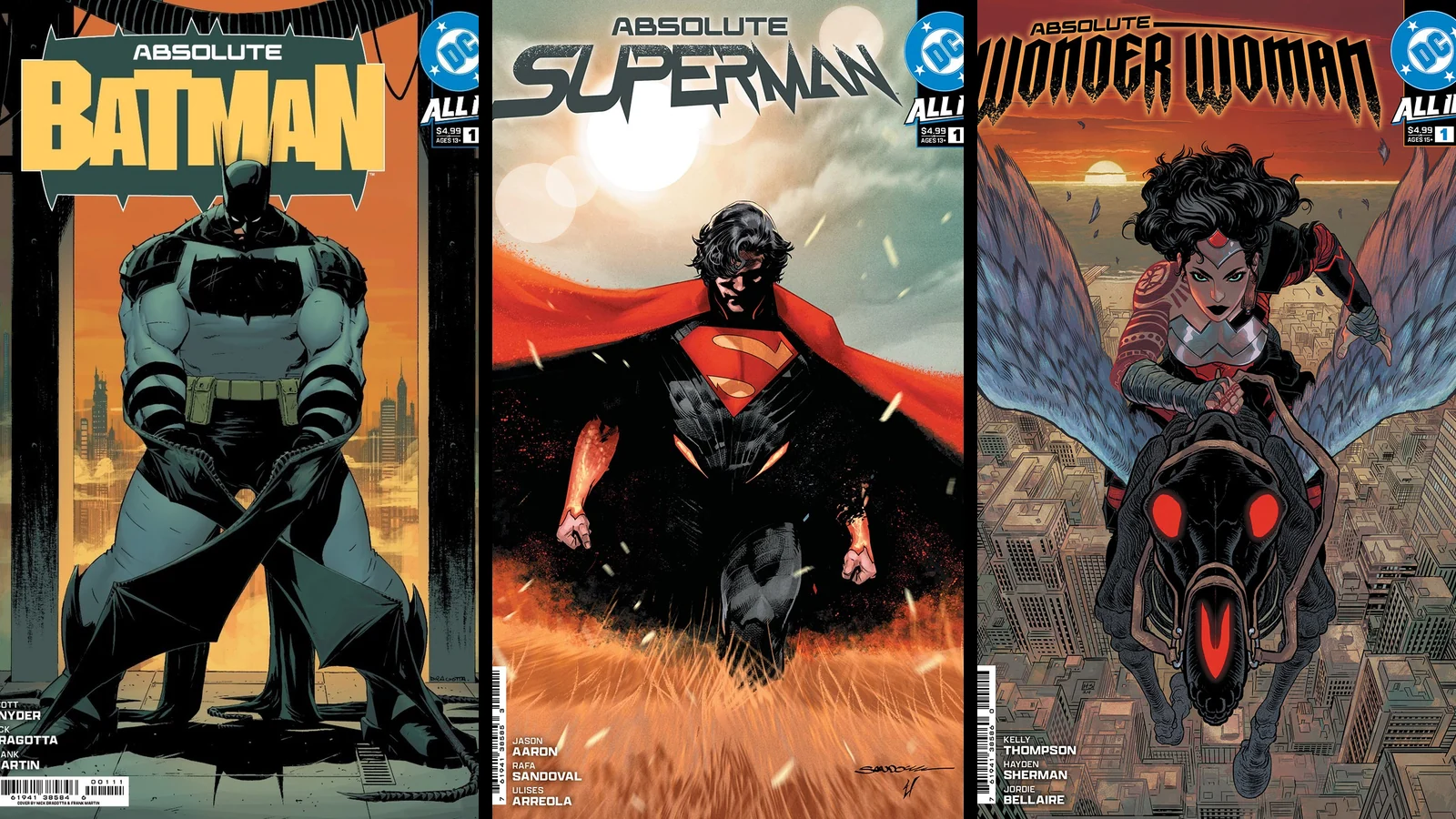
What Is DC's Absolute Universe? Everything You Need to Know
A parallel DC reality where Batman has no money, Superman has no Kansas, and Wonder Woman was raised in Hell. Here's how it works and where to start.

Absolute Wonder Woman Explained: DC's Darkest Reinvention of Diana
Raised in Hell by Circe and denied Themyscira and her sisterhood. The Eisner-winning reinvention of Wonder Woman, explained for new readers.
About the author
Aram Anwar
Founder & Editor
Aram Anwar founded Red Reactions and writes across comics, gaming, movies and television. His work includes franchise guides and large Lore / Explained features, with an emphasis on separating confirmed details from reports, theory and speculation.
Coverage: Comics · DC & Marvel · Gaming · Movies & TV · Lore / Explained · Guides
More from Aram Anwar