Movies Review
Die Hard Review: An Action Classic Built on Vulnerability
Die Hard still works because John McClane can be hurt, Hans Gruber can think, and Nakatomi Plaza gives every confrontation a place and a purpose.
 By Aram Anwar3 min read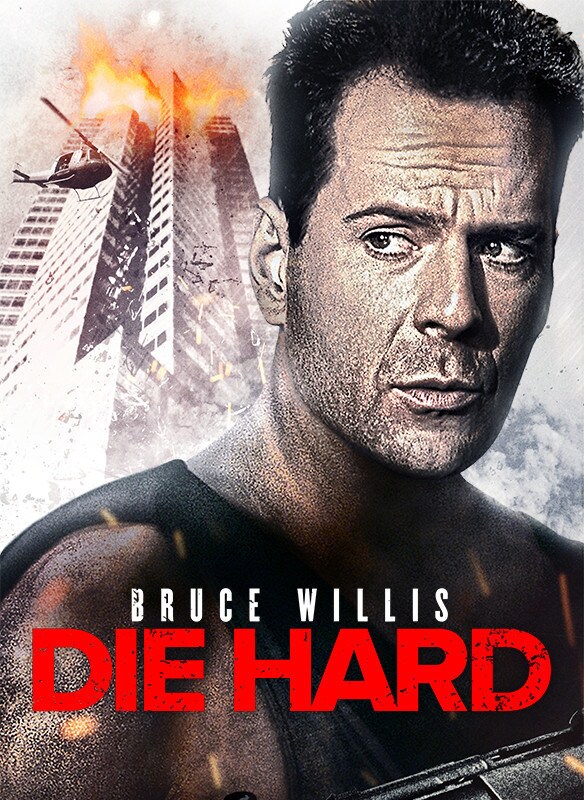
Die Hard remains an unusually satisfying action thriller because its hero has to solve a building before he can defeat the people occupying it. John McTiernan’s 1988 film gives Bruce Willis’s John McClane limited information, bare feet and no reliable backup. The result is tense even when the broad outcome seems certain. At 8.5/10, it earns its reputation through precise staging and two sharp lead performances, though some of the police and media satire now feels much broader than the material inside Nakatomi Plaza.
A hero who cannot shrug off the damage
Willis makes McClane capable without making him invulnerable. He improvises, gets frightened, makes jokes at bad moments and visibly pays for each encounter. His radio exchanges with Al Powell offer relief, but they also give McClane somebody to explain his thinking to; those conversations keep the solitary-building premise from becoming a sequence of anonymous fights. The strained marriage with Holly is sketched economically enough to give the night personal stakes without turning every action beat into a relationship lecture.
Alan Rickman’s Hans Gruber is just as important to the film’s shape. He has an objective, a timetable and a talent for adapting when McClane disrupts both. Gruber is often more controlled than the police outside, and that contrast makes the contest feel like a battle of decisions rather than a simple succession of gunfights. Rickman’s dry delivery also gives the film humor that does not require the threat to disappear.
Nakatomi Plaza is the action design
McTiernan keeps telling us where McClane is in relation to the hostages, the thieves and the exits. Offices, unfinished spaces, elevators and air shafts all have different tactical uses. A new location changes what McClane can see or do, so movement through the tower becomes the plot. The action escalates because each small victory costs him a hiding place, ammunition or physical comfort.
That clear geography is why the film still feels immediate beside later enclosed-space thrillers. Speed uses a similarly simple rule to generate pressure, while McTiernan’s own Predator turns a much larger environment into a trap. Die Hard works on a smaller map, but it makes almost every corner count.
Where the 1980s show through
Outside the tower, the pompous police command and predatory television reporter are drawn with a heavier pen. Their scenes give McClane more obstacles, yet they can flatten the film’s otherwise agile tone into easy caricature. A few stretches also pause to explain a tactical situation the staging has already made clear. These are real irritants in a film that usually trusts the viewer to follow the action.
The durable achievement is not simply that McClane gets hurt. It is that his injuries, the building’s layout and Gruber’s changing plans remain connected. Die Hard keeps consequence visible from one set piece to the next, which makes the final score feel earned rather than inherited from its influence.
Sources
Related coverage

Predator Review: When the Action Squad Becomes the Prey
The 1987 film's shift from commando swagger to jungle horror is its best idea, even if the characters rarely grow beyond their roles in the hunt.
The 20 Best Action Movies of All Time
From Die Hard and Terminator 2 to The Matrix, Mad Max: Fury Road and The Raid, these are Red Reactions' 20 best action movies of all time.

Aliens Review: A War Movie That Remembers the Horror
James Cameron turns Alien's isolated nightmare into a squad mission, but Ripley's trauma and the Marines' collapsing confidence keep the sequel tense.

Casino Royale Review: Bond Learns How Much a Win Can Cost
Daniel Craig gives 007 a rough edge, Eva Green makes the poker game personal, and Martin Campbell keeps the action tied to character.
About the author
Aram Anwar
Founder & Editor
Aram Anwar founded Red Reactions and writes across comics, gaming, movies and television. His work includes franchise guides and large Lore / Explained features, with an emphasis on separating confirmed details from reports, theory and speculation.
Coverage: Comics · DC & Marvel · Gaming · Movies & TV · Lore / Explained · Guides
More from Aram Anwar