Movies Review
Speed Review: One Simple Rule, Constant New Problems
The bus premise keeps Speed focused, while Keanu Reeves and Sandra Bullock turn mechanical suspense into a lively partnership.
 By Bamo Anwar2 min read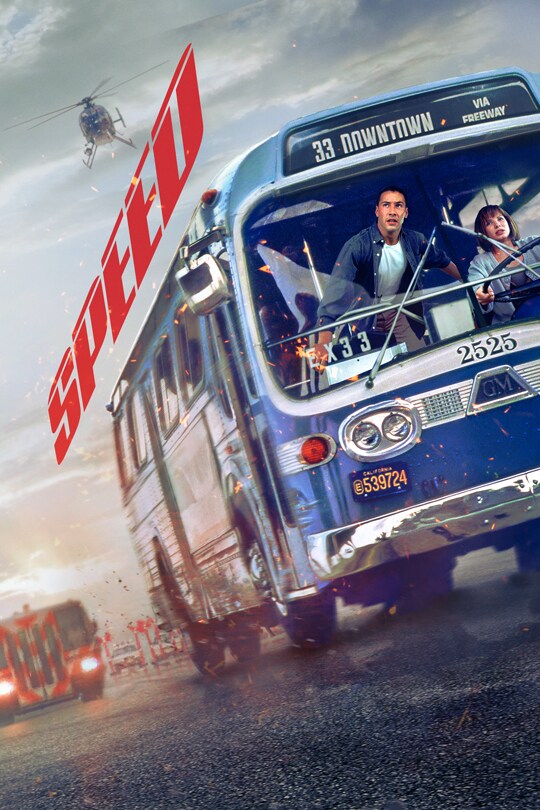
Speed is an 8/10 thriller built around a rule anyone can understand: once the bus is moving, slowing down is dangerous. Jan de Bont’s 1994 film finds a surprising number of distinct problems inside that constraint. Keanu Reeves and Sandra Bullock give the premise a human rhythm, although the movie has a harder time maintaining the same urgency once it leaves its best setting.
A moving bus is an action engine
The central rule makes every ordinary piece of traffic matter. A turn, a passenger’s movement or a new obstruction can force the group to improvise before they have time to argue. De Bont keeps returning to the road ahead and the cramped space inside, so the danger is both external and immediate. The film’s action is clearest when those two views collide: a solution outside changes what the people on board have to do.
Reeves plays Jack Traven as alert and practical rather than indestructible. Bullock’s Annie is more than a steering wheel with dialogue; her nervous humor and willingness to make a decision give the bus an emotional center. Their partnership develops through instructions, disagreement and shared attention to the next few seconds. It never needs the plot to pause for an elaborate romance to feel alive.
A villain who knows the rules too
Dennis Hopper’s Howard Payne is deliberately theatrical. He watches the heroes try to solve his design and adjusts when they make progress. His performance gives a voice and temper to a threat that could otherwise be just a device under the vehicle. The script sometimes asks us to accept convenient surveillance and timing, but Hopper’s relish helps the movie move past those mechanics while the bus is still rolling.
The final stretch exposes more of those contrivances. Without the bus’s simple, visible limitation, the pursuit becomes a broader action finale and loses some of its special tension. The film remains energetic, yet its most elegant suspense has already happened.
That uneven ending is the main reason Speed feels like a strong eight rather than a higher score. At its best, it turns a single condition into escalating choices and lets its leads be funny under pressure. Die Hard is another contained-action benchmark; The Bourne Ultimatum works at the opposite end of the scale, with multiple cities and shifting surveillance rather than one vehicle.
Sources
Related coverage

John Wick Review: Clean Action, Lean Revenge
Keanu Reeves and Chad Stahelski make a simple revenge story compelling through readable movement and a criminal world sketched with restraint.

The Matrix Review: A Revolution That Still Has a Story
The Wachowskis make a complicated world legible through Neo's choices and action scenes that pay off the rules established around him.

Aliens Review: A War Movie That Remembers the Horror
James Cameron turns Alien's isolated nightmare into a squad mission, but Ripley's trauma and the Marines' collapsing confidence keep the sequel tense.

Casino Royale Review: Bond Learns How Much a Win Can Cost
Daniel Craig gives 007 a rough edge, Eva Green makes the poker game personal, and Martin Campbell keeps the action tied to character.
About the author
Bamo Anwar
Anime & Gaming Writer
Bamo Anwar covers anime and gaming for Red Reactions. His work ranges from release news and detailed trailer breakdowns to beginner guides, watch orders and explainers designed to make large franchises and game systems easier to enter.
Coverage: Anime · Gaming · Beginner Guides · Watch Orders · Explainers
More from Bamo Anwar