news · gaming
Persona 4 Revival Gets a Switch 2 Release Date — Plus New Location Episodes and Prime Time Changes the Battle System
Persona 4 Revival launches February 18, 2027 on PS5, Xbox Series and PC, with a Switch 2 version following May 20, 2027. Broadcast Episode 2 also revealed the new Location Episodes feature, Social Link character Aika Nakamura, and more.
 By Kenza Benouna8 min read
Persona 4 has spent nearly two decades refusing to stay in the past.
The original arrived on PlayStation 2 in 2008. Persona 4 Golden followed, then escaped the Vita and eventually spread to modern consoles and PC. It has had fighting games, rhythm games, anime adaptations and enough merchandise to furnish a very yellow apartment. Yet Atlus has somehow managed to make returning to Inaba feel like an event again.
Persona 4 Revival launches on February 18, 2027, and Sega’s Gamescom 2026 showing has finally given us a clearer idea of what “Revival” actually means beyond prettier streets and a much more expensive version of Junes.
This is not simply Persona 4 Golden with sharper textures. P-Studio is rebuilding combat, dungeon exploration and presentation around systems that did not exist in the original game. The most interesting of those is a new mechanic called Prime Time.
And yes, it looks capable of making an already exploitable Persona battle system even more ridiculous in the best possible way.
Persona 4 Revival launches February 18, 2027 — Switch 2 follows May 20
Sega and Atlus have confirmed that Persona 4 Revival will release worldwide on February 18, 2027 for PlayStation 5, Xbox Series X|S and PC, with Windows and Steam versions listed on the official site. The game is also being promoted for Xbox Game Pass.
A Nintendo Switch 2 version is also confirmed, but it arrives later — May 20, 2027, roughly three months after the other platforms. Don’t assume Switch 2 owners get the game on the same February date; Sega has been explicit that it’s a separate, later release.
The remake keeps the basic premise intact. A teenage transfer student moves to the rural town of Inaba, where a string of grotesque murders begins to overlap with rumors about the Midnight Channel — a strange television broadcast said to appear on rainy nights.
If you played the original, none of that is surprising. What matters is how much of the journey around that story has changed.
Sega’s Gamescom demo is split into three “Channels,” each designed to highlight a different part of the remake. The first begins near the opening of the game and includes the protagonist’s encounter with his first Shadow and the awakening of Izanagi. The second moves into a modernized version of Yukiko’s Castle, while the third gives press and creators a longer look at daily life in Inaba before sending them back into the dungeon.
It is a smart demo structure because Persona 4 has never really been one game. Half of it is a murder mystery wrapped around school life, friendships and awkward teenage decisions. The other half is a turn-based RPG where you beat psychological monsters into submission using mythology.
Revival has to modernize both halves without sanding away what made Inaba memorable.
Prime Time could be the remake’s biggest combat change
The headline addition is Prime Time, a new meter that fills during battle.
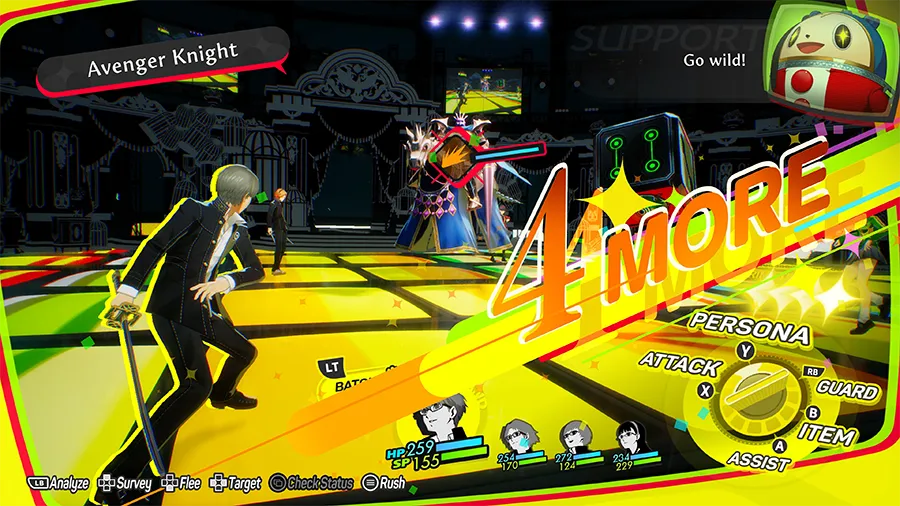
Once activated, Prime Time allows the party to perform consecutive actions, use skills without paying their usual cost, ignore enemy resistances and freely trigger Baton Passes. The sequence ends with a powerful finishing attack called Series Finale.
That is not a cosmetic addition. It changes the rhythm of combat.
Traditional Persona battles are built around discovering weaknesses, knocking enemies down and earning extra turns. Persona 4 Revival still uses that familiar foundation, but Prime Time appears designed to reward players for building momentum and then cashing it in during a concentrated burst.
It also gives P-Studio room to make enemy encounters more aggressive. If the player has access to something this powerful, the remake can afford to ask more of them.
There is a danger here, obviously. Persona combat can already tilt from tense to completely one-sided once you understand elemental coverage and build the right Personas. A mechanic that lets you ignore resistances and spam skills for free sounds absurd on paper.
But that absurdity may be intentional.
The newer Persona games have increasingly treated combat as performance: knockdowns flow into passes, passes flow into All-Out Attacks, and fights become less about slowly trading damage and more about engineering the perfect sequence. Prime Time pushes Persona 4 further in that direction.
Baton Pass is now part of Persona 4
Another major change is the introduction of Baton Pass.
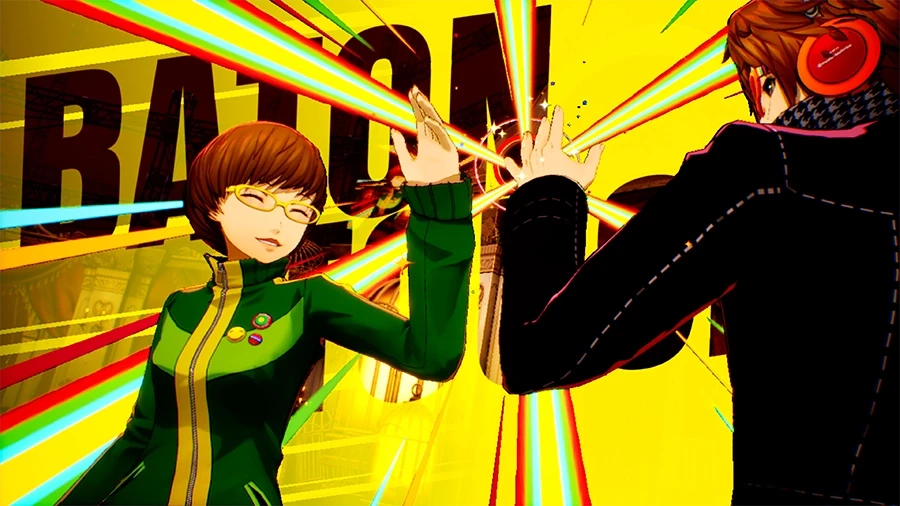
During a “1 More,” players can hand the extra action to another party member, allowing the team to chain attacks and knock down multiple enemies. Anyone coming from Persona 5 will understand the basic idea immediately, but its inclusion fundamentally alters how Persona 4 encounters can be approached.
P-Studio is also adding more ways to manipulate enemies. Attacking a Shadow suffering from a status ailment can potentially send it flying into another target, spreading damage and the ailment. Successfully guarding against an enemy attack can stun the attacker.
These systems make Revival look less passive than the 2008 combat model. Instead of simply waiting for a turn, checking weaknesses and repeating the most efficient spell, players appear to have more opportunities to create openings and extend offensive chains.
The trick will be preserving Persona 4’s identity instead of turning it into Persona 5 wearing a yellow jacket.
So far, Revival looks aware of that problem.
Yukiko’s Castle is being rebuilt, not merely repainted
Sega’s Gamescom material specifically calls out the remake’s modernized dungeons, with Yukiko’s Castle used for the playable demo.
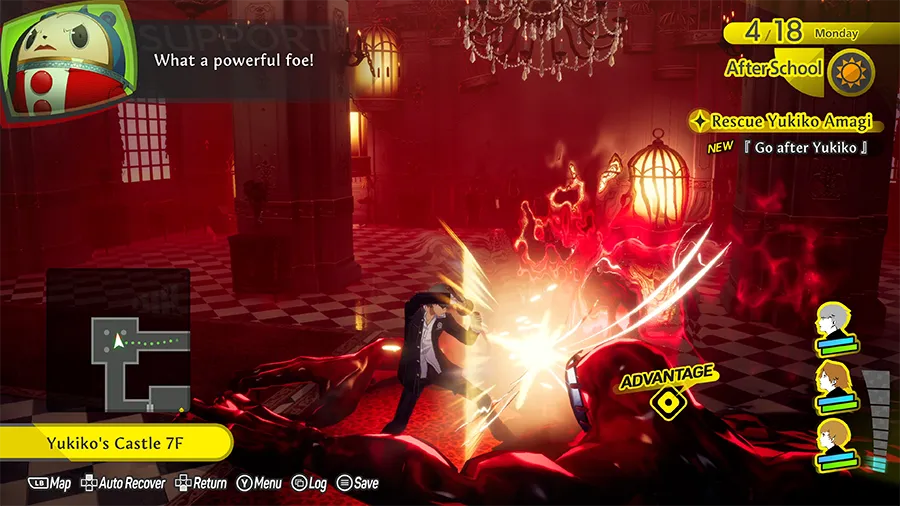
That matters because dungeon design is one of the areas where the original Persona 4 has aged most noticeably. Its procedural corridors were functional, but they were never the reason anyone fell in love with the game.
The official Revival site promises enhanced graphics, rebuilt combat and additional content, while the Gamescom demo suggests dungeon exploration is receiving more attention than a simple visual upgrade.
Even small changes could make a dramatic difference. Being able to choose when to engage Shadows, stun enemies through guarding and build encounters around Prime Time gives P-Studio tools the original game simply did not have.
If those mechanics are supported by more deliberate dungeon layouts, this could be the part of Persona 4 Revival that benefits most from the remake treatment.
Broadcast Episode 2: Location Episodes and a new Social Link
Atlus’s second Persona 4 Revival broadcast, streamed September 20, focused on supporting characters and a new feature called Location Episodes. Per Atlus’s own description, Location Episodes trigger when Aika’s family — the owners of the Aiya restaurant — ask the protagonist to investigate what Inaba was like in the old days. Traveling to different locations around town with Aika, players obtain photographs tied to friends’ memories of those places, which can then be shared with those friends to unlock conversations about their past. Some Location Episodes cover characters outside the core Investigation Team, not just the main cast.
That feature is built around Aika Nakamura, confirmed as a new Social Link character for Revival. Aika originally appeared in Persona 4: The Animation rather than the original game; in Revival she’s the daughter of the Aiya owners, works the restaurant’s delivery route, and is described as laid-back and the face of the business. The broadcast also spent time on Rise, Kanji, Naoto, Teddie, Adachi, Nanako and Dojima, alongside two new battle mechanics: Support Skills — Rise abilities that can randomly analyze enemy weaknesses or nullify incoming damage — and Blunder Cover, where allies can land pursuit attacks after a missed attack fails to knock an enemy down.
Inaba is changing too
Combat is receiving most of the obvious mechanical changes, but Atlus is not leaving the social half of the game untouched.
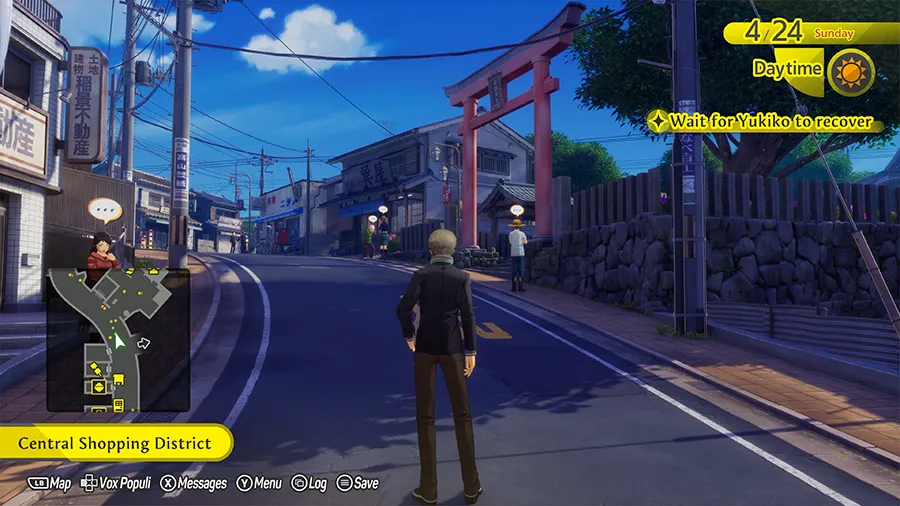
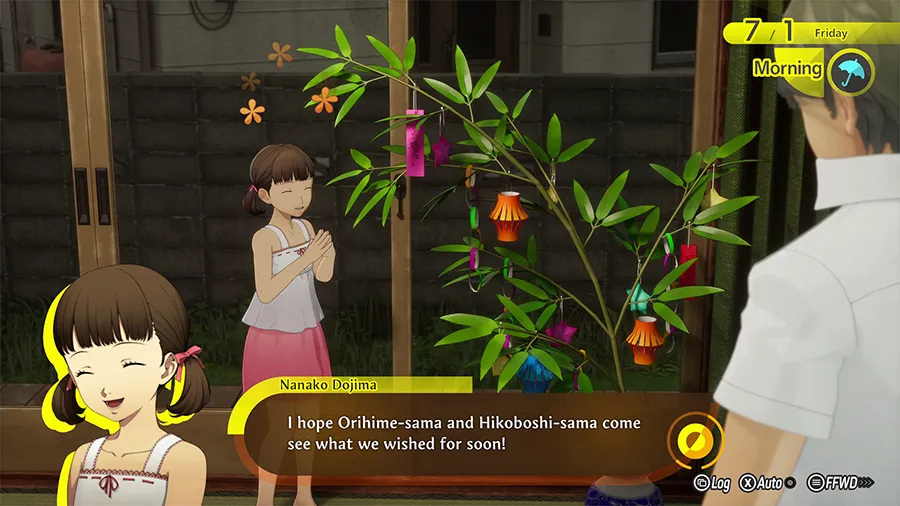
The official site confirms new scenes and seasonal events, including additional opportunities to spend time with characters. Social Link scenes are receiving added voice acting, and the main story has been re-recorded.
The soundtrack is also being reworked. Ryota Kozuka is composing for Persona 4 Revival, and Broadcast Episode 2 confirmed Shiori Sasaki as the game’s new vocalist. Per Kozuka’s own comments during the broadcast, some tracks have been updated to stay faithful to their original versions, while others are getting more expressive rearrangements, alongside entirely new vocal tracks. An advance lyric video for one of those new songs, “True Story -Revival-,” is already up on Atlus’s official YouTube channel, and the broadcast separately previewed a vocal version of “A Sky Full of Stars.”
That is the sort of change Persona fans will argue about until the heat death of the universe.
Persona 4 Golden has one of the most recognizable soundtracks in the series, and replacing or rearranging beloved music can be more dangerous than changing a combat system. Atlus appears to be treating Revival as a reinterpretation rather than a museum piece, though, and that philosophy is becoming increasingly obvious as more of the remake is shown.
Persona 4 Revival finally has something to prove
The easiest version of this remake would have been predictable: rebuild Inaba in a modern engine, retain the old systems, add quality-of-life improvements and let nostalgia do the rest.
That is clearly not what P-Studio is making.
Prime Time, Baton Pass, guarding mechanics, new interactions with status effects, additional scenes, expanded voice work and remastered music all point toward a game willing to rewrite parts of its own playbook.
That makes Persona 4 Revival more interesting — and riskier.
The original works because its individual pieces reinforce a very specific atmosphere. Inaba is sleepy, funny, unsettling and strangely intimate. Modernizing the mechanics is easy compared with preserving that feeling.
Gamescom gives us a better idea of how the remake will play. The bigger question is whether, when February 18 finally arrives, stepping off that train will still feel like coming to a town you somehow remember living in.
Sources
- Persona 4 Revival official website — ATLUS / SEGA
- Persona 4 Revival: A New Beginning — ATLUS / SEGA
- Sega gameplay updates: Persona 4 Revival, Crazy Taxi World Tour, Total War: Warhammer 40,000, and more — PlayStation Blog
- Gematsu — Persona 4 Revival Broadcast Episode 2 – characters, Location Episodes, more — September 20, 2026
- RPG Site — Persona 4 Revival launches May 20, 2027 for Switch 2, Persona 6 confirmed for Switch 2 — September 9, 2026
Make Red Reactions a preferred source
Choose Red Reactions as a preferred source in Google Search.
Confirm your choice on Google.
Related coverage

Eternal Anima Is Marvelous' New Time-Travel JRPG — Future Sight, Psychometry and March 2027 Release Explained
Marvelous revealed Eternal Anima, a turn-based time-travel JRPG launching worldwide March 4, 2027. Here's how Psychometry and Future Sight actually work, and what's confirmed about the PROJECT LIFE is RPG connection.
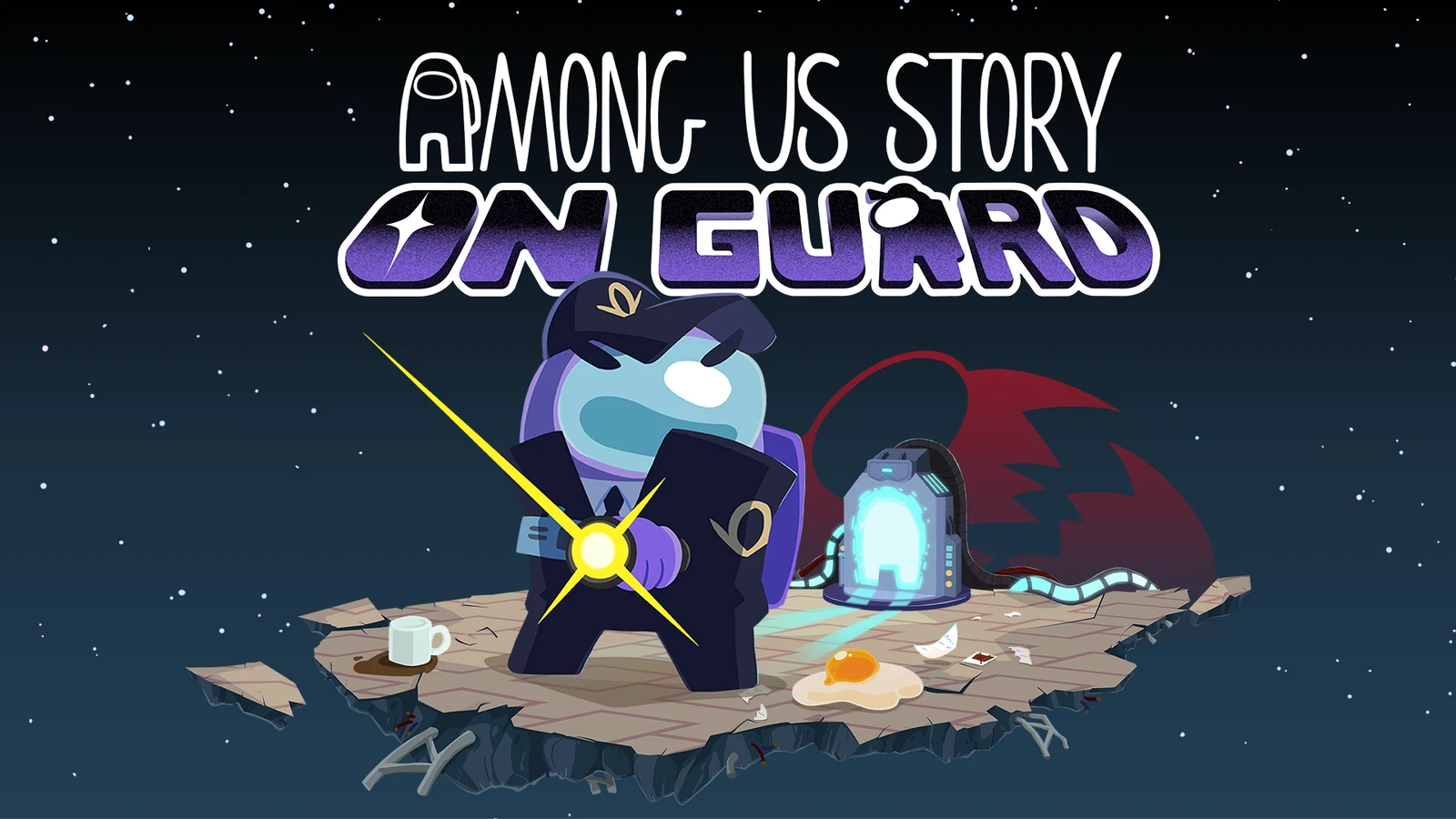
Among Us Story: On Guard Launches February 17 — Platforms, Demo and Detective Gameplay
Among Us Story: On Guard launches February 17, 2027. Check its five announced platforms, October 8–15 Steam demo and single-player detective format.
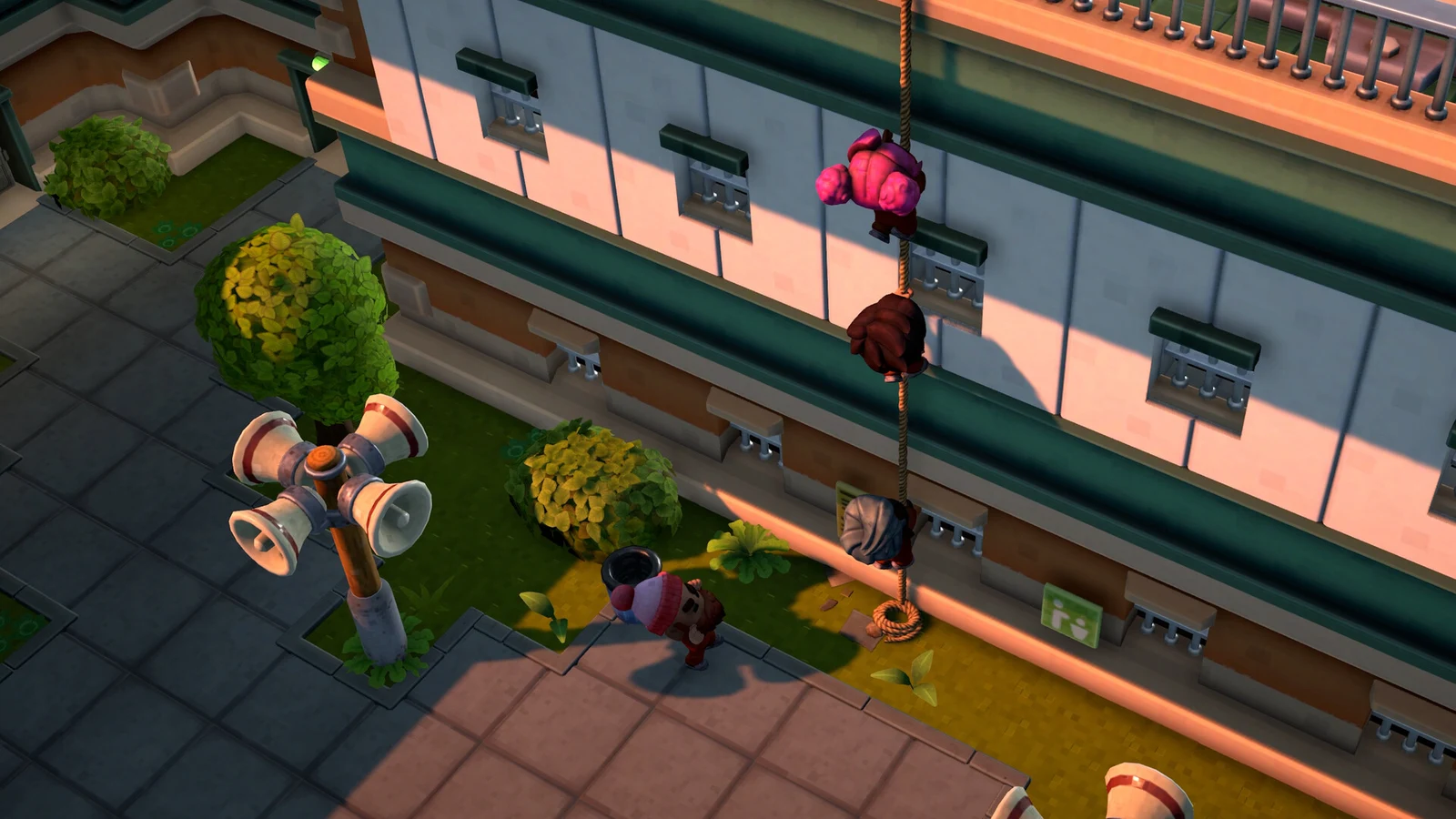
The Escapists 3 Is Coming in 2027: 3D Prisons, Crafting and Co-Op Explained
Team17 has announced The Escapists 3 for 2027. Check its five 3D prisons, 120+ items and weapons, XP progression and distinct local and online co-op limits.

Kingdom Hearts Collection on Switch 2: Storage, Cloud Upgrades and Included Games
Kingdom Hearts Collection launches October 8. Compare native Switch 2 editions, 131 GB versus 138 GB storage notices, Cloud-owner discounts and save transfers.
About the author
Kenza Benouna
Movies, TV & Horror Writer
Kenza Benouna writes about movies and television, with a substantial archive in horror. Her Red Reactions work includes reviews, supernatural and franchise lore, story explainers and analysis of character, atmosphere and adaptation.
Coverage: Horror · Movies · TV · Reviews · Lore & Features
More from Kenza Benouna