Movies Review
Police Story Review: Jackie Chan Makes Every Object an Obstacle
The 1985 film's exhilarating physical comedy and escalating stunts outshine a thin police plot and some awkward tonal shifts.
 By Aram Anwar2 min read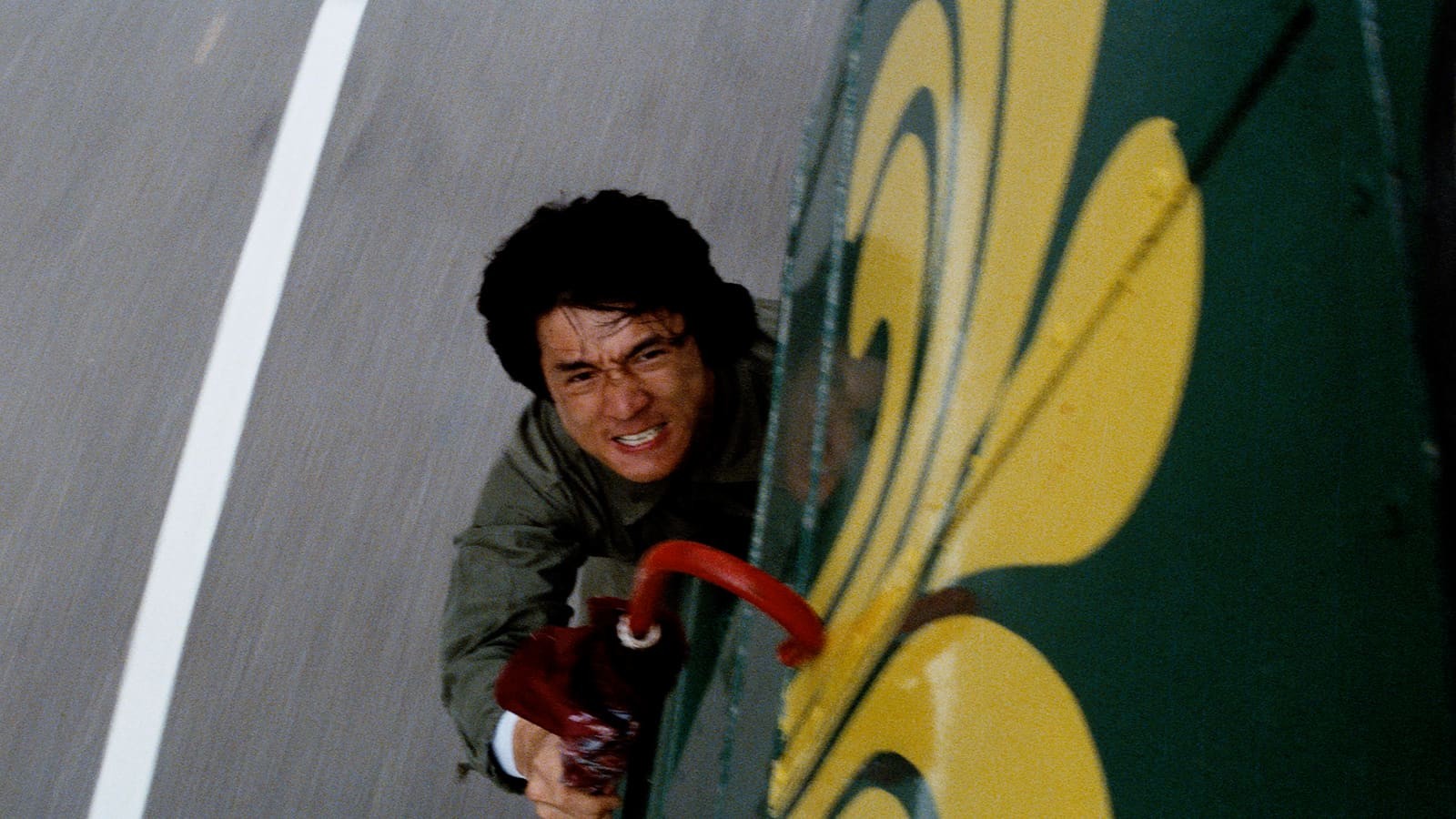
Police Story is an 8/10 film whose action is richer than its police case. Jackie Chan directs and stars in a 1985 movie that treats a bus, a shop display or a flight of stairs as both a comic possibility and a genuine physical hazard. The story between its set pieces can be flimsy, and its treatment of the people around its hero is sometimes impatient. The action remains astonishing because it is so carefully organized.
Ka-Kui works through the room
Chan’s Inspector Ka-Kui rarely solves a problem with a single clean strike. He has to get around furniture, recover balance and find a use for whatever his opponent has just broken. That gives the fights a conversational rhythm: action, reaction, mistake, adjustment. The camera usually holds enough of the space for us to see the effort, which makes a fall funny and alarming at once.
The opening pursuit shows this design on a large scale. The route and vehicles keep changing the options available to Ka-Kui. The later shopping-mall climax takes a familiar public setting and turns its levels, glass and displays into a map of escalating risk. The destruction is impressive, but the more important detail is that Chan makes each new surface affect the next move.
Comedy and pain share the frame
The movie’s humor often comes from effort rather than a punchline. Ka-Kui can be good at his job and still look ridiculous getting there. That quality separates Police Story from Hard Boiled, whose gun battles turn similar architectural spaces into operatic danger. Here, the body is the main instrument, and the joke depends on seeing exactly how precarious it is.
The broader comedy is less consistent. Some relationship and police-station scenes stall the case without adding much to Ka-Kui, while the switches from slapstick to real peril can be abrupt. The supporting women have flashes of personality but are too often placed in positions that keep the hero busy rather than allowed to change the story themselves.
Those weaknesses hold the rating below the action’s highest peaks. Yet the film does not feel like a disposable plot attached to a stunt compilation. Its best sequences teach a physical rule, complicate it and pay it off, a discipline that makes Chan’s risks intelligible rather than merely spectacular. The Raid: Redemption offers a later, much harsher version of action designed around what a building allows.
Sources
Related coverage
The 20 Best Action Movies of All Time
From Die Hard and Terminator 2 to The Matrix, Mad Max: Fury Road and The Raid, these are Red Reactions' 20 best action movies of all time.

Aliens Review: A War Movie That Remembers the Horror
James Cameron turns Alien's isolated nightmare into a squad mission, but Ripley's trauma and the Marines' collapsing confidence keep the sequel tense.

Casino Royale Review: Bond Learns How Much a Win Can Cost
Daniel Craig gives 007 a rough edge, Eva Green makes the poker game personal, and Martin Campbell keeps the action tied to character.
Die Hard Review: An Action Classic Built on Vulnerability
Die Hard still works because John McClane can be hurt, Hans Gruber can think, and Nakatomi Plaza gives every confrontation a place and a purpose.
About the author
Aram Anwar
Founder & Editor
Aram Anwar founded Red Reactions and writes across comics, gaming, movies and television. His work includes franchise guides and large Lore / Explained features, with an emphasis on separating confirmed details from reports, theory and speculation.
Coverage: Comics · DC & Marvel · Gaming · Movies & TV · Lore / Explained · Guides
More from Aram Anwar