lore · comics / movies
Marvel Incursions Explained: How Universes Collide and Why They Matter for Secret Wars
Two Earths, eight hours, and one impossible choice. Here's how Marvel's incursions actually work in the comics, how the MCU has already used the term, and what's confirmed for Doomsday and Secret Wars versus comic-book precedent.
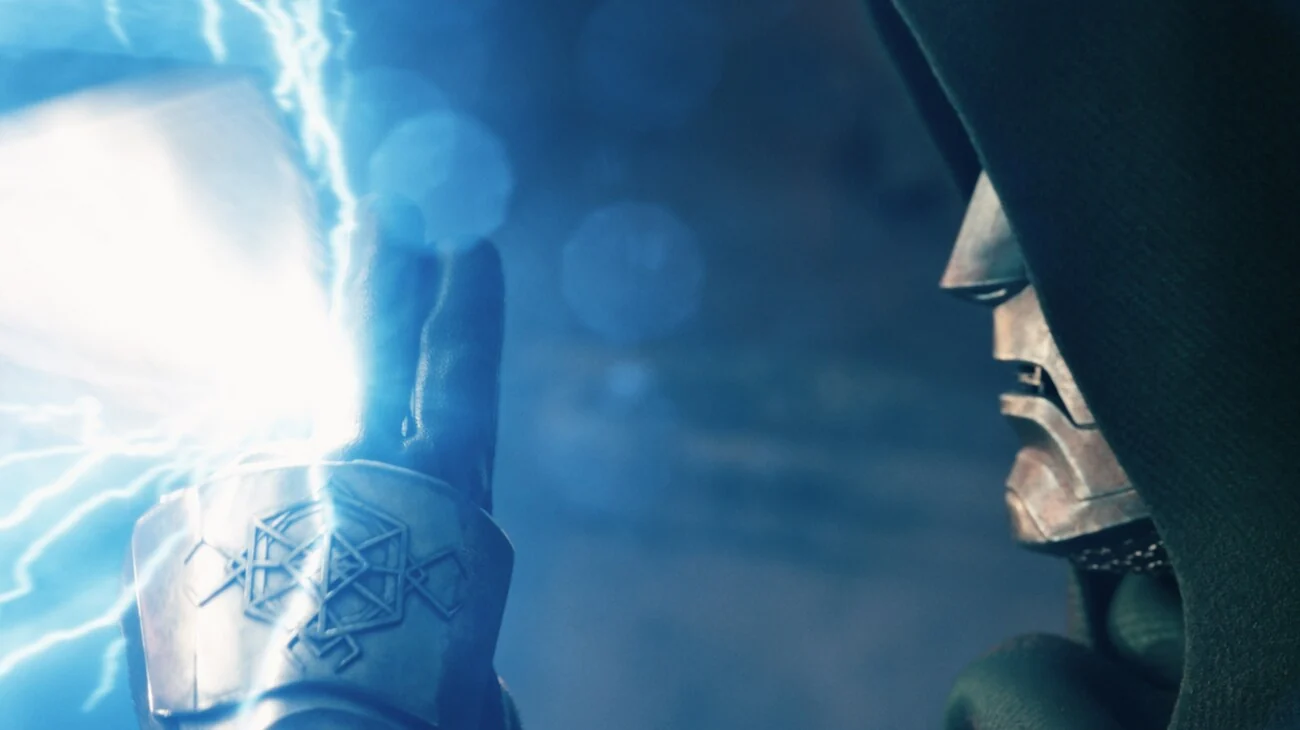
An incursion is Marvel’s word for the worst possible outcome of a multiverse: two Earths drifting into the exact same point in space, on a fixed clock, with only one survivable ending.
The concept comes from Jonathan Hickman’s Avengers and New Avengers, starting in 2012, and it’s the mechanism that eventually collapses the entire Marvel multiverse into Secret Wars (2015). The MCU has already borrowed the term once, in Doctor Strange in the Multiverse of Madness. It has not confirmed that Avengers: Doomsday or Avengers: Secret Wars adapt Hickman’s specific mechanics — but the comics version explains exactly why a title like Secret Wars keeps surfacing in connection with a story about universes colliding.
The simple version
When two parallel Earths get too close to each other, a bordered zone forms at the point where they’re about to meet. From that moment, there’s a fixed window — eight hours, in Hickman’s version — before the two planets physically collide. If the collision happens, both Earths and both of their entire universes are destroyed. The only way to prevent that outcome is for someone to destroy one of the two Earths first, saving one universe by ending the other.
There’s no third option in the base mechanic. Reroute the incursion, delay it, negotiate with it — none of that stops the clock. Somebody dies so somebody else doesn’t.
How the Illuminati got involved
Black Panther is the one who first discovers the problem, when a rhinoceros wanders through a portal into Wakanda and he follows it through to find an entire alternate Earth — with a second Earth visibly approaching it in the sky. Realizing the scale of the threat, he reassembles the Illuminati, the covert brain trust of Marvel’s most powerful minds, specifically to find a way to survive incursions without simply committing genocide against alternate worlds every time one occurs.
That’s the moral engine of the whole Hickman run. The Illuminati spend years searching for a version of “solve this without killing an entire Earth,” and mostly fail. Their most notorious tool ends up being an antimatter weapon, built to destroy an incoming alternate Earth cleanly before collision — a solution that still requires deciding, again and again, that one populated world doesn’t get to survive.
Why incursions kept getting worse
Here’s the part that only becomes clear late in Hickman’s run, and it’s worth including because it’s the twist that makes the whole crisis make sense: incursions aren’t a natural multiversal phenomenon. They’re the side effect of an attempted fix.
The Beyonders — god-level entities that predate the current Marvel multiverse — had already decided to end it, and built a living weapon called a Molecule Man into every single reality as their mechanism for doing so. Doctor Doom, operating under the secret identity Rabum Alal, discovered this and began killing Molecule Men across timelines early, in an attempt to defuse the Beyonders’ plan before it could fully activate. It didn’t work the way he hoped. Removing each universe’s Molecule Man didn’t stop the collapse — it triggered the incursions, pushing neighboring universes into each other in a cascading chain reaction Doom didn’t fully anticipate. The secretive all-female order known as the Black Swans served Rabum Alal specifically because they understood, correctly, that he was trying to save the multiverse rather than destroy it — even though the trail of dead universes he left behind made him look like exactly the opposite.
That reveal recontextualizes the entire crisis: the incursions are the visible symptom of Doctor Doom’s own failed attempt to outmaneuver a threat bigger than anyone else understood.
Where it all ends: Secret Wars
The incursions accelerate until they’re happening constantly, and the Illuminati’s options run out entirely. In the 2015 Secret Wars event, Doctor Doom — working alongside Doctor Strange and the Molecule Man — makes a final play: harnessing the power of the dying Beyonders to preserve fragments of the collapsing multiverse instead of letting everything be destroyed, stitching them into a single patchwork world called Battleworld, and ruling over the result as God Emperor Doom for eight years. For the full breakdown of how that world actually works, see our Battleworld explained.
How the MCU has already used the term
Doctor Strange in the Multiverse of Madness (2022) put the word “incursion” on screen for the first time, tied to the Illuminati of Earth-838 — a different group of heroes on a different Earth who reveal they’ve already lived through this exact crisis. Their backstory establishes that reckless multiversal travel, like the kind America Chavez’s powers or Wanda’s dreamwalking enable, risks setting one off, and that they’ve previously had to make the kind of survive-or-die choice the comics Illuminati faced. It’s a direct, deliberate MCU use of Hickman’s concept, not just a coincidence of naming.
What’s confirmed for Doomsday and Secret Wars, and what’s comic precedent only
Marvel’s official synopsis for Avengers: Doomsday describes heroes from three distinct universes on a collision course with an existential threat — language that echoes incursions closely enough that the connection is an obvious inference. It is still an inference. Marvel has not stated that Doomsday or Secret Wars directly adapts Hickman’s incursion mechanics, the Illuminati’s specific choices, or the Rabum Alal twist. What’s actually confirmed is narrower: Robert Downey Jr.’s Doctor Doom, a three-universe collision premise, and a title — Secret Wars — that Marvel has used before for exactly this kind of story. For more on what’s actually locked down about the films themselves, see our Doctor Doom explainer, why Doom hates Reed Richards, and what’s known so far about Noah Jupe’s mystery Secret Wars role. If you’re planning what to watch before Doomsday itself, see our watch order guide.
The bottom line
An incursion is Marvel’s cleanest metaphor for a bad multiverse: two worlds, one survivable outcome, and heroes forced to choose. The comics version turns out to be caused by the person most associated with fixing it — Doctor Doom trying to outsmart a threat he didn’t fully understand — which is exactly the kind of irony that makes him compelling as Doomsday’s central villain, whether or not the films ever use the word “incursion” out loud.
Sources
Related coverage
Battleworld Explained: Doctor Doom's Secret Wars World and How It Actually Works
One planet built from hundreds of dead universes, ruled by a god who used to be a man. Here's how Battleworld actually functions, why it isn't the same thing as 1984's Battleworld, and what the MCU has and hasn't confirmed.
Who Is Doctor Doom? Marvel's Greatest Villain Explained
A monarch, a sorcerer, and a genius who blames someone else for his own mistake. Everything you need to know about Doctor Doom before Avengers: Doomsday.
Why Does Doctor Doom Hate Reed Richards?
Not because Reed scarred him. Not because Reed sabotaged him. The real reason is smaller, pettier and far more interesting — and Marvel confirmed it in Secret Wars.
Avengers: Doomsday Watch Order — What You Actually Need to Watch Before the Movie
Not a 40-film homework list. Here's the minimum route into Avengers: Doomsday, what's worth adding for the Fantastic Four and X-Men context, and what's genuinely optional.
About the author
Aram Anwar
Founder & Editor
Aram Anwar is the founder of Red Reactions, created from a long-standing passion for movies, television, gaming and entertainment culture. He covers major releases, franchise news, comics, gaming and in-depth Lore / Explained features.