lore · comics
Battleworld Explained: Doctor Doom's Secret Wars World and How It Actually Works
One planet built from hundreds of dead universes, ruled by a god who used to be a man. Here's how Battleworld actually functions, why it isn't the same thing as 1984's Battleworld, and what the MCU has and hasn't confirmed.
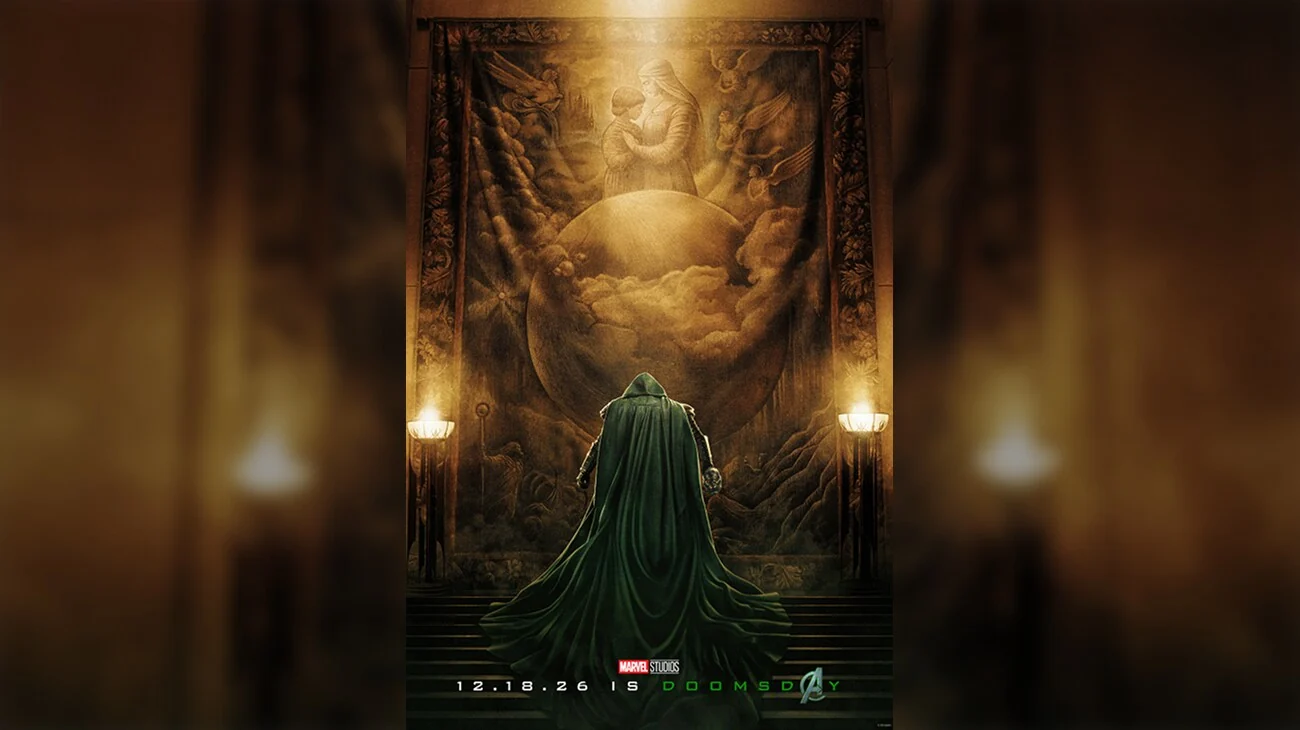
Battleworld is what’s left when a god decides not to let the multiverse finish dying.
In Jonathan Hickman’s Secret Wars (2015), Doctor Doom fuses the surviving fragments of hundreds of destroyed alternate Earths into a single patchwork planet and rules it as God Emperor Doom. It’s the endpoint of Marvel’s incursion crisis — years of parallel universes colliding and being destroyed — and it’s the version of “Battleworld” that actually matters for Avengers: Doomsday and Secret Wars, not the one from 1984.
How Battleworld came to exist
By the time the incursion crisis reaches its breaking point, there’s effectively nothing left to save in the normal sense — universe after universe has been destroyed trying to stop the collisions. Doctor Doom, working with Doctor Strange and the reality-warping entity Molecule Man, confronts the Beyonders — the god-level beings whose plan to end the multiverse caused the incursions in the first place — and takes their power for himself rather than letting it go to waste. Instead of one more universe surviving while everything else is lost, Doom uses that power to preserve fragments of many destroyed realities at once, welding them together into one surviving world.
That world is Battleworld.
How Battleworld’s domains actually work
Battleworld isn’t one continuous setting; it’s built from domains — separate zones, each one a preserved fragment of a different destroyed reality, complete with its own surviving heroes, villains and history. Some domains are straightforwardly familiar corners of Marvel continuity. Others are far stranger: entire regions built from zombie-infested realities, Hulk-dominated worlds, or timelines where Ultron won.
Each domain is governed locally by a Baron or Baroness appointed directly by Doom, and crossing between domains isn’t casual — it requires approval from the local ruler or from Doom himself. Three domains are considered dangerous enough to the rest of Battleworld that they’re sealed off entirely behind a barrier called the Shield: the Deadlands, Perfection and New Xandar, each home to a threat catastrophic enough that letting it loose would endanger every other domain.
Keeping order across all of this falls to enforcers Doom builds specifically for the job: winged, angelic beings called Thors, tasked with handling disobedience wherever it appears. And at the top of the enforcement structure, directly beneath Doom, is Sheriff Strange — Stephen Strange’s role on Battleworld, serving as God Emperor Doom’s personal law enforcer, with a judgment he describes as final. It’s a considerable fall for a character usually cast as a moral authority in his own right, and it doesn’t hold: when survivors from the old Prime Universe eventually arrive on Battleworld, the Sheriff is among those who defies Doom’s rule.
Why Doom becomes a god, and why it can’t last
Doom doesn’t merely rule Battleworld as a king. He holds the power he took from the Beyonders directly, and Battleworld’s very existence depends on him personally sustaining it. He plays father, protector and absolute law to a patchwork of realities that would otherwise not exist at all — and, tellingly, he arranges his own household on Battleworld to resemble the family Reed Richards has and he doesn’t, placing Sue Storm as his consort and treating Franklin and Valeria as his own children.
That detail is the whole rivalry compressed into one choice. For the full story of why Doom’s fixation on Reed Richards specifically drives that decision — and how it eventually costs him everything — see why Doctor Doom hates Reed Richards. The short version: Reed Richards is smuggled onto Battleworld, Molecule Man strips Doom’s borrowed power so the two men can finally argue as equals, and Doom — in an unguarded moment — admits that Reed might genuinely have been the better ruler. Molecule Man treats that admission as permission and hands the power to Reed instead, who uses it to rebuild the shattered multiverse rather than rule over one patched-together world.
1984 Battleworld vs. 2015 Battleworld — they are not the same thing
This causes real confusion, because Marvel has used the name “Battleworld” for two very different stories decades apart, and both are called Secret Wars.
The 1984 original (Marvel Super Heroes Secret Wars) is a much simpler premise: the godlike Beyonder abducts a roster of Marvel’s heroes and villains, drops them on an artificial planet he assembles for the occasion, and forces them to fight for the chance to have their wishes granted. It’s one of Marvel’s first major crossover events and set the template for the modern comics “event,” but the Battleworld in it is a single constructed arena, built and controlled entirely by the Beyonder from the start.
The 2015 version is a rescue, not a game. Its Battleworld is built from the actual, destroyed remains of a collapsing multiverse, assembled by Doctor Doom rather than an external god, and its stakes are the literal survival of reality rather than a battle royale for wishes. When people reference “Battleworld” in connection with Avengers: Doomsday or Secret Wars, they mean this version — the one tied to Doom, Reed Richards and the incursion crisis, not the 1984 arena.
What Marvel Studios has — and hasn’t — confirmed about Battleworld in the MCU
Marvel has confirmed Avengers: Doomsday (December 18, 2026) and Avengers: Secret Wars (December 17, 2027), with Robert Downey Jr. as Victor von Doom and a synopsis describing heroes from three distinct universes on a collision course. That’s a clear thematic echo of the incursion-to-Battleworld arc. It is not a confirmation. Marvel has not said Battleworld itself appears in either film, has not confirmed Doom becomes any version of God Emperor on screen, and has not detailed how — or whether — the films adapt Hickman’s domains, Sheriff Strange, the Thors or any other specific piece of the 2015 story’s machinery. Treat Battleworld as the clearest comics precedent for where this corner of the MCU is heading, not as a plot point Marvel has locked in.
For where this leaves everything else connected to Doomsday and Secret Wars, see our explainers on Doctor Doom, the incursion crisis that makes Battleworld necessary in the first place, and Noah Jupe’s still-unrevealed Secret Wars role.
The bottom line
Battleworld is what happens when the alternative is nothing at all: a god-king, hundreds of borrowed realities welded into one planet, and a ruler whose entire empire exists because he refused to let everyone lose. It ends the way Doom’s ambitions always seem to — with Reed Richards proving he could have done better, and Doom, for one unguarded moment, agreeing.
Sources
Related coverage
Marvel Incursions Explained: How Universes Collide and Why They Matter for Secret Wars
Two Earths, eight hours, and one impossible choice. Here's how Marvel's incursions actually work in the comics, how the MCU has already used the term, and what's confirmed for Doomsday and Secret Wars versus comic-book precedent.
Why Does Doctor Doom Hate Reed Richards?
Not because Reed scarred him. Not because Reed sabotaged him. The real reason is smaller, pettier and far more interesting — and Marvel confirmed it in Secret Wars.
Who Is Doctor Doom? Marvel's Greatest Villain Explained
A monarch, a sorcerer, and a genius who blames someone else for his own mistake. Everything you need to know about Doctor Doom before Avengers: Doomsday.
Avengers: Doomsday Watch Order — What You Actually Need to Watch Before the Movie
Not a 40-film homework list. Here's the minimum route into Avengers: Doomsday, what's worth adding for the Fantastic Four and X-Men context, and what's genuinely optional.
About the author
Sara Avegaard
Movies & TV Writer
Sara Avegaard is a movie and television enthusiast with a strong interest in entertainment news, upcoming releases and the latest developments across film and streaming. At Red Reactions, she focuses on movies, TV, streaming and breaking entertainment stories.