lore · comics
Absolute Wonder Woman Explained: DC's Darkest Reinvention of Diana
Raised in Hell by Circe and denied Themyscira and her sisterhood. The Eisner-winning reinvention of Wonder Woman, explained for new readers.
 By Aram Anwar6 min read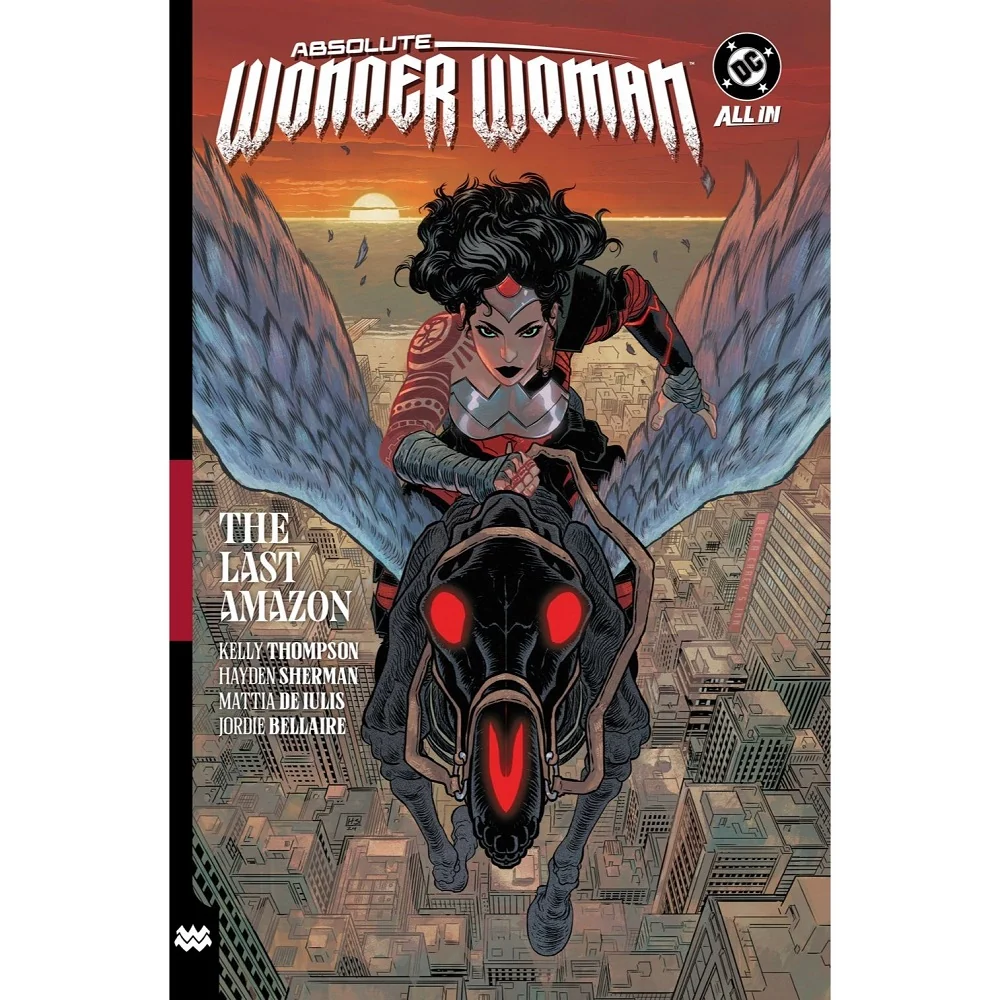
Of the three flagship Absolute Universe titles, Absolute Wonder Woman was the one that took Best New Series at the 2025 Eisners.
The series, by Kelly Thompson and Hayden Sherman, won that category while Jordie Bellaire took Best Coloring for work that included Absolute Wonder Woman. In 2026, the book was nominated for Best Continuing Series, Thompson was nominated for Best Writer, and Bellaire won Best Coloring again. Twenty-two regular issues in, it remains one of the most award-recognized books in DC’s Absolute line.
It’s also the strangest. Because where Absolute Batman lost inherited wealth and Absolute Superman lost the familiar Smallville foundation, Diana lost something structurally harder to replace: the people and culture that were supposed to raise her.
The setup
Before Diana was born, the gods banished and imprisoned the Amazons. Diana is cut off from them so completely that even the word “Amazon” is forbidden around her.
So she gets no Themyscira. No sisterhood. No Hippolyta raising a princess in paradise, no upbringing in a culture of warrior-diplomats.
Instead, Apollo takes the infant Diana to the Wild Isle of Hell and leaves her with Circe, forbidding the witch from telling the child what she is. Circe initially plans to let the baby die there.
She doesn’t.
Circe
This is the inversion the whole book turns on, and it’s the best idea in the Absolute line.
In mainstream continuity Circe is one of Wonder Woman’s most persistent enemies. Here she’s her mother — not in a soft sense, but in the sense that matters. She initially plans to let Diana die, and then doesn’t. She raises her instead, in Hell, and teaches her everything she knows.
What she knows is sorcery and violence.
The relationship that comes out of it is prickly, difficult and genuinely loving. Circe is not warm. She is, however, present, and she builds Diana into someone who can survive the place they live. Their eventual separation is one of the series’ heaviest sequences.
It’s a much better use of Circe than fifty years of her turning people into pigs.
What growing up in Hell does to you
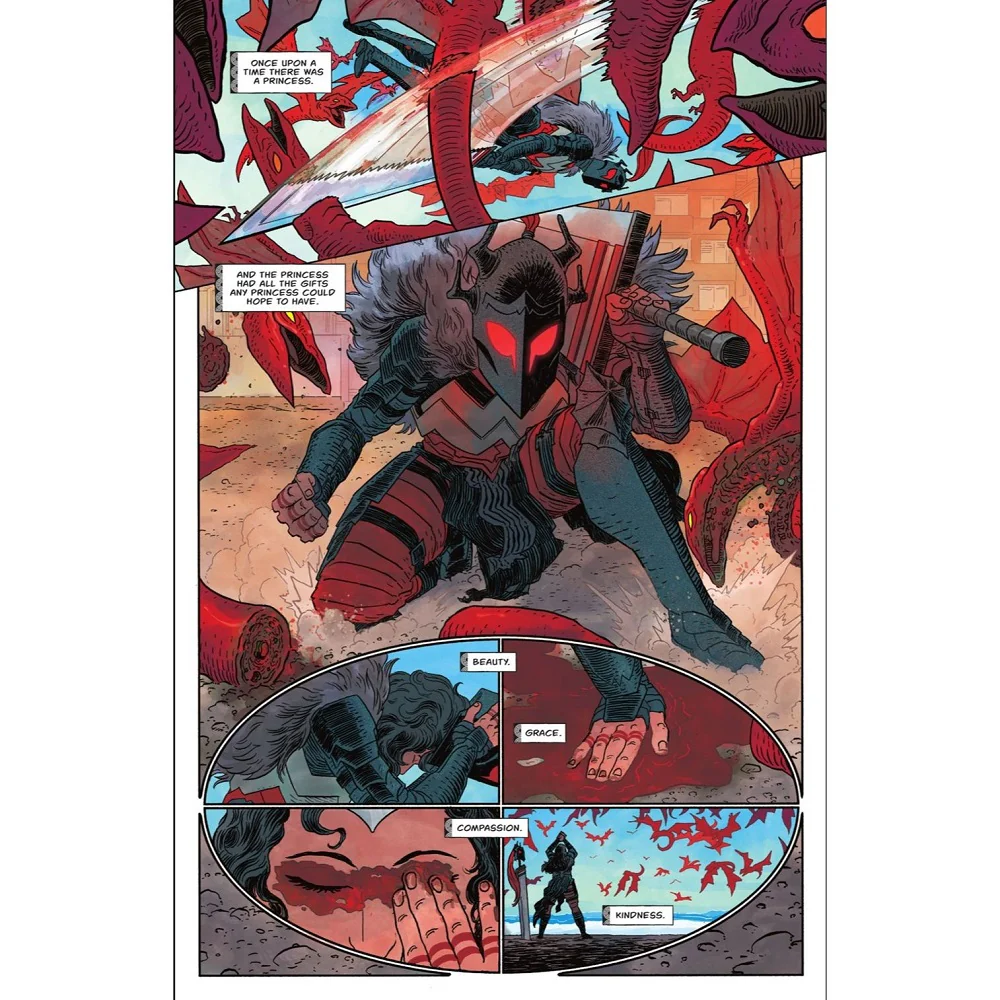
Diana’s childhood is monsters and magic and a landscape trying to kill her, with no human contact and no knowledge of her own people.
The consequence is a Wonder Woman who is a sorceress first. Mainstream Diana’s power is divine blessing expressed physically — strength, speed, durability, immaculate combat training. Absolute Diana has all that too, but her real education was witchcraft: spellcasting, ritual, the ability to perceive things that aren’t there.
And her magic is not consequence-free. Later issues turn the idea that magic has a price into a literal threat, giving her power a built-in cost rather than treating spellcasting as limitless.
She learns the truth of her heritage only later, after growing up with the very idea of the Amazons kept from her.
The look
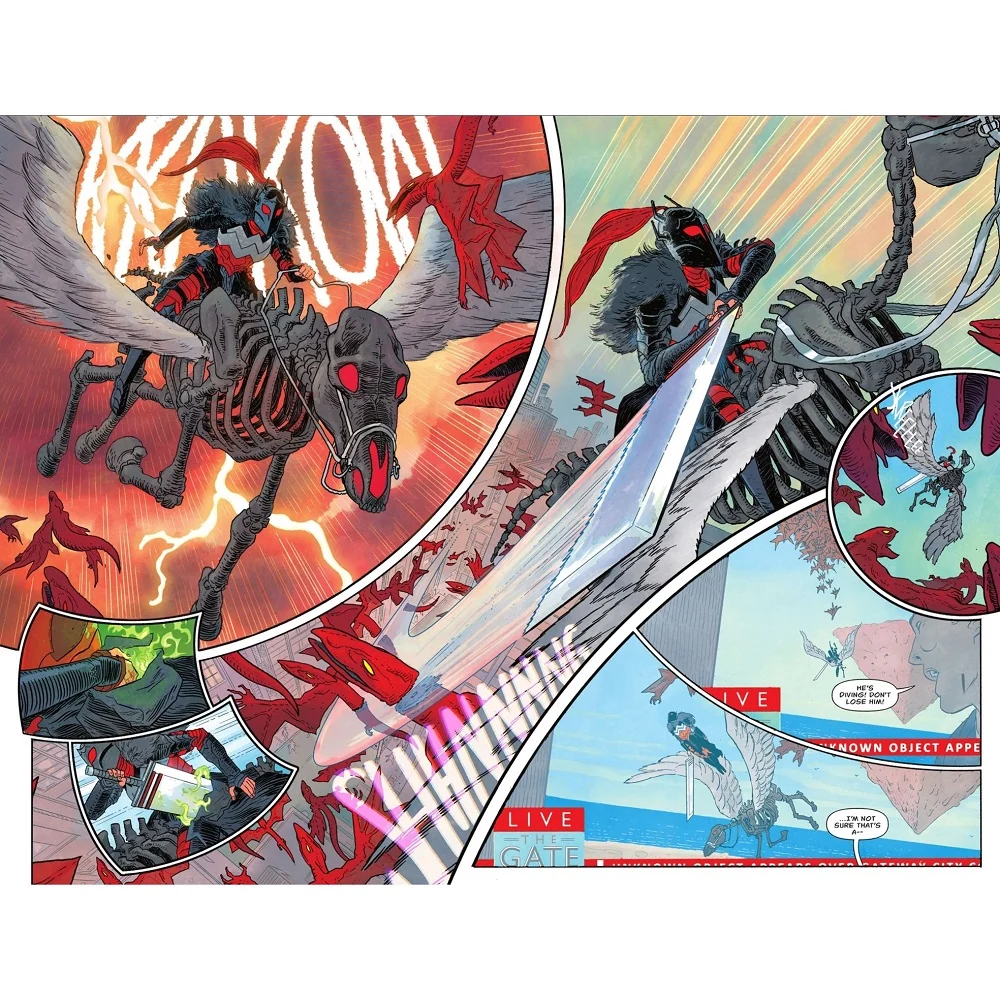
Sherman’s design is the reason people pick this book up off the shelf.
Diana carries an enormous sword, heavy tactical armour rather than ceremonial regalia, a dark cloak, and tattoo work running down both arms from the shoulders. She rides a skeletal winged mount when she comes up into the mortal world. Magical lassos are still part of her arsenal, but they share space with weapons and spellcraft rather than defining the entire loadout.
The overall register is dark fantasy bordering on horror — Bellaire’s colour work doing enormous amounts of the atmosphere, which is precisely why she keeps winning for it.
It looks like a metal album cover, and it earns it.
Coming up into the world
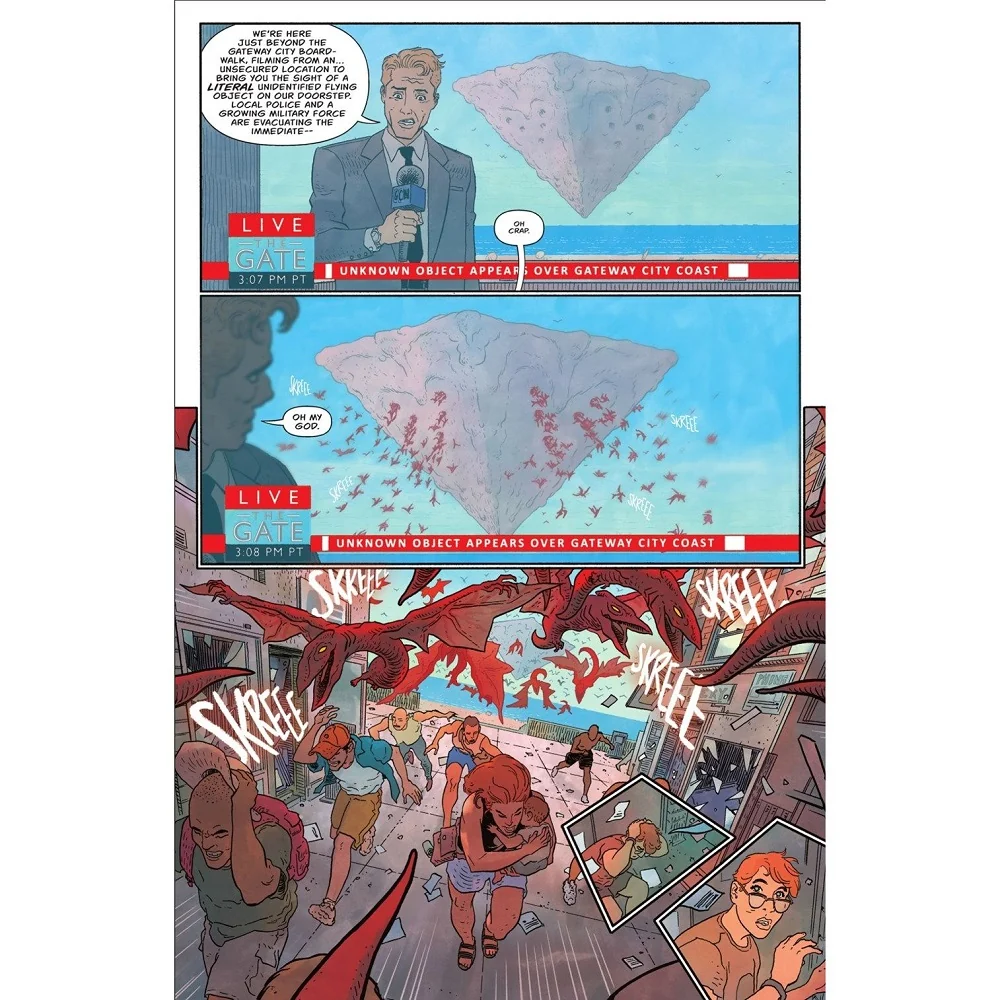
When Diana finally reaches the surface, she arrives in Gateway City with almost no experience of ordinary human life.
Steve Trevor is one of her earliest sustained connections to humanity, which makes his familiar role as Diana’s human anchor even sharper than usual. He’s an ordinary, brave, breakable man, and she’s spent most of her life among things that eat people. He becomes a bridge to a world she barely knows.
The threats mix mythological and modern: underworld powers and monsters on one side, and human institutions trying to understand, contain or exploit the supernatural forces surrounding her on the other.
Absolute vs. classic
| Mainstream Diana | Absolute Diana | |
|---|---|---|
| Raised by | Hippolyta and the Amazons | Circe, in Hell |
| Themyscira | Home | A home and people she was denied |
| Circe | Longtime archnemesis | Foster mother |
| Core skill | Divine strength, combat, diplomacy | Sorcery, plus all of the above |
| Mission | Ambassador of peace | Fighting for a justice nobody handed her |
| Aesthetic | Greek warrior regalia | Armour, cloak, tattoos, greatsword |
Why she’s still Diana
Here’s the thing the horror aesthetic conceals: her personality is intact.
She’s compassionate. She’s principled to the point of inconvenience. She protects people who can’t protect themselves, immediately and without needing to be asked. The book raises her in the worst possible environment and she comes out of it recognisably herself.
That’s the actual argument the Absolute line keeps making, and Wonder Woman is where it lands hardest. Mainstream Diana’s goodness can be read as inheritance — she was raised in paradise by people who taught her peace. Absolute Diana was raised in Hell by a witch who wasn’t sure she wanted her, and turned out kind anyway.
Take away the paradise and the compassion doesn’t go with it. It was hers.
Where to start
Absolute Wonder Woman #1, or Vol. 1: The Last Amazon, which collects the first seven issues. Vol. 2, As My Mothers Made Me, followed in early 2026.
You don’t need Absolute Batman or Absolute Superman, and you don’t need any mainstream Wonder Woman. Issue #1 assumes nothing. See our DC Absolute Universe reading order for where it connects to the rest of the line.
The bottom line
Absolute Wonder Woman is the book that proved the Absolute line was more than a marketing exercise.
It does that by taking one of the line’s most drastic swings — removing not just Diana’s advantages but her entire upbringing among the Amazons, and then asking whether the character survives it.
She does. That’s the whole point, and it’s why this is the Absolute book to hand someone who thinks the concept sounds like a gimmick.
Make Red Reactions a preferred source
Choose Red Reactions as a preferred source in Google Search.
Confirm your choice on Google.
Related coverage
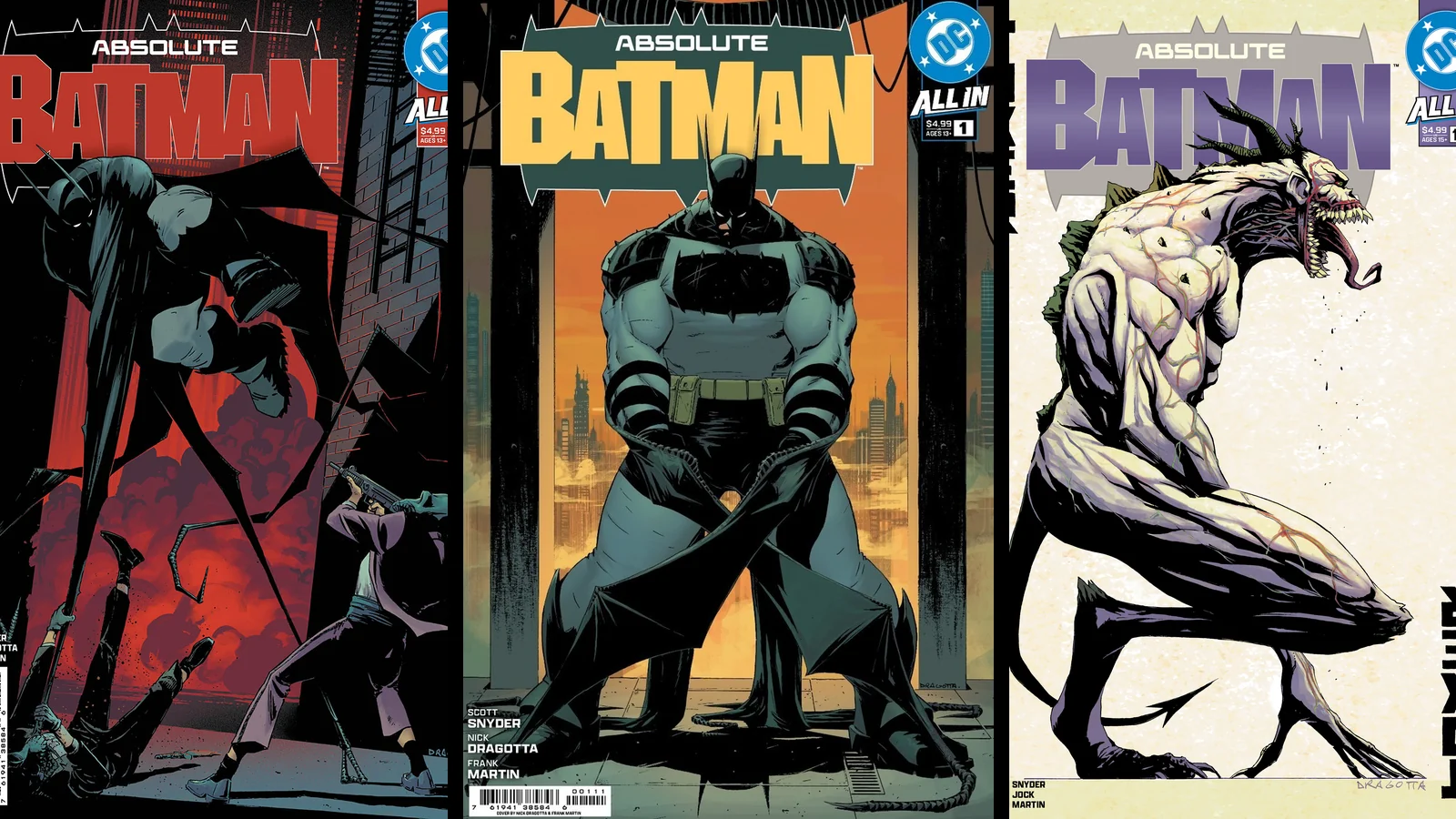
Absolute Batman Explained: Why This Bruce Wayne Is Completely Different
No manor, no money, no butler — and a chest emblem that doubles as an axe. DC's Absolute Batman reimagines Bruce Wayne as a working-class civil engineer.
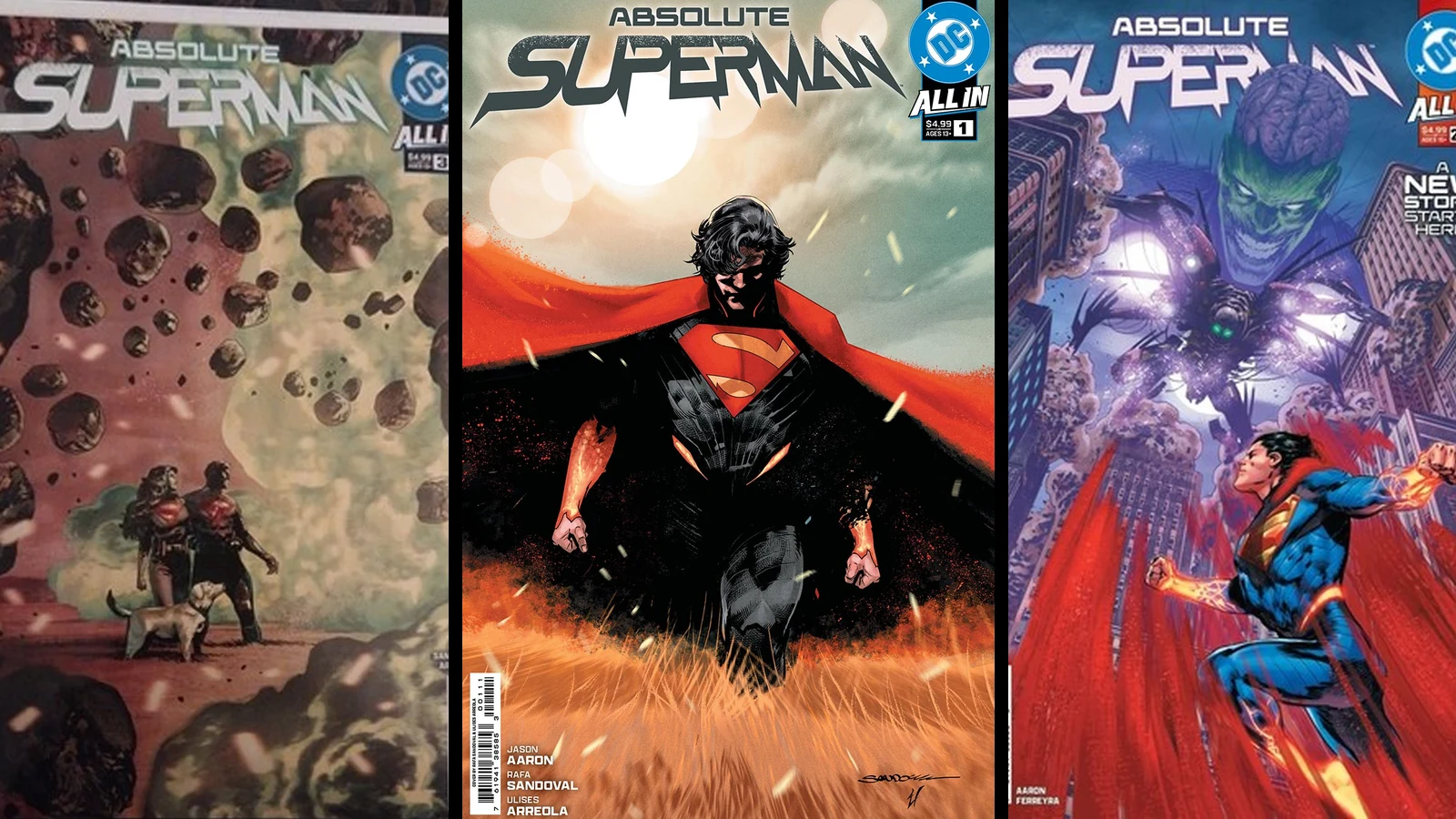
Absolute Superman Explained: Origin, Powers, and Every Major Change
No traditional Kent upbringing. No familiar Daily Planet setup. DC's Absolute Superman grew up on Krypton, arrived on Earth as an adolescent refugee, and rebuilt the Man of Steel from the ground up.
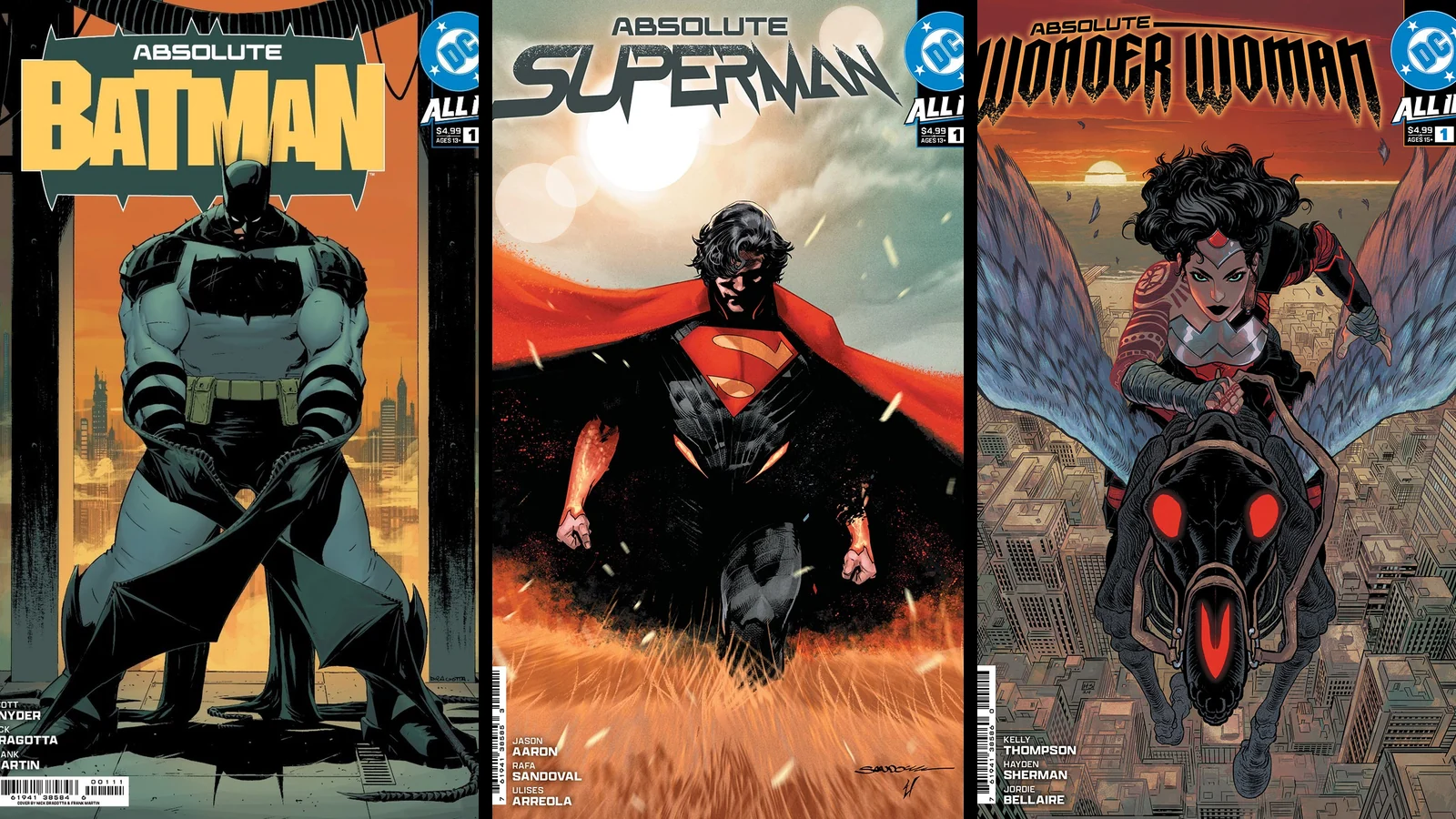
What Is DC's Absolute Universe? Everything You Need to Know
A parallel DC reality where Batman has no money, Superman has no Kansas, and Wonder Woman was raised in Hell. Here's how it works and where to start.
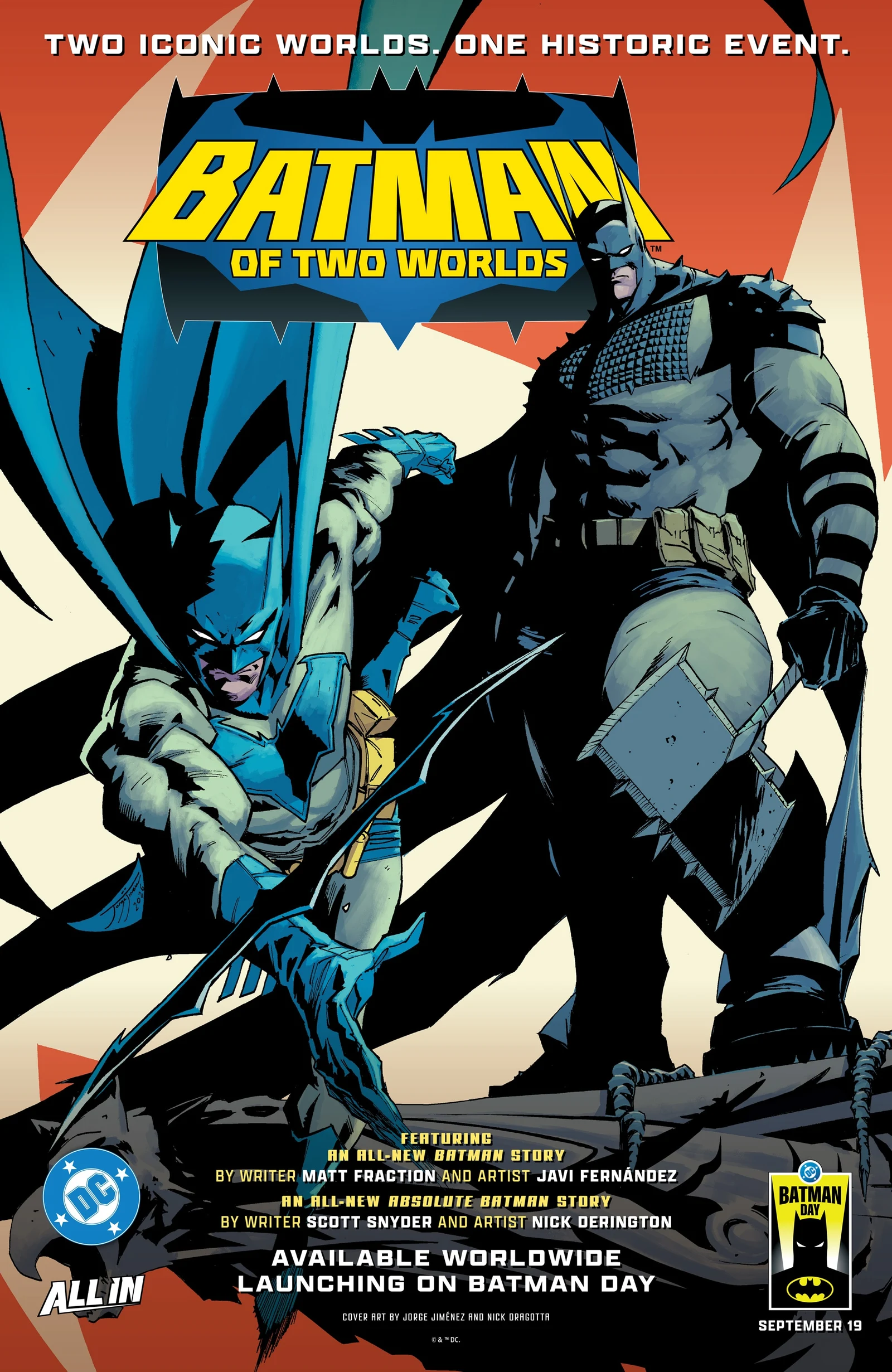
Batman of Two Worlds Explained — How Main DC Batman and Absolute Batman Solve the Same Crime
DC's Batman Day 2026 one-shot Batman of Two Worlds puts mainstream Batman and Absolute Batman in the same issue — but not the same story. Here's exactly how the comparison works, and whether the two Bruce Waynes actually meet.
About the author
Aram Anwar
Founder & Editor
Aram Anwar founded Red Reactions and writes across comics, gaming, movies and television. His work includes franchise guides and large Lore / Explained features, with an emphasis on separating confirmed details from reports, theory and speculation.
Coverage: Comics · DC & Marvel · Gaming · Movies & TV · Lore / Explained · Guides
More from Aram Anwar